As the aerospace and defense sectors evolve, the spotlight is increasingly shining on small-satellite constellations and advanced technologies that promise to reshape operations in space. With the advent of miniaturization, enhanced propulsion systems, and AI integration, organizations are not only looking to improve efficiency but also to augment mission resilience and operational effectiveness. This article delves into the key trends that are defining the future of satellite technology.
The Shift to Small-Satellite Constellations
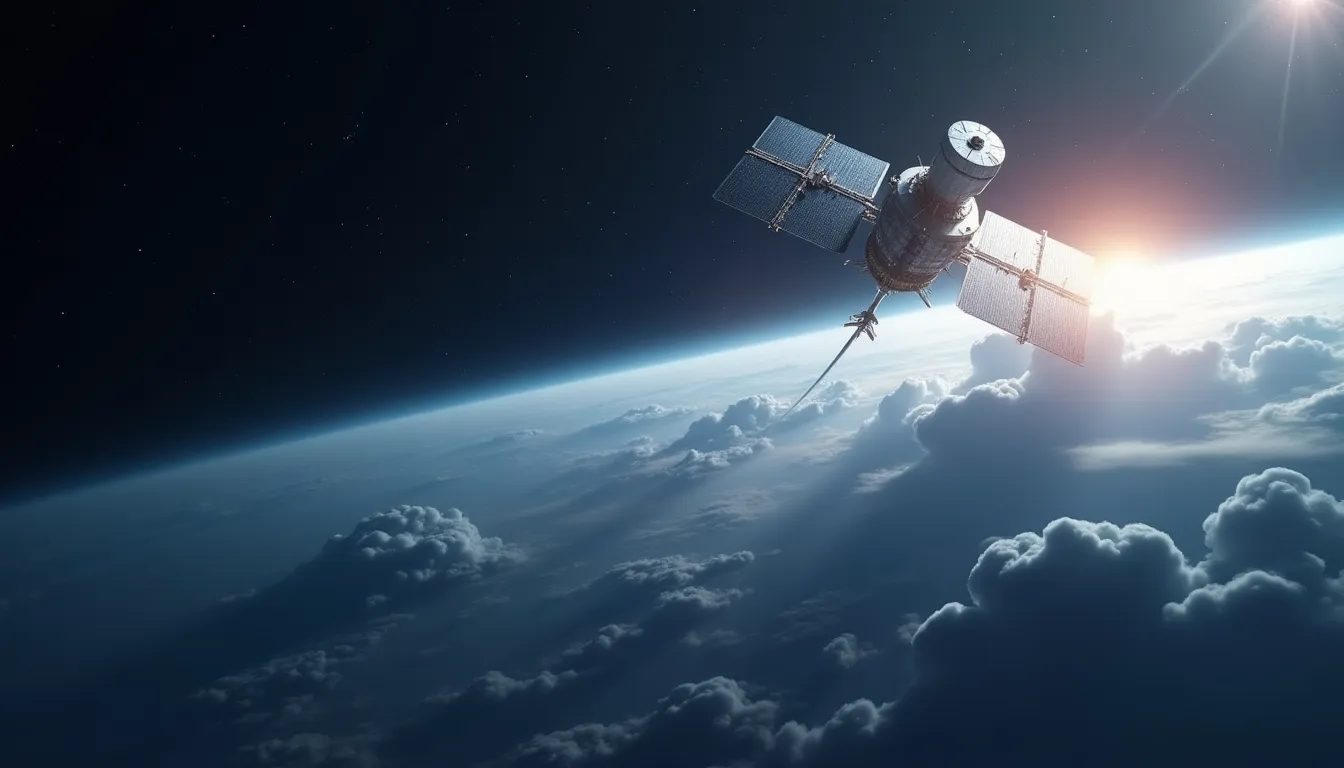
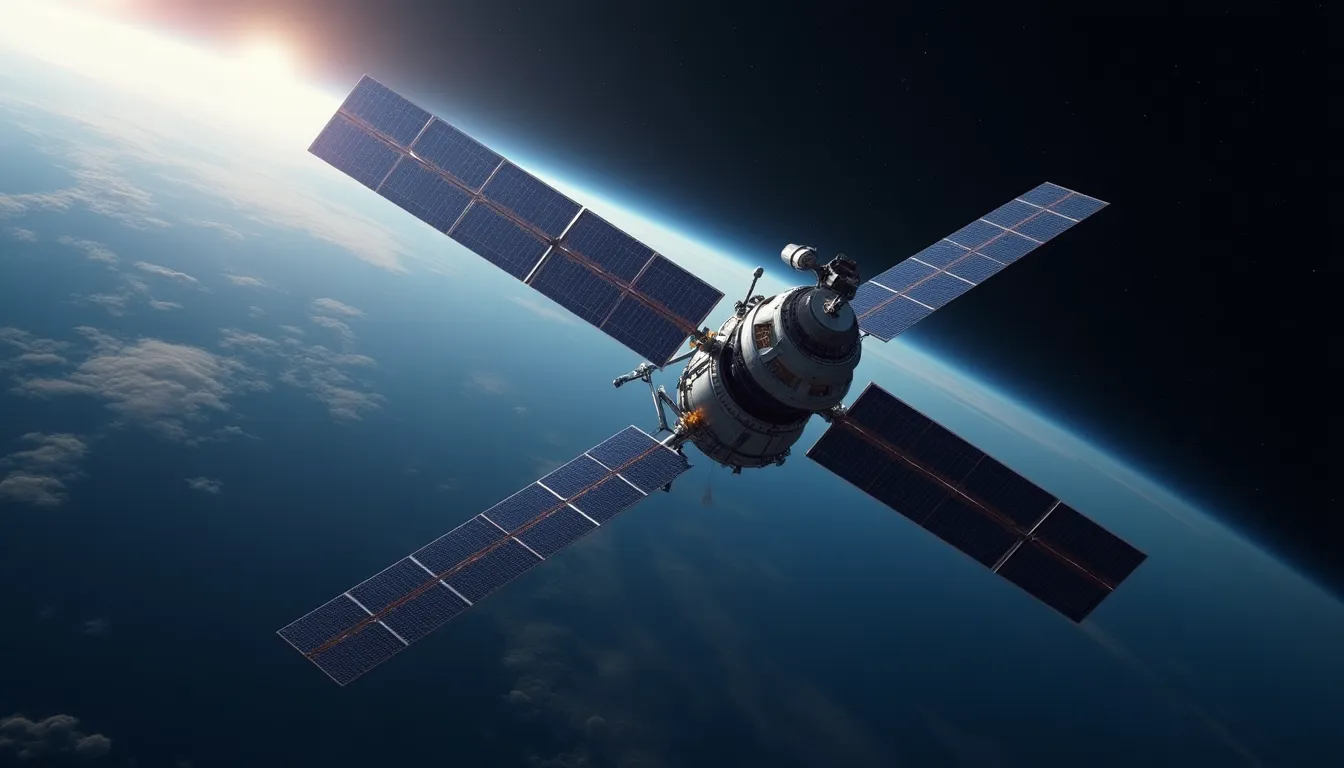
In recent years, there has been a notable shift from large, monolithic satellites to proliferated small-satellite constellations, particularly in Low Earth Orbit (LEO). These smaller satellites are increasingly being employed for a variety of applications, including Earth observation, remote sensing, and satellite IoT. The ability to deploy numerous small satellites allows for greater coverage, redundancy, and reduced costs compared to traditional larger platforms.
The miniaturization of satellite technology is enabling these advancements, as companies develop compact systems capable of performing complex tasks. For instance, the Pony Express 2 demonstration by Lockheed Martin showcased tactical communications capabilities through 12U small satellites featuring Ka-band crosslinks and mesh networking. This not only enhances operational capabilities but also reflects a move toward automated ground systems that can monitor and manage these constellations with minimal human intervention.
Expanding Role of Commercial SATCOM in Defense
The U.S. Department of Defense is increasingly leveraging commercial SATCOM solutions to enhance mission effectiveness and resilience. This paradigm shift emphasizes the integration of commercial satellite services into military operations, allowing for improved command and control of Unmanned Aerial Vehicles (UAVs), integrated missile defense systems, and asset tracking.
By utilizing commercial satellite communications, the military can achieve greater interoperability across various platforms and domains, ensuring that information flows seamlessly during critical missions. The reliance on commercial systems enhances operational flexibility, particularly in an environment where rapid response is essential.
Advanced Propulsion Technologies
As space becomes more congested, satellite propulsion technology is gaining strategic importance. Companies like Moog are at the forefront of developing advanced propulsion systems that facilitate complex maneuvers and support deeper space exploration. Sustainable propulsion systems are also becoming a focus area, driven by the need for environmentally responsible space operations.
These innovations are crucial for national defense, as they provide the agility needed to respond to dynamic threats in space. The integration of high-precision advanced navigation systems and precision accelerometers ensures that satellites can navigate with exceptional stability, adapting to changing conditions in real-time.
The Impact of AI and Automation on Satellite Operations
Artificial intelligence and automation are revolutionizing how satellite operations are managed. The trend toward AI-enabled space systems is reshaping mission planning and data analysis, allowing for more efficient use of satellite constellations. Enhanced algorithms and machine learning capabilities enable satellites to process vast amounts of data autonomously, improving situational awareness and operational efficiency.
As the aerospace and defense sectors increasingly adopt these technologies, we can expect to see a significant shift toward agentic AI and robotics within satellite operations. The automation of ground systems will allow for the efficient management of larger satellite networks, reducing the need for manual oversight and enabling faster decision-making.
New Space Architectures for Enhanced Resilience
The Space Development Agency is actively pursuing the development of new space architectures that emphasize distributed satellite networks. This shift aligns with the broader movement towards resilient constellations, moving away from dependence on singular large spacecraft.
By deploying a network of smaller, interconnected satellites, agencies can ensure that capabilities remain operational even if some assets are compromised. This approach not only enhances resilience but also supports responsive operations that can adapt to evolving mission requirements.
Conclusion
The transformation of satellite technology is well underway, with small-satellite constellations, advanced propulsion systems, and AI integration leading the charge. As these trends continue to develop, we can expect to see a more interconnected and responsive aerospace and defense landscape. The ongoing commitment to innovation will ensure that organizations remain competitive and capable of meeting the challenges of tomorrow’s operational environments. The future of aerospace is not just in the sky; it’s in the intricate web of technologies that enable us to harness the full potential of space.
References
-
Space Development Agency – Increasing Warfighters’ Lethality … (www.sda.mil) - 5/19/2026 The Space Development Agency (SDA) will quickly deliver needed space-based capabilities to the joint warfighter to support terrestrial missions.
-
Advancing Defense Capabilities with New Satellite Propulsion … (www.moog.com) - 5/14/2026 As space becomes an increasingly congested domain, satellite propulsion technology becomes more important than ever for national defense.
-
New Technology Trends in Aerospace and Defense Industry [2026] (www.epicflow.com) - 5/6/2026 *This is explained by the reduction of prices for satellite launches and the increased demand for geospatial intelligence and satellite imagery. The application of satellites is gaining momentum and is expected to grow in 2026 and beyond. This is explained by the reduction of prices for satellite launches and the increased demand for geospatial intelligence and satellite imagery. … According to the research, some of most prominent satellite technology trends are going to be the following ones:
- Satellite miniaturization: small satellites are replacing the large ones and related infrastructure; they are positioned in LEO and used for Earth observation and remote sensing;
- Applications of satellite IoT;
- Advanced ground systems that are capable of monitoring satellite constellations without human intervention;
- Spacecraft propulsion that allows satellites to travel deep into space and perform complex maneuvers;
- Leveraging sustainable propulsion systems in satellite production;
- Very High Throughput Satellites (VHTS) that transmit data at the speed of several hundreds of gigabytes or even terabytes per second. [8] … The aerospace & defense domain continues its digital transformation and active adoption of innovative technologies. In 2026, recent technological advancements will continue to shape the aerospace and defense industry landscape. Among the notable developments that will impact aerospace and defense trends next year are artificial intelligence and agentic AI, additive manufacturing, and immersive technologies. Also, aerospace & defense organizations will continue their decarbonization efforts supported by technological developments, improve defense equipment and satellite technologies, as well as take advantage of robotics, increased connectivity, and blockchain. … Key aerospace and defense innovations will include the application of artificial intelligence and agentic AI, immersive technologies, additive manufacturing, cybersecurity solutions, blockchain, IoT, and robotics. What is more, next year will be marked by further sustainability efforts, space exploration, and developments in aerial mobility. … In 2026, the aerospace landscape will be marked with further sustainability efforts, developments in advanced air mobility, the adoption of AI, 3D printing, and immersive technologies as well as the increased application of satellites.*
-
Aerospace & Defense Technology - SAE Media Group (saemediagroup.com) - 3/5/2026 A&DT is the largest-circulation magazine for mil/aero engineers and managers. Through our portfolio of print, digital, online, and custom opportunities.
-
Satellite Solutions for Defense Applications - YouTube (www.youtube.com) - 11/5/2025 … Recent progress, demonstrations, and successes in the adoption … Tech 101: Defense Radar. Emerging Technologies Institute•260 views · 1 … The Department of Defense is increasingly looking to commercialized satellite communications (SATCOM) to strengthen mission resilience, improve operational effectiveness, and expand capabilities across domains. Why now, and what momentum is driving this shift? … The growing role of commercial SATCOM in defense applications such as UAV command and control, integrated missile defense, and asset tracking. Recent progress, demonstrations, and successes in the adoption of commercial solutions.
-
Aviation, Defense, and Space Market Size Report, 2033 (metastatinsight.com) - 10/8/2025 Global Aviation, Defense, and Space Market valued at USD 709.2 billion in 2025 and projected to exceed USD 896.6 billion by 2032. Key trends driving growth: Rising global defense budgets and military modernization programs, Increasing demand for commercial air travel and aircraft production Opportunities include: Expanding private sector investments in space exploration create new growth avenues Key insight: The market is set to grow exponentially in value over the next decade, highlighting significant growth opportunities. … Satellite Technologies: Satellite technologies are rapidly expanding in the global aviation, defense, and space market where they play a vital role in communication, navigation, and earth observation. Their government and private sectors will adopt more of them for scientific and commercial applications as miniaturization, enhanced data processing, and longer operational life take place. … Rising global defense budgets and military modernization programs: One of the main factors that contribute to the global aviation, defense, and space market is the increasing global defense budgets and military modernization programs. The investments made in the next-generation aircraft, missile systems, and defense technologies are augmenting the capabilities, while fleet upgrades are enhancing operational efficiency and strategic readiness for countries all over the world. … Expanding private sector investments in space exploration create new growth avenues: Deepening private sector interest in space exploration has been creating new ways of growth in the global aviation, defense, and space market. Breakthroughs in reusable launch systems, satellite technologies, and commercial space travel have not only made new businesses, partnerships, and revenue streams possible, but also have been enabling the rapid pace of technological advancement in the aerospace and defense sectors.
-
Space Technology Trends 2025 | Lockheed Martin (www.lockheedmartin.com) - 12/3/2024 *Here are the top 10 space technology trends shaping the future of satellite communications, remote sensing and space exploration.
-
Artificial Intelligence/Machine Learning (AI/ML)
-
Advanced Communications
-
Proliferated Satellite Constellations
-
Interoperability and Connectivity
-
Nuclear Space Propulsion and Power
-
Connecting Domains through Space Data
-
Human Lunar Exploration
-
Climate and Weather-Monitoring Technology … In March 2024, Lockheed Martin launched Pony Express 2, a pair of 12U small satellites with four payloads which provide tactical communications; Ka-band crosslinks and mesh network; RF sensing across multiple bands; and a high-end central processing unit. … Recently, we were awarded a contract from NASA on behalf of NOAA, to develop and build the nation’s next generation weather satellite constellation, Geostationary Extended Observations (GeoXO).*
-
Let’s talk about tech: How satellites strengthen defence - YouTube (www.youtube.com) - 5/7/2024 Comments · How Radar Satellites See through Clouds (Synthetic Aperture Radar Explained) · The US Space Force - America’s Invisible Front Line (A … Satellites have revolutionized our lives and our digitalised world is increasingly dependent on them. They transmit our cat videos and international calls across the globe, pinpoint our location with incredible precision, and observes the Earth for both civilian and military purposes. Whether it’s surveillance, reconnaissance, or strategic communication, satellites are a powerful tool for modern defence forces.
-
The New Frontier of Satellite Technology | Dassault Systèmes (www.3ds.com) - 4/3/2024 Driven by the need to accelerate innovation, this new frontier helps companies identify opportunities to extend the limit of rocketry and satellite design and …