The aerospace and defense industries are currently witnessing a significant transformation in satellite technology. This shift is characterized by the emergence of proliferated satellite constellations, advancements in satellite miniaturization, and the integration of agentic AI for autonomous mission management. As launch costs continue to decline, demand for geospatial intelligence is escalating, bringing innovative solutions to the forefront of military and commercial operations.
Proliferated and Resilient Constellations
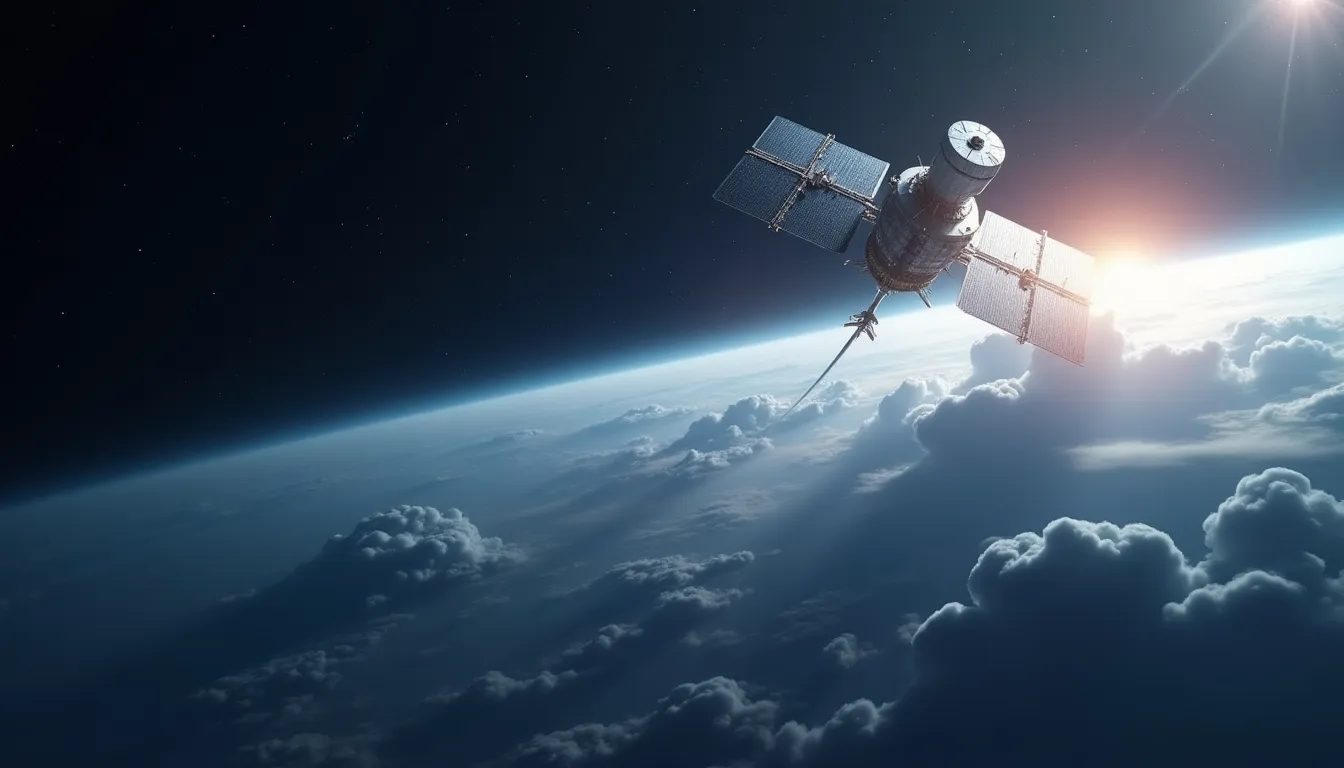
In recent years, the traditional model of relying on large, singular satellites is being challenged by the concept of proliferated satellite architectures. This approach favors deploying numerous smaller satellites in Low Earth Orbit (LEO), enhancing network resilience and ensuring robust communication capabilities even in the face of threats.
Lockheed Martin, a leader in defense technology, is at the forefront of this trend, emphasizing the need for lower-latency connectivity and improved cybersecurity. The proliferation of satellites not only extends the operational life of these systems but also enhances reliability across missile defense networks. According to industry experts, this strategic shift is crucial for adapting to the evolving landscape of military communications, where redundancy and rapid response are paramount.
Miniaturization and Cost Reduction
The trend towards satellite miniaturization is a game-changer. Small satellites, often referred to as CubeSats or nanosatellites, are replacing larger counterparts, drastically reducing the infrastructure required for deployment. As launch prices have decreased—thanks in part to advancements in reusable launch vehicles—the demand for Earth observation, remote sensing, and satellite imagery has skyrocketed.
This cost efficiency allows defense entities to deploy multiple units, maximizing redundancy and coverage. For instance, companies like ICEYE are ramping up production to two satellites per week by late 2027 to meet the surging demand from European militaries, effectively doubling their radar-satellite capacity. The increasing reliance on small satellites is reshaping the landscape of geospatial intelligence and tactical operations.
Agentic AI and Autonomy
As we look toward 2026, agentic AI is poised to become an essential component of defense strategy. This technology facilitates advanced ground systems capable of monitoring satellite constellations autonomously, allowing for intricate maneuvers and even deep-space travel capabilities without human intervention. The integration of robotics and autonomous systems into military operations is significantly enhanced by agentic AI, streamlining decision-making processes and improving operational efficiency.
Experts in the field assert that the adoption of such autonomous systems will revolutionize command and control functions, providing military leaders with real-time analytics and situational awareness that was previously unattainable. As AI technologies continue to evolve, their operational capabilities within defense sectors will undoubtedly expand, leading to more effective mission planning and execution.
High-Throughput and IoT Applications
The development of Very High Throughput Satellites (VHTS) marks another significant advancement in satellite technology. These satellites can transmit data at astonishing speeds, reaching hundreds of gigabytes or even terabytes per second, fundamentally changing the dynamics of data communication. This capacity enhances various applications, from enhanced internet connectivity to more effective military communications.
Simultaneously, the expansion of satellite IoT applications supports global connectivity, facilitating the integration of the Internet of Things (IoT) into everyday life. The growing demand for real-time data and monitoring in various sectors underscores the importance of these advancements, paving the way for smarter and more responsive systems.
On-Orbit Servicing and Propulsion
Emerging trends in on-orbit servicing are becoming increasingly vital for extending satellite lifespans and maintaining network integrity. Innovations in spacecraft propulsion now allow satellites to perform complex maneuvers and travel deeper into space, utilizing sustainable propulsion systems that align with global decarbonization efforts.
The ability to service satellites in orbit not only reduces the need for frequent replacements but also significantly cuts costs and resource consumption. As the industry continues to innovate, on-orbit servicing is expected to play a crucial role in maintaining the operational capabilities of satellite constellations.
Conclusion
The aerospace and defense sectors are on the verge of a new era, driven by advancements in satellite technology and autonomous systems. The shift towards proliferated constellations, coupled with miniaturization and agentic AI, is enhancing operational effectiveness and resilience in military and civilian applications. As we move further into 2026, the integration of these technologies will continue to redefine the landscape of satellite communications and geospatial intelligence, promising a future where connectivity and data-driven decision-making are paramount.
References
-
These six fast-growing stocks sit at the cutting edge of space and … (www.facebook.com) - 6/22/2026 These six fast-growing stocks sit at the cutting edge of space and military technology. In the wake of the SpaceX IPO, investors can expect …
-
Space Technology Trends Shaping The Future | Lockheed Martin (www.lockheedmartin.com) - 4/8/2026 *Explore the latest space technology trends … Extending satellite life and improving reliability across the entire missile defense network.
-
Human lunar exploration
-
Advanced propulsion systems
-
Proliferated satellite architectures
-
Resilient navigation & military communications
-
Autonomy, AI & cybersecurity
-
Threat detection
-
Quantum technologies
-
On-orbit servicing
-
Commercial services …*
-
At the crux of modern military capabilities is a crucial element (www.facebook.com) - 3/30/2026 Welcome back to Defense News Weekly. How does the space development agency keep pace with the demand to be ready to be in a fight at any moment?
-
Defense Tech Trends for 2026: Innovation in Action - NSTXL (nstxl.org) - 2/6/2026 Satellite communications are trending toward more resilient and proliferated constellations, with enhanced cybersecurity, lower-latency connectivity, and … In 2026, industry experts predicted a surge in defense technology innovation fueled by advancements in artificial intelligence (AI), cybersecurity compliance, hypersonics, Internet of Things, and more.
-
Sierra Space | Defining the New Era of Space Defense Technology (www.sierraspace.com) - 1/26/2026 Sierra Space is a Defense Tech leader developing satellites, subsystems, spaceplanes, hypersonics & infrastructure for national security.
-
Future of Defense: Aviation, Weapons and Technology Innovation (www.youtube.com) - 4/23/2025 Axios hosted a Future of Defense event in Washington, D.C., featuring conversations with Rep. Jen Kiggans (R-Va.) The first is start with those existing proven systems that are in inventory {ts:1652} today. You’ve got hot production lines for they’re battle tested. They’re proven in areas around the world and {ts:1658} start building them out. uh you know within the next 6 to 18 months we could deploy at half a dozen to a dozen {ts:1665} critical infrastructure sites uh key capabilities in terms of defending against unmanned threats, aerial {ts:1672} threats, cruise missiles, ballistic missiles. Those systems are available today and then over time what you do is {ts:1679} the second key principle is continue to innovate around the next generation of capabilities to fill those gaps. extend {ts:1686} the capabilities with some systems that allow for large longer protection uh systems for example and and then the … So, so {ts:1741} today we’ve got counter UAS systems that I talked about, for example, and that that includes radars, the aectors, and {ts:1747} it’s not just our aectors. There’s other companies that make counter UAS systems that could be included into that as {ts:1753} well. You you add the national surf uh advanced surface missile systems or NASAs to help defend against some of {ts:1759} those uh aerial threats and and cruise missiles. You build Patriot around that as well that now you start to defend … {ts:1781} do that on annual or every two-year increments and then you can build that that space layer over top of it to get
-
Defense News, Covering the politics, business and technology of … (www.defensenews.com) - 5/16/2024 *Defense News is a global website and magazine about the politics, business and technology of defense, serving senior military and industry decision-makers.
ICEYE to double radar-satellite capacity by late 2027 as demand surges
The company’s goal is to ramp up production to two satellites a week as it responds to surging demand from European militaries.*
- New Technology Trends in Aerospace and Defense Industry [2026] (www.epicflow.com) - 4/6/2022 *Learn how technology trends in aerospace and defense industry dramatically transform the work of A&D organizations. In 2026, AI will be positioned as a foundational capability for decision making, command and control, and mission planning. … The focus of AI adoption in defense will be on agentic AI, which is gaining traction across industries these days. Defense companies are no exception. … In 2026, robotics and autonomous systems are expected to become integral components of military operations, which is, among other things, explained by increased popularity of AI agents. … The application of satellites is gaining momentum and is expected to grow in 2026 and beyond. This is explained by the reduction of prices for satellite launches and the increased demand for geospatial intelligence and satellite imagery. Also, the extensive use of the Internet of Things and the need for global connectivity promotes the active development of satellite technologies. According to the research, some of most prominent satellite technology trends are going to be the following ones:
- Satellite miniaturization: small satellites are replacing the large ones and related infrastructure; they are positioned in LEO and used for Earth observation and remote sensing;
- Applications of satellite IoT;
- Advanced ground systems that are capable of monitoring satellite constellations without human intervention;
- Spacecraft propulsion that allows satellites to travel deep into space and perform complex maneuvers;
- Leveraging sustainable propulsion systems in satellite production;
- Very High Throughput Satellites (VHTS) that transmit data at the speed of several hundreds of gigabytes or even terabytes per second. [8] … The aerospace & defense domain continues its digital transformation and active adoption of innovative technologies. In 2026, recent technological advancements will continue to shape the aerospace and defense industry landscape. Among the notable developments that will impact aerospace and defense trends next year are artificial intelligence and agentic AI, additive manufacturing, and immersive technologies. Also, aerospace & defense organizations will continue their decarbonization efforts supported by technological developments, improve defense equipment and satellite technologies, as well as take advantage of robotics, increased connectivity, and blockchain.*
-
Innovation Timeline - DARPA (www.darpa.mil) From satellites and stealth aircraft to flat screens and Siri, our research challenges assumptions to prepare for the battlefield of tomorrow. Use the filters to narrow results by research topic or year. Also, search by keyword for specific initiatives.
-
Satellite Industry Days 2026 | Rohde & Schwarz (www.rohde-schwarz.com) Join Rohde & Schwarz in Munich on June 16-17, 2026 for keynotes, technical talks, live demos and networking on New Space, 5G NTN and space security.