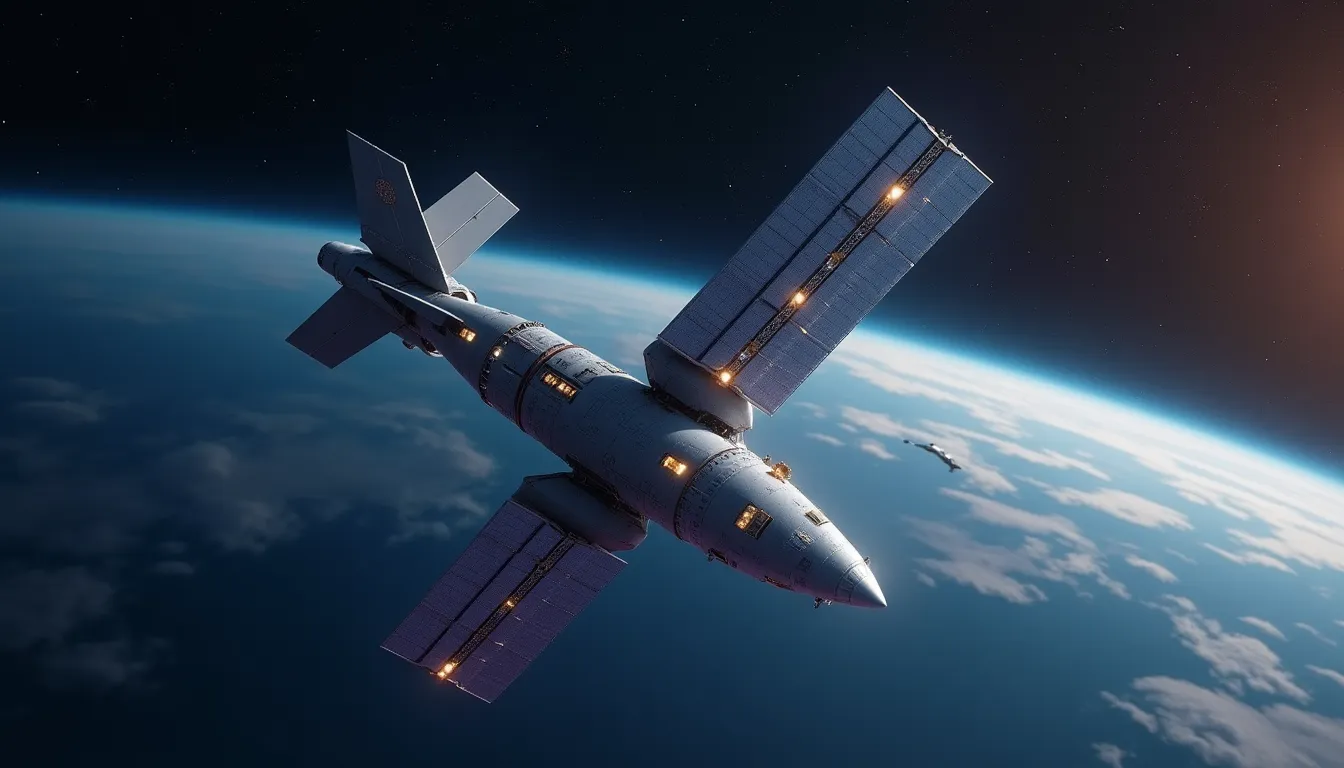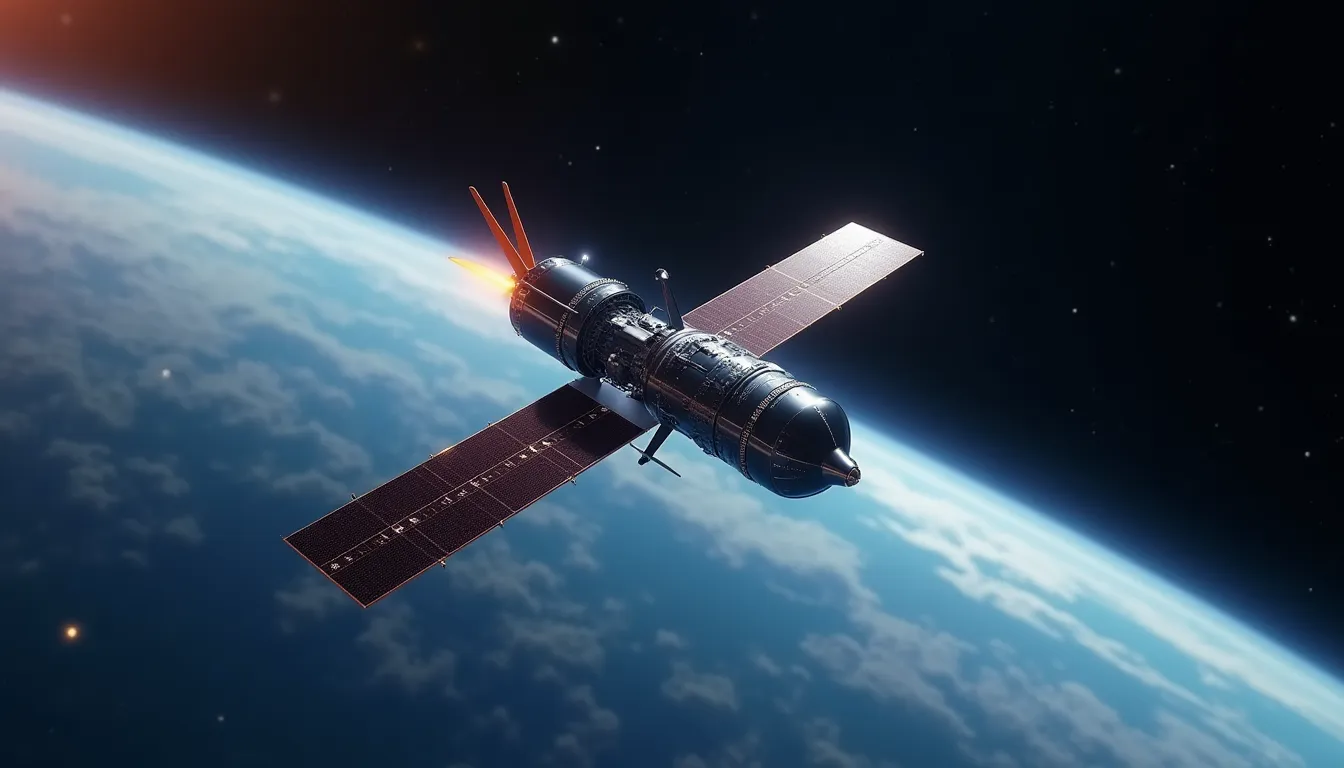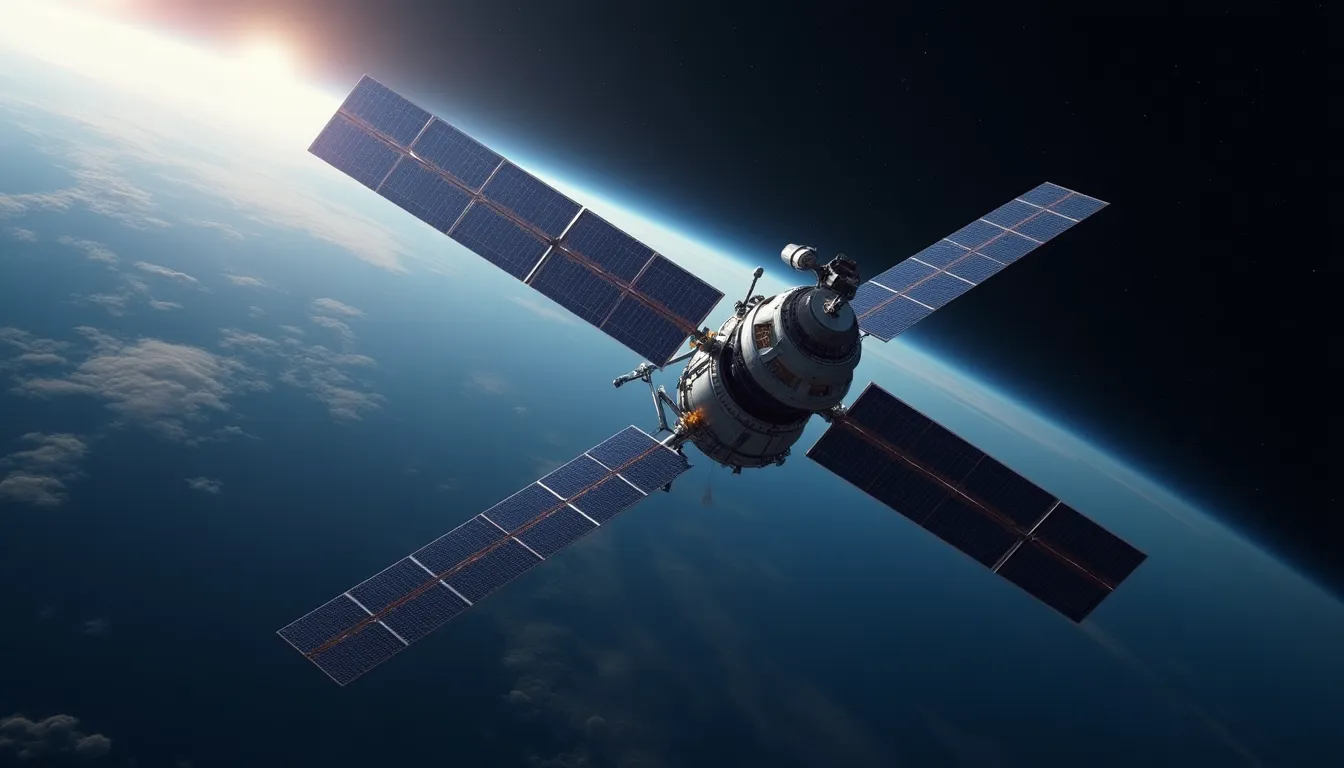
The aerospace and defense sectors are witnessing a paradigm shift, largely driven by groundbreaking advancements in satellite technology. From the miniaturization of satellite constellations to the integration of artificial intelligence (AI) for autonomous operations, the landscape is evolving rapidly. This evolution is not just about enhancing capabilities; it is about redefining how nations approach defense and communications in an increasingly complex strategic environment.
The Era of Miniaturized Satellite Constellations
The trend toward miniaturization is reshaping satellite deployment strategies. Larger satellites are being supplanted by smaller, more agile satellites, specifically those measuring 12U and smaller. Positioned in Low Earth Orbit (LEO), these small satellites are designed for a variety of applications, including Earth observation, remote sensing, and tactical communications. The recent launch of Lockheed Martin’s Pony Express 2 mission, which deployed a pair of 12U satellites equipped with tactical communication payloads, underscores this shift.
Technical Advantages of Miniaturization
- Cost Efficiency: The reduction in satellite size significantly decreases manufacturing and launch costs, making space more accessible.
- Resilience and Redundancy: Proliferated constellations enable redundancy, ensuring continuous coverage and rapid data refresh cycles, which are critical for mission success.
- Advanced Sensor Integration: These small satellites are increasingly equipped with sophisticated technology such as advanced sensor modules, including 9-DOF MEMS IMUs that provide exceptional stability and motion sensing capabilities, allowing for precise operations.
AI: A Game Changer in Satellite Operations
The integration of agentic AI into satellite operations is revolutionizing how these assets function in space. By 2026, it is anticipated that agentic AI will transition from pilot projects to comprehensive deployments, enhancing decision-making processes, logistics, and maintenance operations. This shift allows satellites to autonomously monitor constellations and execute complex maneuvers without human intervention.
Strategic Implications of AI in Aerospace
- Operational Efficiency: Automating routine tasks reduces operational latency, enabling faster response times in critical situations.
- Enhanced Decision Support: AI serves as a vital tool for commanders, providing real-time analytics that can influence battlefield strategies.
- Adaptability: With the ability to learn and adapt, AI-equipped satellites can optimize their functions based on environmental conditions and mission requirements.
Leveraging Commercial SATCOM for Defense Resilience
The Department of Defense (DoD) is increasingly turning to commercial satellite communications (SATCOM) to bolster mission resilience across various domains. This strategic pivot enhances operational effectiveness, particularly in Unmanned Aerial Vehicle (UAV) command and control, as well as integrated missile defense systems.
Key Benefits of Commercial SATCOM
- Scalability: Commercial SATCOM solutions allow the DoD to scale communications infrastructure rapidly in response to evolving threats.
- Interoperability: Enhanced interoperability between commercial and military systems facilitates seamless communication across air, land, sea, and space assets.
- Cost-Effectiveness: Utilizing commercial solutions can significantly reduce costs associated with satellite infrastructure and operations.
Advanced Propulsion and Connectivity Solutions
The future of satellite technology also hinges on advanced propulsion systems and connectivity solutions. Innovations such as nuclear propulsion for deep-space travel and Very High Throughput Satellites (VHTS) capable of transmitting data at unprecedented rates—ranging from hundreds of gigabytes to terabytes per second—are paving the way for new applications.
Expanding Applications of Connectivity
- Satellite IoT: The development of satellite Internet of Things (IoT) applications is enhancing connectivity for remote and previously inaccessible assets, greatly benefiting industries such as agriculture, logistics, and environmental monitoring.
- Data Transmission: The ability of VHTS to transmit vast amounts of data rapidly supports high-bandwidth tactical communications, essential for real-time video feeds and other critical defense applications.
Next-Generation Weather Satellites
In a significant advancement for meteorological science, Lockheed Martin has been awarded a contract by NASA to develop the Geostationary Extended Observations (GeoXO) constellation. This next-generation network of weather-monitoring satellites will improve forecasting capabilities by providing more frequent and accurate data.
Implications for Disaster Preparedness
- Enhanced Forecasting: Improved data collection leads to better predictive models for extreme weather events, enabling timely evacuations and resource allocation during disasters.
- Operational Support: The GeoXO constellation will support a range of operations, from agricultural planning to emergency response, demonstrating the multifaceted utility of satellite technology.
Conclusion
The advancements in satellite technology are not merely incremental; they represent a fundamental transformation in how we perceive and utilize space assets. As miniaturization, AI integration, and commercial SATCOM continue to evolve, the aerospace and defense sectors stand poised to enhance their operational capabilities dramatically. Looking ahead, innovations such as advanced propulsion systems and next-generation satellites will play critical roles in shaping a resilient and responsive defense infrastructure. The market for these technologies is projected to exceed $896.6 billion by 2032, driven by both rising defense budgets and burgeoning private sector investments. The future of satellite technology is here, and it promises to be as expansive as the cosmos itself.
References
-
Space Development Agency – Increasing Warfighters’ Lethality … (www.sda.mil) - 5/19/2026 The Space Development Agency (SDA) will quickly deliver needed space-based capabilities to the joint warfighter to support terrestrial missions.
-
Aerospace & Defense Technology - SAE Media Group (saemediagroup.com) - 3/5/2026 A&DT is the largest-circulation magazine for mil/aero engineers and managers. Through our portfolio of print, digital, online, and custom opportunities.
-
2026 Aerospace and Defense Industry Outlook | Deloitte Insights (www.deloitte.com) - 11/13/2025 The aerospace and defense sector is entering a new phase of expansion, driven by advancements in AI, digital sustainment, and increasing … By 2026, agentic AI is expected to progress from pilot projects to scaled deployments, with the most visible advances occurring in the decision-making, procurement, planning, logistics, maintenance, and administrative functions. … In parallel, agentic AI will play a growing, but supplementary, role in battlefield operations, primarily as a decision support tool.
-
Satellite Solutions for Defense Applications - YouTube (www.youtube.com) - 11/5/2025 … Recent progress, demonstrations, and successes in the adoption … Tech 101: Defense Radar. Emerging Technologies Institute•260 views · 1 … The Department of Defense is increasingly looking to commercialized satellite communications (SATCOM) to strengthen mission resilience, improve operational effectiveness, and expand capabilities across domains. Why now, and what momentum is driving this shift? … The growing role of commercial SATCOM in defense applications such as UAV command and control, integrated missile defense, and asset tracking. Recent progress, demonstrations, and successes in the adoption of commercial solutions.
-
Aviation, Defense, and Space Market Size Report, 2033 (metastatinsight.com) - 10/8/2025 Global Aviation, Defense, and Space Market valued at USD 709.2 billion in 2025 and projected to exceed USD 896.6 billion by 2032. Key trends driving growth: Rising global defense budgets and military modernization programs, Increasing demand for commercial air travel and aircraft production Opportunities include: Expanding private sector investments in space exploration create new growth avenues Key insight: The market is set to grow exponentially in value over the next decade, highlighting significant growth opportunities. … Satellite Technologies: Satellite technologies are rapidly expanding in the global aviation, defense, and space market where they play a vital role in communication, navigation, and earth observation. Their government and private sectors will adopt more of them for scientific and commercial applications as miniaturization, enhanced data processing, and longer operational life take place. … Rising global defense budgets and military modernization programs: One of the main factors that contribute to the global aviation, defense, and space market is the increasing global defense budgets and military modernization programs. The investments made in the next-generation aircraft, missile systems, and defense technologies are augmenting the capabilities, while fleet upgrades are enhancing operational efficiency and strategic readiness for countries all over the world. … Expanding private sector investments in space exploration create new growth avenues: Deepening private sector interest in space exploration has been creating new ways of growth in the global aviation, defense, and space market. Breakthroughs in reusable launch systems, satellite technologies, and commercial space travel have not only made new businesses, partnerships, and revenue streams possible, but also have been enabling the rapid pace of technological advancement in the aerospace and defense sectors.
-
Space Technology Trends 2025 | Lockheed Martin (www.lockheedmartin.com) - 12/3/2024 *Here are the top 10 space technology trends shaping the future of satellite communications, remote sensing and space exploration.
-
Artificial Intelligence/Machine Learning (AI/ML)
-
Advanced Communications
-
Proliferated Satellite Constellations
-
Interoperability and Connectivity
-
Nuclear Space Propulsion and Power
-
Connecting Domains through Space Data
-
Human Lunar Exploration
-
Climate and Weather-Monitoring Technology … In March 2024, Lockheed Martin launched Pony Express 2, a pair of 12U small satellites with four payloads which provide tactical communications; Ka-band crosslinks and mesh network; RF sensing across multiple bands; and a high-end central processing unit. … Recently, we were awarded a contract from NASA on behalf of NOAA, to develop and build the nation’s next generation weather satellite constellation, Geostationary Extended Observations (GeoXO).*
-
Space Defence and the Future of Military Operations - YouTube (www.youtube.com) - 7/8/2024 … space defence, covering laser technology, satellite systems, space … The New Battlefield: Space Defence and the Future of Military Operations. {ts:2370} technology comes first to mind for me is the use of lasers in space
-
The New Frontier of Satellite Technology | Dassault Systèmes (www.3ds.com) - 4/3/2024 Driven by the need to accelerate innovation, this new frontier helps companies identify opportunities to extend the limit of rocketry and satellite design and …
-
New Technology Trends in Aerospace and Defense Industry [2026] (www.epicflow.com) - 4/6/2022 *Key aerospace and defense innovations will include the application of artificial intelligence and agentic AI, immersive technologies, additive manufacturing, … The application of satellites is gaining momentum and is expected to grow in 2026 and beyond. This is explained by the reduction of prices for satellite launches and the increased demand for geospatial intelligence and satellite imagery. … According to the research, some of most prominent satellite technology trends are going to be the following ones:
- Satellite miniaturization: small satellites are replacing the large ones and related infrastructure; they are positioned in LEO and used for Earth observation and remote sensing;
- Applications of satellite IoT;
- Advanced ground systems that are capable of monitoring satellite constellations without human intervention;
- Spacecraft propulsion that allows satellites to travel deep into space and perform complex maneuvers;
- Leveraging sustainable propulsion systems in satellite production;
- Very High Throughput Satellites (VHTS) that transmit data at the speed of several hundreds of gigabytes or even terabytes per second. [8] … The aerospace & defense domain continues its digital transformation and active adoption of innovative technologies. In 2026, recent technological advancements will continue to shape the aerospace and defense industry landscape. Among the notable developments that will impact aerospace and defense trends next year are artificial intelligence and agentic AI, additive manufacturing, and immersive technologies. Also, aerospace & defense organizations will continue their decarbonization efforts supported by technological developments, improve defense equipment and satellite technologies, as well as take advantage of robotics, increased connectivity, and blockchain. … Key aerospace and defense innovations will include the application of artificial intelligence and agentic AI, immersive technologies, additive manufacturing, cybersecurity solutions, blockchain, IoT, and robotics. What is more, next year will be marked by further sustainability efforts, space exploration, and developments in aerial mobility. … In 2026, the aerospace landscape will be marked with further sustainability efforts, developments in advanced air mobility, the adoption of AI, 3D printing, and immersive technologies as well as the increased application of satellites.*