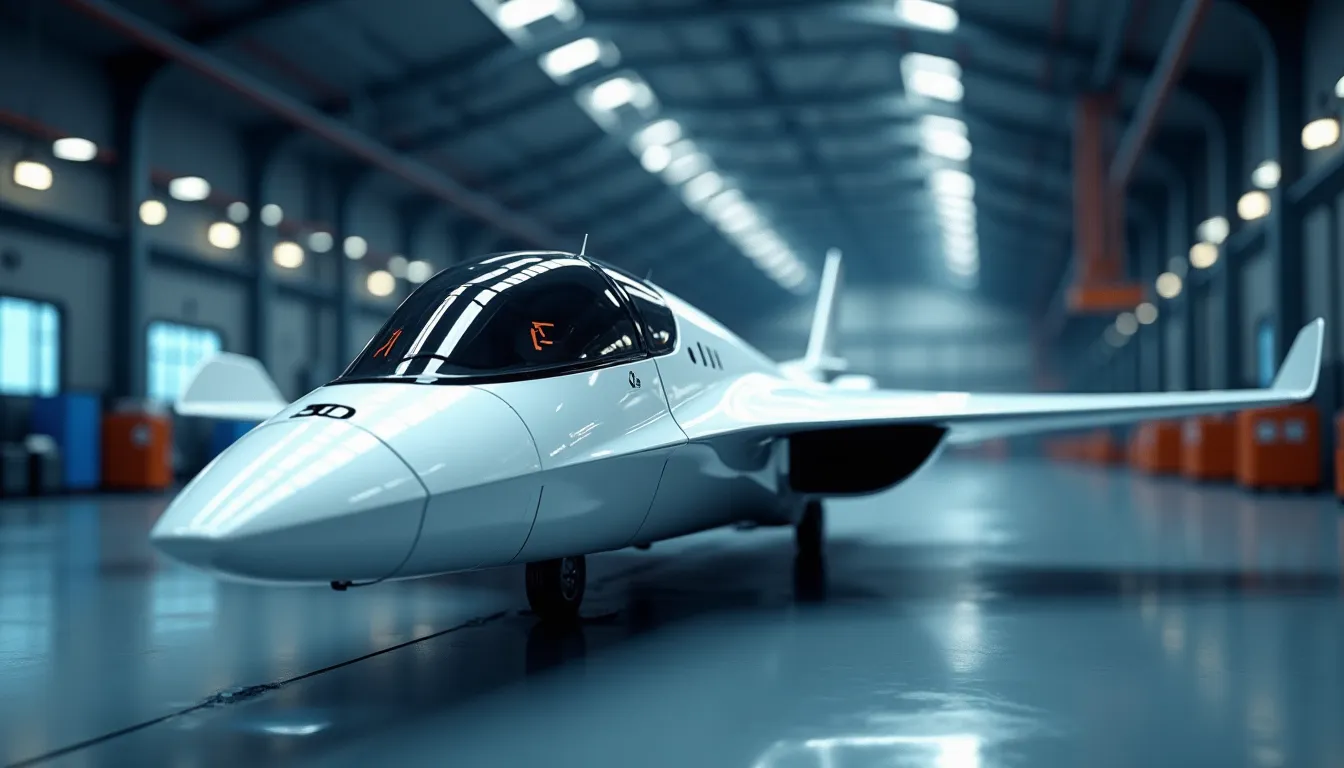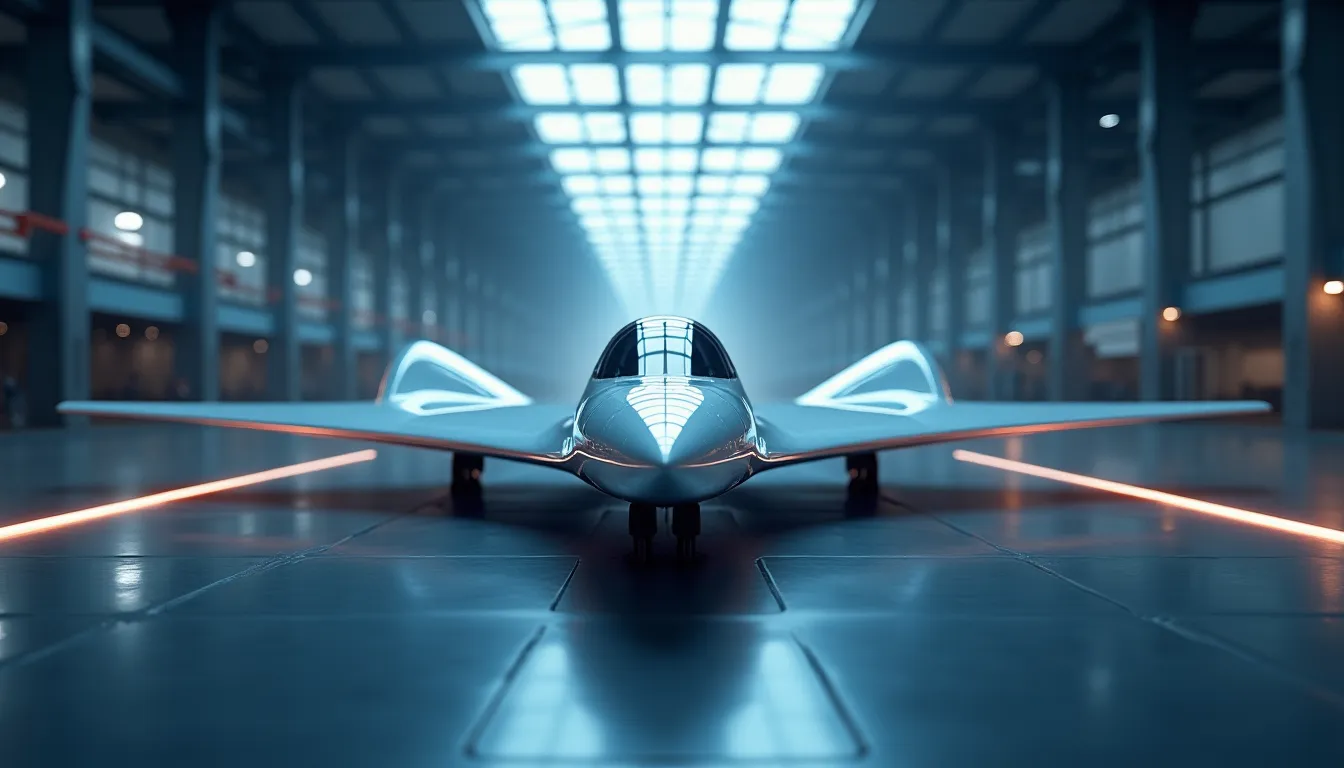
Recent advancements in hypersonic technology have catalyzed significant progress in both the aerospace and defense sectors. As nations race to develop fast, agile, and efficient systems, the latest breakthroughs in experimental validation, flight testing, and material science are paving the way for the next generation of hypersonic vehicles. This article delves into the recent milestones achieved in this critical field, exploring the implications for military and commercial applications.
Key Developments in Hypersonic Technology
Experimental Validation of Hypersonic Turbulence Theory
A notable breakthrough was achieved by researchers at the Stevens Institute of Technology, who provided pivotal experimental evidence supporting Morkovin’s hypothesis regarding hypersonic turbulence. The study demonstrated that at speeds reaching Mach 6, hypersonic turbulent flows exhibit behavior akin to incompressible flows. This finding has substantial implications for engineering design, potentially simplifying the development of hypersonic vehicles and allowing for more straightforward transitions to spaceflight.
Using advanced laser technology, researchers visualized and measured turbulent flow structures in a wind tunnel, marking a significant step forward in understanding hypersonic aerodynamics. This could lead to enhanced designs of hypersonic aircraft, making them not only faster but also more efficient in terms of fuel consumption and structural integrity.
Successful Hypersonic Test Launches
In a demonstration of rapid testing capabilities, Rocket Lab completed its sixth hypersonic test mission for the U.S. Defense Innovation Unit and the Missile Defense Agency using its HASTE (Hypersonic Accelerator Suborbital Test Electron) vehicle. This mission, launched on November 18, 2025, underscores the evolution of cost-effective hypersonic testing solutions critical for national defense.
The HASTE vehicle is a modified Electron rocket capable of deploying payloads at speeds exceeding 7.5 kilometers per second, which presents significant advantages for missile defense applications. The primary payload was from the Johns Hopkins University Applied Physics Laboratory, showcasing a collaboration between private industry and government research entities.
Advancements in Hypersonic Material Science
Continuing the momentum in hypersonic research, Virginia Tech’s Liselle Joseph was awarded a Young Investigators Program grant to investigate fluid-ablation interactions during hypersonic flight. Her research focuses on the behavior of thermal protection materials under extreme conditions, which is vital for the durability and performance of hypersonic vehicles.
Understanding how materials ablate and their impact on airflow and cooling is crucial for the design of next-generation vehicles capable of withstanding the intense heat and pressure experienced during hypersonic travel. This research could lead to the development of new thermal battery systems that enhance vehicle survivability and performance.
Global Military Hypersonic Testing Initiatives
The global landscape for hypersonic technology is also evolving, with Japan successfully testing its first hypersonic missile system as part of a strategic shift in regional defense strategies. This test, conducted by the Japan Self-Defense Forces, signals a growing commitment to deploying advanced military capabilities in response to emerging threats.
In contrast, China has claimed to possess the world’s only long-range nuclear-capable hypersonic missile, further intensifying the global arms race in hypersonic technology. The strategic implications of these developments cannot be understated, as nations seek to leverage hypersonic capabilities for enhanced deterrence and defense strategies.
Commercial and Defense Investment Growth
Investment in hypersonic technology is projected to surge from approximately $5.4 billion to nearly $13 billion by 2031, driven by heightened interest from both commercial and defense sectors. This trend indicates a robust market potential for hypersonic systems, with companies increasingly allocating resources toward developing technologies that can meet the demands of both military applications and commercial air travel.
The anticipated growth in this sector will not only foster innovation but also create opportunities for advanced sensor modules, such as high-performance CMOS imaging systems and precision accelerometers, which are essential for navigation and control in hypersonic vehicles. The integration of these technologies will be critical in enhancing the performance and reliability of hypersonic systems.
Conclusion
The advancements in hypersonic technology over the past month have underscored the field’s rapid evolution and the critical importance of continued research and development. With significant breakthroughs in experimental validation, successful test launches, and a surge in investment, the future of hypersonic technology looks promising. As nations and companies alike invest in this cutting-edge field, the potential for transformative applications in both military and commercial sectors becomes increasingly evident. The race for hypersonic supremacy is just beginning, and the implications for global security and technological innovation are profound.
References
-
Stevens Researchers Bring Hypersonic Flight One Step Closer to … (www.stevens.edu) - 11/12/2025 A study suggests that building hypersonic planes may not require a significantly different design approach.
-
[PDF] 01 HYPERSONIC AIR POWER (airpower.airforce.gov.au) Hypersonic technology has attracted an increasing level of media interest over the past few years, partly because of recent successful hypersonic tests in the …
-
Rocket Lab Hits 18 Electron Launches in 2025 - Via Satellite (www.satellitetoday.com) - 11/20/2025 That launch took off at 1:45 a.m. local time on Nov. 21. This year’s total of 18 successful Electron launches beats last year’s record of 16.
-
The World’s 1st Hypersonic Hydrogen Jet: What We Know So Far (simpleflying.com) - 11/20/2025 It is also predicting investments in hypersonic technology to grow from around $5.4 billion to almost $13 billion by 2031. While hypersonic …
-
Firefly Aerospace Joins Kratos MACH-TB 2.0 Team for Hypersonic … (fireflyspace.com) - 11/20/2025 Firefly is partnering with Kratos as a member of the MACH-TB 2.0 team to provide hypersonic test capabilities with our Alpha rocket.
-
Rocket Lab launches hypersonic test mission for US defence agencies (www.spaceconnectonline.com.au) - 11/18/2025 Rocket Lab has successfully completed a hypersonic test launch for the US Defence Innovation Unit and the Missile Defense Agency, …
-
Burning questions: Researcher works to advance hypersonic … (news.vt.edu) - 11/6/2025 Burning questions: Researcher works to advance hypersonic technologies. Liselle Joseph has been awarded a Young Investigators Program award from …
-
Hypersonic Weapons: Technology, Critical Chains, Doctrines and … (www.hermes-kalamos.eu) - 9/19/2025 Hypersonic technology operates at the edge between science and policy. This dossier strives for excellence without yielding to uncritical …
-
Hypersonic Weapons: Background and Issues for Congress (www.congress.gov) - 8/27/2025 Reportedly, India is also developing an indigenous, dual-capable hypersonic cruise missile as part of its Hypersonic Technology Demonstrator …
-
[PDF] An Exploratory Analysis of the Chinese Hypersonics Research … (www.airuniversity.af.edu) - 12/5/2022 This might be attributed to the fact that HIT established a hypersonic technology research center in July 2007 to comprehensively support.