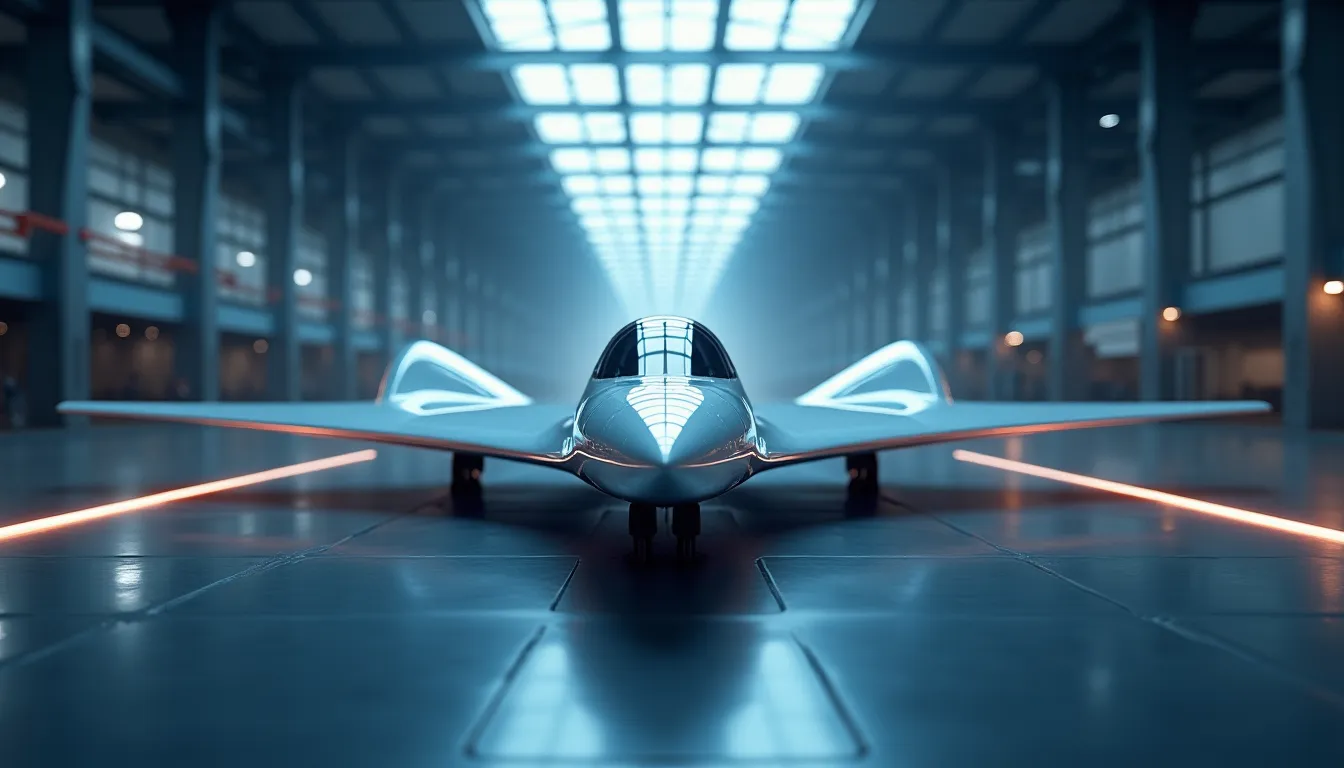
In the fast-evolving aerospace landscape, hypersonic technology has emerged as a crucial frontier, offering the promise of speeds exceeding Mach 5. Recent developments in this sector illustrate significant strides in research, testing, and production, underscoring the urgency of advancing hypersonic capabilities in the face of global competition.
Flight Testing and Research Breakthroughs
One of the most noteworthy recent achievements is the BOLT-1B (Boundary Layer Transition) flight experiment. Conducted by an international team, this experiment successfully gathered hundreds of critical data points, enhancing the understanding of hypersonic flight physics. Unlike conventional wind tunnel tests, BOLT-1B revealed that boundary layer transition behaves differently under actual flight conditions. This insight is pivotal for engineers engaged in the design of hypersonic vehicles, as it challenges previous assumptions derived from ground simulations.
The payload for the BOLT-1B experiment included an array of sensors measuring temperature and pressure across smooth and stepped surfaces. The data collected is currently being utilized to validate new aerodynamic and thermal modeling methods. Key findings from the experiment, including the effects of surface roughness on flight dynamics and innovative techniques for estimating rocket attitude, will be shared at the upcoming American Institute of Aeronautics and Astronautics (AIAA) SciTech Forum slated for January 2026.
Infrastructure and Research Expansion
To bolster hypersonic research capabilities, Florida State University (FSU) has secured a $3.9 million grant from the U.S. Air Force. This funding will facilitate the expansion of the hypervelocity test facility at the FAMU-FSU College of Engineering, equipping it with state-of-the-art hardware and advanced diagnostics tools. These enhancements will enable researchers to analyze hypervelocity flows and develop computational tools tailored for next-generation flight systems.
The new facility is expected to serve as a national resource, supporting collaboration among universities, government laboratories, and industry partners. FSU researchers are aiming to extend testing capabilities beyond Mach 5, a critical step in advancing high-speed aerodynamics and hypersonic vehicle design.
Defense and Production Scaling
In a significant development for hypersonic weaponry, L3Harris Technologies has received a letter of intent from Kratos Defense & Security Solutions for a commercial contract to produce 60 Zeus hypersonic motors. This order represents a more than 50% increase in L3Harris’ annual production rate and demonstrates the growing demand for hypersonic technologies within the U.S. Department of Defense (DoD).
The Zeus motors are integral to various testing programs, including the Multi-Service Advanced Capability Hypersonic Test Bed program, which is essential for developing hypersonic vehicles and ballistic missile defense systems. These motors allow for accelerated iteration cycles in hypersonic weapons development, eliminating the need for expensive modifications to existing ground infrastructures.
The broader hypersonic technology market is projected to reach $8.46 billion by 2025, driven by escalating investments in hypersonic weapons development. The Pentagon has allocated over $6.9 billion for hypersonic weapons initiatives for fiscal year 2025 alone, with $4.7 billion earmarked for hypersonic research in 2023. This surge underscores the strategic imperative for the U.S. to maintain its edge in hypersonic capabilities, especially as nations like Russia and China field operational hypersonic systems.
Military Platform Development
The advancement of hypersonic technology is not limited to weapons; it also encompasses next-generation military platforms. For instance, on January 9, 2026, the U.S. Air Force formally accepted its first T-7A Red Hawk during a ceremony at Air Education and Training Command. The T-7A Red Hawk is part of the Air Force’s initiative to enhance training for pilots in modern combat scenarios, reflecting a commitment to integrating advanced technologies into military operations.
This new aircraft is expected to incorporate high-performance components, such as advanced navigation systems featuring precision accelerometers for enhanced stability and accuracy. These technologies will ensure that future military operations are not only faster but also more reliable and efficient.
Conclusion
As hypersonic technology continues to evolve, the recent breakthroughs in research, production, and military applications paint an optimistic picture for the future of aerospace and defense. The successful BOLT-1B experiment, the expansion of research facilities like that at FSU, and the increase in hypersonic motor production exemplify a concerted effort to advance capabilities that could redefine military strategy and aerospace travel.
The ongoing investments and innovations in hypersonic technologies not only promise enhanced defense mechanisms but also open avenues for commercial applications. As the world watches these developments unfold, the race toward hypersonic supremacy is set to accelerate, positioning nations that lead in this field at the forefront of future aerospace advancements.
References
-
U.S. leadership inspects next-generation hypersonic strike weapon (defence-blog.com) - 1/10/2026 The United States Air Force formally received its first T-7A Red Hawk on January 9, 2026, during an arrival ceremony hosted by Air Education…
-
Global Partners to Highlight BOLT Hypersonic Experiment Success (www.jhuapl.edu) - 1/9/2026 The successful BOLT-1B flight experiment collected hundreds of critical measurements, providing data to advance understanding of complex physics …
-
FSU researcher awarded $3.9M Air Force grant for hypersonic … (news.fsu.edu) - 1/7/2026 FSU researcher awarded $3.9M Air Force grant for hypersonic technology at FAMU-FSU College of Engineering. By: Trisha Radulovich | Published: …
-
2026 Look Ahead: Delivering the Future of Defense Tech (www.lockheedmartin.com) - 1/7/2026 Lockheed Martin is ready to support Golden Dome for America with fielded capabilities across domains, the digital backbone that can connect them …
-
The New Arms Race: Investing in Speed, Agility, and Responsive … (www.prnewswire.com) - 1/2/2026 Now , the hypersonic technology market is projected to reach $8.46 billion in 2025, driven by these recent hypersonic weapons Pentagon …