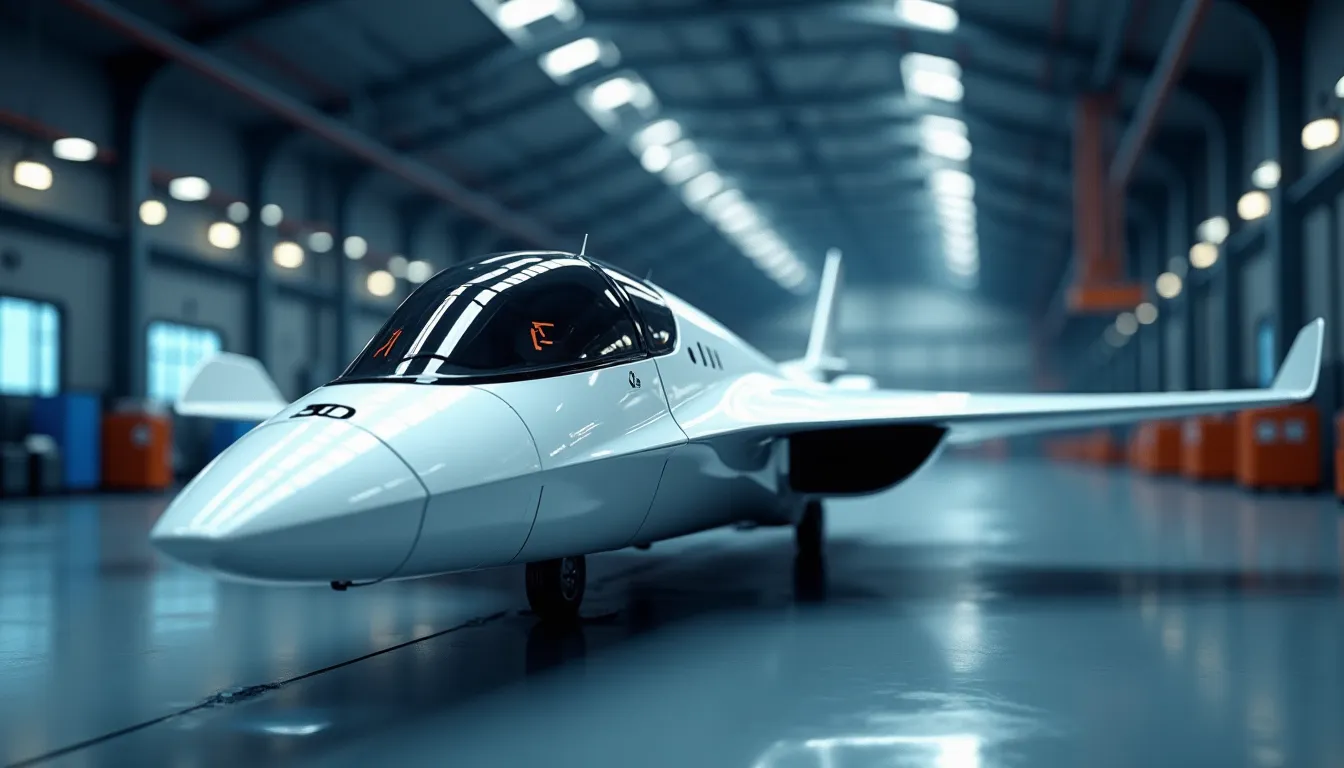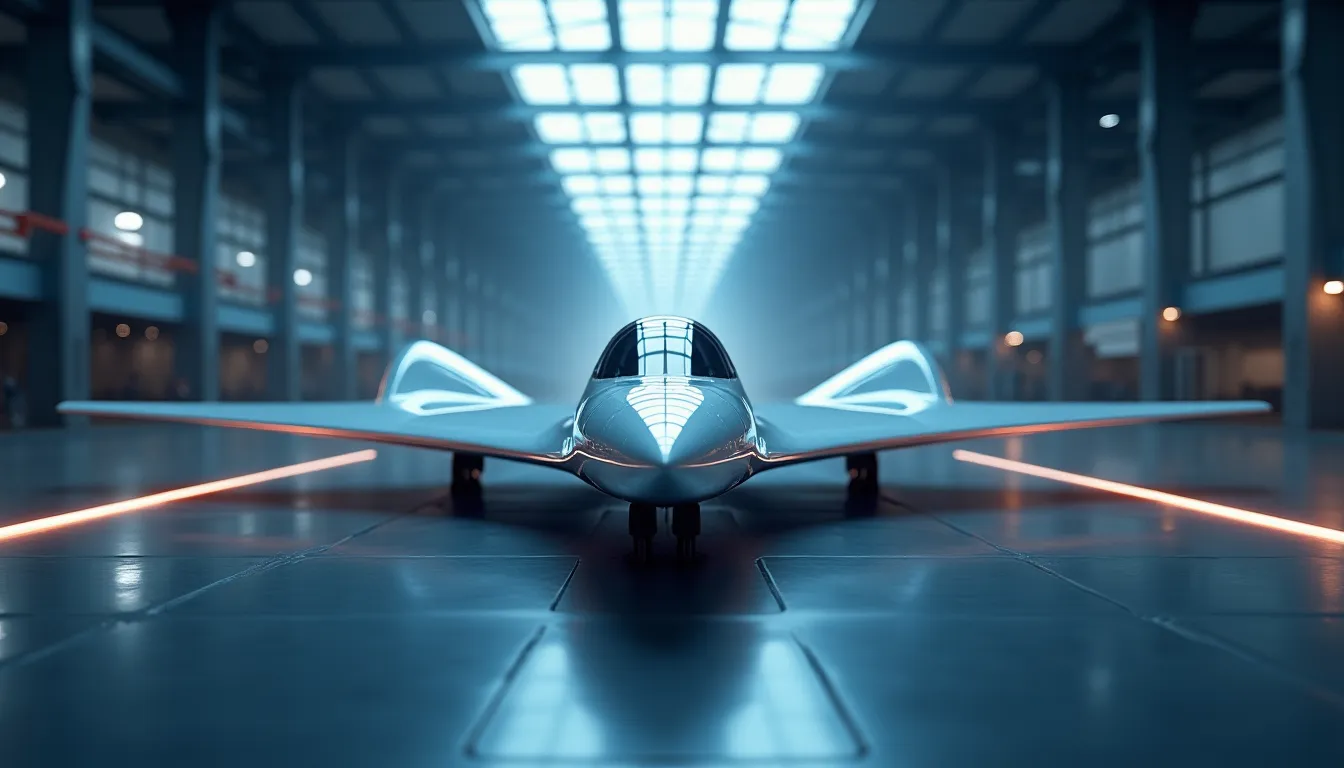
Recent strides in hypersonic technology signify a transformative era in aerospace and defense, impacting everything from national security to commercial aviation. With the capability to travel at speeds exceeding Mach 5, hypersonic vehicles are not just futuristic concepts but are rapidly becoming a reality through collaborative efforts in propulsion, flight testing, turbulence research, and advanced materials engineering.
Advanced Propulsion Systems: The Chimera Engine
At the forefront of hypersonic propulsion is the Chimera engine, developed by Hermeus in collaboration with the University of Notre Dame. This innovative turbine-based combined-cycle engine uniquely transitions between turbojet mode, suitable for subsonic and low supersonic speeds, and ramjet mode, enabling flight at hypersonic velocities exceeding Mach 5. This dual-mode capability is crucial for sustained hypersonic flight, allowing for operational flexibility in various missions, from military applications to potential commercial air travel.
“The Chimera engine represents a significant leap in our ability to harness hypersonic speeds for practical use,” stated a representative from Hermeus. “Our partnership with Notre Dame aims to bridge fundamental research with product development, enhancing the United States’ competitiveness in this critical field.”
Joint Flight Testing Initiatives
In a bid to accelerate hypersonic flight testing, the U.S., Australia, and the U.K. have allocated $252 million for joint testing programs set to run through 2028. The U.S. Department of Defense has also awarded a substantial $1.45 billion contract to Kratos Defense & Security Solutions to facilitate hypersonic flight tests. Companies like Rocket Lab and Stratolaunch are actively conducting test flights, with ambitious plans to increase their flight test cadence to monthly, or even biweekly, by the end of 2025.
These tests not only include reusable hypersonic vehicles but also focus on payloads designed for both defense and commercial applications. Such advancements could redefine the logistics of military operations and civilian air travel, paving the way for a new era of rapid global transportation.
Understanding Turbulence at Hypersonic Speeds
Research from the Stevens Institute of Technology has brought exciting insights into turbulence behavior at hypersonic speeds. Published in Nature Communications, a study provided experimental evidence supporting Morkovin’s hypothesis, which posits that turbulence behaves similarly to incompressible flow at extreme speeds (Mach 6). This breakthrough was achieved using laser-ionized krypton in wind tunnels, suggesting that turbulence can be better managed in hypersonic vehicle design.
The implications of this research are vast, potentially simplifying the design process for hypersonic vehicles and enabling innovative space transportation methods. Hypersonic planes could soon reach low Earth orbit without relying on traditional rocket propulsion, fundamentally altering our approach to space travel.
Thermal Protection and Ablation Research
The challenges of thermal protection in hypersonic flight are being addressed by innovative research led by Virginia Tech’s Assistant Professor Liselle Joseph. Awarded a $450,000 Young Investigators Award, Joseph’s work focuses on fluid-ablation interactions under hypersonic conditions. Understanding how ablative thermal protection materials interact with airflow is key to enhancing the survivability and maneuverability of hypersonic vehicles, particularly in extreme environments.
Her research aims to simulate the extreme temperatures experienced during hypersonic flight, which is critical for developing effective thermal protection systems. Improved thermal management will not only aid military applications but also accelerate the development of commercial hypersonic travel.
Educational Initiatives in Materials Engineering
Recognizing the growing need for skilled professionals in the hypersonic sector, Purdue University has launched a specialized course focused on materials for hypersonic vehicle design. This program emphasizes high-temperature ceramics essential for thermal protection, addressing critical challenges like aerothermal heating and cooling methods. By cultivating a workforce knowledgeable in these areas, Purdue aims to support the burgeoning demand for hypersonic technologies in both military and commercial sectors.
The Role of Additive Manufacturing
In a notable development, LEAP 71 and Farsoon have introduced a 1.5-meter hypersonic precooler concept, designed and manufactured using advanced additive manufacturing techniques. This component plays a vital role in cooling air entering hypersonic engines, thus improving overall efficiency and performance. The ability to rapidly prototype and produce complex components through additive manufacturing is revolutionizing the way hypersonic technologies are developed and deployed.
Conclusion
As advancements in hypersonic technology continue to unfold, the implications for aerospace and defense are profound. From innovative propulsion systems like the Chimera engine to breakthroughs in turbulence understanding and thermal protection, the industry is poised for a transformation that could redefine travel and military strategy. By fostering collaboration between academia, industry, and government, the next decade promises to bring unprecedented capabilities in hypersonic flight, ultimately enhancing national security and opening new avenues for commercial travel.
With ongoing investments and research efforts, the future of hypersonic technology is not just on the horizon—it is rapidly approaching.
References
-
Stevens Researchers Bring Hypersonic Flight One Step Closer to … (www.stevens.edu) - 11/12/2025 Stevens Researchers Bring Hypersonic Flight One Step Closer to Take Off. A study suggests that building hypersonic planes may not require a …
-
LEAP 71 & Farsoon unveil 1.5-metre hypersonic precooler concept (www.tctmagazine.com) - 11/12/2025 LEAP 71 and Farsoon have unveiled a computationally designed and additively manufactured hypersonic precooler concept that measures 1.5 …
-
Burning questions: Researcher works to advance hypersonic … (news.vt.edu) - 11/6/2025 Burning questions: Researcher works to advance hypersonic technologies … Liselle Joseph has been awarded a Young Investigators Program award …
-
Novel materials engineering course emphasizes fundamentals for … (www.purdue.edu) - 10/29/2025 Novel materials engineering course emphasizes fundamentals for hypersonic vehicle design. Rodney Trice, professor of materials engineering, …
-
Emails between University officials reveal efforts to downplay … (armscontrolcenter.org) - 10/28/2025 Emails between University officials reveal efforts to downplay military applications of hypersonics. Research Analyst Shawn Rostker spoke with …
-
Hypersonic flight testing’s unlikely rescuer - Aerospace America - AIAA (aerospaceamerica.aiaa.org) - 10/1/2025 Of the 500 or so hypersonic payloads that various customers want to test in the U.S. in 2025, only a handful will fly, according to Duggleby.
-
Notre Dame and Hermeus Deepen Partnership to Advance … (research.nd.edu) - 1/1/2024 Notre Dame and Hermeus Deepen Partnership to Advance Hypersonic Technology with New 5-Year Agreement. November 03, 2025. Brett Beasley. When the …
-
Hypersonic breakthrough could enable planes that fly 10 times the … (www.sciencedaily.com) A breakthrough in understanding hypersonic turbulence may open the door to one-hour global flights. Date: November 14, 2025; Source: Stevens …