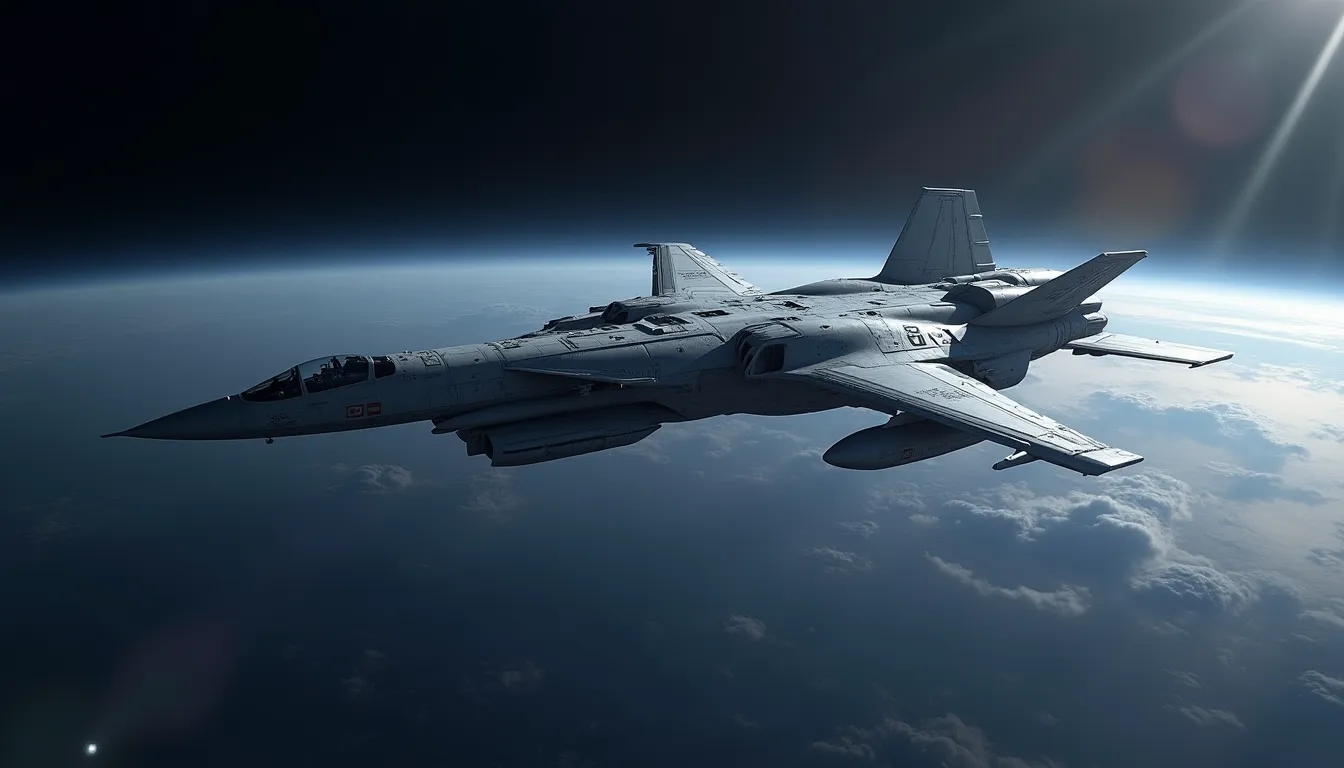
The aerospace and defense sectors are undergoing a seismic shift as advancements in artificial intelligence (AI) and space militarization redefine operational capabilities and strategic paradigms. As we look toward 2026, the integration of agentic AI is poised to revolutionize decision-making processes while enhancing logistics and battlefield support systems. This article delves into the implications of these advancements and the emerging technologies shaping the future of aerospace and defense.
The Evolution of Artificial Intelligence and Agentic AI
In recent years, agentic AI has transitioned from experimental pilot projects to full-scale deployments across various operational functions within the aerospace and defense sectors. This advanced form of AI is increasingly being utilized as a decision support tool for battlefield operations, enabling military leaders to make informed choices swiftly and effectively. By 2026, it is expected that agentic AI will play a substantial role in procurement, planning, logistics, and maintenance, fundamentally enhancing the efficiency of military operations.
“AI is not here to replace human decision-makers but to augment their capabilities,” says Dr. Emily Carter, a leading expert in military technology. “As we integrate AI into our systems, the synergy between human insight and machine intelligence will redefine the battlefield.”
The rise of robotics and autonomous systems, bolstered by AI agents, is transforming military operations. These technologies are driving a new era of warfare, where decision-making can be executed in real-time, significantly enhancing operational effectiveness.
Space Militarization and Satellite Innovations
Space militarization is gaining momentum, with nations investing heavily in sophisticated defense systems. This includes the development of directed energy and hypersonic weapons, which are expected to be game-changers in modern combat scenarios. As military forces recognize the strategic importance of space, advancements in satellite technology are rapidly evolving.
Key trends include:
- Satellite Miniaturization: The shift towards smaller satellites positioned in Low Earth Orbit (LEO) is revolutionizing Earth observation and remote sensing capabilities. These miniaturized systems offer flexibility and cost-effectiveness, making them essential for modern military operations.
- Very High Throughput Satellites (VHTS): These advanced satellites are capable of transmitting data at astonishing speeds of hundreds of gigabytes to terabytes per second, ensuring that military units can access real-time intelligence.
- Advanced Ground Systems: New ground systems equipped with autonomous monitoring capabilities are emerging, enabling seamless oversight of satellite constellations without human intervention.
- Sustainable Propulsion Systems: Innovations in spacecraft propulsion are allowing satellites to travel deeper into space and perform complex maneuvers, aligning with the push for sustainability in aerospace technologies.
Additive Manufacturing and Immersive Technologies
In addition to AI and satellite advancements, additive manufacturing (3D printing) and immersive technologies such as virtual reality (VR) and augmented reality (AR) are reshaping the aerospace and defense landscape. These technologies are pivotal in improving the efficiency of defense equipment while supporting global decarbonization efforts.
Additive manufacturing facilitates rapid prototyping and production of intricate components, allowing for the delivery of customized solutions tailored to specific military needs. The integration of immersive technologies enhances training programs, providing soldiers with realistic simulations that prepare them for various scenarios in a controlled environment.
Strategic Military Space Programs
Several key players are at the forefront of developing strategic military space programs that promise to bolster national security:
- Sierra Space: This defense technology leader is pioneering the development of satellites, subsystems, and spaceplanes specifically designed for national security applications. Their innovations are expected to play a crucial role in future military endeavors.
- Space Development Agency (SDA): The SDA is rapidly delivering space-based capabilities that support joint warfighters in terrestrial missions, enhancing their operational readiness in diverse environments.
- GPS III Constellation: The recent addition of the GPS III Space Vehicle-08 to the constellation enhances resilient Positioning, Navigation, and Timing (PNT) capabilities for military personnel, ensuring they can navigate effectively even in challenging conditions.
- NASA Propulsion: NASA is conducting tests on next-generation propulsion systems capable of transporting crews to Mars and facilitating robotic exploration across the solar system. This research is critical for advancing aerospace technologies and ensuring the United States remains a leader in space exploration.
Conclusion
The aerospace and defense industries are on the brink of a transformative era driven by AI integration, advancements in space militarization, and innovative technologies. As agentic AI becomes a critical decision support tool and satellite technologies evolve, military operations will become increasingly efficient and effective. The strategic programs being developed today are laying the groundwork for a future where technology and human insight work in tandem, ensuring national security in an increasingly complex global landscape.
The continuous evolution of technologies like advanced sensor modules and precision accelerometers will further enhance military capabilities, paving the way for a new frontier in aerospace and defense. As we look ahead, the interplay between technological innovation and strategic military objectives will undoubtedly shape the future landscape of defense operations.
References
-
Space Development Agency – Increasing Warfighters’ Lethality … (www.sda.mil) - 5/19/2026 The Space Development Agency (SDA) will quickly deliver needed space-based capabilities to the joint warfighter to support terrestrial missions.
-
Aerospace & Defense Technology - SAE Media Group (saemediagroup.com) - 3/5/2026 A&DT is the largest-circulation magazine for mil/aero engineers and managers. Through our portfolio of print, digital, online, and custom opportunities.
-
Sierra Space | Defining the New Era of Space Defense Technology (www.sierraspace.com) - 1/26/2026 Sierra Space is a Defense Tech leader developing satellites, subsystems, spaceplanes, hypersonics & infrastructure for national security.
-
2026 Aerospace and Defense Industry Outlook | Deloitte Insights (www.deloitte.com) - 11/13/2025 *The aerospace and defense sector is entering a new phase of expansion, driven by advancements in AI, digital sustainment, and increasing …
-
AI and agentic AI: Transforming A&D
-
Aftermarket: Reshaping maintenance, repair, and overhaul … By 2026, agentic AI is expected to progress from pilot projects to scaled deployments, with the most visible advances occurring in the decision-making, procurement, planning, logistics, maintenance, and administrative functions. … In parallel, agentic AI will play a growing, but supplementary, role in battlefield operations, primarily as a decision support tool.*
-
Dedicated to the Space Enterprise | The Aerospace Corporation (aerospace.org) - 7/17/2025 The GPS III Space Vehicle-08 joins a satellite constellation providing resilient and adaptable Positioning, Navigation, and Timing for the warfighter. July 2025.
-
Future of Defense: Aviation, Weapons and Technology Innovation (www.youtube.com) - 4/23/2025 Axios hosted a Future of Defense event in Washington, D.C., featuring conversations with Rep. Jen Kiggans (R-Va.), Joby Aviation chief … So, what we’re developing is an all electric vertical takeoff and landing aircraft. It takes off like a helicopter.
-
Technology - NASA (www.nasa.gov) - 1/27/2023 NASA puts next‑generation propulsion to the test—a system powerful enough to carry crews to Mars and robots across the solar system.
-
New Technology Trends in Aerospace and Defense Industry [2026] (www.epicflow.com) - 4/6/2022 *Among the notable developments that will impact aerospace and defense trends next year are artificial intelligence and agentic AI, additive manufacturing, and …
- Supporting decision-making. … With the rapid development of digital technologies, defense equipment is becoming more and more sophisticated, which includes the use of directed energy and hypersonic weapons, space militarization, and more. … In 2026, robotics and autonomous systems are expected to become integral components of military operations, which is, among other things, explained by increased popularity of AI agents. … In 2026, we expect even wider adoption of immersive technologies and market growth. … According to the research, some of most prominent satellite technology trends are going to be the following ones:
- Satellite miniaturization: small satellites are replacing the large ones and related infrastructure; they are positioned in LEO and used for Earth observation and remote sensing;
- Applications of satellite IoT;
- Advanced ground systems that are capable of monitoring satellite constellations without human intervention;
- Spacecraft propulsion that allows satellites to travel deep into space and perform complex maneuvers;
- Leveraging sustainable propulsion systems in satellite production;
- Very High Throughput Satellites (VHTS) that transmit data at the speed of several hundreds of gigabytes or even terabytes per second. [8] … The aerospace & defense domain continues its digital transformation and active adoption of innovative technologies. In 2026, recent technological advancements will continue to shape the aerospace and defense industry landscape. Among the notable developments that will impact aerospace and defense trends next year are artificial intelligence and agentic AI, additive manufacturing, and immersive technologies. Also, aerospace & defense organizations will continue their decarbonization efforts supported by technological developments, improve defense equipment and satellite technologies, as well as take advantage of robotics, increased connectivity, and blockchain. … Key aerospace and defense innovations will include the application of artificial intelligence and agentic AI, immersive technologies, additive manufacturing, cybersecurity solutions, blockchain, IoT, and robotics. What is more, next year will be marked by further sustainability efforts, space exploration, and developments in aerial mobility.*
- Space and Aerospace: Research & Analysis - CSIS (www.csis.org) The CSIS Aerospace Security Project and NewSpace Nexus hosted a discussion on the findings of the 2025 State of the Space Industrial Base …