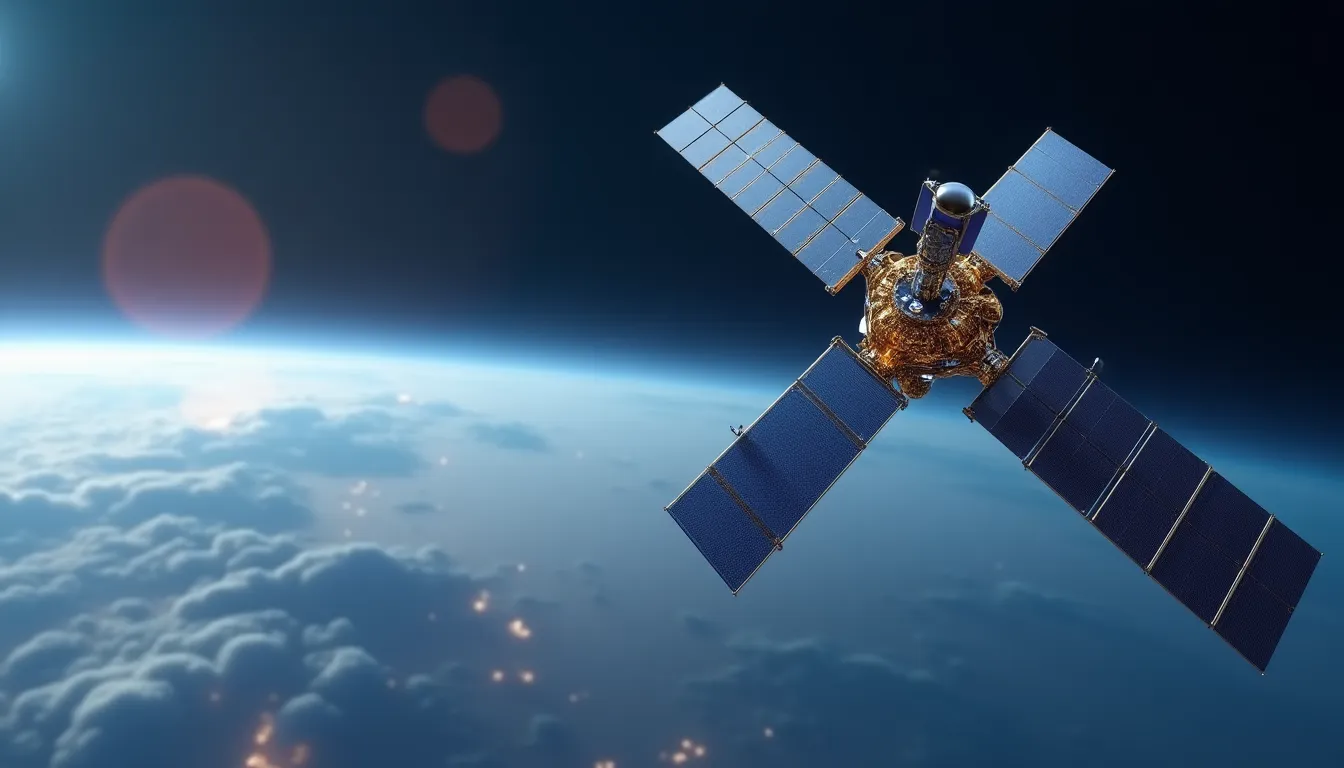
As the aerospace and defense sectors evolve, satellite technology is at the forefront of transformative advancements. Recent trends highlight a shift towards smaller proliferated constellations, AI-enabled operations, and enhanced propulsion systems that promise to redefine capabilities in communication, surveillance, and mission resilience. This article delves into the key developments shaping the future of satellite technology and their implications for the industry.
The Rise of Miniaturized Satellites and Proliferated LEO Architectures
One of the most significant trends in satellite technology is the move towards miniaturization and proliferated Low Earth Orbit (LEO) architectures. Small satellites are increasingly replacing their larger counterparts, particularly for applications in Earth observation and remote sensing.
According to industry analysis, these compact satellites allow for greater deployment flexibility and reduced costs, enabling organizations to launch large constellations that enhance global coverage and resilience.
Multi-orbit architectures further support this trend by allowing satellites to operate in various orbits, increasing redundancy and ensuring operational continuity even in the face of jamming or satellite failures. This shift is pivotal for defense applications, where resilience is paramount.
AI and Automation: The Future of Satellite Operations
The integration of Artificial Intelligence (AI) and Machine Learning (ML) technologies is becoming a core enabler for modern satellite systems. As satellite constellations grow larger, the demand for advanced ground systems capable of autonomous monitoring and anomaly detection becomes increasingly critical.
Lockheed Martin’s 2025 space technology trends report identifies AI/ML as one of the top drivers influencing satellite communications and remote sensing capabilities. By leveraging AI, operators can streamline the monitoring processes, allowing for real-time decision-making without human intervention. This automation not only enhances operational efficiency but also reduces the risk of human error.
Commercial SATCOM: Bridging Defense and Innovation
The defense sector is increasingly turning to commercial satellite communication (SATCOM) solutions to bolster mission resilience and expand operational capabilities. The Department of Defense’s interest in commercialized SATCOM is indicative of a broader trend where innovative technologies from the private sector are integrated into military operations.
This approach supports various applications, including Unmanned Aerial Vehicle (UAV) command and control, integrated missile defense systems, and asset tracking. By utilizing high-throughput payloads and advanced communication technologies, defense organizations can achieve greater flexibility and responsiveness in the field.
Advanced Propulsion Technologies: Enhancing Maneuverability and Resilience
As satellite missions become more complex, advanced propulsion systems are emerging as a strategic necessity. New propulsion technologies not only ensure effective station-keeping but also enhance maneuverability, allowing satellites to adapt to dynamic operational environments.
Moog’s insights into satellite propulsion highlight how these advancements contribute to mission resilience and flexibility, particularly in contested scenarios. With the ability to swiftly reposition assets, defense satellites can better respond to threats and maintain operational effectiveness.
The Importance of High-Throughput Communications
In an era where data demands are skyrocketing, higher-throughput communications remain a critical focus for satellite technology. Very High Throughput Satellites (VHTS) are being developed to deliver improved data transport rates, facilitating the transfer of vast amounts of information quickly and reliably.
Moreover, advancements such as multi-orbit constellations and networked satellite systems are essential for ensuring seamless connectivity across various applications, including non-GPS navigation and remote sensing. These developments are vital for both commercial and military operations, offering enhanced capabilities in data collection and analysis.
Conclusion
The trajectory of satellite technology indicates a future characterized by smaller, more resilient systems that leverage AI and advanced propulsion technologies. As the aerospace and defense industries continue to embrace these innovations, the implications for operational effectiveness and mission resilience are profound.
As we look forward, the integration of advanced navigation systems and precision accelerometers will play a crucial role in enhancing the capabilities of satellite networks. These developments not only promise to revolutionize communication and surveillance but also ensure that defense operations remain agile and responsive in an increasingly complex global landscape.
References
-
Advancing Defense Capabilities with New Satellite Propulsion … (www.moog.com) - 5/14/2026 Moog propulsion technologies are helping redefine how we deploy and safeguard satellites, delivering greater agility, resilience, and mission …
-
New Technology Trends in Aerospace and Defense Industry [2026] (www.epicflow.com) - 5/6/2026 Advanced Satellite Technology. The application of satellites is gaining momentum and is expected to grow in 2026 and beyond. This is explained …
-
Aerospace & Defense Technology - SAE Media Group (saemediagroup.com) - 3/5/2026 A&DT is the largest-circulation magazine for mil/aero engineers and managers. Through our portfolio of print, digital, online, and custom opportunities.
-
Satellite Solutions for Defense Applications - YouTube (www.youtube.com) - 11/5/2025 … Recent progress, demonstrations, and successes in the adoption … Tech 101: Defense Radar. Emerging Technologies Institute•260 views · 1 …
-
Aviation, Defense, and Space Market Size Report, 2033 (metastatinsight.com) - 10/8/2025 Satellite technologies are rapidly expanding in the global aviation, defense, and space market where they play a vital role in communication, …
-
Satellite Technologies | Aerospace Defense Outlook (aerodefenseoutlook.com) - 3/12/2025 Decoding Our Planet: How Generative AI Is Making Satellite Data Actionable · GeoAI for Disaster Response: Transforming Emergency Preparedness · Electric Ramjet …
-
Space Technology Trends 2025 | Lockheed Martin (www.lockheedmartin.com) - 12/3/2024 Here are the top 10 space technology trends shaping the future of satellite communications, remote sensing and space exploration.
-
Let’s talk about tech: How satellites strengthen defence - YouTube (www.youtube.com) - 5/7/2024 Comments · How Radar Satellites See through Clouds (Synthetic Aperture Radar Explained) · The US Space Force - America’s Invisible Front Line (A …
-
The New Frontier of Satellite Technology | Dassault Systèmes (www.3ds.com) - 4/3/2024 The cloud-enabled 3DEXPERIENCE® platform is the integrated solution that New Space players need to succeed in the new frontier of satellite technology.
-
10 Tech Trends That Will Impact the Satellite Industry in 2024 (interactive.satellitetoday.com) - 11/28/2023 In the future, new satellites launched could be built with interfaces or plug-in ports, ideal for refueling, power, and data upgrades, she notes …