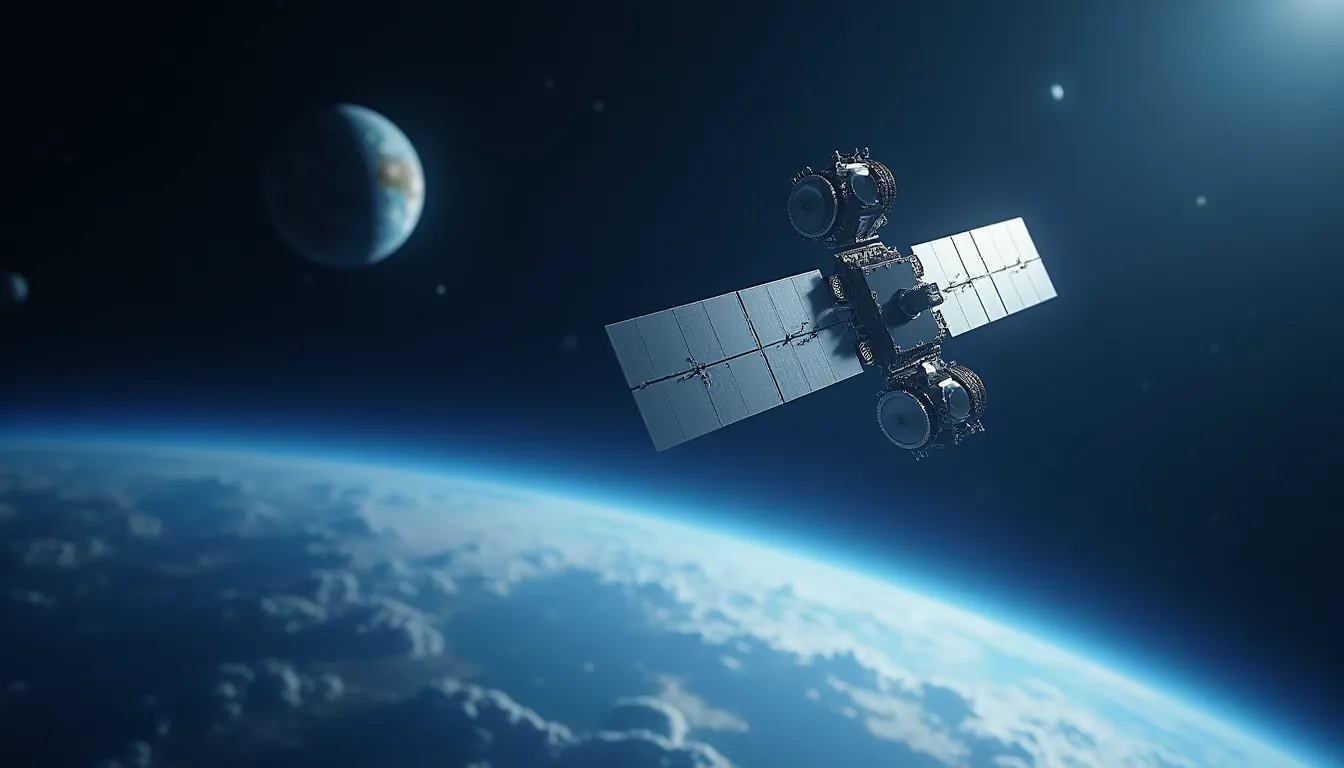
As the aerospace and defense industries evolve, satellite technology stands at the forefront of innovation, driven by miniaturization, advanced propulsion systems, and shifting operational paradigms. With the demand for geospatial intelligence and high-throughput communications rising, the future of satellite deployment looks promising and complex.
Satellite Miniaturization and LEO Constellations
One of the most significant trends in satellite technology is the shift towards miniaturization and the deployment of Low Earth Orbit (LEO) constellations. Small satellites are increasingly replacing their larger counterparts, thanks in part to the falling costs of launching payloads into orbit. This transition enables efficient Earth observation, enhances remote sensing capabilities, and supports Internet of Things (IoT) applications.
The advantages of LEO deployment are manifold. Satellites in this orbit can achieve higher revisit rates for Earth observations, making them ideal for applications that require real-time data collection. As a result, companies are investing heavily in technologies that support the creation and management of these constellations.
Automation and Advanced Ground Systems
In tandem with the miniaturization trend, advanced ground systems are becoming more automated, facilitating the management of satellite constellations with minimal human intervention. This shift towards automation not only enhances the efficiency of satellite operations but also reduces the potential for human error, making missions more reliable.
The integration of sophisticated control systems, such as high-performance CMOS imaging series with multi-resolution options, allows for dynamic monitoring and command of satellite fleets. These systems enable automatic exposure control and external triggering capabilities, vital for maintaining operational integrity in a rapidly changing space environment.
Propulsion Technologies: A Key Focus
Another critical area of development in satellite technology is propulsion. Modern satellites require advanced propulsion systems for maneuvering within congested orbital environments and sustaining multi-satellite operations. As the aerospace sector faces increasing pressure for sustainability, the development of environmentally-friendly propulsion technologies has become paramount.
Innovations in propulsion technologies, including the use of thermal battery systems and high-performance analog MEMS accelerometers, are enabling satellites to achieve better maneuverability and endurance. These advancements are crucial for next-generation spacecraft, particularly those designed for deep-space missions and complex defense operations.
High-Throughput Satellite Communications
High-throughput satellite communications (HTS) are another critical component of the evolving satellite landscape. Very High Throughput Satellites (VHTS) are being prioritized to deliver much higher data rates, catering to the growing need for broadband capacity. This trend is particularly important for defense communications, where secure and reliable data transmission is essential for operational success.
The integration of commercial satellite services into military operations is a notable shift. As the defense sector increasingly relies on commercial SATCOM for UAV command and control, integrated missile defense, and asset tracking, the lines between military and commercial capabilities are blurring. This evolution allows for more flexible and cost-effective operational strategies, enhancing overall mission effectiveness.
The Role of Satellite Technology in Defense Transformation
Satellite technology is being positioned as a crucial enabler in the digital transformation of aerospace and defense. With the adoption of artificial intelligence (AI), robotics, and blockchain technologies, the sector is modernizing its capabilities to meet the challenges of contemporary threats.
Experts emphasize that the defense market is moving towards proliferated, distributed architectures. By deploying a network of smaller, resilient satellites instead of a few large, high-value systems, military operations can achieve greater survivability and operational continuity in the face of potential threats. This strategic pivot reflects a broader understanding of the need for adaptability and resilience in space operations.
Conclusion
As satellite technology continues to advance, its impact on the aerospace and defense sectors will only grow. The shift towards miniaturization, automation, and high-throughput communications is setting the stage for a new era of satellite operations, one that prioritizes efficiency, sustainability, and technological integration. With significant investments in satellite systems and an increasing reliance on commercial capabilities, the future of satellite technology appears poised to redefine the landscapes of both aerospace and defense, ensuring that these sectors remain at the cutting edge of innovation.
References
-
Space Development Agency – Increasing Warfighters’ Lethality … (www.sda.mil) - 5/19/2026 The Space Development Agency (SDA) will quickly deliver needed space-based capabilities to the joint warfighter to support terrestrial missions.
-
Advancing Defense Capabilities with New Satellite Propulsion … (www.moog.com) - 5/14/2026 As space becomes an increasingly congested domain, satellite propulsion technology becomes more important than ever for national defense.
-
New Technology Trends in Aerospace and Defense Industry [2026] (www.epicflow.com) - 5/6/2026 This is explained by the reduction of prices for satellite launches and the increased demand for geospatial intelligence and satellite imagery.
-
Aerospace & Defense Technology - SAE Media Group (saemediagroup.com) - 3/5/2026 A&DT is the largest-circulation magazine for mil/aero engineers and managers. Through our portfolio of print, digital, online, and custom opportunities.
-
Satellite Solutions for Defense Applications - YouTube (www.youtube.com) - 11/5/2025 … Recent progress, demonstrations, and successes in the adoption … Tech 101: Defense Radar. Emerging Technologies Institute•260 views · 1 …
-
Satellite Technology’s Role in Revolutionizing Defense Operations … (governmenttechnologyinsider.com) - 2/5/2025 The article explores how military space capabilities are changing as a result of industry collaborations and innovative commercial technologies.
-
The New Frontier of Satellite Technology | Dassault Systèmes (www.3ds.com) - 4/3/2024 Driven by the need to accelerate innovation, this new frontier helps companies identify opportunities to extend the limit of rocketry and satellite design and …
-
The New Frontier of Satellite Technology - Dassault Systèmes (www.youtube.com) - 9/8/2020 In the race to successfully launch satellites into orbit, New Space companies must speed up innovation in satellite technology.
-
Get the insider’s view on satellite technology today (militaryembedded.com) The number of annual nano- or microsatellite launches has grown at an average of 40% per year since 2011, with 10% growth projected annually through 2023. What …