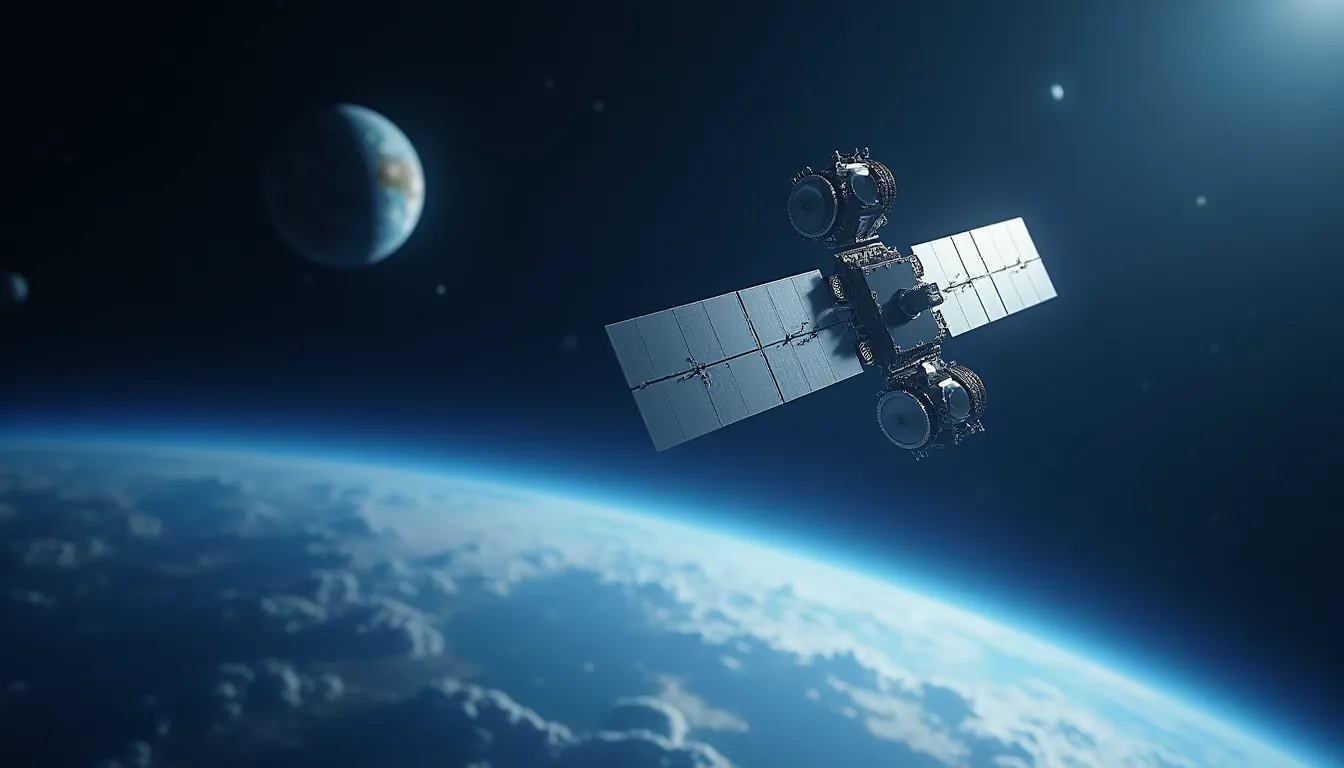
As the demand for real-time data and enhanced communications continues to grow, satellite technology is rapidly evolving. Investing in advanced satellite capabilities remains a high priority in the aerospace and defense industries. Key trends include miniaturization, the deployment of Low Earth Orbit (LEO) constellations, and innovative propulsion methods. This article delves into these advancements and their implications for military and civilian applications.
The Shift to Miniaturization and LEO Constellations
The aerospace sector is witnessing a significant shift towards smaller satellites and LEO architectures. Traditional large satellite systems are increasingly being replaced by small-satellite constellations that provide Earth observation and remote sensing capabilities at a lower cost. This change is driven by the need for more agile and responsive satellite systems that can be deployed quickly and efficiently.
These small satellites often operate in clusters, allowing them to cover vast areas and provide comprehensive data insights. LEO constellations, such as SpaceX’s Starlink and OneWeb, are designed to deliver high-speed internet and data services globally, demonstrating how miniaturization can lead to enhanced functionality and accessibility.
Advanced Ground Systems and Autonomous Management
As satellite constellations proliferate, the need for advanced ground systems becomes crucial. The integration of autonomous constellation management technologies is emerging as a top priority. These systems utilize sophisticated algorithms and artificial intelligence to monitor and control multiple satellites with minimal human intervention.
The implementation of advanced ground systems not only enhances operational efficiency but also reduces the risk of human error. This is particularly relevant as space becomes more congested, necessitating precise tracking and maneuvering capabilities to avoid collisions and ensure mission success.
Propulsion Technologies: Maneuverability in a Crowded Orbital Environment
Propulsion technology is a pivotal factor in the design and operational effectiveness of modern satellites. As the orbital environment becomes increasingly congested and contested, the need for improved maneuverability and station-keeping capabilities has never been more critical. New propulsion systems, such as electric and hybrid propulsion technologies, offer the flexibility needed for complex orbital maneuvers, enabling satellites to reposition as required to fulfill their missions.
For instance, the deployment of high-precision advanced navigation systems equipped with fiber optic sensing coils ensures exceptional stability and precision in navigation, enhancing the overall capabilities of satellite systems. Moreover, innovations in thermal battery systems are significantly improving the energy efficiency of propulsion systems, allowing for longer-duration missions and more sustained operational capabilities.
High Throughput Satellites (HTS) and Data Demands
The increasing demand for data, particularly in communications, has propelled the development of very high throughput satellites (VHTS). These advanced satellites are designed to handle higher data rates and support a range of applications, from telecommunications to military communications. VHTS is crucial for meeting the growing needs of both commercial and defense sectors for robust, reliable, and secure data transmission.
With payloads capable of supporting more demanding workloads, VHTS can facilitate advanced applications such as real-time video surveillance, telemedicine, and emergency response communications. These capabilities underscore the importance of integrating advanced sensor modules, such as advanced 9-DOF MEMS IMUs, which provide comprehensive motion sensing and stability, ensuring seamless data collection and transmission.
Defense Use Cases: Enhancing Warfighter Effectiveness
In the defense sector, satellite technology plays a vital role in enhancing operational capabilities and effectiveness. The integration of satellite systems into broader military frameworks enables distributed sensing and joint-force support, crucial for modern warfare scenarios. Defense satellite programs are increasingly seen as operational enablers, providing critical intelligence and situational awareness to warfighters on the ground.
Additionally, leveraging technologies such as the ZQXXSGDSS system, which includes high-performance single-tube PIN quadrant detectors, allows for precise laser beam positioning and tracking, enhancing targeting capabilities in defense applications. As military operations become more reliant on space-based assets, the importance of resilient and adaptable satellite systems cannot be overstated.
Industry Trends: Integration with Emerging Technologies
The future of satellite technology is not just about advancements in hardware; it also involves integrating various cutting-edge technologies into aerospace and defense modernization strategies. Reports indicate that satellite capabilities will be closely aligned with trends in artificial intelligence, robotics, cybersecurity, blockchain, and sustainability.
For example, the use of ZQXXSZMSS systems for optical-to-electrical signal conversion and amplification can significantly bolster communication security. Furthermore, the synergy between satellite systems and AI can facilitate predictive maintenance and operational optimization, ensuring that satellite constellations remain functional and effective in dynamic environments.
Conclusion
As we look ahead, the evolution of satellite technology will continue to shape the aerospace and defense industries. With a focus on miniaturization, advanced propulsion systems, and integration with emerging technologies, the future holds immense potential for innovation and efficiency. As satellite capabilities expand, they will play a crucial role in enabling new applications, enhancing military operations, and transforming how we communicate and gather information from space. The ongoing investment in these technologies signals a robust trajectory for the industry, paving the way for more resilient and effective satellite systems that meet the challenges of a complex global landscape.
References
-
Space Development Agency – Increasing Warfighters’ Lethality … (www.sda.mil) - 5/19/2026 The Space Development Agency (SDA) will quickly deliver needed space-based capabilities to the joint warfighter to support terrestrial missions.
-
Frontiers of Defense Tech in U.S. Alliances with Japan & Beyond … (www.youtube.com) - 5/14/2026 Hide Kamiya, General John W. “Jay” Raymond, and Jeff Thornburg examine space technologies in a conversation moderated by Naohiko Kohtake, …
-
Advancing Defense Capabilities with New Satellite Propulsion … (www.moog.com) - 5/14/2026 As space becomes an increasingly congested domain, satellite propulsion technology becomes more important than ever for national defense.
-
Aerospace & Defense Technology - SAE Media Group (saemediagroup.com) - 3/5/2026 A&DT is the largest-circulation magazine for mil/aero engineers and managers. Through our portfolio of print, digital, online, and custom opportunities.
-
Aviation, Defense, and Space Market Size Report, 2033 (metastatinsight.com) - 10/8/2025 Global Aviation, Defense, and Space Market valued at USD 709.2 billion in 2025 and projected to exceed USD 896.6 billion by 2032.
-
Space Technology Trends 2025 | Lockheed Martin (www.lockheedmartin.com) - 12/3/2024 Here are the top 10 space technology trends shaping the future of satellite communications, remote sensing and space exploration.
-
The New Frontier of Satellite Technology | Dassault Systèmes (www.3ds.com) - 4/3/2024 Driven by the need to accelerate innovation, this new frontier helps companies identify opportunities to extend the limit of rocketry and satellite design and …
-
New Technology Trends in Aerospace and Defense Industry [2026] (www.epicflow.com) - 4/6/2022 Key aerospace and defense innovations will include the application of artificial intelligence and agentic AI, immersive technologies, additive manufacturing, …
-
The New Frontier of Satellite Technology - Dassault Systèmes (www.youtube.com) - 9/8/2020 In the race to successfully launch satellites into orbit, New Space companies must speed up innovation in satellite technology.