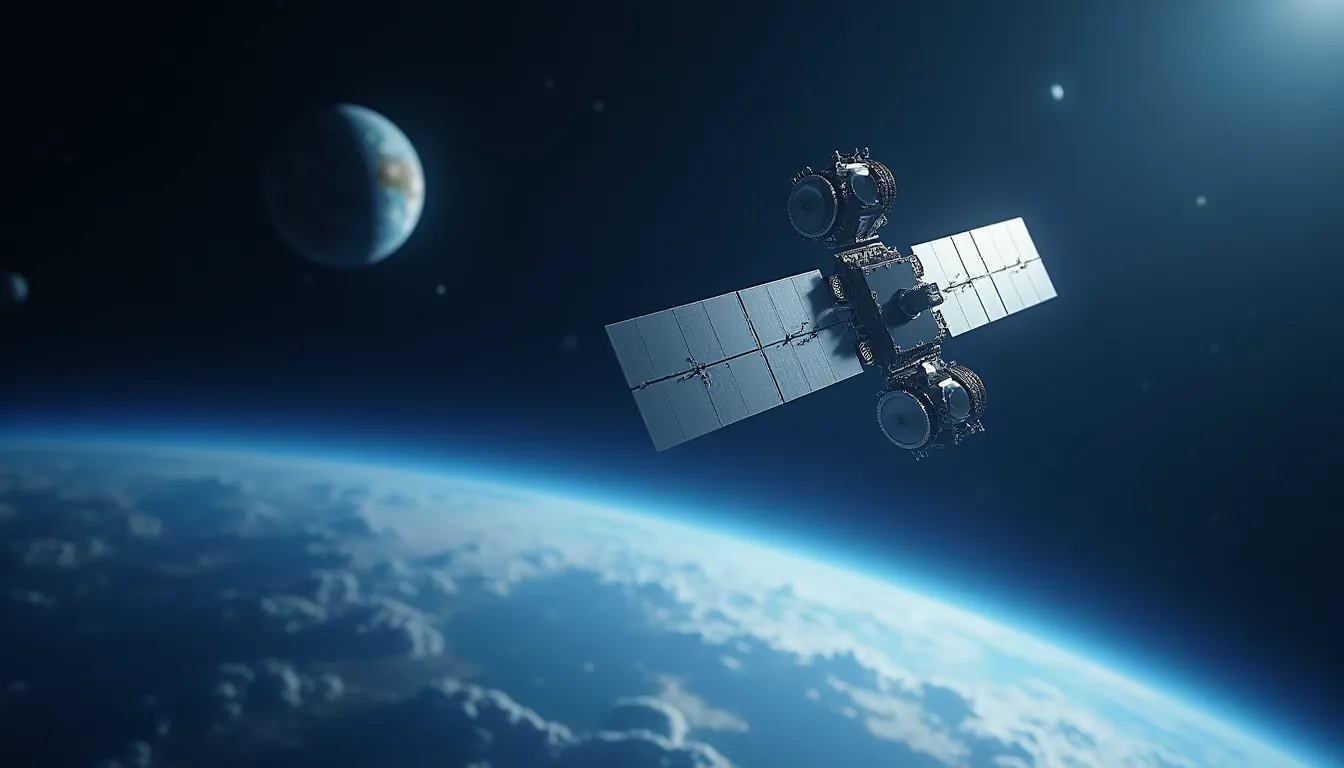
The aerospace and defense sectors are undergoing a transformation driven by rapid advancements in satellite technology. Recent trends highlight the deployment of low Earth orbit (LEO) constellations, the integration of dual-use capabilities, and the development of agile, maneuverable designs aimed at enhancing space warfare effectiveness. As nations prioritize resilience against hypersonic threats and demand for rapid data sharing escalates, the industry is poised for significant growth and innovation.
Proliferation of Low Earth Orbit Constellations
One of the most notable trends in satellite technology is the proliferation of LEO constellations designed for missile warning and tracking. The U.S. Space Development Agency (SDA) is spearheading this initiative with its Tranche 2 Tracking Layer, which includes 16 wide-field-of-view satellites and two missile defense sensors developed by Lockheed Martin. These satellites are optimized for hypersonic threat detection, featuring advanced sensor modules that enhance detection capabilities.
In late 2025, the SDA is expected to award a contract for 18 Tranche 3 Tracking Layer vehicles, further expanding its capabilities. The successful launch of 21 satellites for the Tranche 1 Transport Layer in October 2025 demonstrates the growing momentum of this strategic initiative, which aims to facilitate data sharing for joint operations within the defense community.
Dual-Use Satellites: Bridging Civilian and Military Applications
As geopolitical tensions rise, the need for versatile satellite systems has never been greater. The European Space Agency (ESA) has proposed a €1 billion investment to establish a dual-use satellite network, incorporating optical and radar sensors combined with onboard AI and edge computing technologies. This network is part of a broader €6 billion strategy aimed at enhancing both scientific and military surveillance capabilities by 2035.
Global military spending on dual-use technology surpassed $58 billion in 2023, with projections indicating further growth through public-private partnerships. This trend underscores the increasing importance of resilient intelligence, surveillance, and reconnaissance (ISR) systems that can adapt to both civilian and military operational needs.
Agile and Maneuverable Satellite Designs
The evolving landscape of space warfare requires innovative satellite designs that can adapt to rapidly changing operational environments. Leading defense contractors, including BAE Systems and Lockheed Martin, are investing heavily in the development of on-orbit maneuverable satellites. These agile systems are designed for dynamic operations, including shadowing enemy assets and facilitating networked architectures for improved situational awareness.
As highlighted in the Space Symposium, the focus on agile satellite designs is critical for future military operations, enabling forces to respond swiftly to emerging threats. Such advancements could significantly enhance the effectiveness of missile defense systems and overall military strategy.
Commercial SATCOM Integration with Defense Applications
The U.S. Department of Defense (DoD) is increasingly integrating commercial satellite communications (SATCOM) to ensure mission resilience and cross-domain capabilities. This shift is exemplified by the SDA’s successful demonstration of two-way optical space-to-air links, which aim to improve communication between satellites and aircraft.
The collaboration with commercial SATCOM providers not only enhances operational flexibility but also lowers costs associated with satellite deployment. The integration of high-performance systems such as the Advanced Navigation System, comprising precision accelerometers, plays a pivotal role in this transition by ensuring accurate navigation and positioning for military applications.
Simulation and Emerging Technologies in Satellite Design
The rapid advancement of satellite technologies is also being facilitated by innovative design and simulation tools. Dassault Systèmes’ 3DEXPERIENCE platform is revolutionizing satellite and rocketry design through virtual twins, multi-physics simulations, and cloud collaboration capabilities. This approach allows for sustainable and efficient development processes, reducing time to market for new systems.
As LEO adoption rises, emerging technologies such as artificial intelligence analytics, miniaturized constellations, sustainable propulsion systems, quantum encryption, and edge computing are expected to drive further innovation in the sector. The incorporation of systems like the ZQXXSGDSS System, which features high-performance single-tube PIN quadrant detectors, is critical for precise laser beam positioning and tracking applications in future satellite missions.
Legacy Systems and Future Developments
While new technologies are gaining prominence, legacy systems continue to play an essential role in the defense infrastructure. The U.S. Space Force’s Defense Support Program (DSP) satellites utilize infrared-based detection methods to identify missile launches and space threats. These systems are transitioning to the more advanced Space Based Infrared System (SBIRS), which promises enhanced capabilities for detecting short-range threats.
As defense strategies evolve, the integration of legacy systems with new technologies will be crucial in maintaining an effective deterrent and operational advantage. The continued development of high-performance CMOS imaging series, featuring multi-resolution options and automatic exposure control, supports this goal by enhancing situational awareness across defense operations.
Conclusion
The advancements in satellite technology are reshaping the aerospace and defense landscape, with LEO constellations, dual-use systems, and agile designs taking center stage. As nations invest in these technologies, the future of military operations will increasingly rely on sophisticated satellite capabilities that enhance resilience, data sharing, and situational awareness. The ongoing collaboration between commercial and defense sectors will further accelerate innovation, ensuring that satellite systems continue to meet the evolving demands of modern warfare.
References
-
Defense Firms Target Next Phase of Space Warfare With Agile … (aiaa.org) - 4/15/2026 Defense Firms Target Next Phase of Space Warfare With Agile Satellite Designs Written 15 April 2026. Home/News …
-
Reports - BryceTech (brycetech.com) - 4/10/2026 Orbital and Suborbital Launch Sites of the World 2025. Download Report. A BryceTech publication. January 28, 2025. Revised December 22nd, 2025.
-
Space Technology Trends Shaping The Future | Lockheed Martin (www.lockheedmartin.com) - 4/8/2026 Explore the latest space technology trends … Extending satellite life and improving reliability across the entire missile defense network.
-
Space Development Agency – Increasing Warfighters’ Lethality … (www.sda.mil) - 4/7/2026 The Space Development Agency (SDA) will quickly deliver needed space-based capabilities to the joint warfighter to support terrestrial missions.
-
Dual-Use Satellites to Reshape Defense Tech Landscape in 2025 (www.marketresearchfuture.com) - 12/4/2025 That same year, the European Space Agency proposed a 1-billion-euro dual-use satellite network featuring optical and radar sensors, onboard artificial …
-
Satellite Solutions for Defense Applications - YouTube (www.youtube.com) - 11/5/2025 The Department of Defense is increasingly looking to commercialized satellite communications (SATCOM) to strengthen mission resilience, …
-
Defense Support Program Satellites - Space Force (www.spaceforce.mil) In their 22,300-mile, geosynchronous orbits, DSP satellites help protect the United States and its allies by detecting missile launches, space launches and …
-
Satellite Tech Solution Providers List 2025 - Aero Defense Outlook (aerodefenseoutlook.com) - 3/12/2025 With the rise of Low Earth Orbit (LEO) satellites, organizations are achieving greater coverage, resilience, and affordability in global communications.
-
The New Frontier of Satellite Technology | Dassault Systèmes (www.3ds.com) - 4/3/2024 Driven by the need to accelerate innovation, this new frontier helps companies identify opportunities to extend the limit of rocketry and satellite design and …