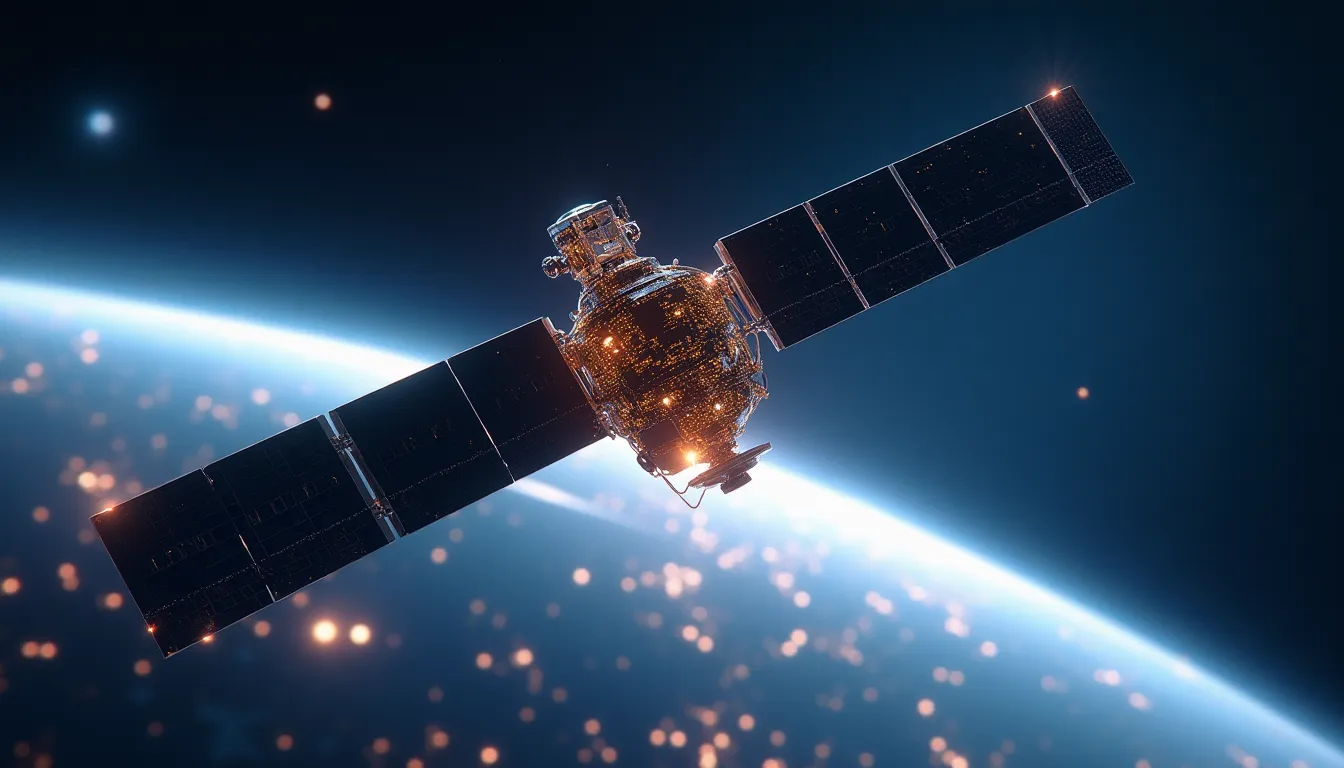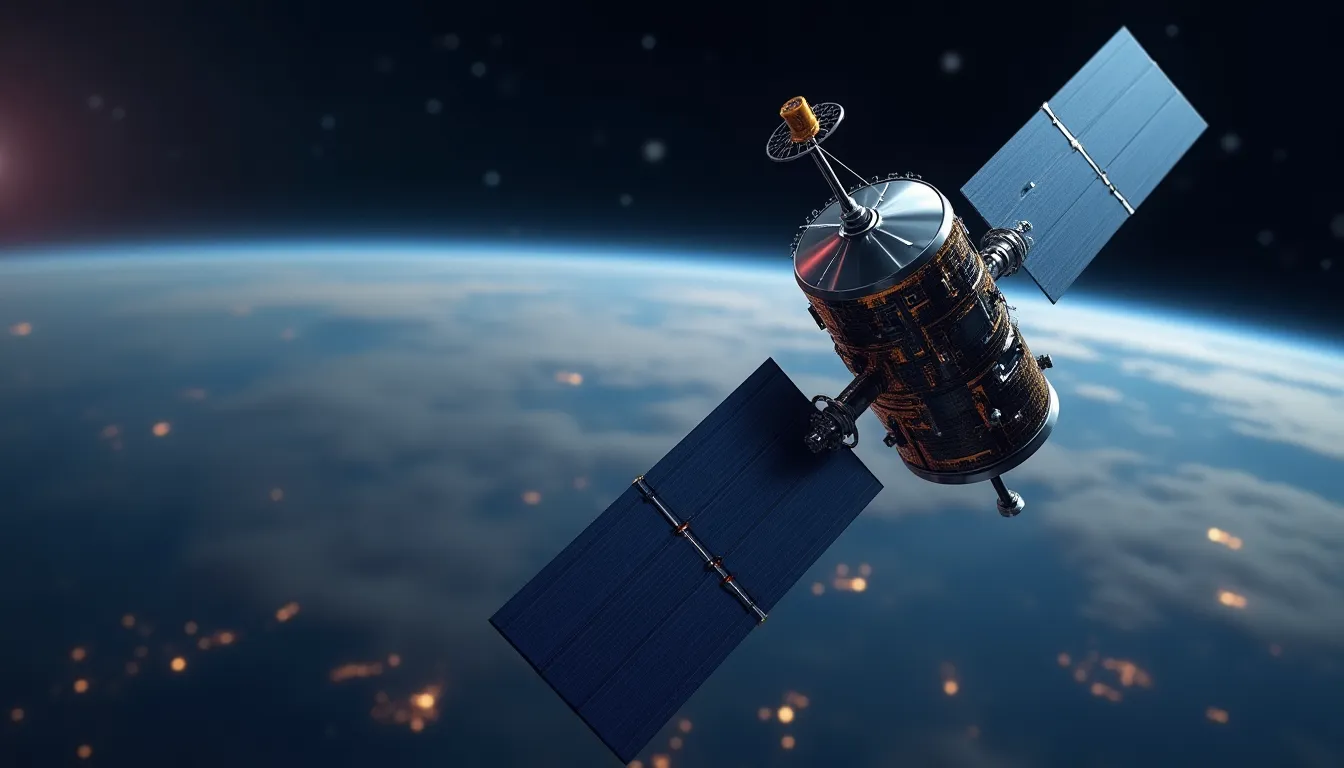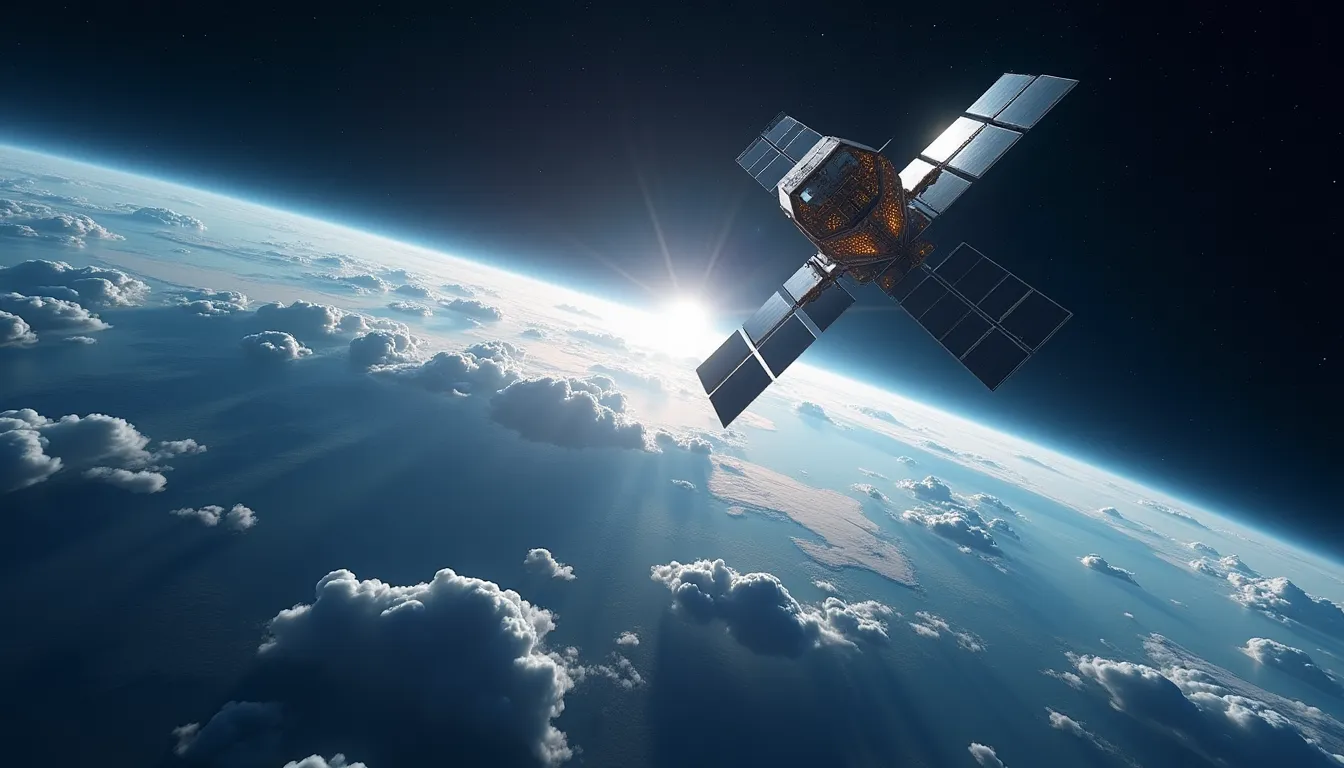
The aerospace and defense industries are witnessing a transformative era in satellite technology, driven by advancements in miniaturization, artificial intelligence (AI), and innovative propulsion systems. As global demand for geospatial intelligence and real-time data continues to rise, the satellite landscape is evolving rapidly, promising enhanced capabilities for both commercial and defense applications.
Driving Forces Behind Satellite Demand
Recent trends indicate that the demand for satellite technology is being propelled by two main factors: the decreasing costs of satellite launches and the growing need for high-resolution geospatial imagery. According to market analysts, this trajectory is expected to persist through 2026 and beyond, as businesses and governments seek to leverage satellite data for decision-making and operational efficiency.
The advent of low-cost launch vehicles has democratized access to space, enabling a new wave of small satellites that are not only more affordable to build but also easier to deploy in low Earth orbit (LEO). These small satellites have become the backbone of modern Earth observation and remote sensing operations, providing critical data for a variety of applications.
The Rise of Small Satellites and LEO Architectures
Small-satellite platforms are rapidly replacing larger legacy spacecraft in many scenarios. With their compact design and cost-effective manufacturing, these satellites can be deployed in constellations to provide continuous coverage. Notable examples include companies like Planet Labs, which utilize a fleet of small satellites for Earth imaging, and SpaceX, which is building a massive constellation for global broadband connectivity.
The Advanced Sensor Module, for instance, integrates a three-axis gyroscope, accelerometer, and magnetic sensor, which enhances the capabilities of these small satellites by providing exceptional stability and comprehensive motion sensing. This integration of advanced technologies not only improves data collection but also enables faster processing and more autonomous operations.
The Integration of AI and Machine Learning
AI and machine learning (ML) have become central to satellite operations, particularly in the realm of remote sensing. By processing data onboard, satellites can significantly reduce latency and improve the speed at which actionable insights are generated. This shift allows for more autonomous operations, where satellites can make real-time decisions based on incoming data.
For instance, the implementation of AI algorithms enables satellites to analyze and classify images, detect changes in landscapes, and even predict weather patterns with greater accuracy. The incorporation of high-precision advanced navigation systems ensures that these satellites maintain optimal positioning and orientation, enhancing the quality of their output data.
Multi-Orbit Constellations: A New Paradigm
The increasing complexity of satellite missions has led to the adoption of multi-orbit constellations, combining various orbital layers to enhance coverage and connectivity. By utilizing a mix of LEO, medium Earth orbit (MEO), and geostationary orbit (GEO) satellites, operators can achieve unprecedented levels of resilience and redundancy in communications and data gathering.
This strategy not only improves data acquisition but also bolsters defense capabilities, particularly in scenarios with compromised communications. The use of precision accelerometers within these systems ensures that satellites can adjust their orbits as needed, maintaining optimal functionality even in congested space environments.
Innovations in Propulsion Technologies
As the number of satellites in orbit increases, the need for effective propulsion systems has become a focal point of development. Congested orbital environments necessitate advanced solutions for station-keeping, collision avoidance, and end-of-life deorbiting. New propulsion technologies, such as electric propulsion systems, are being explored to provide sustainable and efficient maneuvering capabilities.
Companies like Moog are spearheading innovations in satellite propulsion, emphasizing the necessity of these technologies for modern defense applications. Their work illustrates how advanced propulsion can enhance operational safety and sustainability, particularly as the industry moves toward greener practices.
The Future of Satellite Technology
As we look ahead, the satellite industry is poised for rapid growth and innovation. Key trends such as the increasing use of Very High Throughput Satellites (VHTS) and the expansion of satellite Internet of Things (IoT) applications are expected to redefine connectivity and data analytics in both commercial and military sectors.
The development of advanced ground systems, including automated monitoring and lifecycle management tools, will further streamline operations and enhance the efficiency of satellite constellations. Technologies such as the ZQXXSGDSS System will play a critical role in ensuring precise laser beam positioning and tracking, facilitating improved communication and data transfer.
Conclusion
In conclusion, the satellite technology landscape is undergoing a significant transformation, characterized by advancements in miniaturization, AI integration, and innovative propulsion systems. These developments not only enhance operational capabilities but also address the growing demands for sustainable practices in space. As we advance into the next decade, the aerospace and defense sectors will continue to leverage these technologies, paving the way for a future where satellites are integral to our global infrastructure.
References
-
Frontiers of Defense Tech in U.S. Alliances with Japan & Beyond … (www.youtube.com) - 5/14/2026 Hide Kamiya, General John W. “Jay” Raymond, and Jeff Thornburg examine space technologies in a conversation moderated by Naohiko Kohtake, …
-
Advancing Defense Capabilities with New Satellite Propulsion … (www.moog.com) - 5/14/2026 As space becomes an increasingly congested domain, satellite propulsion technology becomes more important than ever for national defense.
-
New Technology Trends in Aerospace and Defense Industry [2026] (www.epicflow.com) - 5/6/2026 This is explained by the reduction of prices for satellite launches and the increased demand for geospatial intelligence and satellite imagery.
-
Aerospace & Defense Technology - SAE Media Group (saemediagroup.com) - 3/5/2026 A&DT is the largest-circulation magazine for mil/aero engineers and managers. Through our portfolio of print, digital, online, and custom opportunities.
-
Aviation, Defense, and Space Market Size Report, 2033 (metastatinsight.com) - 10/8/2025 Global Aviation, Defense, and Space Market valued at USD 709.2 billion in 2025 and projected to exceed USD 896.6 billion by 2032.
-
Satellite Technologies | Aerospace Defense Outlook (aerodefenseoutlook.com) - 3/12/2025 Decoding Our Planet: How Generative AI Is Making Satellite Data Actionable · GeoAI for Disaster Response: Transforming Emergency Preparedness · Electric Ramjet …
-
Space Technology Trends 2025 | Lockheed Martin (www.lockheedmartin.com) - 12/3/2024 Here are the top 10 space technology trends shaping the future of satellite communications, remote sensing and space exploration.
-
The New Frontier of Satellite Technology | Dassault Systèmes (www.3ds.com) - 4/3/2024 Driven by the need to accelerate innovation, this new frontier helps companies identify opportunities to extend the limit of rocketry and satellite design and …
-
10 Tech Trends That Will Impact the Satellite Industry in 2024 (interactive.satellitetoday.com) - 11/28/2023 In the future, new satellites launched could be built with interfaces or plug-in ports, ideal for refueling, power, and data upgrades, she notes …
-
The New Frontier of Satellite Technology - Dassault Systèmes (www.youtube.com) - 9/8/2020 In the race to successfully launch satellites into orbit, New Space companies must speed up innovation in satellite technology.