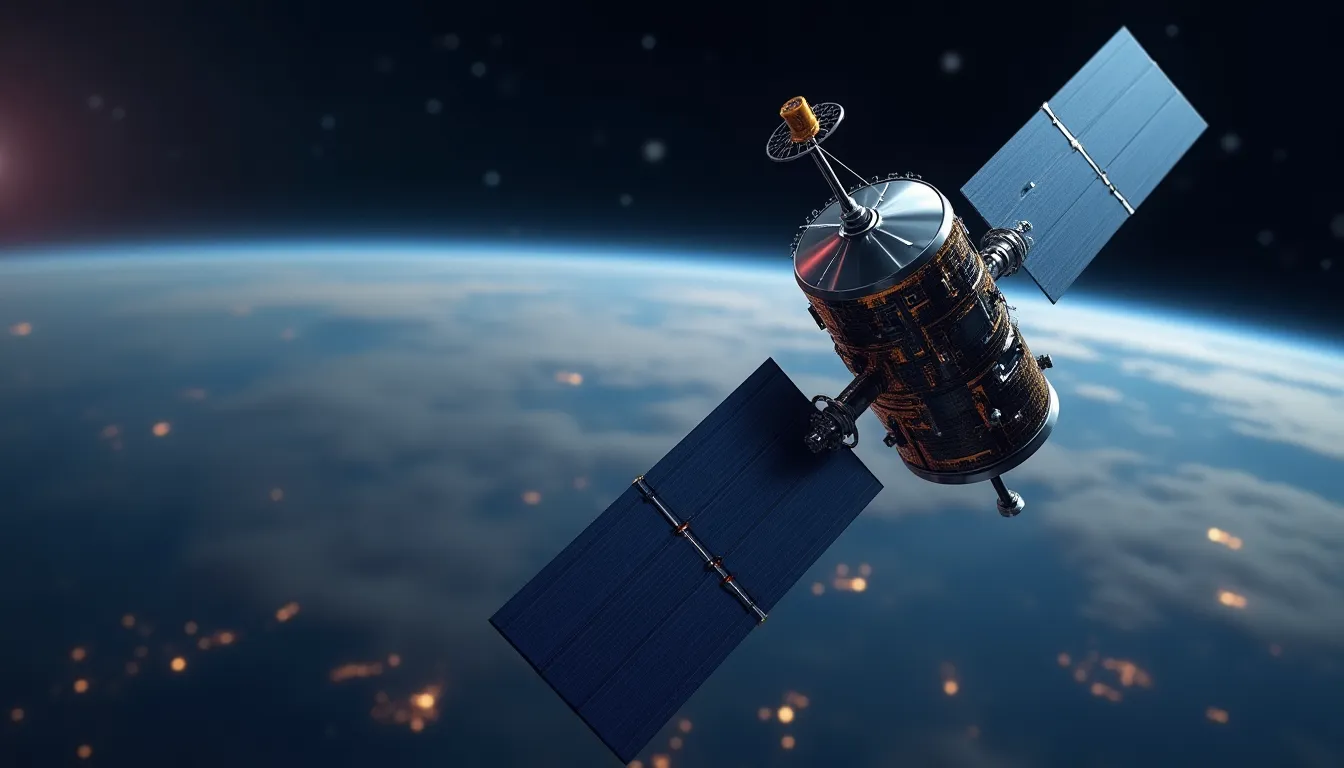
As we enter 2026, the aerospace and defense sectors are experiencing significant shifts, particularly in satellite technology. From groundbreaking launches to pivotal policy changes, the landscape is evolving rapidly, fueled by advancements in propulsion technology, orbital sustainability efforts, and an increasing emphasis on satellite commercialization. This article delves into the recent developments that are shaping the future of satellite technology.
COSMO-SkyMed Second Generation Launch
On January 3, 2026, Italy successfully launched the third satellite in the COSMO-SkyMed Second Generation constellation from Rome. This dual-use satellite significantly enhances Earth observation and defense imaging capabilities.
The COSMO-SkyMed system employs high-resolution synthetic aperture radar (SAR) technology, allowing for all-weather imaging, which is crucial for both military surveillance and civilian applications like disaster monitoring and urban planning. As part of a four-satellite constellation, the system is poised to deliver continuous and reliable data to various sectors, showcasing the growing trend towards integrating military and civilian satellite capabilities.
U.S. Space Safety Policy Shift
A significant policy change was announced in December 2025, impacting how space situational awareness (SSA) services are provided. Starting January 2026, the U.S. will transition from free taxpayer-funded SSA to a fee-based model under the Department of Commerce’s TraCSS system. This shift is particularly relevant as the number of active satellites in orbit surpasses 12,000, alongside an estimated 130 million pieces of debris larger than 1 mm.
By implementing a fee structure, the government aims to promote precision in SSA data, encourage the growth of private sector solutions, and improve sustainability funding for tracking and mitigating space debris. This move is expected to lead to more accurate data offerings, enhancing the ability of commercial operators to navigate the increasingly crowded orbits.
Starlink Debris Mitigation Efforts
In response to the growing concerns over orbital congestion, SpaceX announced on January 5, 2026, its plans to adjust the orbital parameters of over 4,000 Starlink satellites. These modifications are designed to minimize the risk of collisions and debris generation in low Earth orbit (LEO). As the number of satellites continues to rise, effective debris mitigation strategies are essential to ensure the long-term sustainability of satellite operations.
This proactive approach not only addresses the immediate concerns of orbital safety but also underscores the importance of collaborative efforts among satellite operators to maintain a safe space environment. By leveraging advanced tracking technologies and high-precision accelerometers, operators can better predict and avoid potential collisions, thereby securing shared orbits for all users.
Rocketdyne Acquisition for Advanced Propulsion
On January 5, 2026, AE Industrial Partners acquired a majority stake in L3Harris’s Rocketdyne space propulsion business, which includes the renowned RL10 engines used in the Atlas V and Vulcan Centaur launch vehicles. This acquisition aims to modernize propulsion systems and expand capabilities for space missions, including nuclear thermal propulsion for future Mars and cislunar missions.
The focus on developing advanced propulsion technologies is critical, especially as the aerospace sector pivots towards ambitious exploration goals set forth by the recent space policy directives. The integration of nuclear systems and innovative thermal battery systems will play a vital role in supporting these missions, enabling longer-duration flights and enhancing mission flexibility.
Military and Missile Defense Satellite Advancements
As of January 4, 2026, updates reveal significant expansions in satellite contracts aimed at enhancing U.S. missile defense capabilities. The Golden Dome initiative, a $175 billion project, is a cornerstone of this effort, emphasizing the need for sophisticated military satellite communications and surveillance systems.
These military advancements are underscored by a growing reliance on Very High Throughput Satellites (VHTS) capable of delivering terabit speeds, which are essential for real-time data transmission in defense applications. The integration of high-performance sensor modules, such as the advanced 9-DOF MEMS IMU, will further enhance situational awareness and operational effectiveness for defense forces.
Emerging Trends in Satellite Technology for 2026
Looking ahead, several key trends are emerging in the satellite industry:
- Miniaturization of Satellites: The trend towards smaller, more efficient satellites is gaining traction, particularly for LEO Earth observation and Internet of Things (IoT) applications. These small satellites are cheaper to launch and operate, allowing for broader coverage and data collection.
- Autonomous Ground Systems: Advances in artificial intelligence and machine learning are enabling autonomous systems for satellite monitoring and control, reducing the need for human intervention and increasing operational efficiency.
- Sustainable Propulsion Systems: There is a growing emphasis on developing sustainable propulsion technologies, including the use of eco-friendly propellants. This reflects a broader commitment to ensuring that space activities do not compromise the orbital environment.
As the aerospace and defense sectors continue to evolve, the interplay between technology, policy, and commercial interests will shape the future landscape of satellite operations. With ongoing innovations and strategic initiatives, the potential for enhanced connectivity, data utilization, and defense capabilities is immense.
Conclusion
In summary, the satellite industry is at a pivotal juncture in 2026, marked by significant advancements in technology, policy shifts, and an increasing focus on sustainability. As new satellite constellations are launched and existing systems are upgraded, the industry must navigate the complexities of space traffic management, environmental stewardship, and national security priorities. Looking forward, collaboration among stakeholders will be essential to ensure a secure, efficient, and sustainable orbital environment for all users.
References
-
New Technology Trends in Aerospace and Defense Industry [2026] (www.epicflow.com) - 12/29/2025 Advanced Satellite Technology. The application of satellites is gaining momentum and is expected to grow in 2026 and beyond. This is …
-
The Third COSMO-SkyMed Second Generation Satellite … (aeromorning.com) The Third COSMO-SkyMed Second Generation Satellite Successfully Launched · Rome, January 3rd, 2026 – The third satellite part of the COSMO-SkyMed …
-
What we’re watching in 2026 - Aerospace America (aerospaceamerica.aiaa.org) - 1/5/2026 U.S. President Donald Trump unveiled the ambitious Golden Dome missile defense effort that is slated to cost at least $175 billion, while NASA …
-
Orbital Tolls? Industry Braces for the Commercialization of Space … (news.satnews.com) - 1/5/2026 As of January 2026, there are over 12,000 active satellites and an estimated 130 million pieces of debris larger than 1mm in orbit. A single …
-
Aerospace Daily & Defense Report, January 5, 2026 - Aviation Week (aviationweek.com) - 1/5/2026 SpaceX plans to adjust the orbital parameters of more than 4,000 Starlink satellites to reduce the risk of creating orbital debris. In Brief.
-
AE Industrial to Acquire Majority Stake in Rocketdyne from L3Harris (www.satellitetoday.com) - 1/5/2026 AE Industrial Partners has acquired the controlling stake in the space propulsion business of L3Harris, formerly known as Aerojet Rocketdyne …
-
Space Brief 4 Jan 2026 - KeepTrack (keeptrack.space) - 1/4/2026 Today’s updates feature advancements in military satellite communications, expanded satellite contracts for missile defense, …
-
Space Brief 2 Jan 2026 - KeepTrack (keeptrack.space) - 1/2/2026 Today’s brief covers advancements in satellite tracking, national defense partnerships, and innovative space technologies.