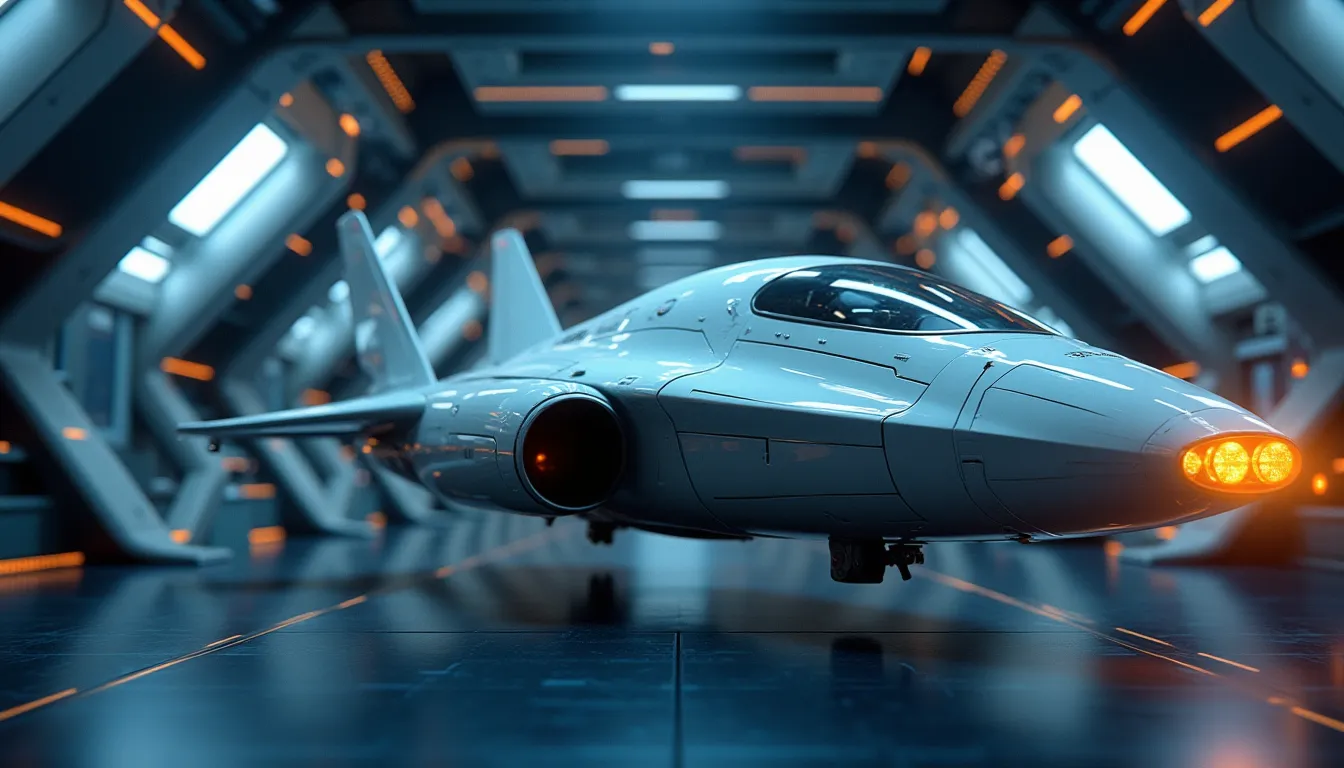
The spacecraft industry is witnessing transformative changes driven by the integration of advanced technologies and evolving market demands. Recent developments highlight a strong focus on defense-space integration, the readiness of commercial spacecraft manufacturing, and continuous technology upgrades in propulsion, autonomy, and mission payloads. This article delves into these trends, providing insights and technical details that underscore the industry’s trajectory toward a more resilient and capable space exploration paradigm.
Defense-Space Integration: Sustained Demand for Specialized Spacecraft
The defense sector’s appetite for advanced spacecraft remains robust, as evidenced by Lockheed Martin’s ongoing investments in systems tailored for Earth observation, scientific research, lunar exploration, and deep-space missions. According to their latest reports, the company continues to expand its portfolio with mission-specific spacecraft capabilities that reflect the increasing intersection of national security and space operations. Lockheed Martin’s acquisition of Terran Orbital, a modular spacecraft manufacturer, further strengthens its production capabilities, indicating a trend toward vertical integration within the U.S. defense-space supply chain.
As the military landscape evolves, the need for resilient spacecraft designed to operate in contested environments has become paramount. Discussions surrounding the development of a new generation of spacecraft focus on enhancing autonomous decision-making capabilities, even amid communication delays or disruptions. This shift is crucial for ensuring mission success in scenarios where traditional command-and-control structures may be compromised.
Commercial Spacecraft Manufacturing: A New Era of Readiness
The commercial sector is also making significant strides, with companies like Firefly Aerospace driving innovation and operational readiness. Their recent announcements indicate ongoing program activity and milestones that align with demands for more agile and capable spacecraft solutions. As commercial entities ramp up spacecraft production, the emphasis on modular manufacturing techniques is becoming increasingly strategic. Lockheed Martin’s acquisition of a modular spacecraft maker reflects a broader industry trend towards creating versatile spacecraft architectures that can be rapidly adapted for various missions.
Key Technology Trends Shaping Spacecraft Design
A comprehensive review of the aerospace and defense industry highlights several key technology trends that are reshaping spacecraft design and operations:
- Artificial Intelligence (AI): AI is transitioning from a support role to becoming a core element of spacecraft operations. It enables advanced decision-making, mission planning, and command-and-control processes, significantly enhancing the autonomous capabilities of spacecraft in real-time scenarios.
- Autonomous Systems: The integration of robotics and autonomous systems is becoming essential for military operations, allowing spacecraft to operate with reduced ground support. This development is vital for missions that require high levels of operational independence, especially in remote or hostile environments.
- Digital Engineering: The adoption of digital twins and digital threads is revolutionizing spacecraft design and manufacturing. These technologies facilitate improved efficiency, faster iteration cycles, and enhanced validation processes, which are crucial for meeting the rapidly evolving demands of space missions.
Expanding Capabilities: Resilience and Mission Diversity
As the landscape of spacecraft missions broadens, industry experts emphasize the importance of operational resilience. Spacecraft are being designed to withstand jamming, latency, and communication disruptions, enabling them to function effectively in challenging environments. The focus on modular spacecraft architectures allows for a versatile approach to mission planning, accommodating a diverse range of objectives—from Earth observation to deep-space exploration.
Additionally, the introduction of advanced sensor modules and precision accelerometers is transforming the capability of spacecraft. Technologies such as the Advanced Sensor Module, featuring a 9-DOF MEMS IMU, enhance motion sensing capabilities, while high-performance MEMS accelerometers improve navigation precision under demanding conditions, further solidifying the operational readiness of modern spacecraft.
Conclusion
The ongoing evolution of the spacecraft industry, driven by defense-space integration, commercial manufacturing readiness, and technological advancements, points to a future rich with possibilities. As AI, autonomy, and advanced manufacturing techniques continue to take center stage, the spacecraft of tomorrow will be better equipped to meet the demands of diverse missions in an increasingly complex space environment. Companies like Lockheed Martin and Firefly Aerospace are at the forefront of this transformation, paving the way for a new era of exploration and operational excellence in the aerospace sector. As we look ahead, the emphasis on resilient, autonomous systems will remain a critical focus, ensuring that spacecraft can thrive in both contested and cooperative missions across the expanse of space.
References
-
Mission-Integrated Space Capabilities - Lockheed Martin (www.lockheedmartin.com) - 6/1/2026 We’re advancing spacecraft for Earth observation and scientific discovery. We’re designing, building and testing lunar and deep space exploration capabilities.
-
Space & Defense Market Update - April 2026 (LIVE from NYSE) (www.youtube.com) - 5/18/2026 … satellite manufacturing, orbital data centers, in … (space) and Tectonic (defense tech). • Payload: www.payloadspace.com …
-
Frontiers of Defense Tech in U.S. Alliances with Japan & Beyond … (www.youtube.com) - 5/14/2026 Hide Kamiya, General John W. “Jay” Raymond, and Jeff Thornburg examine space technologies in a conversation moderated by Naohiko Kohtake, …
-
Lockheed Martin Advances Space Capabilities through Strategic … (terranorbital.com) - 10/30/2024 Lockheed Martin (NYSE: LMT) has completed its previously announced acquisition of Terran Orbital, a leading manufacturer of innovative modular spacecraft.
-
The Military Rockets that Launched the Space Age (airandspace.si.edu) - 8/9/2023 Rockets launched the Space Age. They provided the power needed to take spacecraft and people on flights beyond the Earth.
-
New Technology Trends in Aerospace and Defense Industry [2026] (www.epicflow.com) - 4/6/2022 Among the notable developments that will impact aerospace and defense trends next year are artificial intelligence and agentic AI, additive manufacturing, and …
-
Innovation Timeline - DARPA (www.darpa.mil) From satellites and stealth aircraft to flat screens and Siri, our research challenges assumptions to prepare for the battlefield of tomorrow.
-
Technology - NASA (www.nasa.gov) - 1/27/2023 NASA Fires Up Powerful Lithium-Fed Thruster for Trips to Mars. NASA puts next‑generation propulsion to the test—a system powerful enough to carry crews to Mars …
-
Latest News - Firefly Aerospace (fireflyspace.com) - 12/15/2021 Latest News ; NORAD/USNORTHCOM - Peterson Space Force Base · June 2, 2026 ; Firefly - Intended Ticker Symbol · May 26, 2026 ; Firefly - MoonFall - Elytra Deployment …