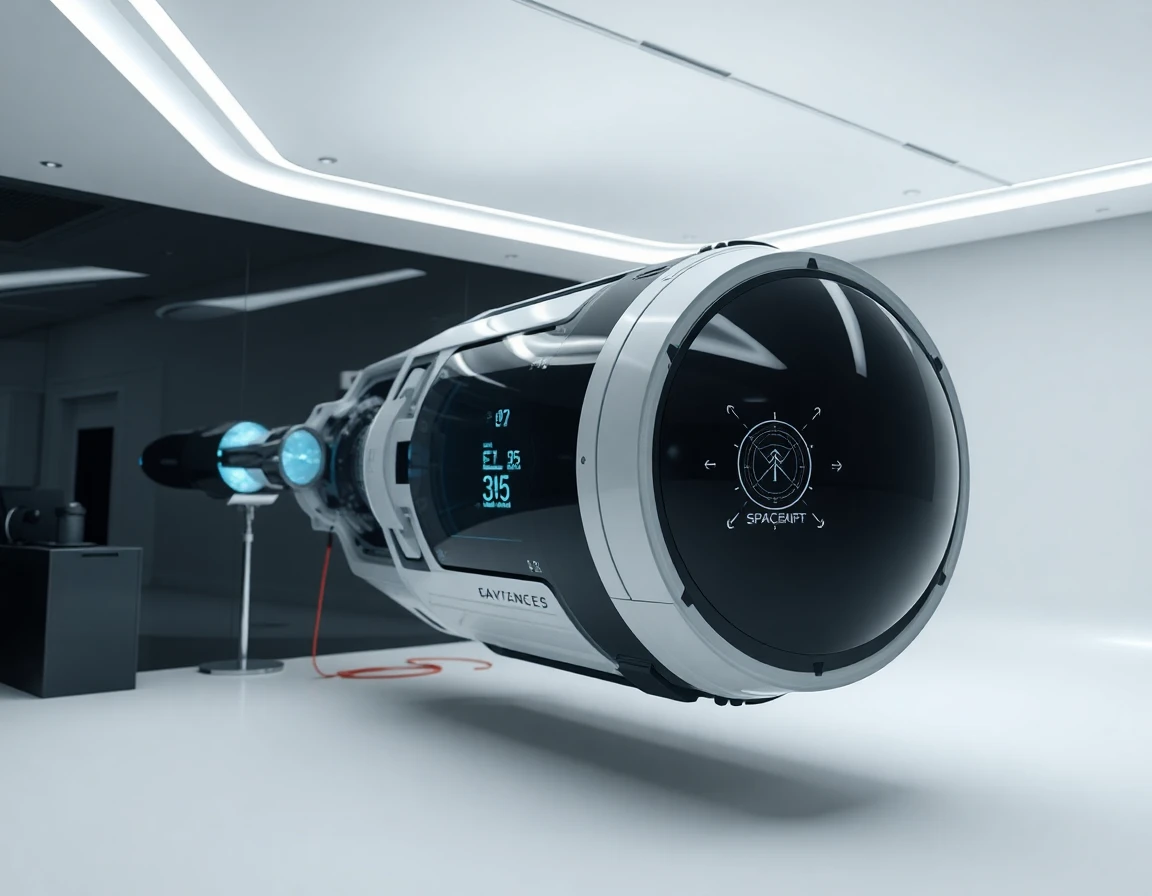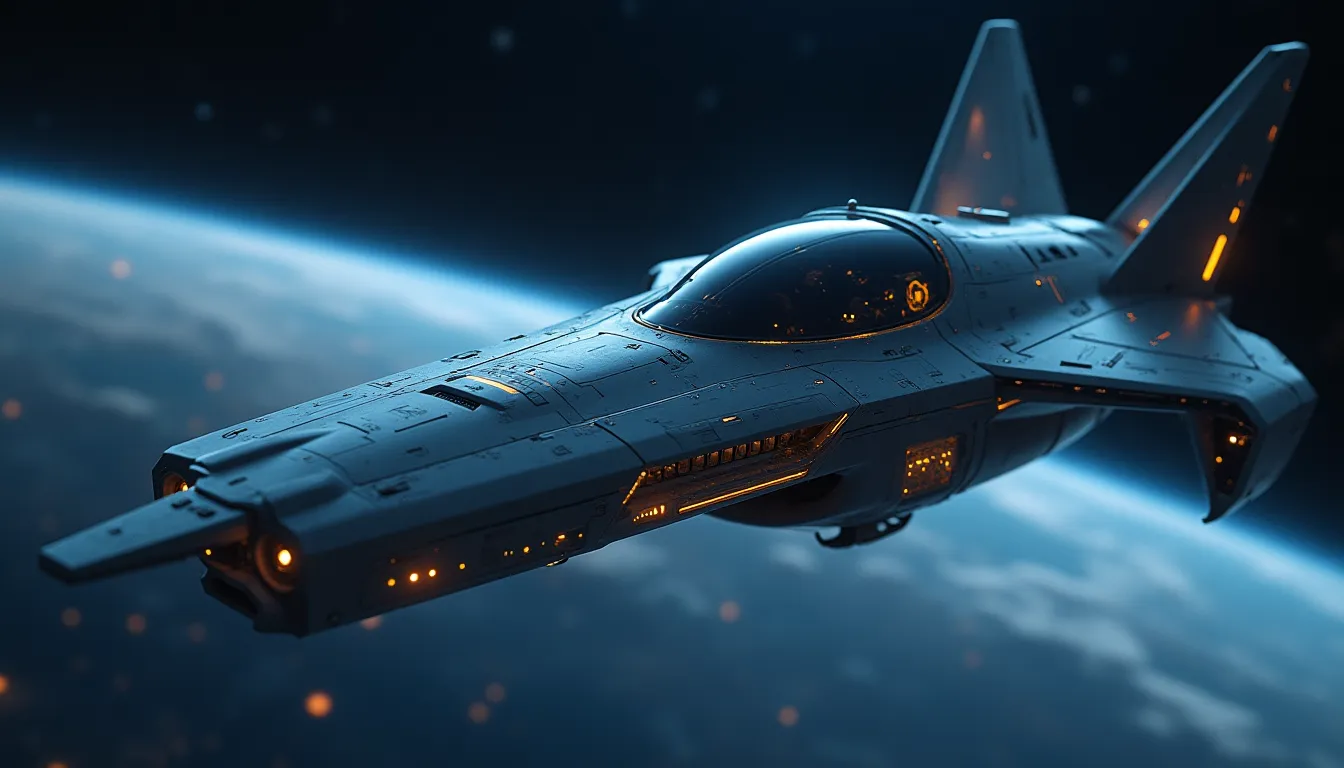
The aerospace and defense industries are witnessing a transformative phase characterized by significant developments in spacecraft technology. Three major trends are shaping this evolution: defense-industrial consolidation, military space capability scaling, and groundbreaking research in next-generation spacecraft and propulsion systems. This article delves into these trends, highlighting key corporate actions, technological advancements, and their implications for the future of space exploration and defense.
Consolidation in the Aerospace Sector
One of the most notable recent events in the spacecraft sector is Lockheed Martin’s acquisition of Terran Orbital, completed in October 2024. This strategic move strengthens Lockheed Martin’s position in the modular spacecraft manufacturing space, allowing for enhanced vertical integration. Terran Orbital specializes in producing modular spacecraft tailored for both aerospace and defense applications, which is increasingly vital as the demand for versatile and adaptable space solutions grows.
This acquisition signifies a broader trend of consolidation within the defense aerospace sector, where major players are merging to create more robust and resilient supply chains. As defense budgets tighten and competition intensifies, companies are recognizing the necessity of a comprehensive approach to spacecraft design and manufacturing. Lockheed Martin’s integration of Terran Orbital will likely streamline operations and lead to innovations in spacecraft systems that can be deployed rapidly in defense scenarios.
Advances in Space Propulsion Technologies
The exploration of advanced propulsion systems is another critical area of focus in the spacecraft industry. NASA’s recent advancements in next-generation thruster technology are particularly noteworthy. The agency is developing a lithium-fed thruster capable of supporting Mars-class missions, demonstrating a commitment to enhancing the performance and efficiency of deep-space missions.
This lithium-fed thruster technology indicates a significant leap in the maturity of electric and thermal propulsion concepts. Such innovations are essential for long-duration space missions, where traditional propulsion methods may prove inadequate. Enhanced propulsion systems not only promise greater fuel efficiency but also enable spacecraft to perform more complex maneuvers in deep space, thereby expanding the horizons of interplanetary exploration.
Military Space Architecture and Capability Scaling
The Space Development Agency (SDA) continues to emphasize the need for rapidly deployable space-based capabilities for military personnel. As conflicts increasingly extend into space, the SDA is advocating for resilient satellite and spacecraft architectures that can ensure operational superiority under contested conditions.
This focus on military utility and robustness is reflected in the development of proliferated satellite constellations that enhance situational awareness for warfighters. The SDA’s initiatives underscore the critical need for integrated spacecraft ecosystems that encompass manufacturing, propulsion, subsystems, and defense mission integration. As military operations become more reliant on space-based assets, the need for advanced sensor modules, like the Advanced Sensor Module, which integrates a three-axis gyroscope, accelerometer, and magnetic sensor, is paramount. Such technologies ensure exceptional stability and comprehensive motion sensing capabilities, which are crucial for military applications.
The Role of Private Sector Innovations
Companies like Sierra Space are positioning themselves as key players in the defense-tech landscape. By focusing on developing satellites, subsystems, spaceplanes, and hypersonics, Sierra Space embodies the dual-use approach that characterizes much of today’s aerospace innovation. Their efforts in creating national security infrastructure highlight the increasing interdependence between commercial and military aerospace sectors.
Furthermore, innovations in high-precision navigation systems, such as the High-Precision Advanced Navigation System, incorporating fiber optic sensing coils, are critical for both commercial and military applications. These advanced systems provide superior stability and precision, addressing the rigorous demands of navigation in complex environments.
The Future of Spacecraft Development
As we look toward the future, the spacecraft industry is poised for continued growth and evolution. The consolidation of companies like Lockheed Martin and Terran Orbital will likely result in more integrated and efficient manufacturing processes, while advancements in propulsion technologies promise to pave the way for deeper space exploration. Additionally, the military’s increasing reliance on space-based systems underscores the need for robust and resilient spacecraft architectures.
The advancements in spacecraft technology are not just about defense; they also open up new horizons for commercial space exploration and scientific inquiry. Companies such as Firefly Aerospace are actively engaged in launching programs that support lunar operations and beyond, exemplifying the vibrant commercial space sector.
Conclusion
In conclusion, the spacecraft industry stands at a pivotal juncture where technological advancements, corporate consolidation, and military demands intersect. As companies continue to innovate and develop next-generation systems, the future looks promising for both defense capabilities and civilian space exploration. The integration of sophisticated technologies, from advanced propulsion systems to precision navigation solutions, will undoubtedly shape the next era of aerospace and defense, making space more accessible and strategically significant than ever before.
References
-
Space Development Agency – Increasing Warfighters’ Lethality … (www.sda.mil) - 5/19/2026 The Space Development Agency (SDA) will quickly deliver needed space-based capabilities to the joint warfighter to support terrestrial missions.
-
Frontiers of Defense Tech in U.S. Alliances with Japan & Beyond … (www.youtube.com) - 5/14/2026 Hide Kamiya, General John W. “Jay” Raymond, and Jeff Thornburg examine space technologies in a conversation moderated by Naohiko Kohtake, …
-
Sierra Space | Defining the New Era of Space Defense Technology (www.sierraspace.com) - 1/26/2026 Sierra Space is a Defense Tech leader developing satellites, subsystems, spaceplanes, hypersonics & infrastructure for national security.
-
Lockheed Martin Advances Space Capabilities through Strategic … (terranorbital.com) - 10/30/2024 Lockheed Martin (NYSE: LMT) has completed its previously announced acquisition of Terran Orbital, a leading manufacturer of innovative modular spacecraft.
-
Bloomberg’s Defense and Space Tech Special - YouTube (www.youtube.com) - 10/11/2024 Bloomberg Technology is on the road for a deep dive into the space and defense tech industry. Executives from Rocket Lab, Varda Space, …
-
The Military Rockets that Launched the Space Age (airandspace.si.edu) - 8/9/2023 Rockets launched the Space Age. They provided the power needed to take spacecraft and people on flights beyond the Earth.
-
Technology - NASA (www.nasa.gov) - 1/27/2023 NASA Fires Up Powerful Lithium-Fed Thruster for Trips to Mars. NASA puts next‑generation propulsion to the test—a system powerful enough to carry crews to Mars …
-
Latest News - Firefly Aerospace (fireflyspace.com) - 12/15/2021 Latest News ; NORAD/USNORTHCOM - Peterson Space Force Base · June 2, 2026 ; Firefly - Intended Ticker Symbol · May 26, 2026 ; Firefly - MoonFall - Elytra Deployment …