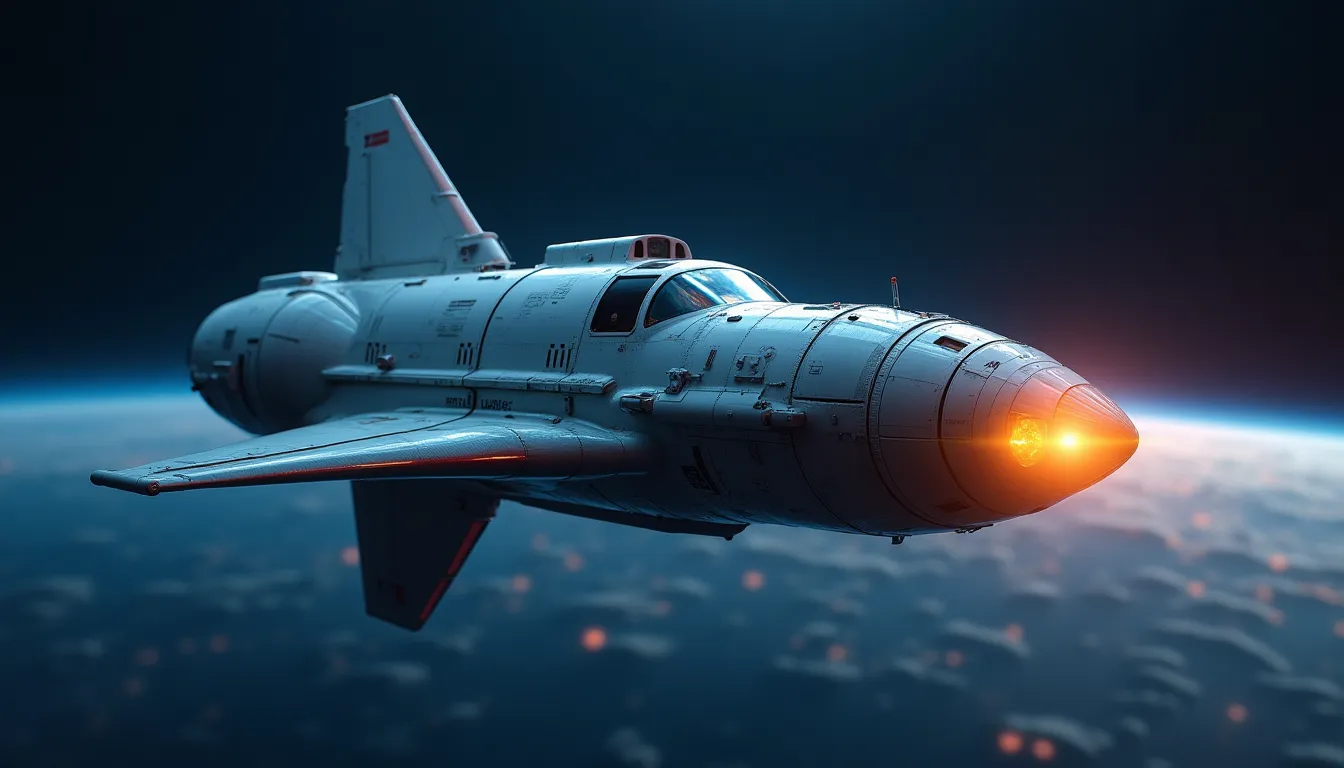
The aerospace and defense sectors are undergoing a transformative shift in spacecraft technology, driven by innovative strategies and advanced manufacturing techniques. As industry leaders embrace new operational paradigms, the focus has intensified on distributed and modular spacecraft systems, enhancing capabilities for both commercial and defense applications.
The Shift Towards Distributed Space Architectures
One of the most significant trends in recent spacecraft development is the movement away from traditional, monolithic spacecraft designs towards distributed space architectures. This approach involves deploying multiple smaller spacecraft that work collaboratively in orbit, which enhances redundancy, resilience, and sensing coverage. According to the Stanford Emerging Technology Review, such systems reduce mission risk and improve operational effectiveness, particularly for complex missions where a single spacecraft might face insurmountable challenges.
Distributed systems not only enable broader coverage but also allow for more agile responses to dynamic space environments. The integration of advanced sensor modules, including high-performance MEMS accelerometers, plays a crucial role in enhancing the functionality of these smaller spacecraft, ensuring precise navigation and control.
AI and Autonomy: The Driving Force Behind Modern Spacecraft
Artificial intelligence is rapidly becoming a cornerstone of spacecraft operations. The aerospace industry is leveraging AI for real-time data analysis, predictive maintenance, and autonomous decision-making, significantly reducing the need for manual intervention. This move towards AI-enabled operations is evident in defense initiatives aimed at enhancing missile warning systems and space domain awareness capabilities.
Lockheed Martin’s advancements in its Next-Gen GEO OPIR satellites, designed for missile detection from geosynchronous orbit, exemplify this trend. These satellites are engineered with advanced cyber-hardening and enhanced propulsion systems to meet the challenges of modern warfare, including the detection of hypersonic threats. The integration of AI with high-performance systems like the precision accelerometers used in these satellites allows for unmatched operational efficiency and reliability.
Lunar and Deep-Space Exploration: A Collaborative Effort
NASA, alongside commercial partners, is making substantial strides in lunar exploration and deep-space transport. The Orion spacecraft, developed by Lockheed Martin, is at the forefront of these efforts, designed for missions beyond Earth orbit. Notably, the CAPSTONE mission by Advanced Space is pushing the boundaries of autonomous navigation within the cislunar space, focusing on developing critical technologies for lunar infrastructure.
As space agencies and private companies collaborate, the focus on lunar navigation systems becomes paramount. Reliable navigation infrastructure is essential for future lunar operations, demanding innovative solutions that can operate effectively beyond traditional Earth-orbit systems. The deployment of advanced navigation systems, such as those featuring quartz MEMS gyroscopes, will be vital for ensuring precision in these operations.
Modular Development: Speeding Up Spacecraft Creation
The pace of spacecraft development is accelerating, thanks in large part to emerging technologies such as 3D printing, reusable launch vehicles, and smart propulsion systems. National Instruments highlights these innovations as key enablers for reducing costs and enhancing performance in spacecraft design and manufacturing.
The advent of additive manufacturing allows for rapid prototyping of spacecraft components, significantly shortening development timelines. Moreover, the ability to produce 3D-printed parts tailored for specific missions contributes to the modularity of spacecraft, facilitating upgrades and maintenance without the need for extensive overhauls. This adaptability is crucial as the industry moves towards more responsive and flexible designs.
The Future of Spacecraft: Resilience and Sustainability
As the aerospace sector continues to evolve, the emphasis on resilience and sustainability will shape the future of spacecraft technology. The integration of advanced thermal battery systems and environmentally friendly materials will be critical in meeting both mission requirements and environmental standards.
Moreover, the ongoing focus on cybersecurity within spacecraft operations reflects the increasing importance of protecting sensitive technologies from potential threats. As spacecraft become more interconnected, ensuring robust security protocols will be essential to maintain operational integrity and safety.
Conclusion
The landscape of spacecraft technology is rapidly changing, driven by innovative approaches to design, development, and operational strategy. From distributed architectures and AI integration to advancements in lunar exploration, the aerospace and defense industries are set to benefit from a new era of spacecraft capabilities. As these trends continue to unfold, the future promises exciting opportunities for exploration and technological advancement, paving the way for resilient, efficient, and sustainable space missions.
References
-
Innovations in Spacecraft Technology: A New Era for Aerospace and … (orbysa.com) - 5/9/2026 Explore the latest advancements in spacecraft technology, including NASA’s Artemis II mission success and emerging missile defense systems, …
-
Rapid Spacecraft Development and Manufacturing | 2026 Warfare … (www.youtube.com) - 5/4/2026 Full session from AFA’s 2026 Warfare Symposium. Featuring: • Kevin Czinger Founder, Lead Inventor, and Executive Chairman, …
-
Mission-Integrated Space Capabilities - Lockheed Martin (www.lockheedmartin.com) - 5/1/2026 We’re designing, building and testing lunar and deep space exploration capabilities, including NASA’s Orion spacecraft, and creating early-warning weather and …
-
Space - Stanford Emerging Technology Review (setr.stanford.edu) - 5/1/2026 KEY DEVELOPMENTS. One major development is the increased use of distributed space systems comprised of multiple spacecraft that interact and work together to …
-
Advanced Space – Delivering Innovation to Orbit™ (advancedspace.com) - 10/1/2025 Advanced Space exists to enable the sustainable exploration, development, and settlement of space. · We are orbiting the Moon! · Capabilities · Experience.
-
5 Next-Generation Space Technologies Being Tested Today - NI (www.ni.com) - 3/22/2024 New Space Technology · 1. 3D Printed Components · 2. Reusable Launch Vehicles · 3. Smart Propulsion · 4. Artificial Intelligence · 5. Nanotechnology.
-
Technology - NASA (www.nasa.gov) - 1/27/2023 NASA Fires Up Powerful Lithium-Fed Thruster for Trips to Mars. NASA puts next‑generation propulsion to the test—a system powerful enough to carry crews to Mars …
-
New Technology Trends in Aerospace and Defense Industry [2026] (www.epicflow.com) - 4/6/2022 Key aerospace and defense innovations will include the application of artificial intelligence and agentic AI, immersive technologies, additive manufacturing, …
-
Top Space Tech Companies (space-tech.aerospacedefensereview.com) ExoAnalytic Solutions is a leader in space domain awareness, defense technology, and military operations research. With a mission to protect and enhance global …