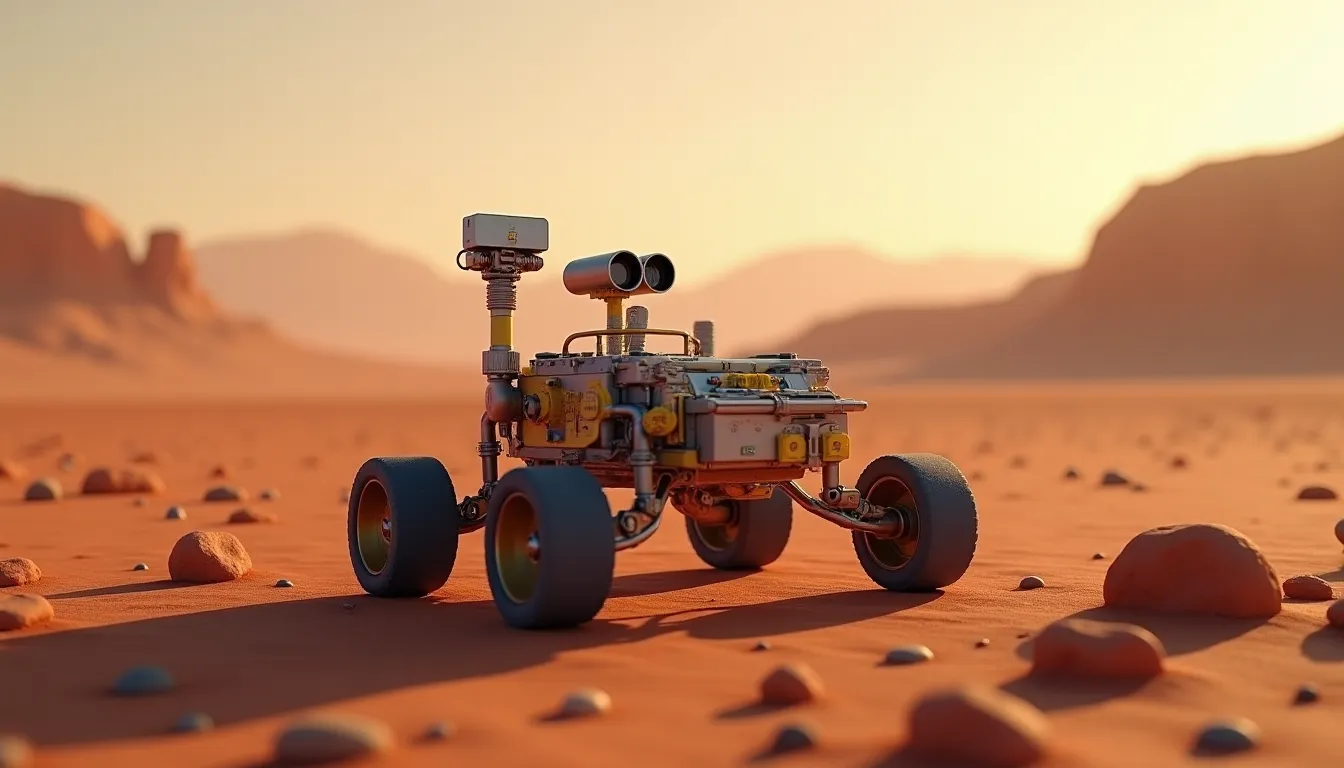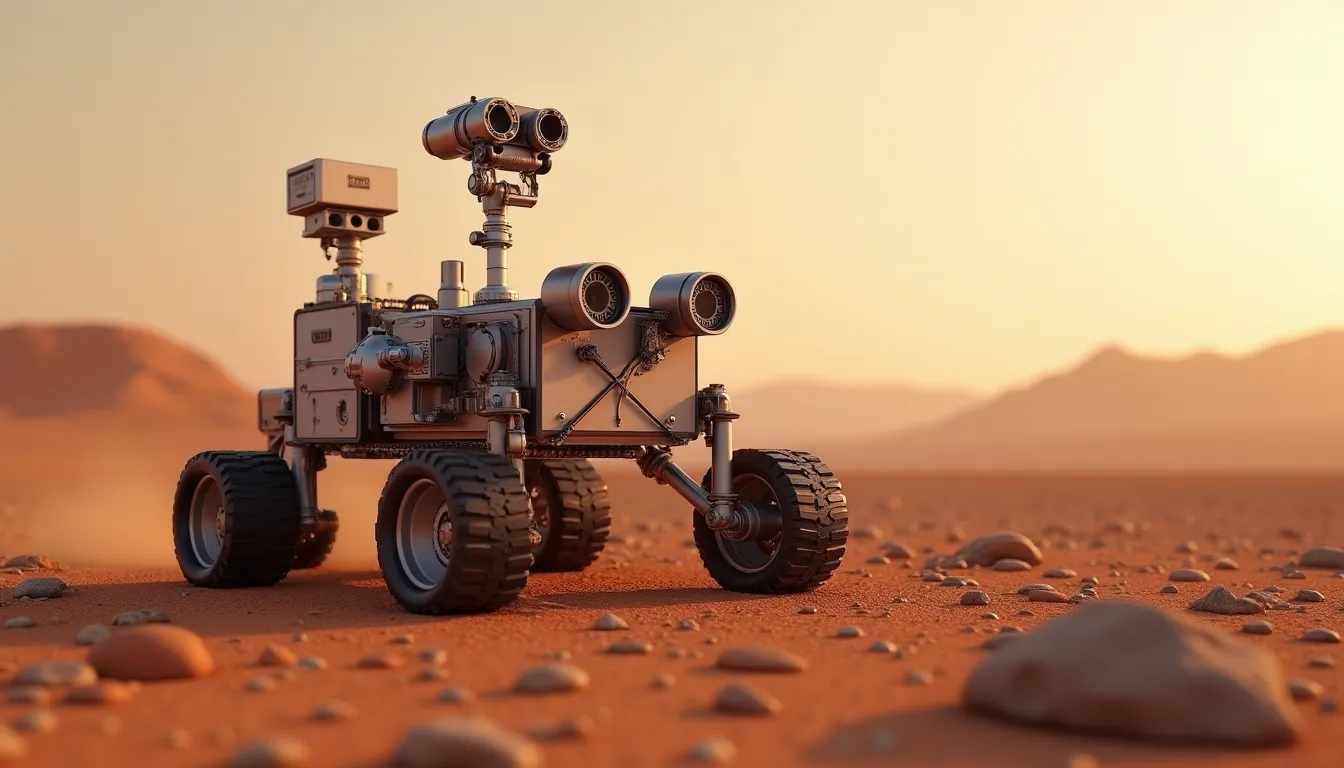
NASA’s Curiosity rover, a flagship of the Mars Science Laboratory (MSL) mission, remains operational and vital for scientific exploration on the Martian surface. After more than 13 years since its landing in Gale Crater, Curiosity continues to provide invaluable data and insights into the geology and climate of Mars. Recent software upgrades have enhanced its efficiency, enabling it to multitask more effectively—combining driving, communication with orbiters, and imaging in a single operational cycle. This article delves into the latest developments surrounding Curiosity, its ongoing mission, and the challenges it faces in maintaining its functionality.
Operational Status: A Resilient Rover
Curiosity has successfully navigated the challenging Martian terrain and is currently exploring sulfate-rich regions within Gale Crater and Gediz Vallis. These areas are of significant interest to scientists, as they hold clues to the planet’s geological history and past habitability. Despite the considerable wear and tear on its systems, particularly its wheels, Curiosity’s operational status remains robust. According to recent reports, the rover’s software enhancements have improved its operational efficiency, allowing for more scientific output per unit time.
Dr. Jennifer Trosper, a project manager for the Curiosity mission at NASA’s Jet Propulsion Laboratory, stated, “Our software upgrades have allowed Curiosity to multitask like never before, which is crucial given the limited time we have to gather data in these scientifically rich areas.”
Technical Advancements: Software Upgrades
One of the most notable recent advancements has been the implementation of software updates that allow the rover to perform multiple tasks simultaneously. This capability has been critical in maximizing the scientific return from Curiosity’s mission. The ability to conduct imaging, data transmission, and navigation concurrently is a testament to NASA’s commitment to continual innovation in space technology.
These software improvements are particularly relevant for aerospace applications, where efficiency and reliability are paramount. The advancements echo the capabilities found in high-performance MEMS accelerometers, such as those in the Advanced Navigation System, which ensure superior stability and precision in critical navigation and surveying tasks.
Mechanical Challenges: Wheel Wear and Tear
As Curiosity continues its exploration, mechanical degradation poses a significant obstacle. Reports indicate substantial wear on the rover’s wheels after years traversing the rocky Martian surface. The wear is emblematic of the challenges faced by long-duration planetary operations and serves as a reminder of the mechanical stress that these rovers endure.
NASA has released videos documenting the deterioration of the wheels, underscoring the importance of robust design in aerospace engineering. The findings could inform future rover designs, potentially incorporating materials and technologies similar to those used in systems like the YWJ01ZB150 System, which offers reliable angle measurement and durability in varying conditions.
Limited Coverage: A Quiet Phase for Curiosity
Interestingly, the aerospace and defense sectors have shown limited direct interest in Curiosity in recent months. A review of aerospace and defense publications from April to May 2026 revealed no significant headlines directly related to the rover. This gap in coverage suggests that while Curiosity continues to operate effectively, it may not currently align with the broader defense industry’s priorities, which often focus more on immediate technological applications and national security.
Despite this, Curiosity remains a crucial project for planetary science and exploration, representing the best of NASA’s technological advancements and our quest for knowledge beyond Earth.
Conclusion
Curiosity’s ongoing mission exemplifies resilience and innovation in the realm of space exploration. As it enters its 14th year on Mars, the rover continues to adapt and overcome challenges, thanks to advanced software capabilities and ongoing engineering support. The insights gained from Curiosity not only enhance our understanding of Mars but also inform future missions and the development of technologies crucial for space exploration.
Looking ahead, as we prepare for more ambitious missions to the Moon and beyond, the lessons learned from the Curiosity rover will undoubtedly influence the design and operational strategies of future exploration vehicles. With continuous advancements in software and hardware, including innovations akin to those found in the ZQXXSGDSS System for precise laser beam tracking and positioning, the future of planetary exploration remains bright.
References
-
Exploring the Silence: Recent Developments on NASA’s Curiosity … (orbysa.com) - 5/12/2026 An overview of the current status of NASA’s Curiosity rover, its operational context, and the evolving landscape of aerospace technology.
-
VxWorks by Wind River Powers Mars Rover (www.windriver.com) Wind River congratulates NASA Jet Propulsion Laboratory on the successful landing of Curiosity on Mars, a groundbreaking milestone for space exploration …
-
NASA Releases New Video Showing Six Years of Wear on Curiosity … (orbitaltoday.com) - 5/8/2026 NASA has released a new video revealing how six years on the harsh Martian surface have damaged Curiosity rover’s wheels.
-
Mars Rover Curiosity, A Nuclear Powered Mobile Laboratory — ANS … (www.ans.org) - 4/21/2026 NASA’s robotic rover Curiosity is scheduled to touch down inside the Gale Crater on the surface of Mars. Soon after, it will begin looking for clues.
-
Continued innovation in space: Curiosity rover celebrates 13 years … (www.openaccessgovernment.org) - 8/5/2025 After 13 years of exploring the Red Planet, NASA’s Curiosity rover is continuing to make discoveries.
-
Mars Science Laboratory: Curiosity Rover News & Features (science.nasa.gov) - 9/21/2023 NASA’s Curiosity and Perseverance rovers have captured two 360-degree landscapes that highlight how the missions are revealing details of the Red Planet’s …
-
Curiosity Landed Within One Mile of Target - SpacePolicyOnline.com (spacepolicyonline.com) - 8/10/2012 NASA’s Mars Curiosity rover came awfully close to hitting the bull’s eye when it landed earlier this week. After travelling 352 million …
-
Teledyne Proudly Powers NASA’s Curiosity Rover (www.teledyne.com) - 8/6/2012 Finally, Teledyne DALSA manufactured the image sensors for Curiosity’s navigation and hazard avoidance cameras, just as it did for the prior …
-
Curiosity (rover) - Wikipedia (en.wikipedia.org) - 8/6/2012 The rover is still operational, and as of June 2, 2026, Curiosity has been active on Mars for 4914 sols (5048 total days; 13 years, 300 days) since its landing …