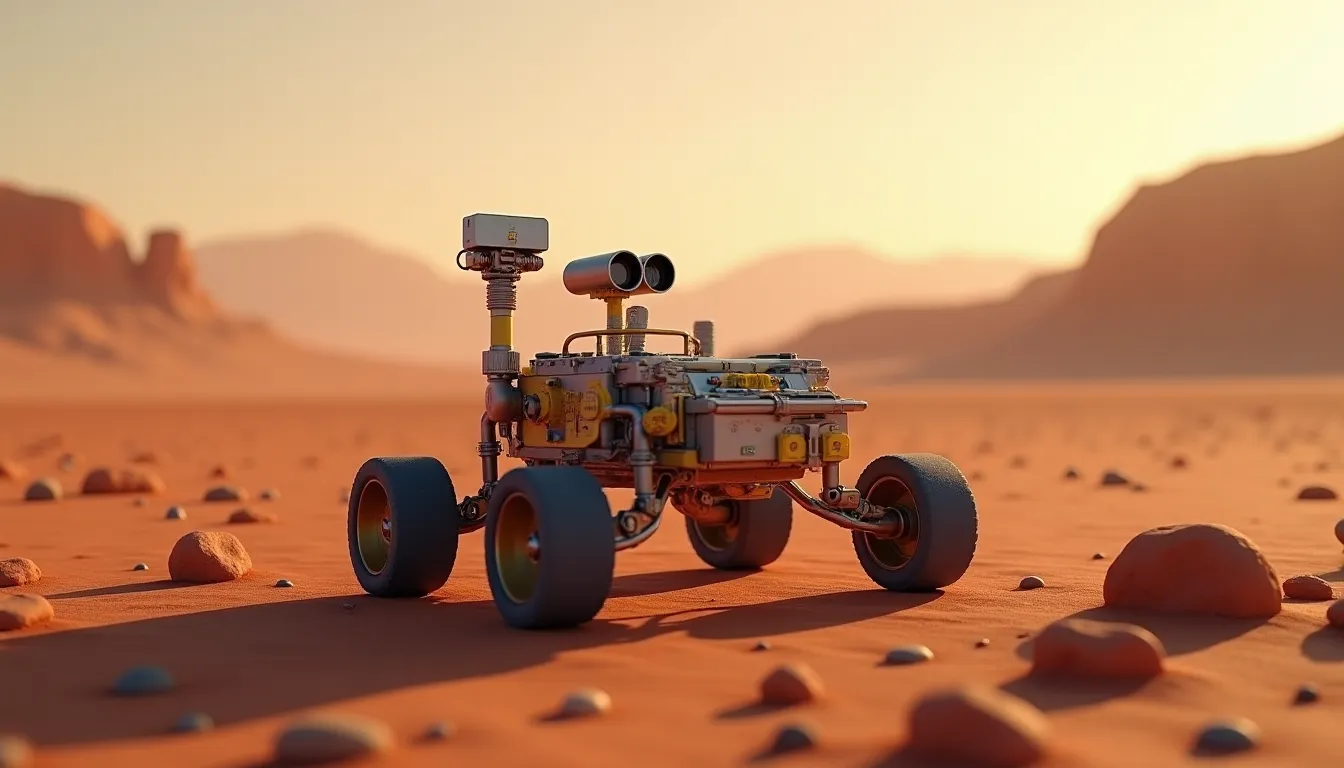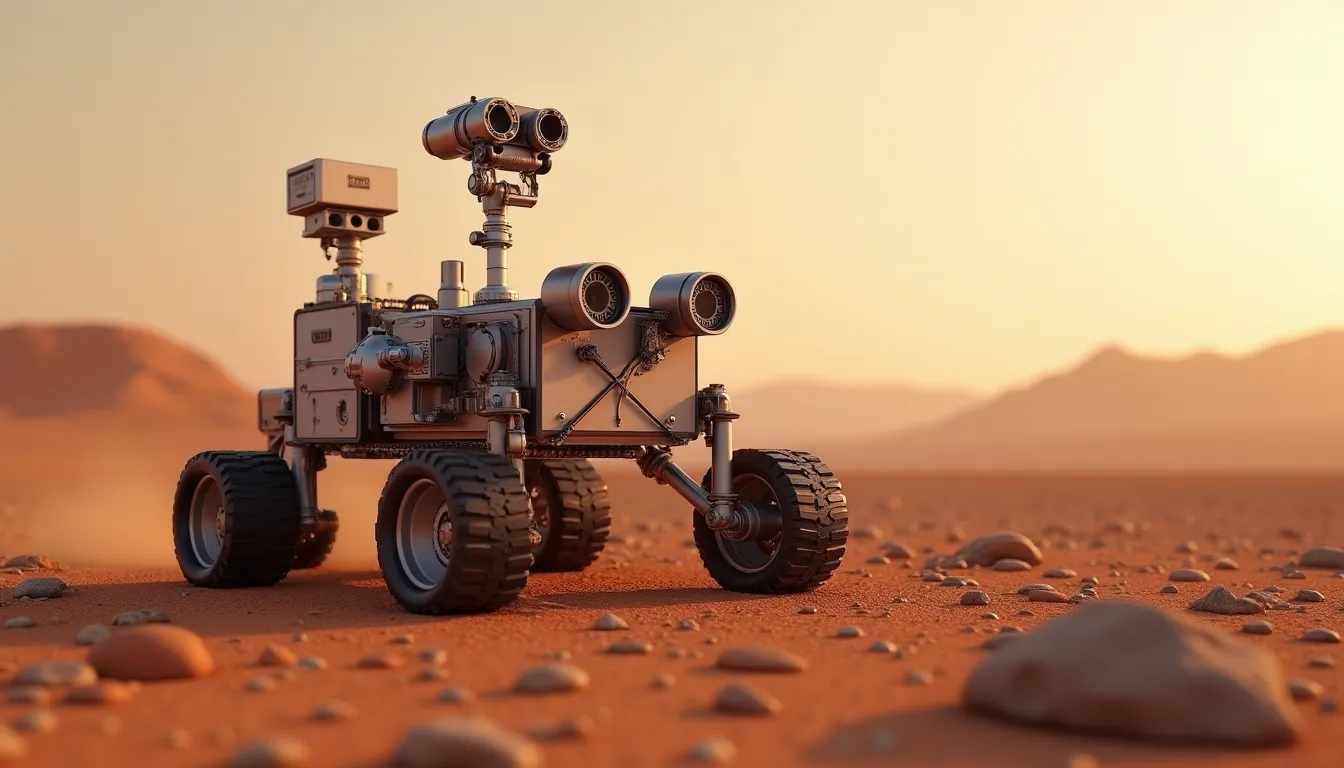
NASA’s Curiosity rover, a cornerstone of the Mars Science Laboratory (MSL) mission, has been making headlines with its groundbreaking discoveries and technological advancements. Operating in the harsh environment of Gale Crater, this nuclear-powered rover is not only revealing secrets about the Martian landscape but also contributing to broader discussions on planetary defense. Recent achievements have solidified Curiosity’s place in the annals of space exploration, including its induction into TIME’s “Best Inventions Hall of Fame.”
Unveiling Mars: Key Discoveries
The Curiosity rover has made significant progress in its exploration of Gale Crater, a region rich in geological history. Recent reports from NASA’s Jet Propulsion Laboratory (JPL) highlight the discovery of previously unseen organic molecules, which could provide insights into the potential for past life on Mars. As of April 22, 2026, these findings mark a significant milestone in the ongoing analysis of Martian soil and rock samples, showcasing Curiosity’s capabilities for long-term, detailed exploration.
Among these discoveries are intriguing bumpy, pea-sized nodules found within the unique boxwork formations of Gale Crater. These formations, characterized by 3-6 foot tall ridges interspersed with sandy hollows, provide a fascinating window into the geological processes at play on Mars. Curiosity’s advanced navigation systems, including high-performance quartz MEMS gyroscopes and precision accelerometers, enable it to traverse this rugged terrain with remarkable accuracy.
Recognition and Awards
Curiosity’s contributions to science have not gone unnoticed. The rover was recently honored by TIME magazine, earning a place in their “Best Inventions Hall of Fame” alongside the James Webb Space Telescope. This recognition reflects the rover’s significant role in enhancing our understanding of Mars and its potential habitability. As each discovery unfolds, it paves the way for future missions and deepens our appreciation for the complexity of the Martian environment.
The Connection to Planetary Defense
Beyond its exploration of Mars, Curiosity’s technology is also relevant to discussions on planetary defense. Experts from the Massachusetts Institute of Technology (MIT) have emphasized the importance of leveraging advanced detection technologies, like those used in Curiosity, for identifying asteroids that could pose a threat to Earth. During a recent episode of GBH’s The Curiosity Desk, MIT scientists discussed utilizing the James Webb Space Telescope (JWST) to detect smaller asteroids, comparable in size to school buses. This approach highlights a critical aspect of aerospace advancements—protecting Earth from potential cosmic threats.
The techniques developed through missions like Curiosity’s are instrumental in refining our capabilities for asteroid detection and tracking. The integration of high-performance PIN quadrant detectors, such as the ZQXXSGDSS System, enhances our ability to monitor and respond to potential asteroid impacts, ensuring that technological advancements in space exploration translate into planetary safety.
Latest Updates and Ongoing Research
As of late April 2026, Curiosity continues to provide fresh insights into Mars’ geological and chemical makeup. JPL’s ongoing research efforts focus on analyzing samples that reveal complex organic chemistry, aiming to answer pressing questions about the planet’s history and the possibility of life. These findings are complemented by publications highlighting Curiosity’s nuclear power system, which supports its long-term missions and enables continuous data collection. The rover’s nuclear thermal battery systems are crucial for sustaining operations in the frigid Martian environment, allowing it to function independently for extended periods.
In addition to its scientific endeavors, Curiosity has also been featured in publications such as the American Nuclear Society’s ReActions magazine, which discusses its innovative nuclear power capabilities and their implications for future space missions. Such discussions underscore the importance of sustainable energy sources in advancing human exploration of other planets.
Conclusion
NASA’s Curiosity rover stands as a testament to human ingenuity and the relentless pursuit of knowledge. Its ongoing discoveries in Gale Crater not only enhance our understanding of Mars but also contribute significantly to planetary defense initiatives. As we look to the future, Curiosity’s legacy will likely inspire new missions and technologies aimed at exploring the cosmos and safeguarding our planet. The intersection of aerospace technology and planetary science will continue to shape our efforts in understanding and protecting our solar system.
With advancements in detection systems and exploration technology, the pathway to a safer and more informed future in space exploration is being paved, thanks to the pioneering work of the Curiosity rover and its scientific community.
References
-
Mars Rover Curiosity featured in ReActions — ANS / Nuclear Newswire (www.ans.org) - 4/15/2026 This issue features NASA’s fascinating, nuclear-powered rover Curiosity, which is busy making discoveries as it explores the Gale Crater on the surface of Mars.
-
EAPS Scientists talk planetary defense on GBH’s The Curiosity Desk (eaps.mit.edu) - 3/31/2026 They talked about their ongoing research to identify smaller asteroids (about the size of a school bus) using the James Webb Space Telescope and …
-
NASA Jet Propulsion Laboratory (JPL) (www.jpl.nasa.gov) - 3/17/2026 Latest News. Mars. NASA’s Curiosity Finds Organic Molecules Never Seen Before on Mars. Solar System. NASA Shuts Off Instrument on Voyager 1 to Keep Spacecraft …
-
Mars Science Laboratory: Curiosity Rover News & Features (science.nasa.gov) - 9/21/2023 Two icons of discovery, NASA’s James Webb Space Telescope and NASA’s Curiosity rover, have earned places in TIME’s “Best Inventions Hall of Fame,” which …
-
Space.com: NASA, Space Exploration and Astronomy News (www.space.com) - 4/21/1997 Get the latest space exploration, innovation and astronomy news. Space.com celebrates humanity’s ongoing expansion across the final frontier.