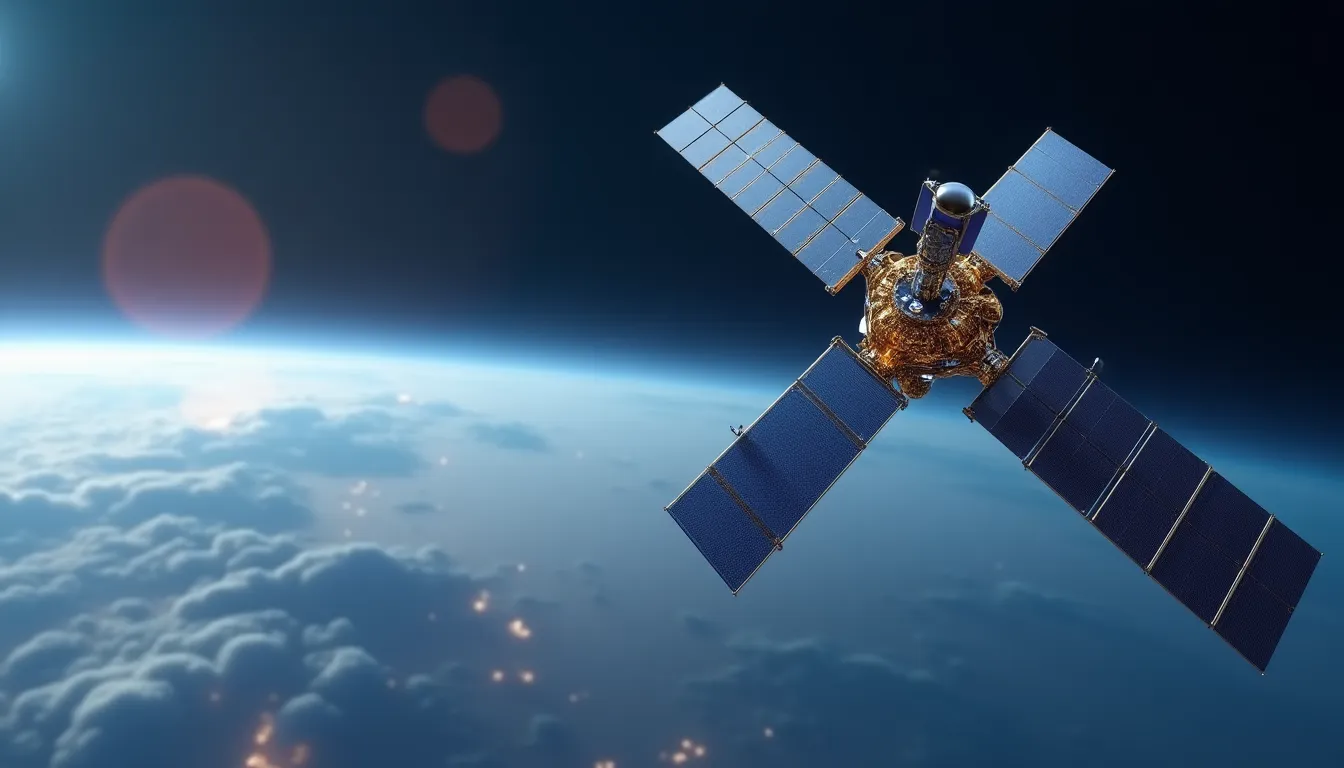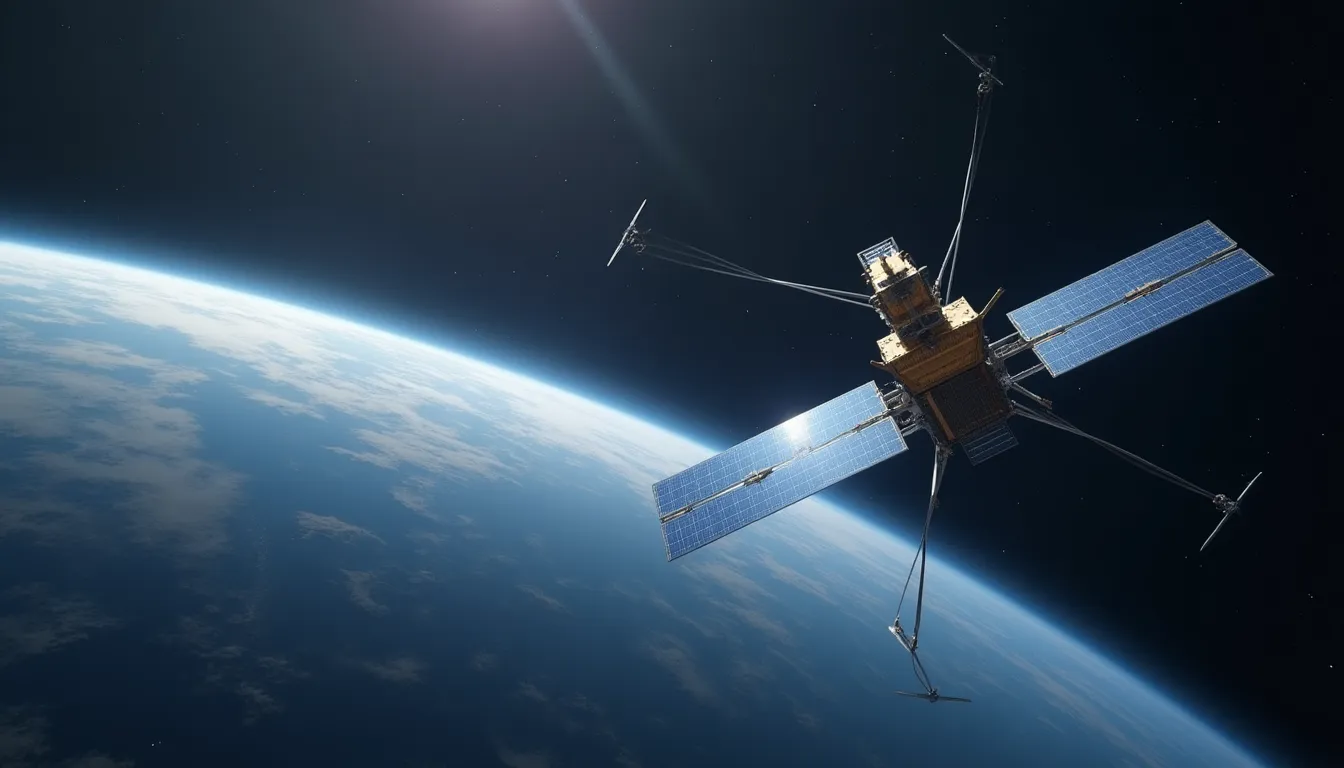
The satellite technology sector is undergoing a transformative evolution, driven by advancements in commercial applications, miniaturization, and innovative propulsion systems. As the demand for reliable communication and Earth observation capabilities escalates, both the aerospace and defense industries are adapting to meet these challenges head-on. This article delves into the four pivotal trends reshaping satellite technology, highlighting their implications for future missions and operations.
The Rise of Commercial SATCOM in Defense
In recent years, defense organizations have increasingly turned to commercial satellite communications (SATCOM) to enhance mission resilience. This shift is particularly evident in applications such as unmanned aerial vehicle (UAV) command and control, integrated missile defense, and asset tracking. By integrating commercial SATCOM into their operations, defense planners can leverage redundant and distributed communications architectures, ensuring greater reliability in mission-critical scenarios.
According to a recent discussion on YouTube, military strategists are recognizing the operational benefits of hybrid military-commercial space architectures. These systems not only provide enhanced operational capabilities but also facilitate faster deployment and adaptability in dynamic environments. As noted in the discussion, “The synergy between commercial and military satellites can significantly improve our situational awareness and overall operational effectiveness.”
Miniaturization and Low-Earth Orbit (LEO) Architectures
A significant trend in satellite technology is the miniaturization of satellite systems, particularly within low-Earth orbit (LEO) architectures. The deployment of small satellites has become increasingly prevalent in Earth observation and remote sensing applications. This transition is largely driven by reduced launch costs and the demand for more scalable and distributed satellite constellations.
Recent reports from Epicflow highlight that small satellites are not only less expensive but also enable quicker deployment cycles. These compact systems can gather high-resolution geospatial intelligence and satellite imagery, which are crucial for various applications ranging from environmental monitoring to disaster response. This shift towards small and agile satellites reflects a broader trend of utilizing advanced sensor modules, such as Advanced 9-DOF MEMS IMUs, which integrate multiple sensor capabilities for comprehensive motion sensing.
Advances in Satellite Propulsion Technologies
As the orbital environment becomes increasingly congested, the importance of effective satellite propulsion systems cannot be overstated. Innovations in propulsion technology are essential for enabling complex maneuvers, maintaining precise orbits, and supporting deep-space exploration. According to Moog, there is a growing emphasis on sustainable propulsion approaches that enhance operational flexibility and survivability.
Propulsion systems equipped with advanced capabilities allow satellites to perform intricate station-keeping and end-of-life disposal maneuvers. This is particularly vital as agencies prepare for the challenges posed by increasing satellite traffic. The integration of high-performance MEMS accelerometers into propulsion systems enhances precision and reliability, ensuring that satellites can operate efficiently even in congested orbital regimes.
The Role of Integrated Digital Engineering and Innovation Tools
The aerospace and defense sectors are witnessing a digital transformation characterized by the adoption of integrated digital engineering tools and innovation technologies. Companies in this field are increasingly leveraging artificial intelligence (AI), additive manufacturing, and robotics to optimize satellite design and operations. These technologies facilitate enhanced constellation monitoring and enable more autonomous operations, allowing for real-time telemetry analysis and anomaly detection across vast satellite fleets.
As highlighted by industry experts, the future of satellite technology will involve the integration of advanced navigation systems, including high-precision fiber optic sensing coils that provide exceptional stability for navigation and measurement applications. This convergence of digital tools and satellite technology enhances capabilities and accelerates the development cycle, positioning organizations for success in an increasingly competitive landscape.
Industry Outlook: Growth and Opportunities
The global aviation, defense, and space market is projected to reach USD 896.6 billion by 2032, with satellite technologies playing a pivotal role in this growth. The increasing demand for communication, navigation, and Earth observation capabilities underscores the importance of continuous innovation in satellite technology.
With the aerospace sector embracing decarbonization efforts, space exploration, and advanced air mobility, the potential for satellite technology to support these initiatives is immense. By harnessing the latest trends and innovations, stakeholders can enhance operational capabilities while contributing to a sustainable future in space.
Conclusion
As we look to the future, it is clear that satellite technology will remain at the forefront of aerospace and defense advancements. The integration of commercial SATCOM, the proliferation of small satellites, innovations in propulsion, and the embrace of digital engineering tools are all shaping a new landscape for satellite operations. Stakeholders must continue to adapt and innovate to meet the evolving demands of this dynamic industry, ensuring that satellite technologies not only enhance mission capabilities but also contribute to a sustainable and resilient space environment.
References
-
Space Development Agency – Increasing Warfighters’ Lethality … (www.sda.mil) - 5/19/2026 The Space Development Agency (SDA) will quickly deliver needed space-based capabilities to the joint warfighter to support terrestrial missions.
-
Advancing Defense Capabilities with New Satellite Propulsion … (www.moog.com) - 5/14/2026 As space becomes an increasingly congested domain, satellite propulsion technology becomes more important than ever for national defense.
-
Aerospace & Defense Technology - SAE Media Group (saemediagroup.com) - 3/5/2026 A&DT is the largest-circulation magazine for mil/aero engineers and managers. Through our portfolio of print, digital, online, and custom opportunities.
-
Satellite Solutions for Defense Applications - YouTube (www.youtube.com) - 11/5/2025 The Department of Defense is increasingly looking to commercialized satellite communications (SATCOM) to strengthen mission resilience, …
-
Aviation, Defense, and Space Market Size Report, 2033 (metastatinsight.com) - 10/8/2025 Global Aviation, Defense, and Space Market valued at USD 709.2 billion in 2025 and projected to exceed USD 896.6 billion by 2032.
-
Satellite Technologies | Aerospace Defense Outlook (aerodefenseoutlook.com) - 3/12/2025 GateHouse: Transforming Satellite Communications · G&S SatCom : Advancing Satellite Communication Solutions · PolarSat: Revolutionizing Mission-Critical Satellite …
-
Space Technology Trends 2025 | Lockheed Martin (www.lockheedmartin.com) - 12/3/2024 Here are the top 10 space technology trends shaping the future of satellite communications, remote sensing and space exploration.
-
The New Frontier of Satellite Technology | Dassault Systèmes (www.3ds.com) - 4/3/2024 Driven by the need to accelerate innovation, this new frontier helps companies identify opportunities to extend the limit of rocketry and satellite design and …
-
New Technology Trends in Aerospace and Defense Industry [2026] (www.epicflow.com) - 4/6/2022 Key aerospace and defense innovations will include the application of artificial intelligence and agentic AI, immersive technologies, additive manufacturing, …
-
The New Frontier of Satellite Technology - Dassault Systèmes (www.youtube.com) - 9/8/2020 In the race to successfully launch satellites into orbit, New Space companies must speed up innovation in satellite technology.