The aerospace and defense industries are witnessing a transformative phase in satellite technology, characterized by the transition from experimental trials to mainstream commercial applications. As we approach 2026, several key developments are reshaping how we perceive and utilize satellite connectivity, especially with the integration of non-terrestrial networks (NTNs) into 5G and Internet of Things (IoT) ecosystems.
Satellite-to-Handset Connectivity Enters Commercial Phase
In a significant step forward, satellite connectivity is poised to enter a commercial phase with the launch of 5G services utilizing satellite technology. Leading the charge is AST SpaceMobile, which has partnered with AT&T to offer device-to-device (D2D) communication through its innovative BlueWalker platform. This initiative aims to roll out beta services in early 2026, supported by a planned constellation of 60 satellites designed to enhance global connectivity.
The partnership between Apple and Globalstar represents another pivotal development in this space. By integrating satellite capabilities into iPhones, Apple has moved satellite services from a niche market to mainstream acceptance, enabling users to access messaging, roadside assistance, and geo-location services in areas without traditional cellular coverage. This shift is setting a new standard that other handset manufacturers are now striving to match.
Advanced 5G Non-Terrestrial Network Demonstrator Launched
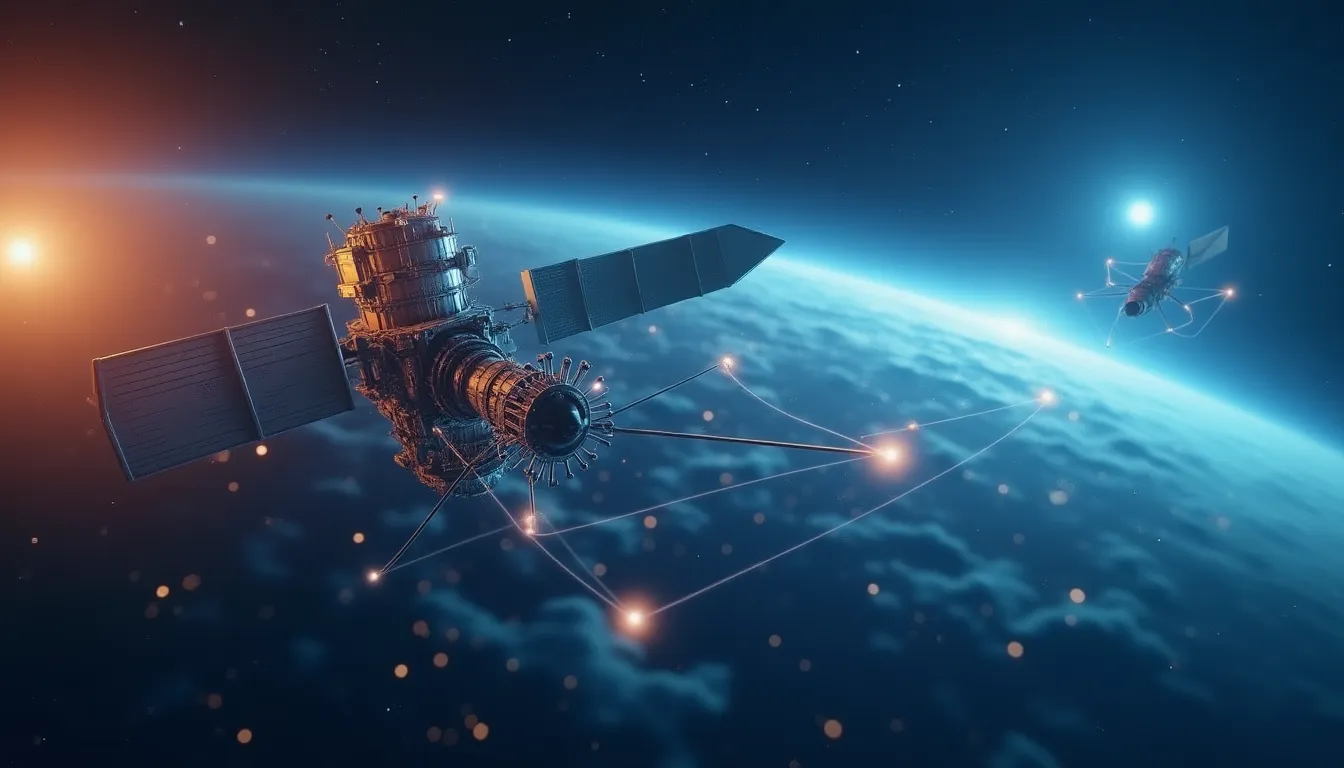
On January 14, 2026, Airbus UpNext unveiled its SpaceRAN (Space Radio Access Network) demonstrator, designed to revolutionize 5G connectivity in orbit. This cutting-edge system utilizes software-defined satellite technology to manage and optimize 5G signals directly in space, a notable departure from conventional satellite relaying methods. By reducing latency and maximizing data throughput, SpaceRAN is expected to enable more efficient network management and user-to-user direct connectivity.
In collaboration with industry leaders such as Aalyria, AccelerComm, and Deutsche Telekom, the project is part of the Air!5G initiative under France’s France 2030 investment plan. Initial results from this demonstrator are anticipated by 2028, paving the way for next-generation 6G wireless technology and significantly lowering the costs associated with orbital data transmission.
Record Satellite Deployment Activity
The satellite launch landscape is experiencing unprecedented growth, exemplified by Exolaunch’s successful deployment of 22 satellites during SpaceX’s Twilight rideshare mission on January 11, 2026. This launch included a diverse array of satellites, from Connecta IoT satellites for Turkey’s Plan-S initiative to the BlackCAT satellite, a NASA-supported project developed by Kongsberg NanoAvionics and Penn State University.
In 2025 alone, Exolaunch completed 11 missions, deploying a total of 197 customer satellites into orbit, with plans for over 20 additional missions in 2026. This increased launch cadence not only supports commercial ventures but also scientific missions, marking a significant increase in satellite deployment activity.
Scientific Satellite Mission for Exoplanet Research
In a landmark achievement for scientific exploration, RTX’s Blue Canyon Technologies launched a Saturn-200 minisatellite on January 14, 2026, as part of NASA’s Pandora mission. This satellite is equipped with the largest telescope payload ever integrated onto a Blue Canyon spacecraft, specifically designed for studying the atmospheres of exoplanets and the activity of their host stars. The advanced guidance, navigation, and control systems ensure the precision pointing and stability required for such intricate observations.
Key Takeaways
The satellite industry is on the cusp of a major evolution, driven by several key trends:
- Mainstream Direct-to-Handset Connectivity: Partnerships between major players are making satellite connectivity accessible to everyday users.
- Advanced Orbital Processing Capabilities: Innovations in satellite technology are enabling more efficient 5G and emerging 6G networks.
- Increased Launch Cadence: A surge in satellite launches supports both commercial and scientific endeavors, expanding the capabilities of satellite networks.
- Continued Innovation: From exoplanet observation to IoT connectivity, the applications of satellite technology are diversifying.
Conclusion
As we look toward the future, the integration of satellite technology with terrestrial networks marks a new era in aerospace and defense. The advancements in satellite-to-handset connectivity, along with innovations in 5G non-terrestrial networks, are setting the stage for a more connected world. With continued investment and development, the satellite industry is not only enhancing communication capabilities but also paving the way for groundbreaking scientific research and exploration.
References
-
Convergence Comes of Age: 2026 Shifts Satellite Promise into … (www.satellitetoday.com) - 1/16/2026 For the better part of a decade, the promise of satellite-to-handset connectivity has sat somewhere between trial and theory.
-
Lockheed Martin and GE Aerospace Complete Successful … (news.satnews.com) - 1/16/2026 NISKAYUNA, N.Y. — On Wednesday, January 14, 2026, GE Aerospace and Lockheed Martin announced the successful completion of a series of engine …
-
Airbus launches demonstrator to test global 5G connectivity in orbit (www.airbus.com) - 1/14/2026 Airbus UpNext SpaceRAN will leverage Airbus’ software-defined satellite 1 capabilities to manage and optimise 5G signals in orbit. By processing …
-
RTX provides Blue Canyon satellite for interstellar mission (www.rtx.com) - 1/14/2026 Pandora mission to utilize Saturn-200 minisatellite platform for exoplanet long observations. LAFAYETTE, Colo., Jan. 14, 2026 /PRNewswire/ …
-
Space Brief 14 Jan 2026 - KeepTrack (keeptrack.space) - 1/14/2026 This debate reveals deeper issues concerning strategic planning and innovation in satellite technology development. Read the full story …
-
Exolaunch Deploys 22 Satellites on SpaceX’s Twilight Mission (www.exolaunch.com) - 1/1/2025 In 2026, Exolaunch is gearing up for another record-breaking year, with plans to execute over 20 missions and deliver several hundred satellites …