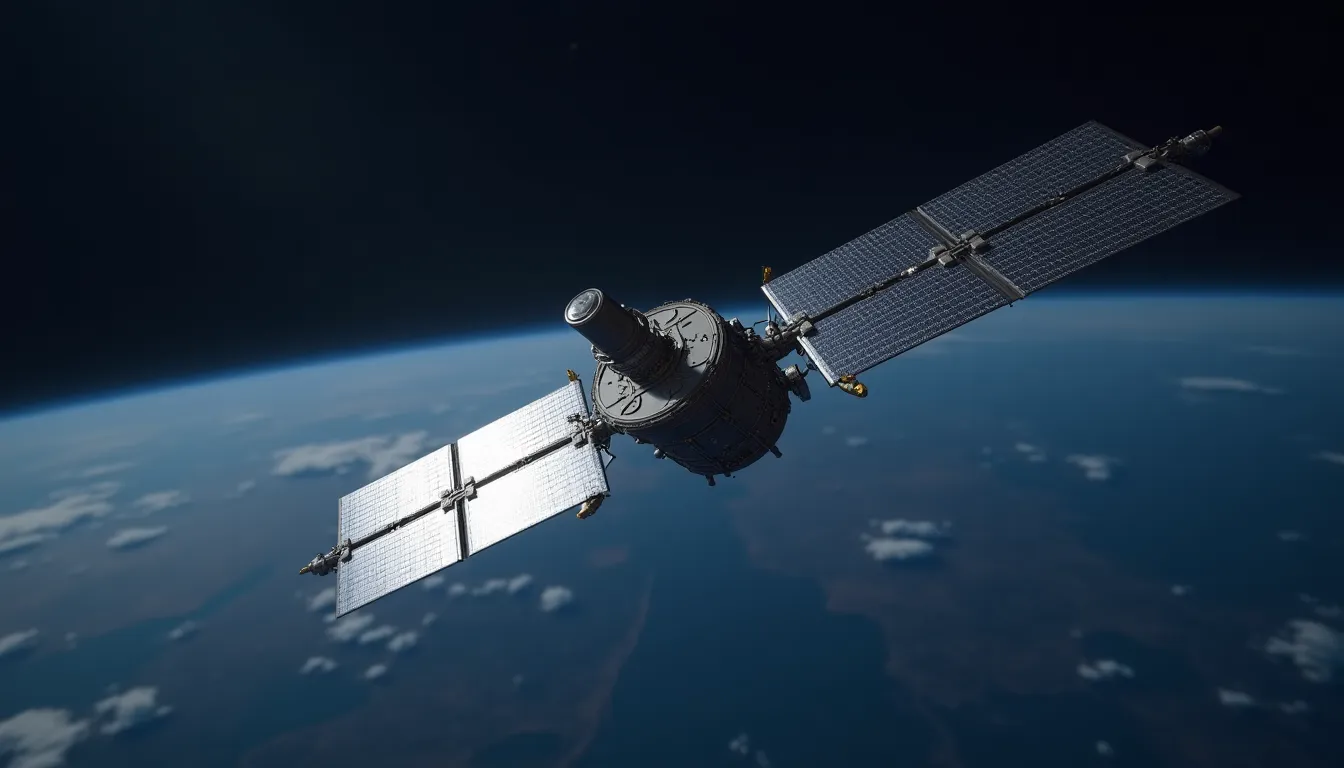
The aerospace and defense sectors are witnessing unprecedented advancements in satellite technology, as new innovations enhance capabilities in surveillance, space research, and environmental monitoring. Recent developments highlight the role of autonomous systems, cutting-edge research aboard the International Space Station (ISS), and emerging industry trends that will shape the satellite landscape in 2026 and beyond.
Advancements in Autonomous Space-Based Surveillance
One of the most significant breakthroughs in satellite technology is the development of autonomous space-based surveillance systems. Under a contract with the Defense Advanced Research Projects Agency (DARPA), BAE Systems’ FAST Labs is advancing technologies that will enable real-time, independent monitoring from orbit. This project aims to enhance military capabilities in contested environments by creating systems that can operate without direct human intervention.
According to a BAE Systems spokesperson, “The future of defense is in automated systems that can analyze data and make decisions at speeds and efficiencies unattainable by human operators. Our collaboration with DARPA is a pivotal step towards realizing this vision.”
These advancements in autonomous surveillance are paving the way for enhanced situational awareness and quicker decision-making processes for defense agencies, making them crucial in the evolving landscape of geopolitical tensions.
Research Insights from the International Space Station
NASA’s ongoing research aboard the ISS is yielding valuable insights that are directly applicable to satellite technology and operations. Recent experiments, particularly the StemCellEx-IP1 investigation, have demonstrated the production of superior-quality stem cells in microgravity. These findings could inform the development of satellite-based biotech platforms, opening new avenues for regenerative medicine and healthcare applications.
In addition, JAXA (Japan Aerospace Exploration Agency) Flight Engineer Kimiya Yui conducted a series of experiments that expose various materials to the harsh conditions of space. This includes the installation of hardware in the Kibo airlock to test material durability against vacuum, radiation, and extreme temperatures. The outcomes of these experiments are expected to enhance the resilience of satellite materials, ensuring longevity and reliability in both terrestrial and extraterrestrial applications.
Furthermore, Yui’s installation of an advanced carbon dioxide scrubber, designed for noise reduction in upcoming Artemis lunar missions, highlights the importance of life support technologies for long-duration satellite operations. These advancements are not only significant for space exploration but also enhance the sustainability of environmental monitoring satellites.
Emerging Trends Shaping the Satellite Industry
As we approach 2026, several key trends are emerging that will transform the satellite industry. A recent article from Via Satellite outlines ten technology trends to watch, emphasizing the integration of artificial intelligence (AI) in satellite operations. Industry leaders, including Lt. Gen. John Shaw and Impulse Space CEO Tom Mueller, advocate for the adoption of AI to improve data processing and decision-making capabilities.
Another noteworthy trend is the exploration of Very Low Earth Orbit (VLEO) propulsion technologies. VLEO satellites promise significant advancements in imaging and communication capabilities due to their proximity to Earth, which can enhance data transfer speeds and reduce latency. This shift towards VLEO is expected to revolutionize how satellite constellations are designed and operated.
Moreover, the push for open standards in ground systems is crucial, especially as major players like Starlink and Amazon create proprietary ecosystems. Open standards are essential for fostering interoperability among various satellite systems, allowing for more robust and flexible satellite networks.
The Future of Satellite Technology
The developments in satellite technology, from DARPA’s autonomous systems to groundbreaking ISS research, are setting the stage for a transformative era in aerospace and defense. As we move forward, the integration of advanced navigation systems, such as high-performance MEMS accelerometers and precision accelerometers, will play a vital role in enhancing satellite functionality and reliability.
In tandem, the proliferation of technologies like the ZQXXSGDSS System and Advanced Sensor Modules will enable precise positioning and tracking capabilities, essential for modern satellite operations. Moreover, innovations in fiber optic sensing coils, such as the HXG46JZ120 System, are expected to enhance temperature stability and performance in demanding applications.
Conclusion
The satellite industry is on the brink of a technological revolution, driven by advancements in autonomous systems, innovative research from the ISS, and emerging trends that prioritize AI and VLEO propulsion. As these technologies continue to evolve, they will not only enhance the capabilities of satellites but also expand their applications across various sectors, from defense to environmental monitoring. The future of satellite technology is bright, promising a new era of exploration and connectivity that is both exciting and full of potential.
References
-
BAE Systems to advance autonomous space-based surveillance technology for DARPA (www.baesystems.com) - 12/11/2025 BAE Systems to advance autonomous space-based surveillance technology for DARPA … 10 December 2025. Business Electronic Systems (Inc.) FAST Labs …
-
Expedition 74 Crew Promotes Innovation with Stem Cell and Space Tech Research (www.nasa.gov) - 12/11/2025 Stem cells, materials research, and a technology demo topped the research schedule for the Expedition 74 crew on Thursday.
-
Marking the End of 2025 | December 2025 - Via Satellite (interactive.satellitetoday.com) - 12/2/2025 This year I tackled “10 Tech Trends to Impact the Space and Satellite Industry,” talking to experts like retired Lt. Gen. John Shaw, former …