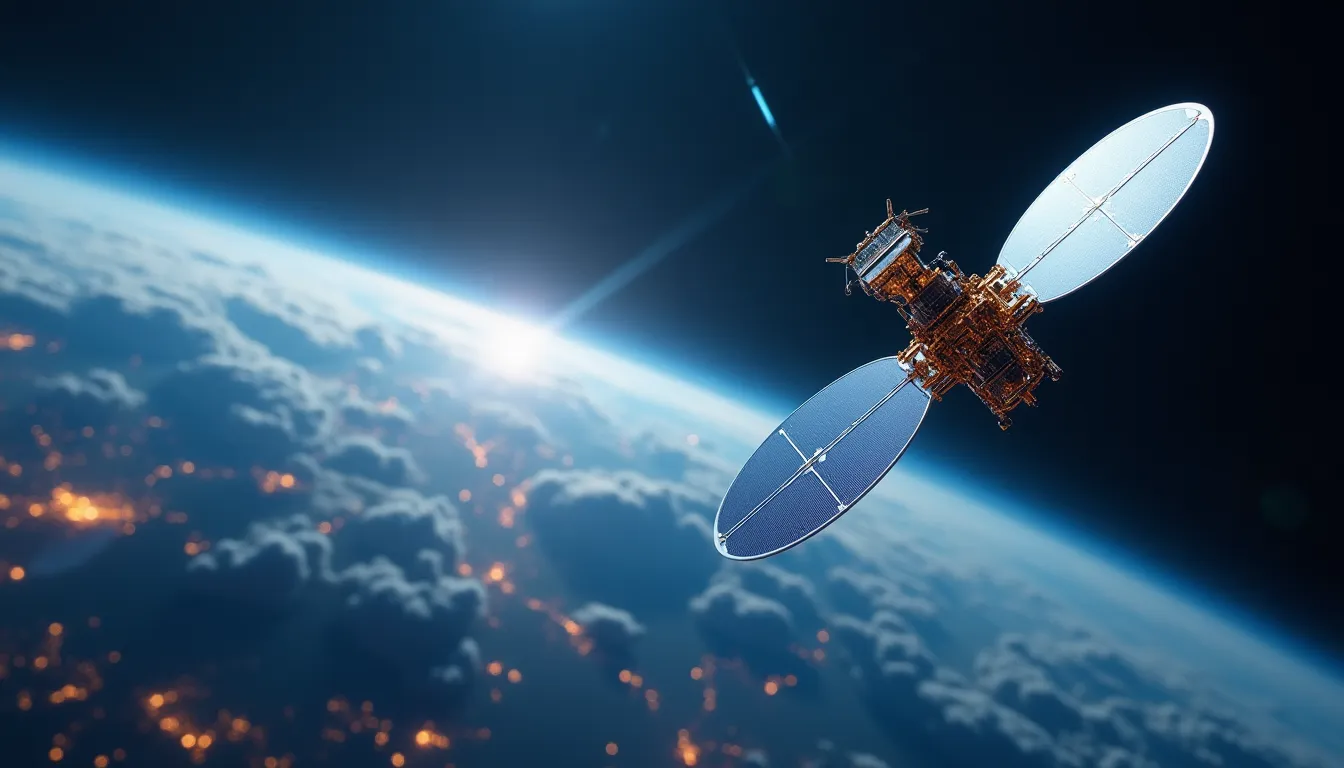
As the aerospace and defense sectors evolve, satellites play an increasingly critical role in surveillance, communication, and data processing. Recent developments highlight significant advancements in autonomous technology, artificial intelligence (AI), and the potential of Very Low Earth Orbit (VLEO) operations, setting the stage for a new era in satellite capabilities.
Advances in Autonomous Space-Based Surveillance
On December 10, 2025, BAE Systems announced a pivotal contract with the Defense Advanced Research Projects Agency (DARPA) to enhance autonomous space-based surveillance technologies. This initiative emphasizes the growing defense interest in on-board autonomy for real-time sensing and processing in contested space environments. The focus on autonomous on-orbit processing aims to reduce latency and increase the survivability of satellite systems.
“The future of military operations in space will center around autonomous capabilities that can provide timely intelligence and reduce response times during missions,” stated an industry expert. This transition toward onboard autonomy is seen as essential for adapting to evolving threats in space.
AI as a Cross-Cutting Technology
Artificial intelligence is emerging as a transformative force within the satellite industry. A recent report by Via Satellite titled Marking the End of 2025 highlights AI applications as a super-trend expected to reshape satellite operations, data processing, and constellation management in the coming years. Industry leaders foresee AI playing a crucial role in enhancing payload autonomy, improving operational efficiency, and facilitating complex data analysis.
Specifically, AI can optimize the performance of advanced sensor modules, such as the Advanced Sensor Module, which integrates a three-axis gyroscope, accelerometer, and magnetic sensor. This integration ensures exceptional stability and comprehensive motion sensing capabilities, essential for autonomous satellite operations.
The Rise of Very Low Earth Orbit (VLEO) Operations
Very Low Earth Orbit is gaining renewed attention due to recent advancements in propulsion technologies and drag compensation methods. As highlighted in the December 2025 industry outlook, these innovations make VLEO operations more feasible, leading to opportunities for lower-latency communications and enhanced resolution in Earth observation.
The operational advantages of VLEO include closer proximity to the Earth, which can significantly reduce signal transmission delays. This capability is vital for applications requiring real-time data, such as disaster response and environmental monitoring. Furthermore, the development of advanced navigation systems, such as high-performance MEMS accelerometers, will be crucial for maintaining the precision required in VLEO operations.
Open Ground Systems and Interoperability
The push towards open ground-system standards is another critical trend shaping the satellite industry. As operators and suppliers increasingly endorse these standards, the aim is to foster interoperability among different satellite systems. This shift challenges the vertically integrated approaches seen with major constellations like Starlink and Amazon’s Project Kuiper.
By promoting open standards, satellite operators can create a more competitive landscape, enabling multi-vendor ecosystems and facilitating better service offerings. The adoption of advanced ground-segment technologies will be essential for achieving these interoperability goals, ensuring that satellite systems can communicate effectively and share data seamlessly.
Ongoing Technology Maturation from the ISS
NASA’s International Space Station (ISS) has been a cornerstone of satellite technology development over the past 25 years. The ongoing research and demonstrations aboard the ISS have led to significant advancements in on-orbit manufacturing and power systems. Technologies such as on-orbit 3D printing, including metal part production, and roll-out solar arrays (iROSA) have been instrumental in enhancing satellite capabilities.
The iROSA technology has notably increased the ISS’s power generation by 20–30%, showcasing the potential for similar advancements in satellite systems. These innovations are critical for developing lighter, more scalable satellite platforms and reducing the logistics challenges associated with ground-to-orbit hardware replacements.
Conclusion
The future of satellite technology is poised for transformation, driven by advancements in autonomous systems, AI applications, VLEO operations, and open ground standards. As the aerospace and defense industries adapt to new challenges and opportunities, the integration of these technologies will be essential for enhancing operational capabilities and ensuring the effectiveness of satellite missions. The coming years will undoubtedly see further innovations that will shape the way we think about and utilize satellite systems in the modern era.
References
-
BAE Systems to advance autonomous space-based surveillance technology for DARPA (www.baesystems.com) - 12/11/2025 BAE Systems to advance autonomous space-based surveillance technology for DARPA … 10 December 2025. Business Electronic Systems (Inc.) FAST Labs …
-
25 Years of Space Station Technology Driving Exploration (www.nasa.gov) - 12/11/2025 After 25 years of habitation, the International Space Station continues to be a proving ground for technology that powers NASA’s Artemis …
-
Marking the End of 2025 | December 2025 - Via Satellite (interactive.satellitetoday.com) - 12/2/2025 This year I tackled “10 Tech Trends to Impact the Space and Satellite Industry,” talking to experts like retired Lt. Gen. John Shaw, former …