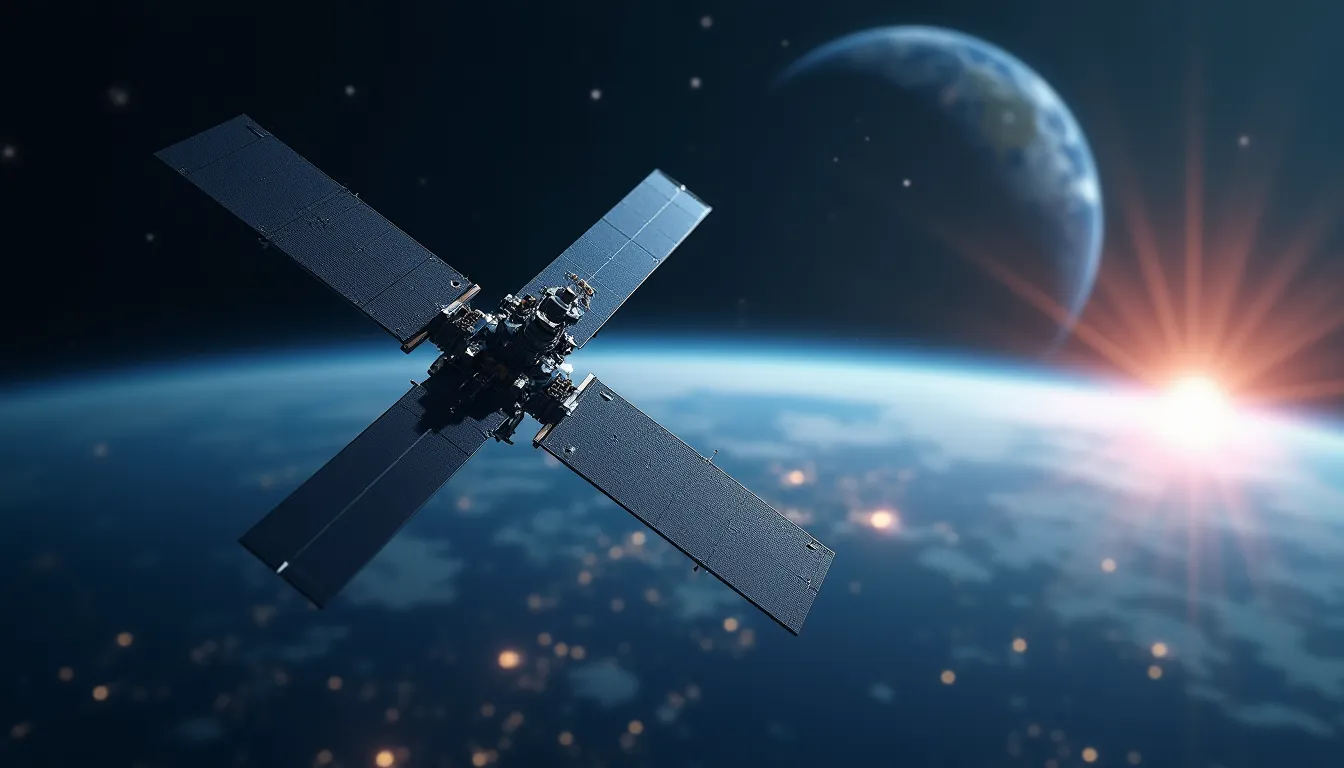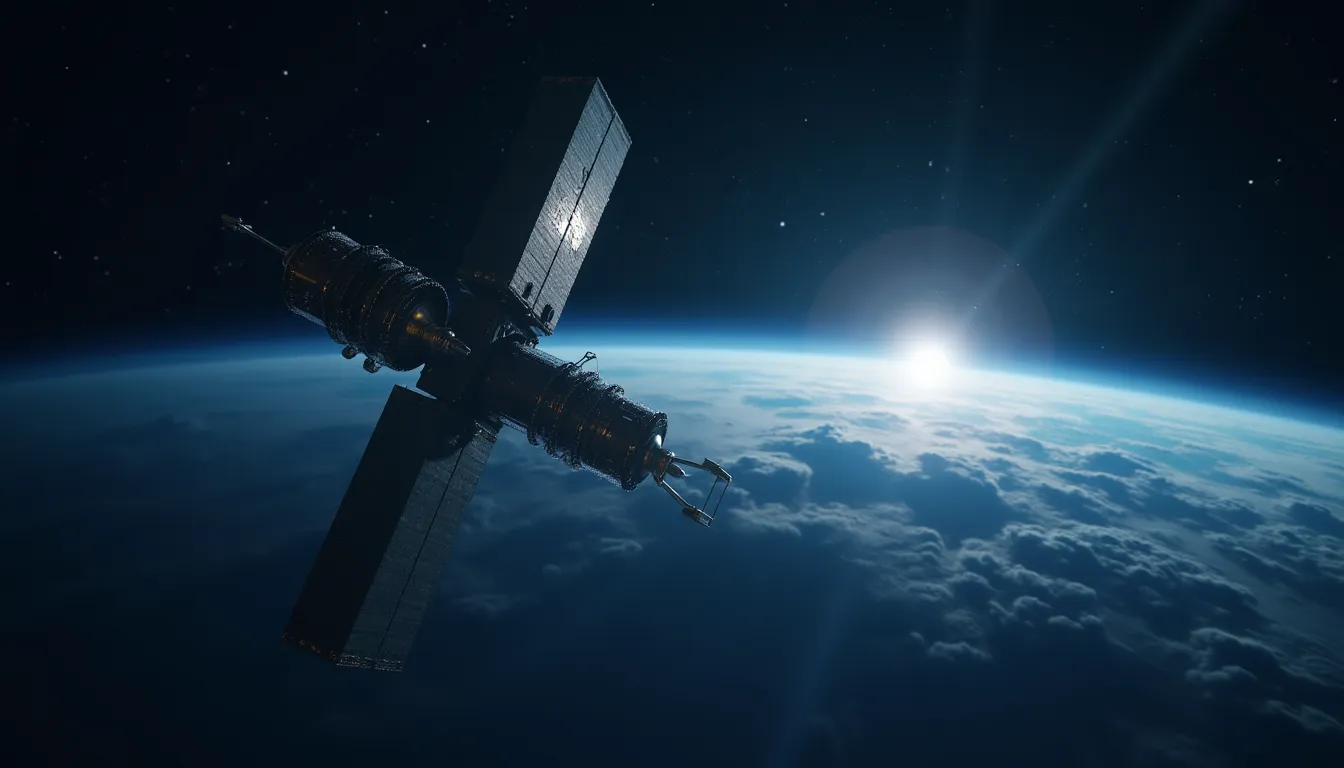
The aerospace and defense sectors are witnessing significant advancements in spacecraft technology, with recent developments signaling a new chapter in lunar exploration and satellite communications. Key milestones include NASA’s Artemis II mission, SpaceX’s ongoing Starlink satellite launches, and Japan’s latest cargo spacecraft for the International Space Station (ISS). This article delves into these developments, highlighting their technical details and implications for the future of space exploration.
NASA’s Artemis II Mission Progress
NASA has achieved a critical milestone in its Artemis program with the successful stacking of the Orion spacecraft on the Space Launch System (SLS) rocket. This pivotal moment, achieved on October 24, 2025, marks the preparations for the Artemis II mission, which aims to be the first crewed flight test to orbit the Moon. The mission will carry four astronauts and is designed to test various systems and technologies that will be essential for future lunar exploration.
The Orion spacecraft is equipped with state-of-the-art navigation systems, including high-performance MEMS accelerometers that provide superior stability and precision necessary for deep-space travel. The integration of these advanced navigation technologies ensures that the spacecraft can accurately navigate the complexities of lunar orbit and beyond, a crucial capability as NASA aims for sustainable lunar exploration.
ESCAPADE Mission and International Collaboration
In parallel with the Artemis II preparations, NASA has reopened media accreditation for the ESCAPADE mission, which is set to deploy twin spacecraft to study solar wind interactions with Mars. This mission aims to unravel the complexities of Martian space weather, offering valuable insights into the planet’s atmosphere and potential habitability.
Moreover, NASA is actively working with global space agencies to advance the Artemis Accords, a framework established to promote responsible exploration of celestial bodies. These accords are pivotal for fostering international collaboration and ensuring that space exploration adheres to ethical standards, particularly as missions become increasingly ambitious.
SpaceX Starlink Satellite Expansion
SpaceX continues to revolutionize global communications with its rapid deployment of Starlink satellites. The recent planned launch of the 230th Starlink V2 Mini satellite from Cape Canaveral reflects the company’s commitment to expanding global broadband internet coverage through a large constellation of low Earth orbit satellites.
These satellites are designed to integrate with advanced sensor modules, including 9-DOF MEMS IMUs, which feature exceptional stability and comprehensive motion sensing capabilities. This integration enhances the satellites’ operational efficiency, allowing for improved data transmission and connectivity across diverse geographic regions.
Japan’s HTV-X Cargo Spacecraft Launch
On October 25, 2025, Japan’s space agency successfully launched the HTV-X cargo spacecraft using the H3 rocket. This unmanned spacecraft is tasked with delivering supplies to the ISS, marking a significant advancement in Japan’s space logistics capabilities. The HTV-X represents a leap forward in autonomous space transport, equipped with cutting-edge technology that ensures efficient cargo delivery and operational reliability.
The HTV-X’s design incorporates advanced navigation systems that utilize high-precision fiber optic sensing coils. These systems provide exceptional stability for navigating to the ISS, ensuring that cargo delivery is executed with precision and safety.
Airbus SpainSat NG-II: Enhancing Secure Communications
In another notable development, Airbus successfully launched the SpainSat NG-II, a next-generation secure communications satellite. This satellite enhances Spain’s capabilities regarding secure communications infrastructure, particularly for defense-related applications.
The SpainSat NG-II employs advanced thermal battery systems that ensure reliable power supply during its operational lifespan, thus enhancing its effectiveness in secure communications. As defense-related space technology advances, satellites like the SpainSat NG-II play a crucial role in maintaining national security and communication integrity.
Conclusion
The recent advancements in spacecraft technology signify a transformative period in aerospace and defense. NASA’s Artemis II mission, the ongoing expansion of SpaceX’s Starlink constellation, Japan’s innovative cargo spacecraft, and Airbus’s secure communications satellite all illustrate the dynamic progress occurring in the industry.
As these missions evolve, they not only enhance our capabilities in space exploration but also lay the groundwork for future technologies that will shape our understanding of the cosmos. With a commitment to innovation and international cooperation, the aerospace sector is poised to achieve unprecedented milestones in the years to come.
References
-
Japan successfully launches new cargo spacecraft to deliver supplies to International Space Station (www.michigansthumb.com) - 10/26/2025 Japan’s space agency has successfully launched its new flagship H3 rocket carrying an unmanned cargo spacecraft for its first mission to …
-
Watch Japan’s advanced new cargo spacecraft launch to the ISS for the 1st time today (www.space.com) - 10/26/2025 Japan’s new HTV-X cargo spacecraft launched on its first-ever mission to the International Space Station on Saturday, Oct. 25, 2025.
-
Month: October 2025 (spaceflightnow.com) - 10/25/2025 Month: October 2025 · Live coverage: SpaceX to launch 28 Starlink satellites on Falcon 9 rocket from Cape Canaveral · SpaceX surpasses 2024 orbital launch record …
-
Airbus-built SpainSat NG-II secure communications satellite successfully launched (www.airbus.com) - 10/25/2025 SpainSat NG-II, the second Airbus-built new generation secure communications satellite for Spain, has been successfully launched.
-
Orion Spacecraft Completes Major Stacking Milestone Ahead of Artemis II Mission (news.lockheedmartin.com) - 10/25/2025 This marks a major milestone for the Artemis II mission as NASA and industry work toward a historic launch to the Moon with four astronauts …
-
2025 NASA News Releases (www.nasa.gov) - 4/11/2025 Media are invited to see NASA’s fully assembled Artemis II SLS (Space Launch System) rocket and Orion spacecraft in mid-October before its crewed test flight …