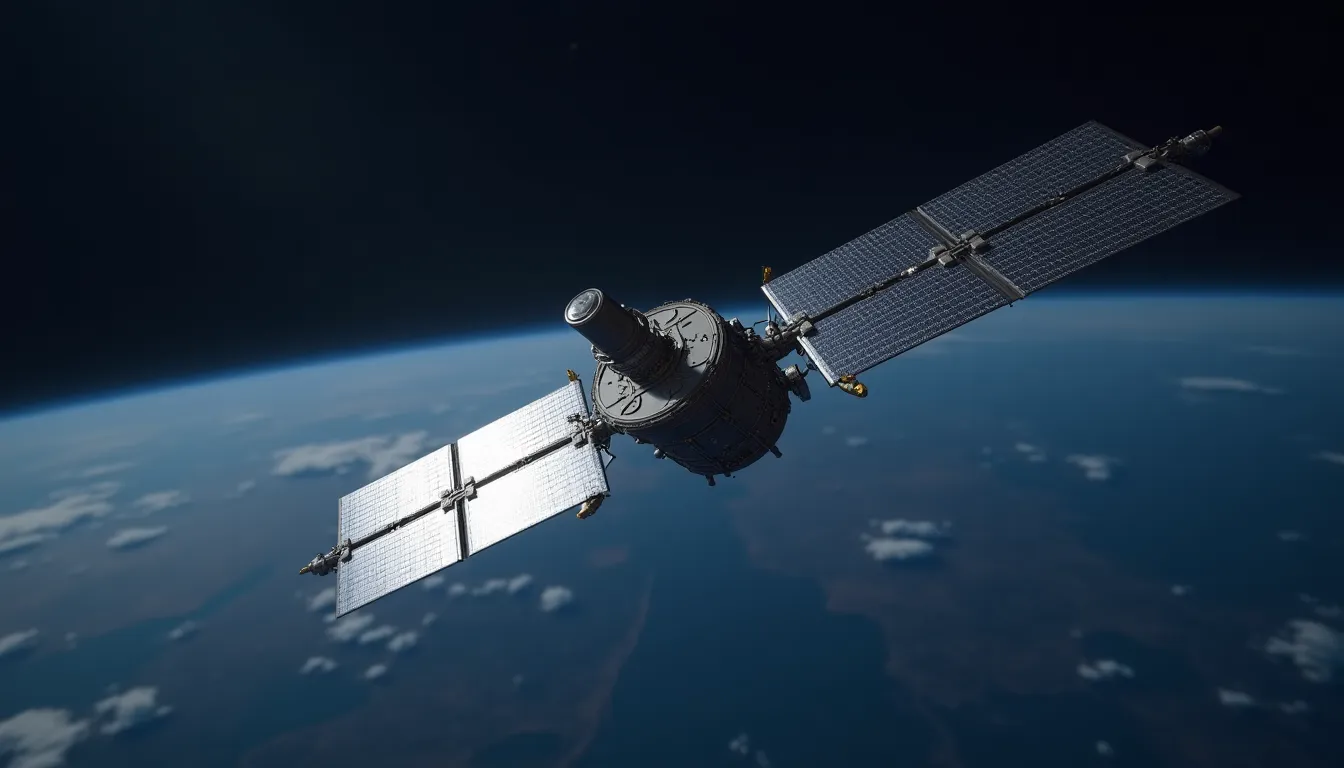
The aerospace and defense sectors are undergoing a transformative shift due to significant advancements in satellite technology. With an increasing focus on low Earth orbit (LEO) constellations, missile defense enhancements, and the integration of artificial intelligence (AI), these developments are reshaping how military operations are conducted. Driven by substantial U.S. military contracts and innovative commercial initiatives, the future landscape of satellite technology is poised for growth and evolution.
The Golden Dome Initiative: A New Era in Missile Defense
Launched in September 2025, the Golden Dome Initiative represents a landmark investment by the Pentagon, with a budget ranging from $24.4 to $25 billion. This initiative aims to deploy a multi-orbit constellation of satellites, including geostationary (GEO), medium Earth orbit (MEO), and low Earth orbit (LEO) systems. These satellites will utilize infrared sensors designed to detect the heat signatures of hypersonic missiles, thus enhancing missile tracking capabilities and enabling space-based interception.
According to experts, the deployment of these advanced infrared sensors is crucial for maintaining a strategic edge in missile defense. The integration of technologies such as the Advanced Sensor Module, which features a 9-DOF MEMS IMU (Inertial Measurement Unit), will facilitate precise fire-control tracking in real-time scenarios.
Tranche 3 Tracking Layer: Enhancing Missile Warning Systems
In line with the Golden Dome Initiative, the Space Development Agency (SDA) has awarded a $3.5 billion contract for the Tranche 3 Tracking Layer, slated for completion by December 2025. This contract includes the deployment of 72 satellites, with Rocket Lab receiving a notable $805 million for the construction of 18 satellites on its Lightning platform. These satellites will be equipped with Phoenix infrared sensors, further bolstering the capabilities for missile warning and tracking.
The advanced systems being developed are designed for seamless integration into existing military frameworks, ensuring interoperability and enhanced operational efficiency across various platforms. This capability is instrumental in meeting the evolving threats posed by hypersonic and other advanced missile technologies.
The Shift Towards Miniaturization and Proliferated Constellations
One of the most significant trends in satellite technology is the shift towards miniaturization, with a notable emphasis on small satellites such as CubeSats and nanosatellites. These smaller systems are proliferating in LEO, driven by their versatility in Earth observation, remote sensing, and increased resilience against emerging threats.
Lockheed Martin is at the forefront of this movement, supporting the U.S. Space Force with MEO missile-tracking satellites and pioneering the TacSat initiative, which features the first orbital 5G.MIL payload capable of onboard data processing. This is a significant leap in military communication technology, allowing for faster and more efficient data transmission in operational environments.
Advanced Propulsion Technologies and Very High Throughput Satellites
As satellite capabilities expand, so does the need for advanced propulsion systems. The industry is investing in sustainable propulsion technologies that enable deep-space maneuvers, ensuring that satellites can adapt to changing mission requirements and operational demands. This includes the development of Very High Throughput Satellites (VHTS), which aim to achieve terabit-per-second data rates, significantly enhancing connectivity and defense capabilities.
These innovations are critical for both military and commercial applications, as they facilitate faster communication and more effective data processing, essential for modern military operations.
The Role of AI and Machine Learning in Satellite Operations
The incorporation of AI and machine learning (ML) into satellite technology is another transformative trend. Onboard processing capabilities are being enhanced through AI integration, allowing satellites to process vast amounts of data in real time. This shift towards edge computing improves the flexibility and responsiveness of satellite networks against potential threats.
Lockheed Martin’s Small Satellite Processing & Delivery Center is a prime example of how the industry is ramping up production capabilities to meet increasing demand for these advanced systems. The center utilizes precision accelerometers and advanced navigation systems to ensure operational reliability and accuracy in hostile environments.
Future Developments and Industry Insights
In addition to these advancements, companies like ICEYE are expanding their European defense satellite fleet to enhance tactical intelligence. The ongoing upgrades to the Defense Support Program (DSP) satellites further illustrate the commitment to modernizing military satellite capabilities, particularly in infrared missile detection.
As we look to the future, the replacement of DSP satellites with the Space Based Infrared System (SBIRS) indicates a broader trend towards more advanced, resilient satellite architectures that can withstand the demands of modern warfare.
Conclusion
The recent advancements in satellite technology are set to redefine the landscape of aerospace and defense. With initiatives like the Golden Dome and Tranche 3 Tracking Layer paving the way for improved missile defense and real-time tracking capabilities, the integration of AI and advanced propulsion systems will only enhance these efforts. As the industry continues to innovate, the importance of satellite technology in ensuring national security and operational efficiency cannot be overstated. The future is bright for satellite technology, promising a new era of capabilities and strategic advantages in both military and civilian applications.
References
-
Advancements in Satellite Technology - Aerospace & Defense News (orbysa.com) - 4/3/2026 Explore the latest developments in satellite technology, including the Golden Dome initiative, miniaturization trends, and AI integration …
-
Defense Support Program Satellites - Space Force (www.spaceforce.mil) In their 22,300-mile, geosynchronous orbits, DSP satellites help protect the United States and its allies by detecting missile launches, space launches and …
-
Reports - BryceTech (brycetech.com) - 3/30/2026 Orbital and Suborbital Launch Sites of the World 2025. Download Report. A BryceTech publication. January 28, 2025. Revised December 22nd, 2025.
-
New Technology Trends in Aerospace and Defense Industry [2026] (www.epicflow.com) - 12/29/2025 According to the research, some of most prominent satellite technology trends are going to be the following ones: Satellite miniaturization …
-
Top Space Technology Trends and Aerospace Innovations … (www.techtimes.com) - 12/11/2025 SpaceX, Blue Origin, Rocket Lab, and other firms have introduced innovations in rocket launches, satellite deployment, and space mission design.
-
Advancements Driving Small Satellite Launch Technology Growth (www.aerospacedefensereview.com) - 12/5/2025 Advances in small satellite launch technology drive cost-effective access to space, supporting growth in telecommunications, earth observation, …
-
Military Space Systems - Defense News (www.defensenews.com) - 11/17/2025 Defense News offers premier news and analysis of military space programs and technologies to keep defense and industry decision-makers informed.
-
Satellite Tech Solution Providers List 2025 - Aero Defense Outlook (aerodefenseoutlook.com) - 3/12/2025 With the rise of Low Earth Orbit (LEO) satellites, organizations are achieving greater coverage, resilience, and affordability in global communications.
-
Space Technology Trends 2025 | Lockheed Martin (www.lockheedmartin.com) - 12/3/2024 Here are the top 10 space technology trends shaping the future of satellite communications, remote sensing and space exploration.
-
The New Frontier of Satellite Technology | Dassault Systèmes (www.3ds.com) - 4/3/2024 Driven by the need to accelerate innovation, this new frontier helps companies identify opportunities to extend the limit of rocketry and satellite design and …