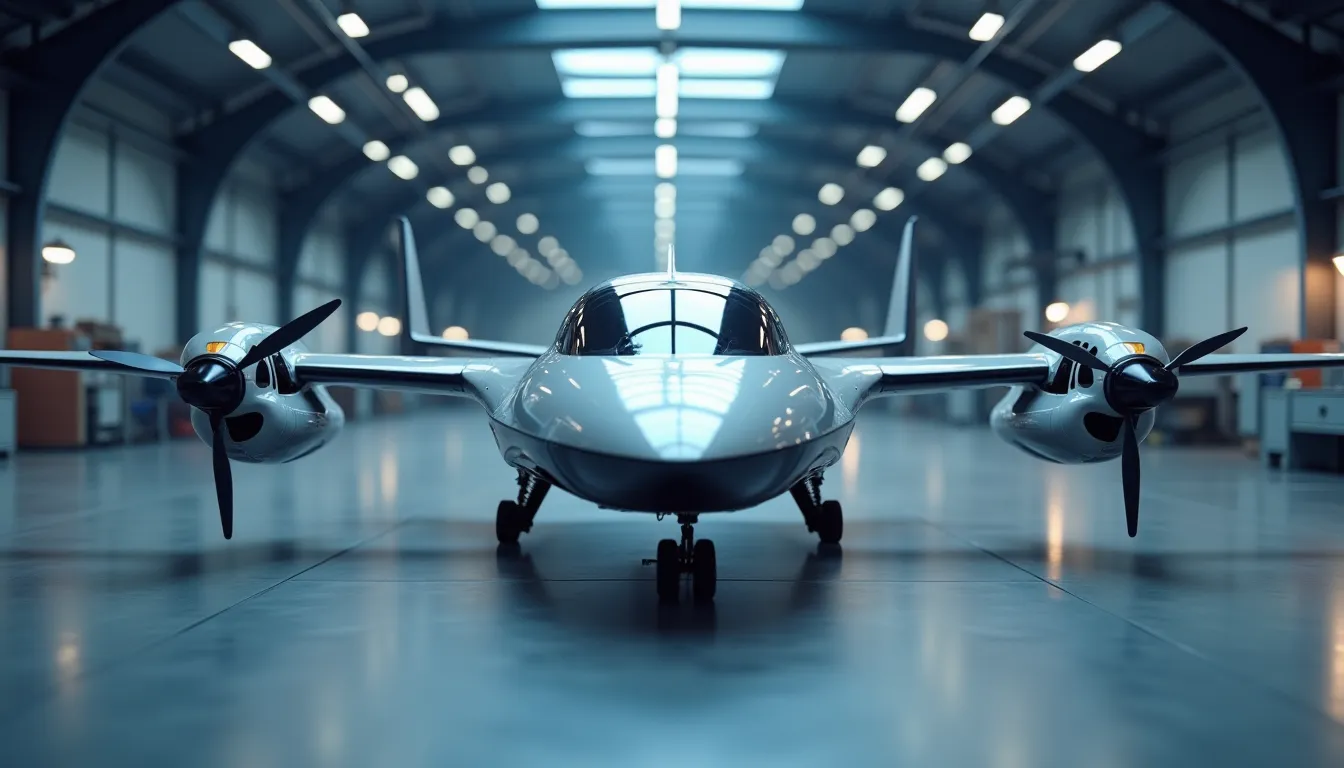
The aerospace industry is witnessing a transformative phase with the increasing adoption of electric aircraft technologies. As manufacturers innovate to reduce carbon footprints and enhance operational efficiencies, the focus has shifted towards hybrid-electric regional planes and electric vertical takeoff and landing (eVTOL) aircraft. This article delves into the recent developments, market trends, and future prospects of electric aircraft.
Recent Developments in Electric Aircraft
Hybrid-Electric Regional Aircraft
One of the most notable advancements in the electric aircraft sector is AURA AERO’s ERA, a hybrid-electric regional aircraft that recently secured its first firm order from Pan Européenne Air Service (PEAS). Designed to carry 19 passengers, the ERA boasts a remarkable reduction in CO2 emissions—up to 80% compared to traditional thermal aircraft. This aircraft features eight Safran ENGINeUS electric motors and two Sustainable Aviation Fuel (SAF)-compatible turbogenerators, enabling it to achieve a range of 900 nautical miles and a cruising speed of 300 knots. Prototype testing is set to begin by the end of 2026, with the first flight scheduled for 2027 and commercial launch anticipated in 2030. The order book currently stands at approximately 700 Letters of Intent (LOIs) valued at around $12 billion from 16 operators.
Advancements in eVTOL Technology
In the realm of eVTOLs, Honda is making significant strides with its hybrid-electric eVTOL prototype, expected to complete full-scale testing by the end of 2025. The aircraft will feature a 250-300 kW turbogenerator that allows for an impressive intercity range of 400 kilometers, addressing the limitations of battery-only systems. The first remote flight is slated for March 2026 in the United States, with FAA certification targeted for the early 2030s.
Meanwhile, Ascendance has achieved a critical milestone with its ATEA hybrid-electric aircraft, completing the airframe structure and entering final integration phases. This aircraft will utilize the STERNA hybrid-electric system, which incorporates Safran ENGINeUS motors and is designed with a focus on practical decarbonization strategies. The STERNA technology has already been successfully deployed in various civil aviation partnerships and drone applications.
The Surge in eVTOL Testing
The years 2025 and 2026 are set to be pivotal for electric air taxi testing, with companies like Beta, Archer, Joby, and Wisk actively conducting flight tests. Beta has already exceeded 100,000 nautical miles in testing its Alia model, while Archer is advancing with the assembly of six conforming aircraft, three of which are in final stages of assembly for Type Inspection Authorization (TIA). Joby is also progressing with its conforming aircraft, aiming for a flight test by late 2026, with FAA testing expected in 2027.
In addition, Wisk is focusing on its Gen 6 model, currently undergoing hover testing and preparing for transition flight capabilities within the next six months. Companies are increasingly emphasizing hybrid propulsion systems to enhance the operational range and efficiency of eVTOLs, though it should be noted that no FAA certification for powered-lift eVTOLs is expected in 2026.
Market Trends and Growth Potential
The commercial electric aircraft market is on an upward trajectory, growing from $6.96 billion in 2025 to an estimated $7.83 billion in 2026. This growth is driven by advancements in electric, hybrid, and fuel-cell propulsion technologies, regulatory support, and a burgeoning demand for short to medium-haul operations in sectors like cargo, air taxis, and commuter services. Electric aircraft technologies encompass a range of systems, including battery-electric (Li-ion and solid-state), fuel cells (Proton Exchange Membrane and Solid Oxide Fuel Cells), and hybrid configurations (parallel and series).
A significant highlight in the sector is the integration of advanced navigation systems that utilize high-performance MEMS accelerometers, ensuring superior stability and precision for navigation applications. These systems are crucial for the safe operation of both traditional and electric aircraft, enhancing their performance in various conditions.
Conclusion
The advancements in electric aircraft technology signify a promising shift towards a more sustainable aviation future. With hybrid-electric regional planes and eVTOLs entering critical testing phases, the potential for decarbonization in civil aviation is expanding. As companies continue to innovate and regulatory frameworks evolve, the electric aircraft market is poised for substantial growth. The integration of technologies such as precision accelerometers and advanced sensor modules will further enhance the capabilities of these aircraft, ensuring their place in the future of aviation. As we look ahead, 2026 promises to be a landmark year in the journey towards greener skies.
References
-
Ascendance Reaches Structural Milestone in the Development of Its … (evtolinsights.com) - 3/5/2026 French startup Ascendance has announced its ATEA hybrid-electric aircraft has entered its final integration phase, with the completion of a …
-
Commercial Electric Aircraft Market - Global Forecast - GlobeNewswire (www.globenewswire.com) - 3/4/2026 The commercial electric aircraft market grew from USD 6.96 billion in 2025 to USD 7.83 billion in 2026. It is projected to continue expanding at …
-
Vertical Aerospace to Report FY 2025 Business & Strategy Update … (www.businesswire.com) - 3/3/2026 Vertical is creating a safer, cleaner, and quieter way to travel. Valo is a piloted, four-passenger, Electric Vertical Take-Off and Landing ( …
-
First firm order placed for AURA’s ERA regional hybrid-electric aircraft (www.greenairnews.com) - 3/2/2026 French aircraft manufacturer AURA AERO has announced the first firm order for its regional ERA 19-seater hybrid-electric aircraft.
-
Advanced Air Mobility Pioneers Edge Toward Long-awaited … (www.ainonline.com) - 2/20/2026 However, SMG has ruled out any powered-lift eVTOL passenger-carrying aircraft completing FAA type certification in 2026—as has been widely …
-
2025: A Big Year for Electric Air Taxi Testing, But 2026 Will Be Bigger (www.flyingmag.com) - 1/12/2026 Electric air taxis and other novel aircraft are expected to participate in operational trials as soon as summer 2026.
-
Honda targets early 2026 for first flight of eVTOL prototype - AeroTime (www.aerotime.aero) - 11/21/2025 The aircraft is slated for a first flight in March 2026, flown remotely in the United States. Type certification is targeted for the early 2030s …
-
Latest Industry Updates - Electric Aircraft 2026 (www.electric-aircraft-conference.com) - 8/8/2023 Get the latest stories from Electric Aircraft USA 2026 on regulatory moves, tech milestones, partnerships, and trends shaping electric aviation.