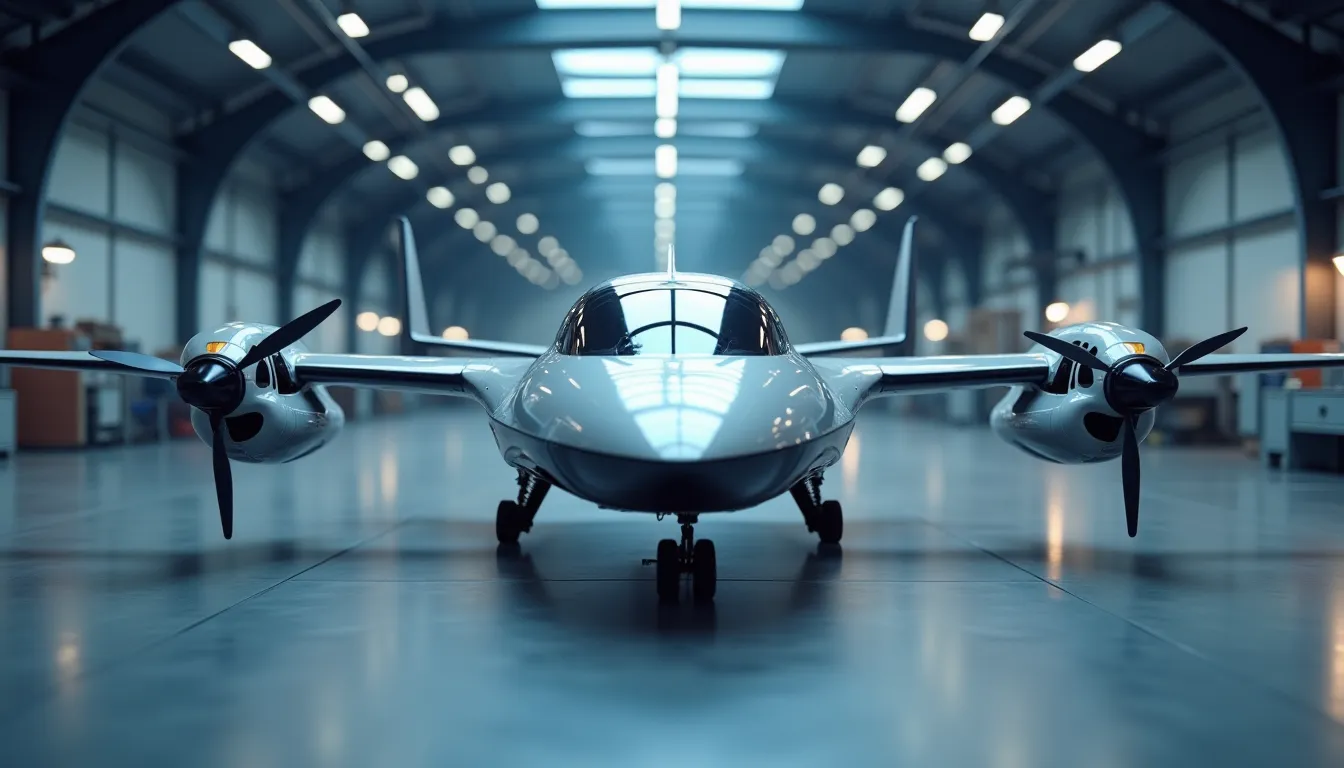
The electric aviation sector is experiencing unprecedented advancements, particularly in the realm of electric Vertical Take-Off and Landing (eVTOL) aircraft. Recent developments from January 10 to February 9, 2026, highlight significant milestones achieved by companies worldwide, particularly in China, where AutoFlight’s Matrix eVTOL has made headlines with its successful flight demonstrations. As the industry moves closer to commercial viability, a focus on certification, regional orders, and supporting technologies such as solid-state batteries and hybrid propulsion systems is becoming more pronounced.
eVTOL Flight Tests and Certifications
One of the standout achievements in electric aviation is AutoFlight’s Matrix eVTOL. On February 4, 2026, this uncrewed aircraft, weighing five metric tons, successfully completed a public demonstration, showcasing its ability to transition from vertical to horizontal flight. With an all-electric range of 155 miles, the Matrix can extend to 932 miles with hybrid capabilities. This aircraft is designed for various applications, including regional travel, logistics, and emergency response. Accompanying the Matrix is the CarryAll, a two-ton class eVTOL that has received full approvals from the Civil Aviation Administration of China (CAAC). By the end of 2025, AutoFlight plans to deliver 50 units of the CarryAll to UAE’s Falcon Aviation, marking a significant step in the certification of larger electric aircraft.
China’s regulatory environment is proving to be a catalyst for electric aviation, having certified the first four-seat electric aircraft for commercial operations in 2025 and the EH216-S autonomous eVTOL for limited passenger flights. Meanwhile, U.S. companies are not far behind. Boeing’s Wisk Aero has initiated full-scale testing of its autonomous eVTOL prototypes, with other players like Joby Aviation, Archer, and Beta working under the FAA’s eVTOL Integration Pilot Program, aiming for public demonstrations in the summer of 2026.
Orders and Commercialization Trends
The commercial landscape for electric aircraft is rapidly evolving, with notable orders and partnerships emerging across Asia. In February 2026, AirX and Eve Air Mobility announced a firm order for two eVTOLs with options for an additional 48 units, aimed at scaling urban air mobility solutions in Japan and Singapore. Similarly, Vertical Aerospace has partnered with Marubeni to advance the commercialization of electric air taxi services in Japan.
These developments underscore a growing interest in urban air mobility and the potential for electric aircraft to alleviate congestion and enhance transportation efficiency in metropolitan areas.
Innovations in Battery and Propulsion Technologies
A major factor driving the electric aircraft revolution is the advancement of battery technologies. For instance, E-Hang has successfully flown its eVTOL equipped with 480 Wh/kg solid-state batteries, which are anticipated to play a crucial role in enhancing the endurance of electric aircraft in 2026. Meanwhile, German company Electra is set to sell its Electra Trainer, which boasts a range of 300 km and a flight endurance of 2.5 hours, to the Chinese market, further illustrating the global appetite for electric flight solutions.
Hybrid-electric propulsion systems are also making strides, with Wisk’s full-scale prototype undergoing testing that combines turbo-generators and batteries. This hybrid approach could offer a bridge to full electrification, enabling longer ranges and faster turnaround times.
In addition to battery advancements, supporting technologies continue to emerge. AutoFlight has unveiled a floating vertiport, while ZeroAvia has commenced operations in Norway, focusing on hydrogen-powered aviation solutions. Notably, MD Aircraft is exploring fast turnaround capabilities without the need for rapid charging infrastructure.
Broader Electrified Propulsion Developments
The industry’s focus on hybrid-electric systems is further exemplified by the CFM RISE/Open Fan initiative, which aims to establish Singapore as a testbed for next-generation propulsion technologies. An MOU signed on February 2, 2026, highlights the potential for hybrid-ready engines that promise over 20% fuel efficiency gains and reduced emissions and noise.
Moreover, Beyond Aero has successfully completed wind tunnel tests for hydrogen-electric business aircraft, validating the aerodynamic designs for future aircraft that utilize external hydrogen tanks. This innovation positions hydrogen as a viable alternative to traditional aviation fuels, further diversifying the electric propulsion landscape.
Conclusion
The electric aircraft sector is on the brink of transformative change, with significant advancements in eVTOL technology, regulatory support, and innovative propulsion systems. As companies like AutoFlight and others push the boundaries of electric flight, the industry is becoming increasingly competitive, with a clear focus on sustainability and efficiency. Looking ahead, the integration of advanced navigation systems, precision accelerometers, and high-performance control systems will be pivotal in shaping the future of aviation. The coming years are likely to witness the emergence of fully certified electric passenger airliners, alongside continued innovation in hybrid and hydrogen-electric aircraft. The electric aviation revolution is not just a possibility; it is rapidly becoming a reality.
References
-
The Week In Technology, Feb. 9-13, 2026 (aviationweek.com) - 2/8/2026 Biggest eVTOL flies; ducted-fan ultra-STOL; axial-flux motor success; endurance UAS upgraded; and riblet service trial expands.
-
WATCH: First-of-Its-Kind Electric Aircraft Lifts Off in China (www.flyingmag.com) - 2/6/2026 Wednesday, February 4, 2026. How a U.S. Company Enabled Norway’s First Electric Aircraft Trials. Beta Alia electric aircraft with Bristow …
-
Electric Aviation News February 2026 - YouTube (www.youtube.com) - 2/5/2026 ZeroAvia to start operating in Norway, MD Aircraft promises fast turnaround times without fast chargers and solid state batteries are coming …
-
Outlook 2026: The airliner projects that promise new technology and … (leehamnews.com) - 2/5/2026 Fourth EU Clean Aviation funding proposal recognises hydrogen’s upcoming importance February 3, 2026; Net Zero by 2050 is beyond reach, but …
-
News Roundup February 2026 - GreenAir News (www.greenairnews.com) - 2/5/2026 GreenAir’s roundup of the latest news and comment from around the world on efforts to reduce aviation’s climate and environmental impact …
-
Singapore to establish world’s first airport testbed for next generation … (www.airbus.com) - 2/2/2026 For the future of air transport, CFM’s RISE program is accelerating development of new propulsion technologies that will pave the way for the …
-
AirX Signs Firm Order Agreement with Eve Air Mobility for Two … (www.eveairmobility.com) Order agreement adds flexibility with options for 48 more Eve eVTOLs as Japan based AirX scales Urban Air Mobility services. SINGAPORE – Feb …
-
Next Edition: February 2026 - eVTOL Insights (evtolinsights.com) - 1/27/2026 Vertical Aerospace Advances Japan Commercialisation with Marubeni Via Electric Air Taxi Routes · AirX Signs Firm Order Agreement with Eve Air …