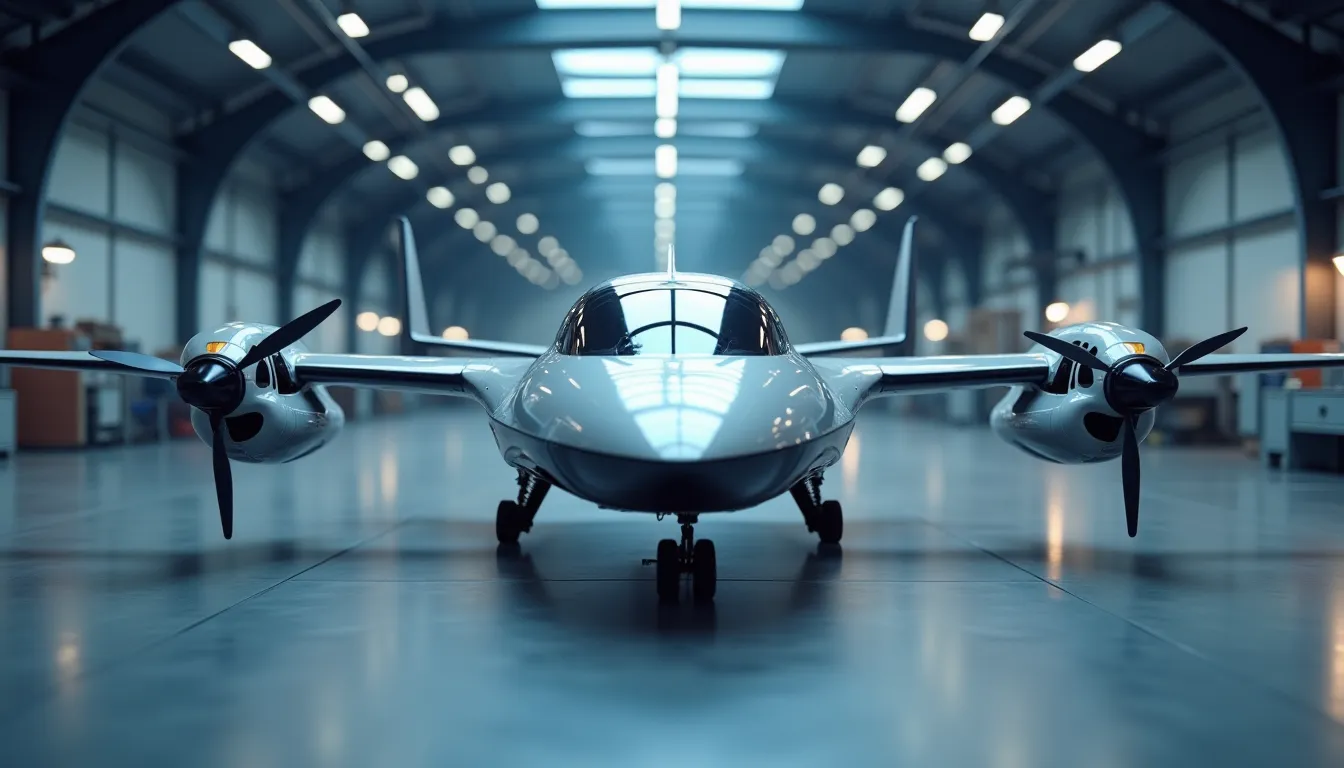
As the aerospace industry seeks to reduce its carbon footprint, recent developments in electric aircraft technology are paving the way for a new era of aviation. From hybrid-electric regional jets to hydrogen-powered business aircraft, the sector is witnessing significant advancements aimed at enhancing sustainability and operational efficiency. In this article, we delve into notable innovations from the past month, highlighting key players, industry insights, and the technical specifications that could shape the future of air travel.
Recent Breakthroughs in Electric Aircraft Technology
EVIO 810: A New Era in Regional Aviation
On December 11, 2025, the Boeing-backed startup EVIO unveiled its latest project—the EVIO 810, a hybrid-electric regional airliner designed to accommodate 76 passengers. Slated for entry into service in the early 2030s, the EVIO 810 targets the burgeoning 50- to 100-seat market, a segment poised for substantial growth as airlines increasingly prioritize sustainable solutions.
The EVIO 810 has already garnered attention with 450 conditional purchase agreements, signifying strong market interest and commercial viability. This aircraft’s development is supported by Pratt & Whitney Canada, which brings its expertise in propulsion technologies to enhance the aircraft’s efficiency and performance. The hybrid-electric propulsion system combines traditional jet engines with electric motors, promising lower emissions and operational costs while maintaining the reliability expected by regional operators.
Electra’s FAA Certification and Defense Applications
In a significant regulatory advancement, Electra filed for FAA Type Certification under Part 23 for its innovative hybrid-electric aircraft on December 10, 2025. This ultra-short takeoff and landing (STOL) design presents a unique solution for short-haul flights, enabling operations in constrained environments where traditional aircraft may struggle.
Moreover, on December 3, 2025, Electra announced the formation of a dedicated defense division aimed at exploring hybrid ultra-STOL applications for logistics and medical evacuation purposes. This strategic move positions Electra to leverage its technology in critical defense scenarios, enhancing operational capabilities in austere conditions. The hybrid-electric system not only aids in reducing emissions but also offers potential cost savings for military logistics operations.
Beyond Aero’s Hydrogen-Electric Initiative
As the industry explores alternative fuels, Beyond Aero has revealed plans for a hydrogen-electric factory, focusing on the production of its hydrogen-powered business jet. The startup’s feasibility study outlines potential industrial sites across Europe, emphasizing scalability in manufacturing processes. Hydrogen technology represents a promising avenue toward zero-emission aviation, and Beyond Aero’s commitment to this initiative reflects the industry’s broader shift toward sustainable aviation solutions.
Emerging Trends in Electric Propulsion Technology
Advanced Propulsion Techniques
The December 2025 issue of Aerospace & Defense Technology discusses innovative research into nuclear microreactors for electric propulsion systems, which could revolutionize energy generation for both aircraft and spacecraft. These microreactors promise enhanced efficiency and reliability, potentially transforming the landscape of electric aviation.
Additionally, researchers are developing techniques to control heat spikes in electric aircraft, a vital consideration for ensuring safe and efficient operations. By integrating advanced thermal battery systems and precision accelerometers, manufacturers can enhance the performance and safety of electric aircraft, thereby increasing their acceptance among operators and regulators.
Industry Insights and Expert Perspectives
Industry experts emphasize the importance of collaboration among aerospace companies, startups, and regulatory bodies to foster innovation in electric aircraft technology. According to Dr. Sarah Thompson, an aerospace engineer specializing in sustainable aviation, “The recent advancements in hybrid and hydrogen technologies indicate a paradigm shift in how we approach aviation. Collaboration between established players and innovative startups will be crucial to overcoming the technological and regulatory challenges ahead.”
Conclusion
The recent developments in electric aircraft technology signify a pivotal moment for the aerospace industry as it navigates the transition toward sustainable aviation practices. With innovative models like the EVIO 810 and Electra’s hybrid STOL aircraft gaining traction, the future looks promising for electric aviation. As we progress into 2026 and beyond, continued investment in hybrid-electric and hydrogen technologies will be essential in reshaping air travel and achieving global sustainability targets. The integration of advanced technologies, including quartz MEMS gyroscopes and high-performance CMOS imaging systems, will play a critical role in ensuring the success of these initiatives, ultimately leading to cleaner and more efficient flying experiences for passengers worldwide.
References
-
Boeing-Backed EVIO Unveils Hybrid-Electric Regional Jet With 450 … (aiaa.org) - 12/13/2025 Aerotime reports, “EVIO, a little-known hybrid-electric aircraft developer backed by Boeing, stepped into the spotlight on December 11, 2025 …
-
Boeing-backed Evio Launches Hybrid-electric Regional Airliner (www.ainonline.com) - 12/12/2025 December 11, 2025. Boeing-backed start-up Evio emerged from stealth today with the unveiling of its planned hybrid-electric regional airplane …
-
Beyond Aero Details Hydrogen-Electric Factory Plan (avweb.com) - 12/11/2025 Beyond Aero Details Hydrogen-Electric Factory Plan. Feasibility work outlines proposed industrial site and production goals. Matt Ryan.
-
Electra files to certify its hybrid-electric plane under FAA Part 23 (www.electra.aero) - 12/10/2025 December 10, 2025. Electra files to certify its hybrid-electric plane under FAA Part 23. December 3, 2025. Exclusive: Electra launches defense …
-
25AERP12 : Aerospace & Defense Technology: December 2025 (www.sae.org) - 12/3/2025 Nuclear microreactors could improve the performance of electric propulsion systems in spacecraft. Controlling Heat Spikes in Electric Aircraft …