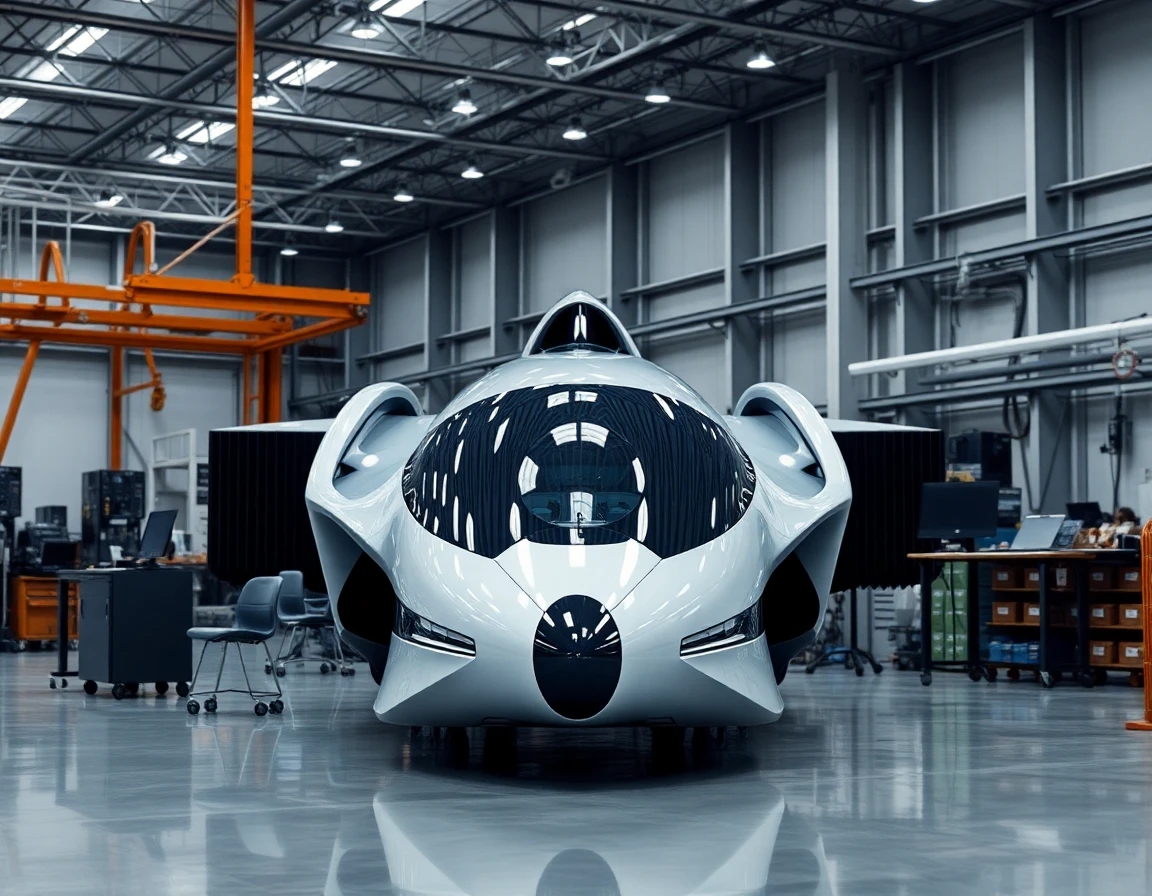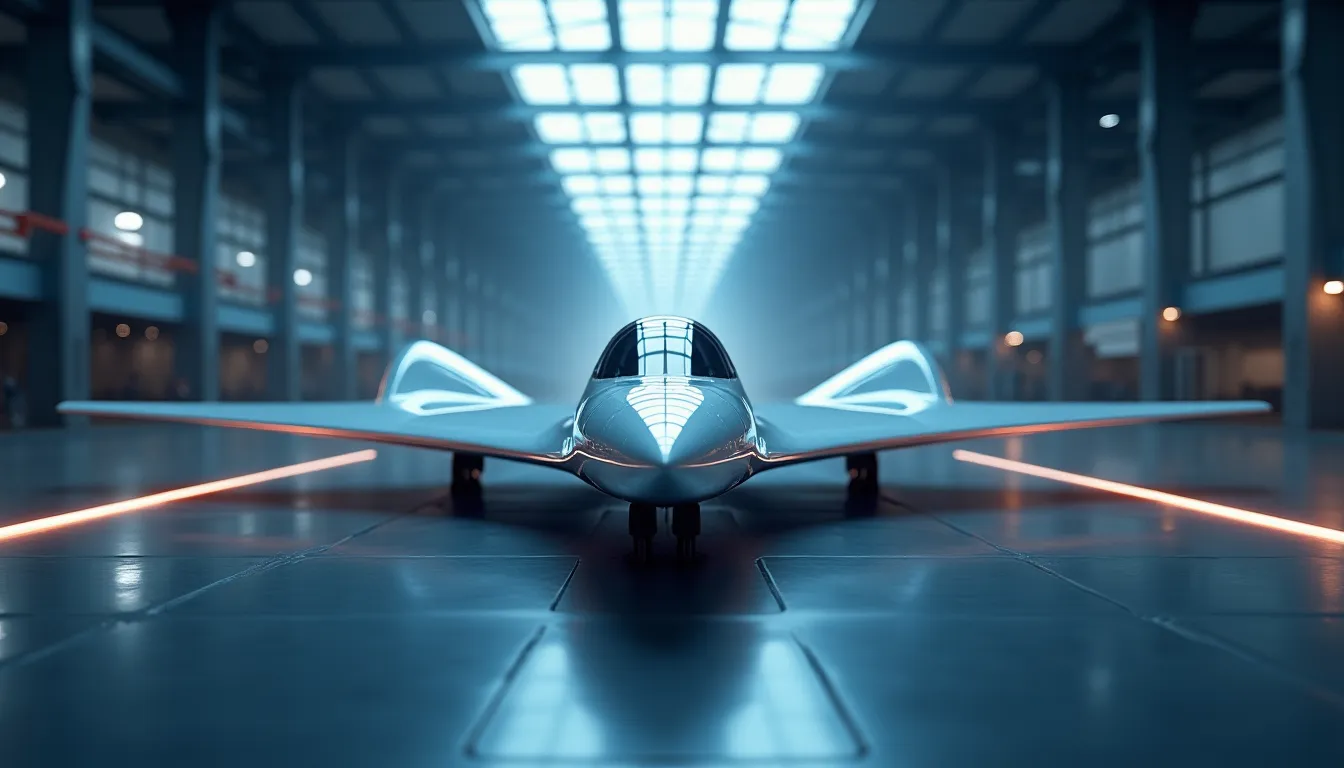
Hypersonic technology is rapidly emerging as a game-changer in aerospace and defense, promising unprecedented speed and maneuverability for military applications. This technology, defined as flight at speeds greater than Mach 5, is being integrated into defense systems worldwide, raising both opportunities and challenges for national security.
Understanding Hypersonic Technology
Hypersonic vehicles can travel at speeds exceeding 3,836 miles per hour (6,174 kilometers per hour). Unlike traditional ballistic missiles, hypersonic vehicles can maneuver during flight, making them significantly harder to detect and intercept. This capability is set to transform the landscape of modern warfare, prompting countries to invest heavily in hypersonic research and development.
According to Dr. Emily Carter, a leading expert in aerospace technology, “The ability to maneuver at hypersonic speeds means that these vehicles can evade existing defense systems, creating a new class of strategic threats.”
Recent Developments in Hypersonic Systems
Several nations are at the forefront of hypersonic technology development. The United States, Russia, and China have all conducted successful tests of hypersonic weapons in recent months. For instance, the U.S. Department of Defense’s recent test of the Hypersonic Technology Demonstrator Vehicle (HTDV) showcased the potential of hypersonic flight, achieving speeds greater than Mach 5 while maintaining precision and control.
Integration with Advanced Sensor Technologies
To achieve reliable hypersonic flight, advanced inertial navigation systems are critical. These systems enable precise guidance and control, ensuring that hypersonic vehicles can navigate effectively through complex trajectories. The integration of precision accelerometers is also vital, as they provide accurate motion sensing, which is essential for maintaining stability at high speeds.
The Role of Radar Systems in Hypersonic Detection
As hypersonic technology advances, so too must the systems designed to detect and counteract these threats. Traditional radar systems struggle to track hypersonic objects due to their speed and maneuverability. This necessitates the development of next-generation radar systems capable of monitoring and responding to hypersonic threats in real-time.
“The challenge with hypersonic threats is not just detecting them, but also predicting their trajectories,” explains Colonel Mark Reynolds, a defense analyst. “Enhanced radar systems that leverage advanced algorithms and machine learning will be crucial in addressing this issue.”
Strategic Implications for Global Security
The emergence of hypersonic technology has significant implications for global security dynamics. As nations race to develop their hypersonic capabilities, there is a growing concern about an arms race that could destabilize international relations. Military analysts warn that the ability to strike at hypersonic speeds may lead to increased tensions and miscalculations in conflict scenarios.
Furthermore, hypersonic technology also poses a challenge to existing arms control frameworks. The rapid development and deployment of these systems may outpace the creation of regulatory measures, leading to a security dilemma among nations.
Future Prospects and Challenges
Looking ahead, hypersonic technology will likely continue to evolve, with ongoing research focused on improving efficiency, reliability, and safety. Emerging innovations in thermal management systems will play a pivotal role in enabling sustained hypersonic flight by effectively managing the extreme heat generated during high-speed travel.
Additionally, advancements in materials science will contribute to the development of hypersonic vehicles that are lighter yet more durable, further enhancing their operational capabilities.
As the race to dominate hypersonic technology intensifies, collaboration across international lines may become essential to address the strategic challenges posed by these advancements. “International cooperation on hypersonic research could lead to shared standards and norms, reducing the risks associated with these powerful technologies,” suggests Dr. Carter.
Conclusion
Hypersonic technology stands at the forefront of military innovation, reshaping defense strategies worldwide. As nations invest in the development of hypersonic systems, the implications for global security and military balance cannot be overstated. The integration of advanced navigational and detection technologies will be crucial in harnessing the potential of hypersonic capabilities while managing the risks they pose. The future of warfare may very well hinge on the ability to master this groundbreaking technology.
References
-
hypersonic technology Research - defensenews.com (defensenews.com)
-
hypersonic technology Research - aviationweek.com (aviationweek.com)
-
hypersonic technology Research - spacenews.com (spacenews.com)