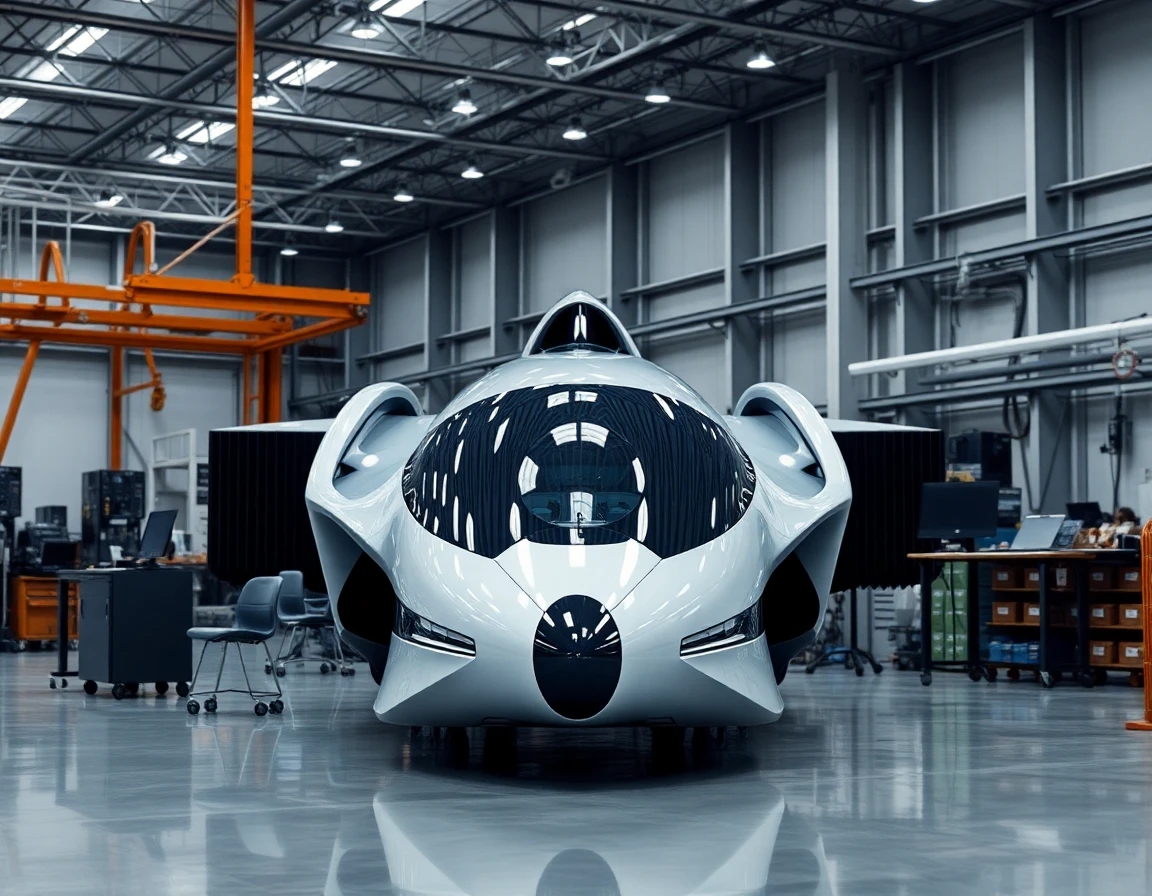
As global tensions escalate, the race for hypersonic technology—defined as travel at speeds exceeding Mach 5—has intensified among nations, particularly the United States, China, and Russia. Recent advancements in this high-speed domain highlight significant strides in production, testing, and integration of hypersonic systems, driven by a mix of strategic partnerships, innovative facilities, and substantial funding.
Key Partnerships Fueling Production
One notable development is the partnership between L3Harris and Kratos Defense, which aims to produce 60 Zeus solid rocket motors for hypersonic and ballistic missile testing. This initiative is expected to increase annual production by over 50%, allowing for seamless integration with legacy systems. The Zeus motors are designed to deliver enhanced thrust and efficiency, facilitating longer flight durations and higher speeds. This collaboration supports programs like the Multi-Service Advanced Capability Hypersonic Test Bed (MACH-TB), a critical asset for the U.S. Department of Defense (DoD).
Cutting-Edge Testing Facilities
On December 3, 2025, Lockheed Martin inaugurated a 17,000 square-foot Hypersonics System Integration Lab (SIL) in Huntsville, Alabama, backed by a $17.1 million investment. This facility is equipped with advanced testing apparatus, simulations, and engineering capabilities aimed at shortening development cycles for various U.S. Army hypersonic systems. The lab’s establishment reflects a broader commitment to enhancing deterrence and operational readiness through rapid technological advancements.
Innovative Funding and Startup Initiatives
In a significant boost to hypersonic production, startup Castelion, founded by alumni of SpaceX, secured $350 million in Series B funding on December 22, 2025. This capital will enable Castelion to scale its hypersonic production capabilities, particularly the integration of its Blackbeard missile with U.S. Army and Navy platforms. The company has ambitious plans for a 1,000-acre Project Ranger rocket motor facility and aims to conduct multi-service tests in 2026. With over 20 successful flight tests in 2025, Castelion’s focus on low-cost, mass-producible designs could revolutionize the hypersonic landscape, potentially producing hundreds or thousands of missiles annually.
Reusable Hypersonic Systems
Stratolaunch is making waves in the hypersonic sector with its Talon-A vehicle, which has completed four hypersonic flights since December 2024. This vehicle utilizes real-time energy management algorithms to achieve precise customer trajectories, navigating within seconds of target conditions and demonstrating Mach 0.01 accuracy. The reusable nature of the Talon-A, operated by the Spirit of Mojave carrier aircraft, is crucial for efficient operations, with contracts in place for overland tests at White Sands and AUKUS-related flights in Australia.
Naval Advancements: Conventional Prompt Strike Program
The U.S. Navy’s Conventional Prompt Strike (CPS) program continues to make significant progress, focusing on integrating hypersonic missiles onto Zumwalt-class destroyers and Virginia-class submarines through 2026. The program has received substantial funding of $798.3 million for Fiscal Year 2026 in Research, Development, Test, and Evaluation (RDT&E). However, experts caution that data on its effectiveness remains insufficient, highlighting the challenges of ensuring operational readiness in an evolving threat landscape.
Army’s Dark Eagle Hypersonic System
A landmark achievement for the U.S. Army is the development of the Dark Eagle hypersonic missile system, which is capable of achieving global reach in under 20 minutes. This capability underscores the urgency of hypersonic advancements as the Army looks to bolster its strategic response options against potential adversaries.
Global Context: The Competitive Landscape
The competitive landscape in hypersonic technology is rapidly evolving, with the U.S. demonstrating reusable hypersonic test vehicles under the MACH-TB program, which successfully reduced turnaround times from months to weeks. Additionally, advancements in ramjet and scramjet technologies are paving the way for faster hypersonic systems. Meanwhile, international competitors such as China and Russia are making strides of their own. Notably, China’s shape-changing hypersonic missile and its Nanqiang No.1 aircraft, capable of Mach 6+, alongside Russia’s Ayaks program, add to the urgency of U.S. developments in this domain.
Looking Ahead: Future of Hypersonic Technology
As the U.S. continues to push the boundaries of hypersonic technology, the integration of advanced systems like precision accelerometers and advanced sensor modules will play a crucial role in enhancing operational effectiveness. The development of quartz MEMS gyroscopes and thermal battery systems will further support the precise navigation and rapid response capabilities critical for hypersonic operations.
Conclusion
In conclusion, the advancements in hypersonic technology reflect a concerted effort by the U.S. aerospace and defense sectors to maintain a strategic edge in a rapidly changing global landscape. As partnerships strengthen, testing facilities expand, and funding surges, the future of hypersonic capabilities looks promising. However, the competition remains fierce, and continued innovation will be essential to address emerging threats and secure national defense interests.
References
-
Explained: Ramjets, scramjets, and the race to hypersonic speeds (aerospaceglobalnews.com) - 12/25/2025 Advancements in ramjets and scramjets have allowed manufacturers to design faster and highly capable hypersonic systems.
-
US firm to produce 60 hypersonic motors for rocket, missile testing (interestingengineering.com) - 12/24/2025 L3Harris Technologies has received a letter of intent for a commercial contract to produce 60 hypersonic rocket motors for Kratos Defense.
-
L3Harris Receives Letter of Intent from Kratos Defense for … (www.l3harris.com) - 12/23/2025 L3Harris Technologies has received a letter of intent for a commercial contract to produce 60 Zeus hypersonic motors for Kratos Defense …
-
Castelion Raises $350M Series B for Hypersonic Production (www.latimes.com) - 12/22/2025 In 2025, Castelion conducted more than 20 development flight tests, validating weapon-critical subsystems, including internally manufactured …
-
An Overview of Current U.S. Hypersonic Missile Developments (dsm.forecastinternational.com) - 12/22/2025 Current plans call for continued CPS integration aboard Zumwalt-class destroyers through 2026, with integration on Virginia-class submarines …
-
US Army Achieves Sub-20-Minute Reach with Hypersonic Missiles (www.alm.com) - 12/22/2025 Recent developments in hypersonic missile technology have marked a significant milestone for the United States Army.
-
Hypersonics System Integration Lab - Lockheed Martin (news.lockheedmartin.com) - 12/3/2025 HUNTSVILLE, Ala., Dec. 3, 2025 – Lockheed Martin (NYSE:LMT) has opened a Hypersonics System Integration Lab (SIL) at its Huntsville campus, …
-
The Need for Speed: Stratolaunch’s Spirit of Mojave Proves Out … (www.autonomyglobal.co) - 11/26/2025 The Need for Speed: Stratolaunch’s Spirit of Mojave Proves Out Reusable Hypersonic Flight. 24 Dec 2025 | Published By Dawn Zoldi. Stratolaunch.
-
China Says It Built a Hypersonic Missile That Changes Shape at … (thedefensepost.com) - 11/4/2025 Could a missile really change its shape while flying faster than Mach 5? China’s latest experiment suggests it might.