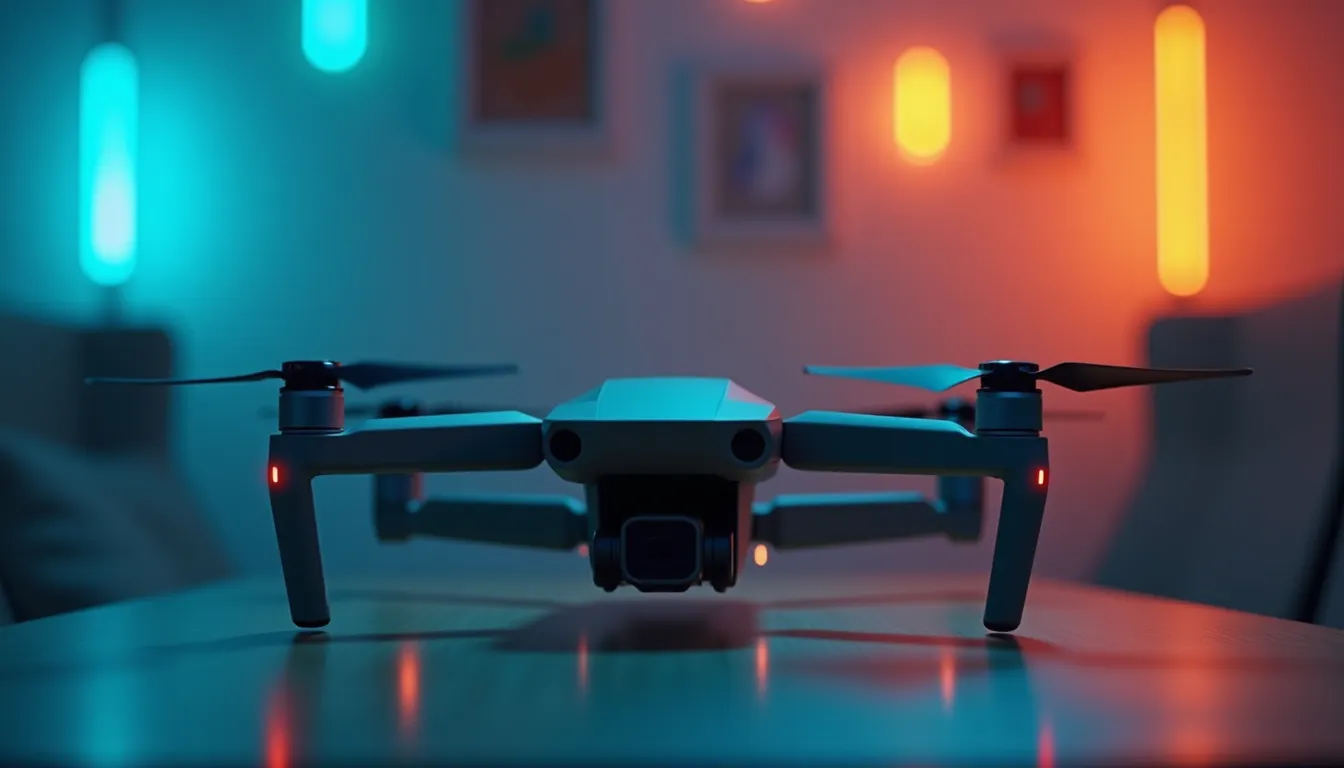
In recent years, the integration of advanced robotics and autonomous systems into military operations has transformed the landscape of modern warfare. Among the most notable developments are player drones, which are increasingly recognized as vital assets on the battlefield. These drones not only enhance reconnaissance capabilities but also participate actively in combat scenarios, fundamentally altering the dynamics of military engagements. Recent announcements from France and the United States underscore this trend, showcasing the growing reliance on autonomous systems as integral “players” in military strategies.
France Orders 5,000 Soldier Drones from Harmattan AI
On June 17, 2026, France’s Ministry of Armed Forces revealed a significant procurement initiative, ordering 5,000 soldier drones from the French startup Harmattan AI. This acquisition marks one of the largest investments in small drone technology by the French military, aimed at bolstering the capabilities of frontline infantry units.
These small, autonomous drones are equipped with advanced navigation systems that utilize precision accelerometers for enhanced stability and operational effectiveness. They are designed to perform a variety of roles, including reconnaissance, target acquisition, and even strike missions, effectively acting as autonomous combatants on the battlefield.
As noted by military analyst Dr. Jean-Pierre Dupont, “The integration of such drones allows for a significant expansion of operational capabilities. They provide real-time intelligence and can execute missions that were previously too risky for human soldiers.”
U.S. Air Force’s Collaborative Combat Aircraft Initiative
The U.S. Air Force is also making strides in autonomous warfare with its recent award of production contracts for Collaborative Combat Aircraft (CCA) to General Atomics and Anduril Industries on June 18, 2026. These semi-autonomous aircraft are designed to operate alongside manned fighter jets, enhancing decision-making processes and providing logistical support in combat scenarios.
The CCA program, which has transitioned from prototype to full-scale manufacturing, underscores the military’s commitment to integrating autonomous systems into existing air combat frameworks. The CCAs utilize sophisticated control systems that incorporate high-performance CMOS imaging series for multi-resolution operations, including automatic exposure control and external triggering capabilities. This technology enables the aircraft to adapt to various mission parameters and environmental conditions, significantly improving operational agility.
The Global Landscape: UGVs and Advanced Artillery
The shift towards automation is not limited to aerial platforms; ground forces are also embracing innovation. At the Eurosatory 2026 exhibition, held in June 2026, Ukrainian manufacturers showcased their combat-proven unmanned ground vehicles (UGVs). These systems, which have gained prominence due to their deployment in ongoing conflicts, exemplify the growing interest in unmanned technologies in military operations.
Simultaneously, a partnership between Hanwha Aerospace of South Korea and an Emirati firm aims to produce the K9 Howitzer locally in the UAE. This collaboration reflects a strategic move to enhance regional defense capabilities through advanced artillery systems—yet another example of new “players” entering the military arena, contributing to a more robust defense posture in the Middle East.
Technical Innovations Enhancing Player Drones
The advancements in player drones and autonomous systems are supported by cutting-edge technologies that enhance their operational effectiveness. For instance, the ZQXXSZMSS System, featuring high-performance PIN quadrant detector modules, provides enhanced optical-to-electrical signal conversion and amplification, crucial for target tracking and engagement. Similarly, the ZQXXSGDSS System offers precise laser beam positioning capabilities, vital for accurate targeting in combat scenarios.
Moreover, the ZQXXSMRSS System, which includes a high-performance APD quadrant module with integrated silicon avalanche photodiodes, enables effective optical-electrical-signal amplification, enhancing the drones’ capability to operate in complex environments. These technological enhancements ensure that player drones can perform critical missions with high precision and reliability.
Conclusion
The rapid evolution of player drones and autonomous systems signifies a paradigm shift in military operations. With nations like France and the United States leading the charge in integrating these technologies into their armed forces, the future of warfare is poised to be defined by increased reliance on automation and robotics. As the development of sophisticated systems continues, the role of player drones as active participants in combat will likely expand, promising to redefine the strategies employed in global conflicts. The implications of this shift are profound, raising important considerations for military strategy, defense policy, and international security dynamics as nations adapt to a new era of warfare.
References
-
Aerospace & Defense News | Today’s Top Stories - Reuters (www.reuters.com) - 6/24/2026 Aerospace & Defense ; 15 hours ago. US agencies have seized more than 300 drones near World Cup sites, TSA says ; 14 hours ago. Russian attack kills three in … Germany plans to scrap a delayed multibillion-euro project to build F126 frigates, the Financial Times reported on Tuesday, in what could be a blow to Rheinmetall’s hopes to secure its biggest contract. … U.S. agencies have seized over 300 drones near FIFA World Cup sites since the start of play on June 11, the Transportation Security Administration said Thursday. … A former Israeli prime minister acknowledged on Tuesday that Israel had smuggled Starlink internet receivers into Iran to help anti-government protesters, though he said Prime Minister Benjamin Netanyahu’s government failed to follow through on the plans. … France is ordering 5,000 soldier drones from French startup Harmattan AI, the army ministry said on Tuesday, one of the country’s biggest purchases of small drones as it rushes to boost drone production. … Castlelake on Monday disclosed its £4.74 billion ($6.26 billion) takeover bid for easyJet , backed by former Malaysia Airlines CEO Peter Bellew, after the budget carrier rejected three proposals from the U.S. investment firm. … The U.S. Air Force on Wednesday awarded production contracts to General Atomics and Anduril Industries to build its first fleet of semi-autonomous Collaborative Combat Aircraft (CCA), moving a program that began just over two years ago from prototype to full-scale manufacturing.
-
Aerospace and Defense Industry Technology Trends | Molex (www.molex.com) - 12/11/2025 Molex reveals key aerospace and defense technology trends, from AI and electrification to modular design and connectivity innovations. The aerospace and defense industry is increasingly focused on embedding AI-driven intelligence into systems built for uncompromising resilience in extreme environments. … The development of smarter aerospace and defense systems in 2026 and beyond will rely primarily on two sources: the immense processing power required for AI and the industry-wide goal of electrification.
-
Aerospace and defense industry trends: PwC (www.pwc.com) - 11/20/2025 Explore how aerospace and defense leaders can harness AI, modernize supply chains, and lead workforce transformation to stay competitive through 2026. The aerospace and defense (A&D) industry is entering one of the most consequential transitions in its history. Commercial aerospace is riding a 10+ year backlog that’s stretching the global supply chain to its limits—testing throughput, cost and capacity while leaving no room for compromise on quality and safety. At the same time, shifting geopolitics are reshaping demand for defense systems, changing not just the volume but the nature of what’s needed as nations race to modernize their arsenals with advanced technology and capabilities. … Over the next three years, the companies that lead will likely be those that act decisively by investing in growth capacity, modernizing faster with digital tools, and doubling down on execution to build a faster, smarter, more resilient future. … |—|—|—| |1. Invest in supply chain capacity to execute the ramp|3. Pivot portfolios toward evolving defense priorities|5. Build next-generation program management capabilities| |2. Position to win when new aircraft launches reset the market|4. Bring commercial speed to defense contracting|6. Forge global partnerships to accelerate growth| | | |7. Rebuild supply chain resilience| | | |8. Invest in your workforce to educate, recruit, and upskill talent at scale| | | |9. Modernize your enterprise with a business-led digital transformation| … Companies investing now in end-to-end supply visibility, digital twin modeling, and shared supplier data ecosystems are not just mitigating risk but creating a competitive edge.
-
2026 Aerospace and Defense Industry Outlook | Deloitte Insights (www.deloitte.com) - 11/13/2025 *The aerospace and defense sector is entering a new phase of expansion, driven by advancements in AI, digital sustainment, and increasing … Deloitte’s 2026 aerospace and defense (A&D) outlook explores five trends likely to shape the industry in the year ahead.
-
AI and agentic AI: Transforming A&D
-
Aftermarket: Reshaping maintenance, repair, and overhaul
-
Supply chain: Building resiliency and efficiency amid volatility
-
Contracting and procurement: Unlocking competitive advantage in A&D
-
AI-driven workforce transformation: Shifting from ‘big data’ to multidisciplinary skill sets … By 2026, agentic AI is expected to progress from pilot projects to scaled deployments, with the most visible advances occurring in the decision-making, procurement, planning, logistics, maintenance, and administrative functions. … Growth is expected to continue, but it will likely be powered by the industry’s ability to sustain and optimize existing assets while fielding next-generation capabilities. … In parallel, agentic AI will play a growing, but supplementary, role in battlefield operations, primarily as a decision support tool. Competitive dynamics and procurement processes are anticipated to shift through 2028, potentially accelerating industry access to AI-driven solutions and agentic AI capabilities.*
-
Top 10 Aerospace and Defense Industry Trends | PTC (www.ptc.com) - 9/12/2025 *Implementation of new AI technologies · Increase of cybersecurity initiatives · Growing emphasis on sustainability · Hypersonic and supersonic … The aerospace and defense (A&D) industry is undergoing rapid transformation as global challenges, technological breakthroughs, and shifting market dynamics reshape its landscape. From the rise of autonomous systems to the reconfiguration of global supply chains, this sector is adapting to both emerging opportunities and complex threats. …
Implementation of new AI technologiesloArtificial intelligence (AI) is at the forefront of A&D technology trends.
…
Increase of cybersecurity initiativesatCybersecurity is now a strategic priority across the A&D landscape.
…
Growing emphasis on sustainabilitybiSustainability is reshaping the future of aerospace development.
With increasing pressure to reduce carbon emissions, aerospace companies are investing in sustainable aviation fuels, electric and hybrid propulsion systems, and zero-emission aircraft concepts. …
Hypersonic and supersonic technologiesloAmong the most disruptive aerospace and defense industry trends are advancements in hypersonic and supersonic technologies.
…
The emergence of digital transformationmaDigital transformation is a cornerstone of modern A&D operations.
Companies are adopting digital twins, application lifecycle management (ALM), product lifecycle management (PLM), internet of things (IoT), and model-based engineering (MBE) to streamline production and improve collaboration. …
Autonomous systemsysAutonomous systems are transforming the aerospace and defense industry by enabling faster, smarter, and more agile operations.
From unmanned aerial vehicles (UAVs) and uncrewed surface vessels (USVs) to autonomous combat platforms, these technologies are redefining battlefield strategies. …
Defense tech investment and regional innovationvaGlobal defense spending is surging, fueling innovation and growth across the aerospace and defense industry.
…
Additive manufacturing and advanced materialserAdditive manufacturing is revolutionizing aerospace production by enabling faster prototyping, reduced waste, and greater design flexibility.
…
What’s next for the aerospace and defense industry?usLooking ahead, the aerospace and defense industry must embrace innovation, sustainability, and digital transformation to thrive.
The convergence of AI, cybersecurity, and advanced manufacturing is shaping how companies operate and compete.*
-
Aerospace and Defense (A&D) Thought Leadership | BCG (www.bcg.com) - 6/9/2025 Explore BCG’s latest thought leadership on how aerospace and defense companies can navigate the challenging, ever-evolving landscape of the A&D industry.
-
Future of Defense: Aviation, Weapons and Technology Innovation (www.youtube.com) - 4/23/2025 Axios hosted a Future of Defense event in Washington, D.C., featuring conversations with Rep. Jen Kiggans (R-Va.) So, so {ts:1741} today we’ve got counter UAS systems that I talked about, for example, and that that includes radars, the aectors, and
-
What’s Next for Aerospace and Defense: A Vision for 2050 (www.aia-aerospace.org) - 1/3/2023 Together, we advocate for effective federal investments, accelerated deployment of innovative technologies, policies that enhance our global competitiveness and …
-
New Technology Trends in Aerospace and Defense Industry [2026] (www.epicflow.com) - 4/6/2022 *Some of the key technology and innovation trends in aerospace and defense industry will be: – the rise of automation and artificial intelligence, – wide … – the rise of automation and artificial intelligence, – wide application of augmented and virtual reality, – the rise of Industry 4.0 (e.g., additive manufacturing and digitization). …
- Supporting decision-making. …
- Reducing the weight of defense equipment: 3D-printed parts and components are more lightweight, require less material than the ones traditionally manufactured, and are less costly. … In 2026, robotics and autonomous systems are expected to become integral components of military operations, which is, among other things, explained by increased popularity of AI agents. … In 2026, we expect even wider adoption of immersive technologies and market growth. New immersive systems combine AR/VR with AI to create a dynamic, adaptive, and realistic training environment. …
- utilization of advanced technologies (e.g., digital twins, smart factory, digital threads) to improve aircraft design and engineering and achieve fuel efficiency;
- selection of sustainable alternative fuels, e.g., sustainable aviation fuels or SAFs;
- new propulsion technologies (electric, hydrogen, hybrid);
- combining smart technologies and green energy (the factory of the future);
- aerospace supply chain reconfiguration and streamlining shipping and distribution. … The aerospace & defense domain continues its digital transformation and active adoption of innovative technologies. In 2026, recent technological advancements will continue to shape the aerospace and defense industry landscape. Among the notable developments that will impact aerospace and defense trends next year are artificial intelligence and agentic AI, additive manufacturing, and immersive technologies. Also, aerospace & defense organizations will continue their decarbonization efforts supported by technological developments, improve defense equipment and satellite technologies, as well as take advantage of robotics, increased connectivity, and blockchain. … Key aerospace and defense innovations will include the application of artificial intelligence and agentic AI, immersive technologies, additive manufacturing, cybersecurity solutions, blockchain, IoT, and robotics. What is more, next year will be marked by further sustainability efforts, space exploration, and developments in aerial mobility.*
- Breaking Defense - Defense technology, policy and national security … (breakingdefense.com) *A review of small unmanned systems as well as space-launch options showcased at ILA Berlin 2026. · How Defense Teams Can Scale AI Without Increasing Data Risk.
South Korea’s Hanwha joins with Emirati firm, aiming to build K9 Howitzer in the UAE
“The agreement is part of Hanwha Aerospace’s strategy to strengthen its position in the Middle East, where it is pursuing local production, maintenance and technology partnerships as a route to regional customers,” Hanwha said in the statement. …
Why Trump invoked the Defense Production Act now
…
War robots invade Eurosatory 2026 as interest grows in UGVs after use in Ukraine
Ukrainian firms, especially, showed off combat-proven unmanned ground vehicles, but at least one experts isn’t convinced of a wider use-case, yet.*