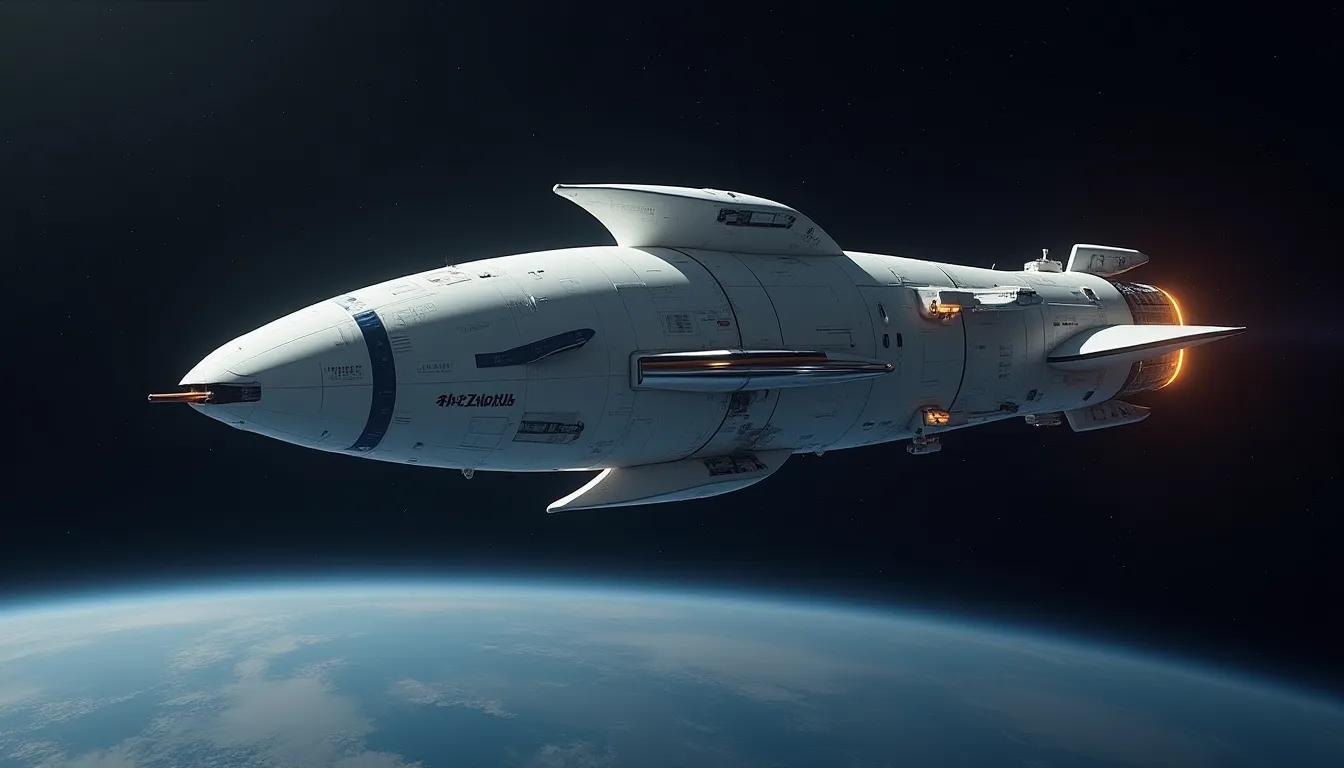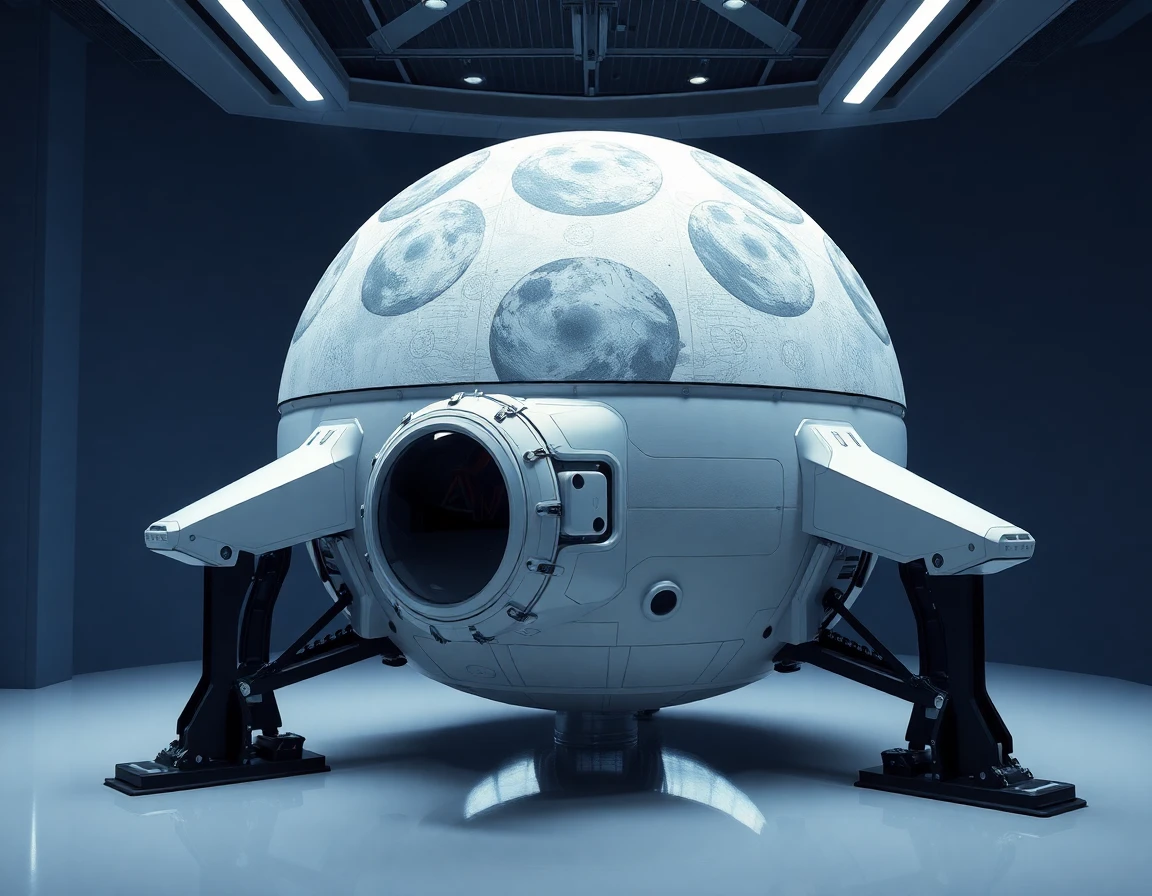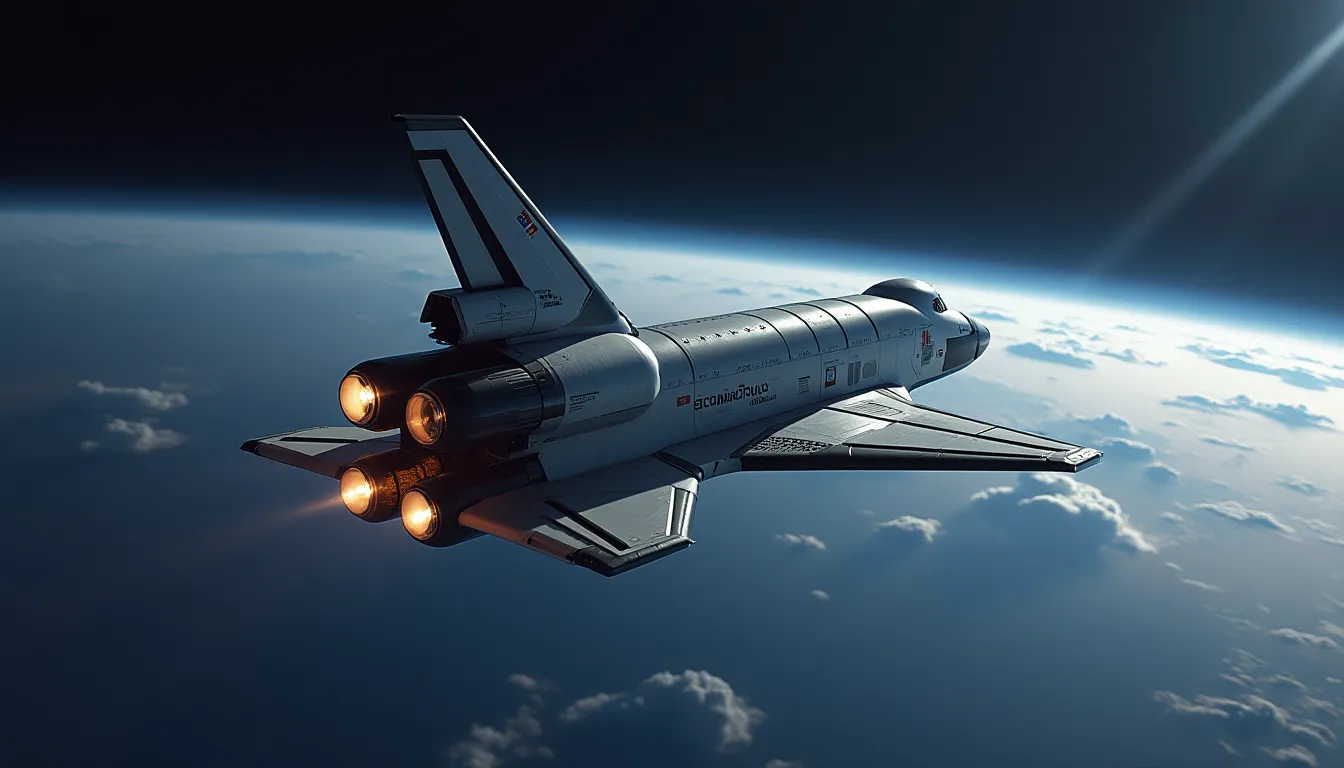
The aerospace industry stands at a pivotal moment, marked by groundbreaking advancements in spacecraft technology and ambitious plans from agencies like NASA. As we look toward the next decade, the implementation of advanced systems and innovative technologies will redefine how we explore space. Notably, NASA’s recent announcements regarding a lunar-surface base and a nuclear-powered spacecraft for Mars represent significant milestones in human space exploration.
NASA’s Vision for a Lunar-Surface Base by 2030
On March 24, 2026, Aerospace America reported on NASA’s strategic plan to establish a lunar base by 2030. This initiative aims to create a sustainable human presence on the Moon, serving as a launchpad for further exploration of Mars and beyond. The lunar base is expected to support long-duration missions, enabling astronauts to conduct scientific research and test technologies essential for future interplanetary travel.
The proposed base will utilize various advanced technologies, including high-precision navigation systems and precision accelerometers, to ensure operational safety and efficiency. These systems will play a crucial role in the autonomous operations of the base, from landing maneuvers to resource management.
Nuclear-Powered Spacecraft: A Leap Toward Mars
In conjunction with its lunar ambitions, NASA is also focusing on developing a nuclear-powered spacecraft designed for Mars missions. This innovative propulsion system is expected to significantly reduce travel time to the Red Planet, addressing one of the most pressing challenges of crewed space exploration.
Nuclear propulsion offers several advantages over traditional chemical rockets, including the ability to provide continuous thrust over long durations. This technological leap could enable astronauts to undertake more extensive exploration missions, enhancing our understanding of Mars’ geology and potential for past or present life.
The Role of AI in Spacecraft Operations
As spacecraft become more complex, the integration of artificial intelligence (AI) and machine learning (ML) technologies is becoming paramount. Lockheed Martin’s 2025 trends report highlights the increasing reliance on AI for spacecraft autonomy, mission planning, and operational support. These technologies are transforming how spacecraft operate in orbit and communicate with ground control, enhancing decision-making processes and reducing the need for human intervention.
For instance, AI-driven systems will enable spacecraft to adapt to unforeseen circumstances during missions, such as adjusting flight paths or optimizing resource usage in real-time. This level of autonomy is essential for long-duration missions, where communication delays with Earth can hinder immediate responses to critical situations.
Modular Spacecraft Manufacturing: A Shift in Defense Integration
The recent acquisition of Terran Orbital by Lockheed Martin marks a pivotal moment in the defense sector’s approach to spacecraft manufacturing. This acquisition emphasizes the growing trend toward modular spacecraft, which allows for scalable production tailored to national security needs.
Modular spacecraft systems can be rapidly assembled and reconfigured, enabling a more dynamic response to evolving military requirements. As the aerospace and defense industries continue to intersect, the focus on modular design principles will likely lead to enhanced operational capabilities and cost efficiencies.
Emerging Trends Shaping the Aerospace Landscape
The aerospace industry is witnessing a convergence of several key trends that are reshaping the landscape of spacecraft development. Among these are:
- Agentic AI: Enabling autonomous decision-making capabilities in spacecraft.
- Digital Twins: Creating virtual replicas of spacecraft for enhanced design and testing processes.
- Additive Manufacturing: Pioneering new techniques for producing spacecraft components with reduced weight and material waste.
- Robotics and Immersive Training: Enhancing astronaut training and mission planning through advanced simulation technologies.
These trends not only improve the efficiency and effectiveness of spacecraft but also contribute to a more comprehensive approach to space exploration, viewing spacecraft as integral nodes within a larger networked system-of-systems.
Conclusion
As we look to the future, NASA’s plans for a lunar base and a nuclear-powered spacecraft to Mars signify a new era in human space exploration. The integration of AI, modular manufacturing, and emerging technologies will play a critical role in shaping the next generation of spacecraft. With these advancements, the potential for deep space exploration is expanding, paving the way for humanity to unlock the mysteries of the cosmos. The continuous evolution of technologies like high-precision navigation systems and advanced sensor modules will further enhance our capabilities, ensuring that we are well-equipped for the challenges ahead.
References
-
Frontiers of Defense Tech in U.S. Alliances with Japan & Beyond … (www.youtube.com) - 5/14/2026 Hide Kamiya, General John W. “Jay” Raymond, and Jeff Thornburg examine space technologies in a conversation moderated by Naohiko Kohtake, …
-
Space.com: NASA, Space Exploration and Astronomy News (www.space.com) - 5/14/2026 Get the latest space exploration, innovation and astronomy news. Space.com celebrates humanity’s ongoing expansion across the final frontier.
-
Sierra Space | Defining the New Era of Space Defense Technology (www.sierraspace.com) - 1/26/2026 Sierra Space is a Defense Tech leader developing satellites, subsystems, spaceplanes, hypersonics & infrastructure for national security.
-
A Brief History of Space Exploration | The Aerospace Corporation (aerospace.org) - 7/17/2025 In the latter half of the 20th century, rockets were developed that were powerful enough to overcome the force of gravity to reach orbital velocities.
-
Space Technology Trends 2025 | Lockheed Martin (www.lockheedmartin.com) - 12/3/2024 Here are the top 10 space technology trends shaping the future of satellite communications, remote sensing and space exploration.
-
Lockheed Martin Advances Space Capabilities through Strategic … (terranorbital.com) - 10/30/2024 Lockheed Martin (NYSE: LMT) has completed its previously announced acquisition of Terran Orbital, a leading manufacturer of innovative modular spacecraft.
-
Technology - NASA (www.nasa.gov) - 1/27/2023 NASA Fires Up Powerful Lithium-Fed Thruster for Trips to Mars. NASA puts next‑generation propulsion to the test—a system powerful enough to carry crews to Mars …
-
New Technology Trends in Aerospace and Defense Industry [2026] (www.epicflow.com) - 4/6/2022 Among the notable developments that will impact aerospace and defense trends next year are artificial intelligence and agentic AI, additive manufacturing, and …
-
News - Aerospace America (aerospaceamerica.aiaa.org) - 12/13/2016 NASA details plan to establish lunar surface base by 2030, send nuclear-powered spacecraft to Mars. By Paul Brinkmann March 24, 2026 …