Transforming the Satellite Landscape: Key Trends and Innovations in 2024
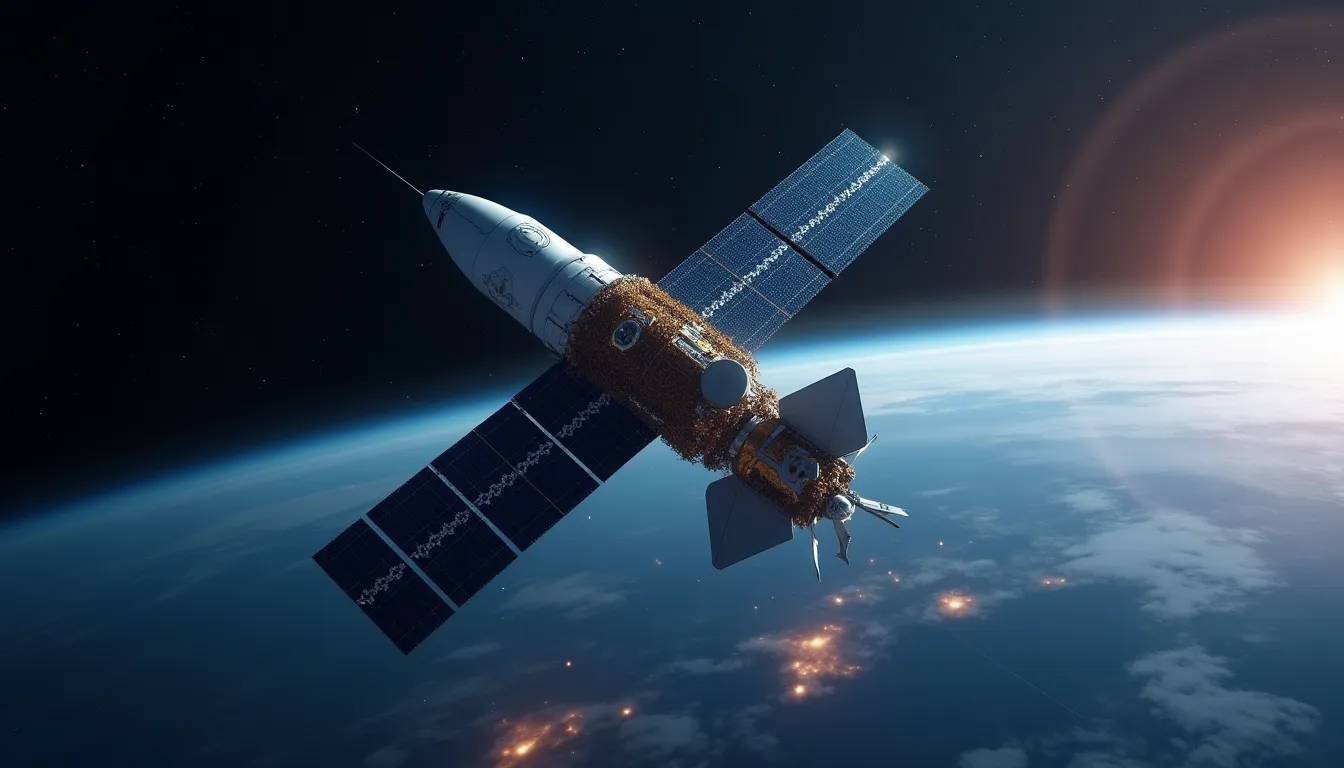
The satellite industry is undergoing a significant transformation, driven by technological advancements and evolving operational demands. As we approach 2024, several key trends are emerging that highlight the shift towards more capable, adaptable, and sustainable satellite systems. With a focus on on-orbit servicing, artificial intelligence (AI), and the integration of commercial satellite communications into defense operations, the future of satellite technology promises to reshape both civilian and military applications.
The Rise of Modular and Upgradeable Satellites
One of the most notable trends in satellite development is the shift towards modular design and upgradeability. Industry experts are advocating for satellites equipped with plug-in interfaces that facilitate maintenance and upgrades in orbit. This approach not only extends the lifecycle of the satellites but also significantly reduces the long-term costs associated with replacements. The ability to refuel, modify power systems, or upgrade data handling capabilities without the need for a complete satellite overhaul is becoming increasingly vital as the demands of remote sensing and communication evolve.
Artificial Intelligence: Enhancing Onboard Processing
Artificial Intelligence and Machine Learning (AI/ML) are revolutionizing the satellite industry by enabling enhanced onboard processing capabilities. This allows satellites to perform complex data filtering and analysis in real-time, leading to lower latency and more actionable intelligence outputs. According to industry analysts, the integration of AI/ML in satellite operations is not just a trend but a necessity for improving Earth observation (EO) and synthetic aperture radar (SAR) data products, thereby enhancing their overall value and usability for various applications, from environmental monitoring to military reconnaissance.
Multi-Orbit Constellations: A New Architectural Paradigm
The concept of multi-orbit constellations is gaining traction as satellite operators look to maximize coverage and resilience. These systems combine several orbital regimes, including low Earth orbit (LEO) and geostationary orbit (GEO), to provide uninterrupted service and redundancy. Advanced communication technologies and improved processing capabilities are facilitating the development of these complex constellations, which are essential for enhancing connectivity across diverse geographical areas and applications.
Propulsion Technologies: Ensuring Maneuverability and Sustainability
As the space environment becomes increasingly congested, the role of onboard propulsion is becoming critical. More satellites are now equipped with thrusters that allow for better maneuverability, collision avoidance, and sustainable deorbiting practices. This capability is essential not only for operational efficiency but also for addressing growing concerns about space debris. The implementation of advanced propulsion systems is seen as a national defense enabler, allowing for greater operational flexibility in military and commercial applications alike.
Commercial Satellite Communications in Defense Applications
The integration of commercial satellite communications (SATCOM) into defense operations marks a significant shift in military strategy. The use of commercial SATCOM for UAV command and control, missile defense, and asset tracking demonstrates the convergence of civilian and military space resources. This trend is particularly emphasized by the Space Development Agency (SDA), which is focused on rapidly delivering space-based capabilities that enhance warfighter lethality and operational effectiveness.
Experts from Lockheed Martin predict that a focus on satellite communications, remote sensing, and exploration will remain central to investment strategies through 2025 and beyond. Such commercial partnerships are expected to drive innovation and reduce costs, ultimately benefiting defense capabilities while ensuring a more robust and resilient space infrastructure.
The Role of Advanced Technologies in Satellite Development
Emerging technologies such as 3D printing, digital twins, and advanced sensor modules are revolutionizing the satellite manufacturing process. These innovations allow for quicker design iterations, improved reliability validation, and significantly lower development times. For instance, the deployment of advanced navigation systems with high-performance MEMS accelerometers is enhancing the precision and stability of satellite operations, which is crucial for both civilian and military applications.
Moreover, quartz MEMS gyroscopes are being utilized in control systems to ensure high accuracy in satellite positioning and navigation, further underscoring the importance of precision technology in modern satellite design.
Conclusion
As we look towards 2024, the satellite industry stands at the forefront of technological advancement, driven by the need for adaptability and efficiency in both commercial and defense sectors. The ongoing developments in modular designs, AI integration, and propulsion technologies are not only enhancing the capabilities of satellites but also paving the way for a more sustainable and resilient space environment. The future of satellite technology promises to deliver unprecedented levels of service and operational effectiveness, ensuring that both industries can meet the complex challenges of the coming years.
References
-
Space Development Agency – Increasing Warfighters’ Lethality … (www.sda.mil) - 5/19/2026 The Space Development Agency (SDA) will quickly deliver needed space-based capabilities to the joint warfighter to support terrestrial missions.
-
Advancing Defense Capabilities with New Satellite Propulsion … (www.moog.com) - 5/14/2026 As space becomes an increasingly congested domain, satellite propulsion technology becomes more important than ever for national defense.
-
Satellite Solutions for Defense Applications - YouTube (www.youtube.com) - 11/5/2025 … Recent progress, demonstrations, and successes in the adoption … Tech 101: Defense Radar. Emerging Technologies Institute•247 views · 41 …
-
Satellite Technologies | Aerospace Defense Outlook (aerodefenseoutlook.com) - 3/12/2025 GateHouse: Transforming Satellite Communications · G&S SatCom : Advancing Satellite Communication Solutions · PolarSat: Revolutionizing Mission-Critical Satellite …
-
Space Technology Trends 2025 | Lockheed Martin (www.lockheedmartin.com) - 12/3/2024 Here are the top 10 space technology trends shaping the future of satellite communications, remote sensing and space exploration.
-
The New Frontier of Satellite Technology | Dassault Systèmes (www.3ds.com) - 4/3/2024 Driven by the need to accelerate innovation, this new frontier helps companies identify opportunities to extend the limit of rocketry and satellite design and …
-
10 Tech Trends That Will Impact the Satellite Industry in 2024 (interactive.satellitetoday.com) - 11/28/2023 In the future, new satellites launched could be built with interfaces or plug-in ports, ideal for refueling, power, and data upgrades, she notes …
-
The New Frontier of Satellite Technology - Dassault Systèmes (www.youtube.com) - 9/8/2020 In the race to successfully launch satellites into orbit, New Space companies must speed up innovation in satellite technology.
-
Get the insider’s view on satellite technology today (militaryembedded.com) The number of annual nano- or microsatellite launches has grown at an average of 40% per year since 2011, with 10% growth projected annually through 2023. What …