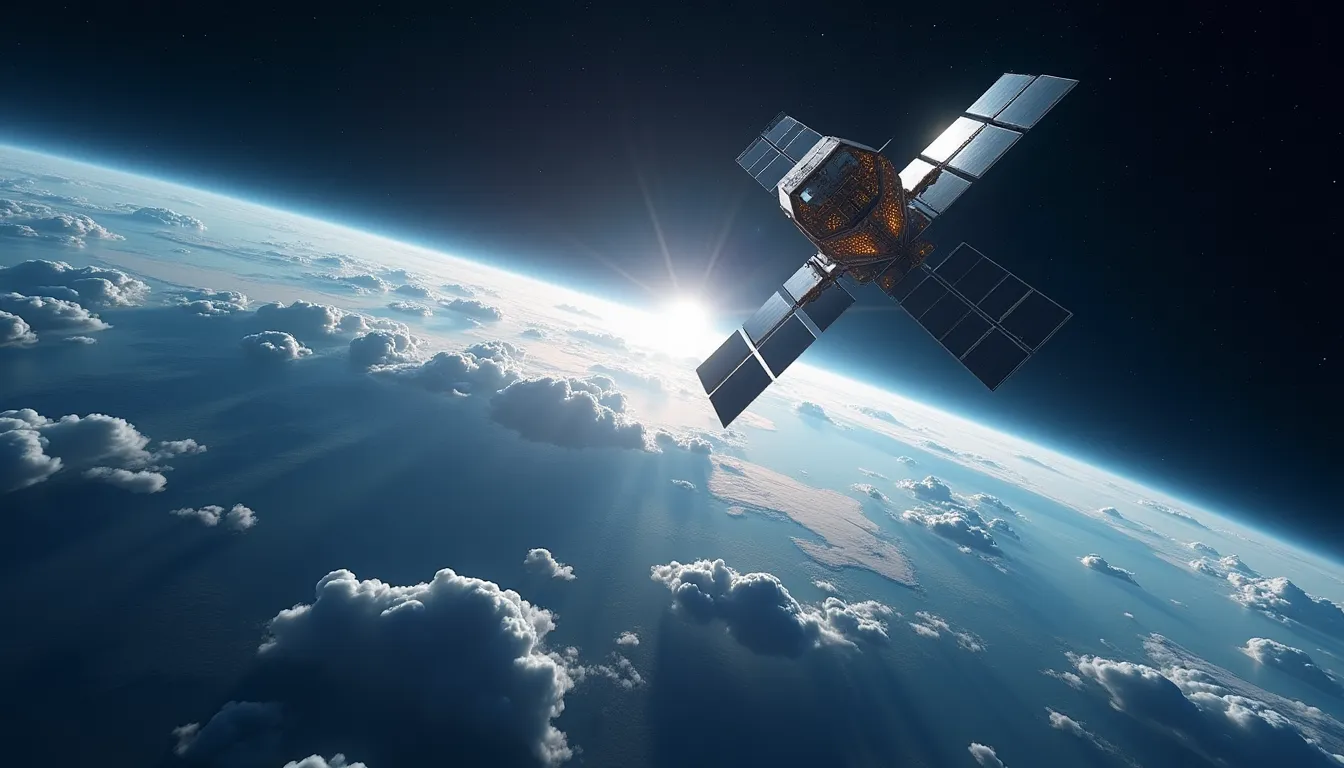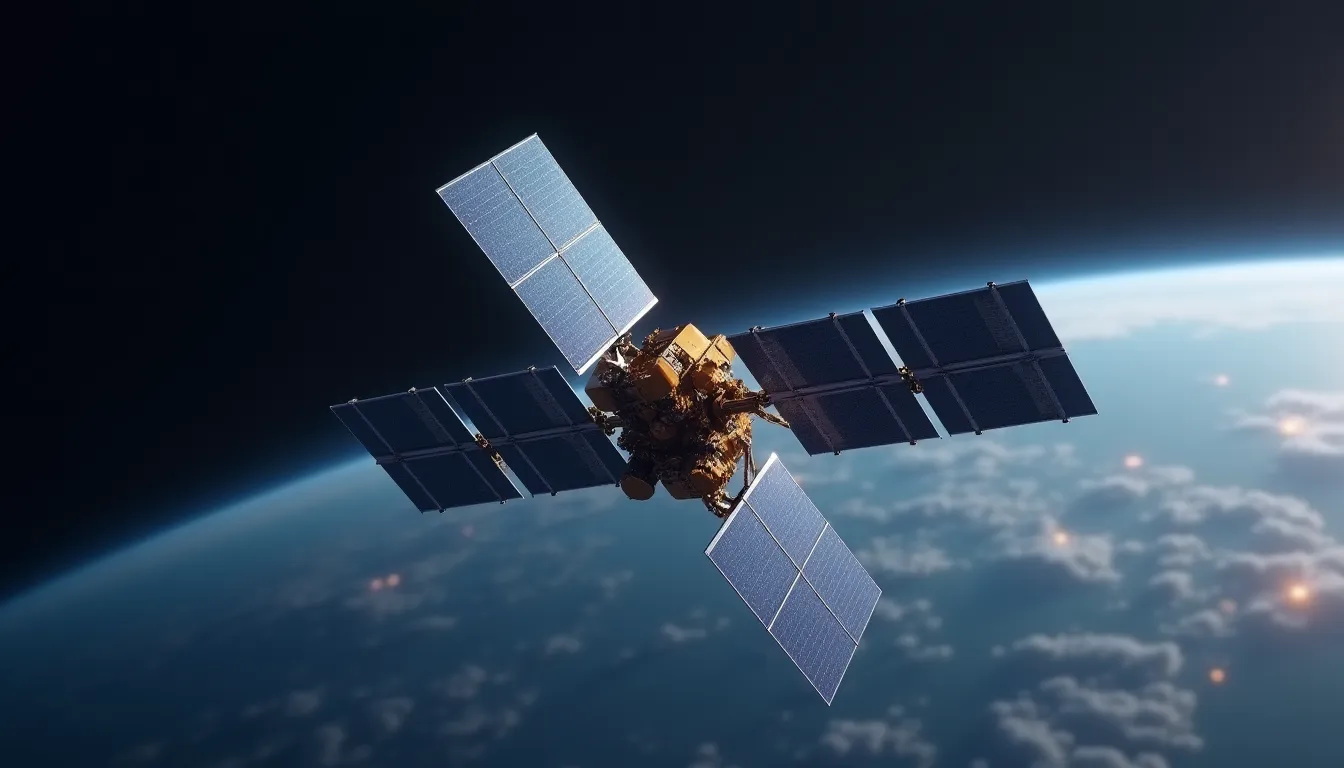
In the rapidly evolving aerospace and defense sectors, satellite technology is undergoing a significant transformation. With projections indicating more than 43,000 satellites set to launch over the next decade and a market valued at $665 billion in manufacturing and launch services, defense interests are playing a crucial role in shaping the future of space technology. This article delves into the latest trends that are redefining satellite capabilities, focusing on proliferated constellations, maneuverable spacecraft, and resilient communication systems.
The Defense Sector as a Catalyst for Growth
Recent analyses have underscored the defense sector as an essential driver for the satellite market. According to a report by NovaSpace, while defense accounts for only 9% of launch volume, it significantly influences overall market value and strategic direction. The emphasis on military applications underscores the need for advanced capabilities in contested orbital environments.
As major players like Lockheed Martin emphasize, satellite architectures are evolving towards proliferated systems. This shift is not just about quantity; rather, it represents a strategic approach to enhancing resilience and operational flexibility. These proliferated constellations allow for a more robust network that can sustain military communications and navigation in the face of potential threats.
Proliferated Architectures and Enhanced Capabilities
The trend towards proliferated architectures is characterized by the deployment of numerous small satellites that work in concert. Lockheed Martin’s 2026 technology trends report highlights several key priorities, including autonomy, AI, and cybersecurity. As satellites become more autonomous, they can operate with reduced reliance on ground control, enhancing operational response times and resilience against adversarial actions.
Moreover, next-generation satellites are designed with improved propulsion systems, enhancing maneuverability for critical military applications. Companies like BAE Systems and Lockheed Martin are investing heavily in maneuverable satellite designs that can shadow other satellites and adapt to changing orbital scenarios. This capability is essential for maintaining strategic advantages in space operations.
The Importance of Propulsion Systems
As space becomes increasingly congested, the role of propulsion systems in satellite design is becoming more crucial. Moog has emphasized that advanced propulsion technologies are vital for ensuring effective maneuvering, station-keeping, and mission flexibility. The need for high-performance MEMS accelerometers and precision gyroscopes is evident, as they ensure satellites can make real-time adjustments for optimal performance in dynamic environments.
The Advanced Sensor Module, featuring a comprehensive three-axis gyroscope and accelerometer, is one such technology that enhances stability and motion sensing capabilities. This capability is pivotal for military satellites operating in an environment where agility can determine mission success.
The Shift Towards On-Orbit Servicing
Another significant development in satellite technology is the shift towards on-orbit servicing, moving from theoretical concepts to practical applications. Lockheed Martin identifies this capability as essential for extending satellite life and enhancing operational efficiency. On-orbit servicing encompasses repair, refueling, and maintenance, which are crucial for sustaining prolonged missions without the need for frequent replacements.
The integration of systems like the ZQXXSGDSS System, a high-performance single-tube PIN quadrant detector, facilitates precise tracking and positioning, which is vital for servicing operations. This technology allows satellites to perform complex maneuvers and adjustments necessary for effective servicing tasks.
China’s Growing Launch Cadence
The international landscape of satellite technology is also influenced by geopolitical factors, particularly the rising launch cadence of China’s space program. Recent reports from the CSIS Aerospace Security Project indicate that China’s annual launches have surged from approximately 35-40 in 2018-2020 to nearly 95 in 2025. This rapid expansion of launch capacity and satellite deployment underscores the competitive nature of current space endeavors and the urgency for nations to bolster their own capabilities.
Conclusion
As we look toward the future of satellite technology, it is clear that defense demands are driving significant advancements in capabilities and architectures. From proliferated constellations to maneuverable satellites and on-orbit servicing, the industry is undergoing a transformative phase that emphasizes agility, resilience, and strategic superiority. The implications for national security and commercial applications are profound, suggesting a new era where satellite technology plays an even more integral role in global aerospace and defense strategies. As companies innovate and adapt to these changing landscapes, the next decade promises to be a pivotal period for satellite technology and its applications across various domains.
References
-
Advancing Defense Capabilities with New Satellite Propulsion … (www.moog.com) - 5/14/2026 As space becomes an increasingly congested domain, satellite propulsion technology becomes more important than ever for national defense.
-
Red Tide Rising: China’s Increasing Satellite Launch Cadence - (www.youtube.com) - 4/28/2026 Please join the CSIS Aerospace Security Project for a Space Strategic Dialogue studio event examining China’s rapidly expanding space launch …
-
Defense Firms Target Next Phase of Space Warfare With Agile … (aiaa.org) - 4/15/2026 Defense Firms Target Next Phase of Space Warfare With Agile Satellite Designs Written 15 April 2026. Home/News. In This Section.
-
Reports - BryceTech (brycetech.com) - 4/10/2026 Orbital and Suborbital Launch Sites of the World 2025. Download Report. A BryceTech publication. January 28, 2025. Revised December 22nd, 2025.
-
Space Technology Trends Shaping The Future | Lockheed Martin (www.lockheedmartin.com) - 4/8/2026 Explore the latest space technology trends … Extending satellite life and improving reliability across the entire missile defense network.
-
Dual-Use Satellites to Reshape Defense Tech Landscape in 2025 (www.marketresearchfuture.com) - 12/4/2025 That same year, the European Space Agency proposed a 1-billion-euro dual-use satellite network featuring optical and radar sensors, onboard artificial …
-
Defense to ‘anchor’ exploding satellite market over next decade (breakingdefense.com) - 10/7/2025 The defense sector is projected to account for only nine percent of the satellites going up between 2024 and 2035, but at the same time …
-
Satellite Tech Edition 2025 | Aerospace Defense Outlook (aerodefenseoutlook.com) - 3/12/2025 China’s Long March 8 Rocket Launch Signals a New Era in Space Technology · Telstra Launches Adaptive Networks Centre to Help Businesses Manage Smarter …
-
The New Frontier of Satellite Technology | Dassault Systèmes (www.3ds.com) - 4/3/2024 Driven by the need to accelerate innovation, this new frontier helps companies identify opportunities to extend the limit of rocketry and satellite design and …