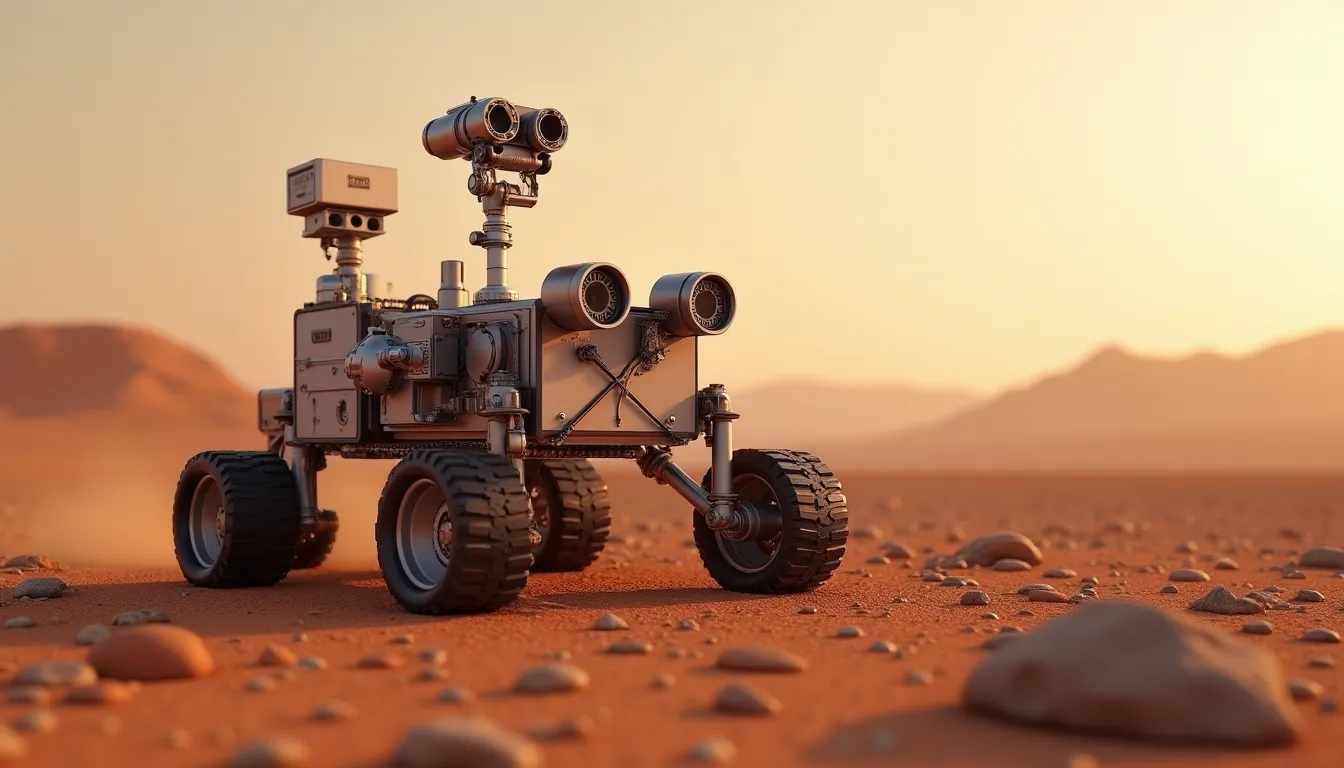
NASA continues to push the boundaries of aerospace technology and planetary defense through innovative missions and strategic initiatives. Recent developments highlight the agency’s commitment to enhancing detection capabilities for near-Earth objects and fostering technological advancements that resonate within both commercial and defense sectors.
Planetary Defense: A Focus on Detection and Deflection
The U.S. House Space and Aeronautics Subcommittee recently convened for a hearing titled “From Detection to Deflection: Evaluating NASA’s Planetary Defense Strategy”. This event underscored the urgency of strengthening NASA’s capabilities in planetary defense, showcasing three pivotal areas:
-
Detection Gap Reduction: At the forefront is NASA’s NEO Surveyor mission, the agency’s first spacecraft explicitly designed to detect near-Earth asteroids and comets. Scheduled for launch in 2028, NEO Surveyor aims to significantly reduce the detection gap, ensuring that potentially hazardous objects are identified well in advance. This proactive approach is vital as it enhances Earth’s protective measures against asteroid impacts.
-
Deflection Validation: The DART (Double Asteroid Redirection Test) mission has successfully demonstrated that a kinetic impactor can alter an asteroid’s trajectory. This monumental achievement provides critical data for future planetary defense strategies, showcasing that not only can we detect, but we can also take action to mitigate potential threats.
-
Risk Assessment Maturity: NASA’s observational capabilities have matured, evidenced by recent assessments of a 2025 near-Earth object, which lowered its impact probability to nearly zero. This evolution in risk assessment reflects NASA’s growing proficiency in detecting and characterizing asteroids, paving the way for operational capabilities in planetary defense.
These developments indicate a strategic shift within NASA’s approach to planetary defense, transitioning from theoretical frameworks to operational readiness.
Technology Maturation Through STMD
The Space Technology Mission Directorate (STMD) remains the backbone of NASA’s technological advancements. With a mission to “transform future missions while ensuring American leadership in aerospace,” STMD is focused on high-technology readiness levels (TRLs) that are crucial for mission success. Key areas of investment include:
- Advanced Propulsion Systems: Innovations in propulsion technologies are essential for deep-space exploration, particularly for upcoming missions to Mars. NASA’s ongoing thruster testing aims to refine propulsion systems that will support future crewed missions.
- Autonomous Systems: Enhancing autonomy in spacecraft operations will be pivotal for future exploration, minimizing the need for constant human oversight and allowing for more efficient mission execution.
- Deep-Space Communications: As missions venture further from Earth, robust communication systems become essential for data relay and navigation.
The STMD acts as a bridge, transforming laboratory concepts into practical applications that align with NASA’s mission goals and industry needs.
NASA’s Spin-Off Technologies: Bridging Space and Industry
NASA’s influence extends beyond the realm of space exploration, fostering a vibrant ecosystem of spin-off technologies that have significant applications in both commercial and defense sectors. Notable advancements include:
- Lidar Technologies: Originally developed for space missions, lidar systems are now employed in various fields, including target tracking and control.
- Vibration Isolation Systems: Shock absorbers and vibration control technologies have found applications in aerospace and seismic protection, enhancing structural integrity across industries.
- Specialty Coatings and Materials: High-temperature and bearing applications benefit from NASA’s innovative materials, further highlighting the agency’s role in technology transfer.
- Sensor and Monitoring Tools: NASA’s advancements in structural testing and fastener integrity monitoring illustrate the practical implications of space research on everyday technology.
These spin-off technologies exemplify NASA’s capacity as a technology incubator, demonstrating the profound impact of space research on industrial advancements and dual-use applications.
Key Areas of Near-Term Relevance
In assessing the current landscape, several areas emerge as particularly relevant to both aerospace and defense sectors:
- Planetary Defense Sensing: As evidenced by the advancements in NEO Surveyor and DART, improving our ability to detect and respond to potential threats is paramount.
- Impact Mitigation Strategies: The successful demonstration of deflection methods marks a new chapter in planetary protection efforts.
- Advanced Propulsion Technologies: Continued investment in propulsion systems is critical for enabling sustainable deep-space exploration.
- Commercialization of Space Technologies: The growing trend of technology transfer from NASA to commercial sectors highlights the importance of collaboration between space agencies and industry stakeholders.
Conclusion
NASA’s recent developments in planetary defense and technology maturation signal a robust commitment to safeguarding Earth against potential asteroid threats while simultaneously advancing aerospace capabilities. As the agency continues to innovate and foster technological advancements, the implications for both commercial and defense sectors remain profound. The integration of space technologies into practical applications ensures a future where the fruits of space exploration continue to benefit society at large, paving the way for a safer and more technologically advanced world.
References
-
Space Development Agency – Increasing Warfighters’ Lethality … (www.sda.mil) - 5/19/2026 The Space Development Agency (SDA) will quickly deliver needed space-based capabilities to the joint warfighter to support terrestrial missions.
-
From Detection to Deflection: Evaluating NASA’s Planetary Defense … (www.youtube.com) - 5/15/2025 Space and Aeronautics Subcommittee - From Detection to Deflection: Evaluating NASA’s Planetary Defense Strategy Full details here: …
-
NASA spin-off technologies - Wikipedia (en.wikipedia.org) - 7/10/2008 NASA spin-off technologies are commercial products and services which have been developed with the help of NASA, through research and development contracts.
-
[PDF] The Aerospace Technology Enterprise mission is to pioneer and (www.nasa.gov) The pro- gram will create new models for aviation safety management, including real-time identification and mitigation of risk at all levels, while contin- uing …
-
Space Technology Trends 2025 | Lockheed Martin (www.lockheedmartin.com) - 12/3/2024 Here are the top 10 space technology trends shaping the future of satellite communications, remote sensing and space exploration.
-
Technology - NASA (www.nasa.gov) - 1/27/2023 NASA Fires Up Powerful Lithium-Fed Thruster for Trips to Mars. NASA puts next‑generation propulsion to the test—a system powerful enough to carry crews to Mars …
-
Space Technology Mission Directorate - NASA (www.nasa.gov) - 12/13/2022 NASA’s Space Technology Mission Directorate (STMD) aims to transform future missions while ensuring American leadership in aerospace.
-
NASA Picks Revolutionary Space Tech Proposals For Development (www.edn.com) - 8/17/2012 –“Lightweight High Performance Acoustic Suppression Technology Development,” NASA’s Jet Propulsion Laboratory, Pasadena, Calif. This technology …