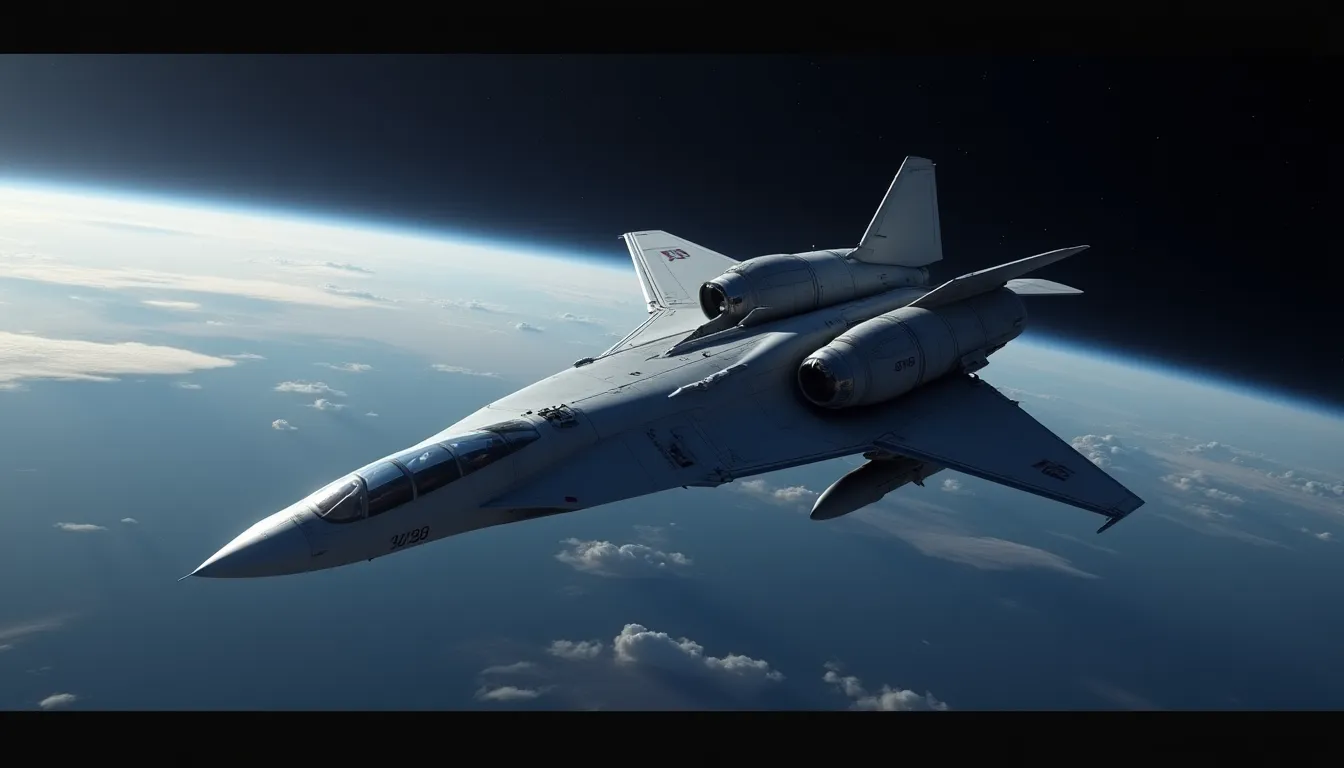
In recent years, satellite technology has emerged as a cornerstone in the aerospace and defense sectors, enabling enhanced military capabilities and commercial applications. As the demand for resilient communication systems and advanced operational capabilities increases, the industry is witnessing a transformative shift towards commercial satellite communications (SATCOM) and innovative satellite architectures.
The Commercialization of Defense SATCOM
The implications of commercial SATCOM for defense operations are profound. Historically, military communications relied heavily on legacy systems that were often rigid and limited in scope. Today, there’s a growing emphasis on adopting commercial satellite services to bolster resilience and ensure mission continuity in contested environments.
Key applications include:
- UAV Command and Control: Utilizing commercial networks enables more robust and secure communications for unmanned aerial vehicles.
- Integrated Missile Defense: Enhanced communication links facilitate quicker decision-making and coordination.
- Asset Tracking: Real-time data from commercial satellites improves the tracking and management of military assets.
As highlighted in a recent YouTube discussion on defense SATCOM applications, experts predict a future where military operations increasingly depend on hybrid architectures that blend commercial and military satellite capabilities, thereby enhancing flexibility and operational effectiveness.
Proliferated Space Architectures: A Game Changer
The U.S. Space Development Agency (SDA) is at the forefront of this transition, advocating for proliferated low Earth orbit (LEO) constellations. This approach emphasizes rapid deployment cycles and the use of smaller, networked satellites instead of a few large platforms, which historically posed single points of failure.
This shift aligns with a broader military strategy aimed at enhancing survivability in space, allowing for:
- Faster Deployment: New systems can be launched and operational within shorter timelines.
- Increased Resilience: Distributed constellations reduce the risk of total mission failure due to the loss of a single satellite.
Navigating Orbital Congestion with Advanced Propulsion
As the number of satellites in orbit increases, orbital congestion has become a pressing concern. This has led to a renewed focus on satellite propulsion technologies. Modern defense operations require satellites to maneuver effectively to avoid collisions and maintain operational integrity in crowded environments.
Key advancements include:
- Improved Maneuverability: Satellites equipped with advanced propulsion systems can change orbits more readily, enhancing their mission adaptability.
- Collision Avoidance: Enhanced propulsion capabilities allow for real-time adjustments to avoid potential collisions with other space debris.
For example, companies like Moog are pioneering developments in propulsion technologies that not only enhance maneuverability but also support deeper space travel capabilities. The integration of electric propulsion systems is becoming increasingly important, driven by the need for sustainable and efficient mission operations.
Innovations in Satellite Design and Autonomy
The satellite sector is also experiencing a wave of innovation characterized by miniaturization and increased autonomy. The trend towards smaller satellites offers numerous benefits, including lower launch costs and the ability to deploy constellations that enhance data collection and communication capabilities.
Recent advancements in satellite technology include:
- Satellite Miniaturization: Smaller satellites are replacing larger counterparts in roles such as Earth observation and remote sensing, enabling more efficient operations.
- Advanced Ground Systems: Automation in ground control operations allows for continuous monitoring and management of satellite constellations with minimal human intervention.
Innovative products such as the Advanced Sensor Module, featuring a 9-DOF MEMS IMU for precise motion sensing, are becoming essential in this evolving landscape. Additionally, the Control System, with its multi-resolution CMOS imaging capabilities, plays a vital role in enhancing ground operations.
The Growing Need for High Throughput
With the increasing demand for data, especially in defense intelligence, surveillance, and reconnaissance (ISR) operations, Very High Throughput Satellites (VHTS) are gaining traction. These systems are designed to handle large volumes of data transmission, supporting applications ranging from geospatial intelligence to commercial broadband services.
Companies are rapidly developing higher-capacity satellite networks to meet these demands, ensuring that both military and commercial users have access to the necessary bandwidth for real-time operations.
Conclusion
The satellite technology landscape in aerospace and defense is undergoing significant transformation, driven by a convergence of commercial capabilities and innovative engineering solutions. As the sector moves towards more integrated, resilient, and autonomous systems, the future promises to deliver enhanced operational capabilities that can effectively address the evolving challenges of space and terrestrial warfare. The integration of advanced systems such as precision accelerometers and navigation solutions will further empower military and commercial operators alike, ensuring that they remain competitive and agile in an increasingly complex environment.
References
-
Space Development Agency – Increasing Warfighters’ Lethality … (www.sda.mil) - 5/19/2026 The Space Development Agency (SDA) will quickly deliver needed space-based capabilities to the joint warfighter to support terrestrial missions.
-
Advancing Defense Capabilities with New Satellite Propulsion … (www.moog.com) - 5/14/2026 As space becomes an increasingly congested domain, satellite propulsion technology becomes more important than ever for national defense.
-
Aerospace & Defense Technology - SAE Media Group (saemediagroup.com) - 12/23/2025 A&DT is the largest-circulation magazine for mil/aero engineers and managers. Through our portfolio of print, digital, online, and custom opportunities.
-
Satellite Solutions for Defense Applications - YouTube (www.youtube.com) - 11/5/2025 The Department of Defense is increasingly looking to commercialized satellite communications (SATCOM) to strengthen mission resilience, …
-
Aviation, Defense, and Space Market Size Report, 2033 (metastatinsight.com) - 10/8/2025 Global Aviation, Defense, and Space Market valued at USD 709.2 billion in 2025 and projected to exceed USD 896.6 billion by 2032.
-
Satellite Technologies | Aerospace Defense Outlook (aerodefenseoutlook.com) - 3/12/2025 GateHouse: Transforming Satellite Communications · G&S SatCom : Advancing Satellite Communication Solutions · PolarSat: Revolutionizing Mission-Critical Satellite …
-
Space Technology Trends 2025 | Lockheed Martin (www.lockheedmartin.com) - 12/3/2024 Here are the top 10 space technology trends shaping the future of satellite communications, remote sensing and space exploration.
-
The New Frontier of Satellite Technology | Dassault Systèmes (www.3ds.com) - 4/3/2024 Driven by the need to accelerate innovation, this new frontier helps companies identify opportunities to extend the limit of rocketry and satellite design and …
-
New Technology Trends in Aerospace and Defense Industry [2026] (www.epicflow.com) - 4/6/2022 Key aerospace and defense innovations will include the application of artificial intelligence and agentic AI, immersive technologies, additive manufacturing, …
-
The New Frontier of Satellite Technology - Dassault Systèmes (www.youtube.com) - 9/8/2020 In the race to successfully launch satellites into orbit, New Space companies must speed up innovation in satellite technology.