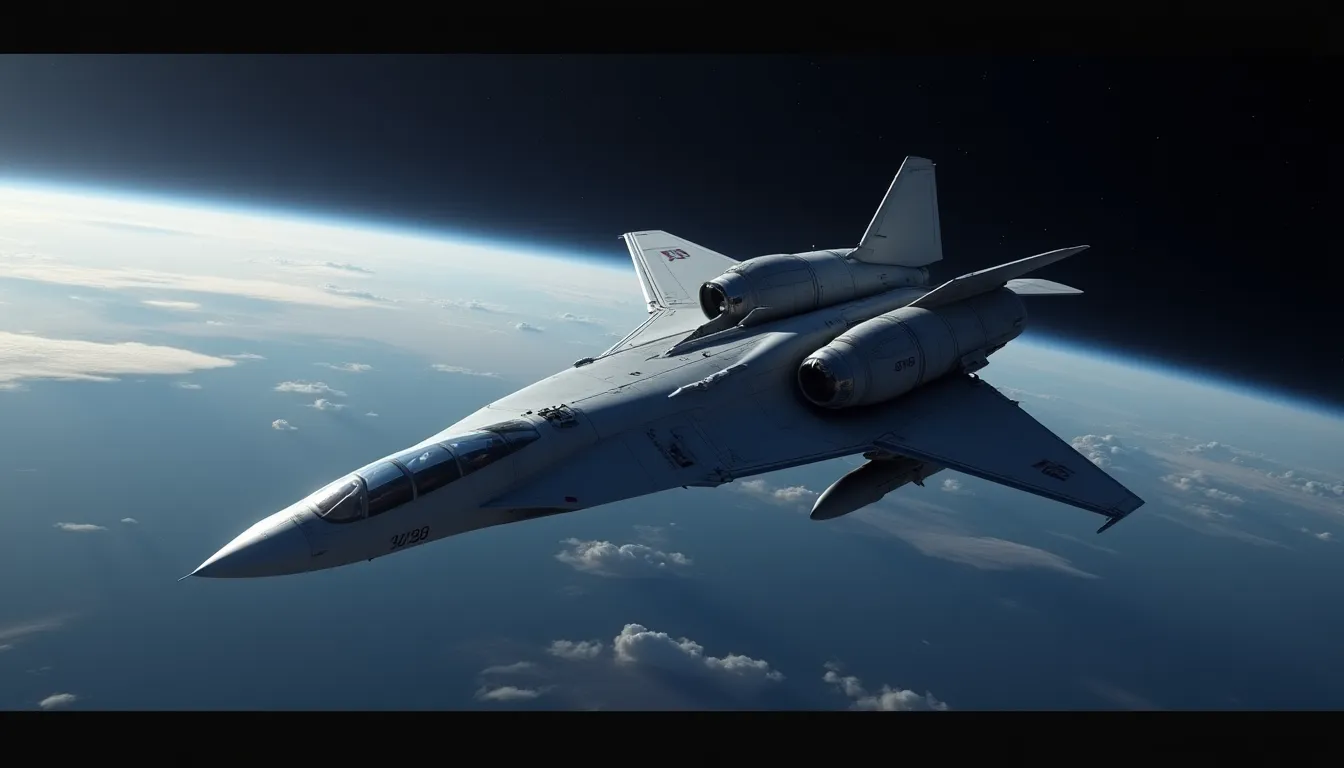
In recent years, the aerospace and defense sectors have witnessed significant advancements in satellite technology, driven by increasing demand for military communications, enhanced manufacturing capabilities, and an evolving landscape of commercial space operations. This article delves into the latest developments that are reshaping the satellite industry and their implications for national security and commercial applications.
Military Tactical Communications: AST SpaceMobile’s Bold Move
On February 23, 2026, AST SpaceMobile secured a pivotal $30 million contract from the Space Development Agency (SDA) aimed at demonstrating tactical satellite communications capabilities. This award marks the inaugural contract under the SDA’s Europa Track 2 Commercial Solutions program, part of the expansive Tranche 2 Demonstration and Experimentation System (T2DES) project.
Leveraging its BlueBird commercial satellite constellation, AST SpaceMobile will conduct on-orbit demonstrations of low-latency tactical communications, with testing expected to conclude by December 2027. The focus will be on validating integration between military tactical radios and showcasing the potential for the Department of Defense (DoD) to utilize commercial space infrastructure as a service for data transmission. Notably, BlueBird 6, deployed in late 2025, features the largest commercial communications array antenna ever launched into low Earth orbit, measuring an impressive 2,400 square feet.
Manufacturing Expansion: Boeing Takes the Lead
In response to rising demand for satellite capabilities, Boeing is significantly ramping up production, planning to manufacture 26 satellites in 2026—more than double its previous output. The Space Mission Systems division, which encompasses the Millennium Space Systems subsidiary, is at the forefront of this expansion, gearing up to support multiple defense programs.
A critical initiative is the Resilient Missile Warning and Tracking (MWT) MEO program. Millennium is tasked with constructing 12 advanced space vehicles equipped with Boeing’s cutting-edge electro-optical infrared (EO/IR) sensor payloads for the U.S. Space Force, with deliveries slated for 2027. This manufacturing strategy reflects Boeing’s commitment to transitioning proven technologies into scalable manufacturing processes while ensuring a stable production flow through repeatable work packages.
Industrial Consolidation: The Rise of Next-Generation Space Primes
The aerospace sector is undergoing a strategic metamorphosis characterized by industrial consolidation and a shift towards vertical integration. Companies such as Rocket Lab and Intuitive Machines are emerging as formidable players, capable of controlling the entire supply chain from satellite bus production to on-orbit operations.
The SDA’s recent awards for the Tranche 3 Tracking Layer, announced in late December 2025, underscore this trend, with $3.5 billion allocated to four vendors for the development of 72 satellites. Rocket Lab, securing an $805 million contract for 18 space vehicles, solidifies its status as a vertically integrated manufacturer capable of delivering infrared sensors and bus hardware at scale. Utilizing its Lightning satellite platform and proprietary Phoenix infrared sensors, Rocket Lab is poised to meet the SDA’s stringent fire-control quality tracking requirements essential for missile defense applications.
Blue Origin’s Terow Wave: A New Era in Satellite Communications
In a significant step towards vertical integration, Blue Origin has unveiled its new satellite communications constellation, Terow Wave. This initiative will leverage the company’s advanced launch capabilities, particularly its New Glenn rocket, to provide comprehensive end-to-end solutions that span from launch vehicle deployment to application-layer services, positioning Blue Origin as a key player in the satellite communications landscape.
Defense Spending and Market Growth: A Catalyst for Innovation
The Pentagon’s recent $152 billion spending plan allocates substantial resources for advancing hypersonic defense systems and space-based interceptors, with $2.2 billion earmarked for hypersonic technologies and $5.6 billion for satellite-based defense initiatives. An additional $24.4 billion in new missile defense funding under the Golden Dome initiative is expected to drive sustained demand across satellite ground systems, advanced propulsion technologies, and airborne test platforms.
As commercial space operations expand, the FAA licensed 205 commercial space operations in 2025, reflecting a 25% increase over the previous year. Projections suggest that licensed launches could double by 2029, highlighting the vibrant growth trajectory of the aerospace sector.
Military Space Operations: Enhancing Operational Capabilities
A notable advancement in military space operations is the U.S. Space Force’s recent launch of a prototype maneuverable satellite designed to train personnel for on-orbit offensive and defensive activities. This development signifies a strategic enhancement in space domain awareness and operational capabilities, reinforcing the importance of satellites in modern military strategies.
Conclusion
The advancements in satellite technology are reshaping the aerospace and defense industries with innovative solutions for military communications, manufacturing efficiencies, and enhanced operational capabilities. As major players like Boeing, Rocket Lab, and Blue Origin continue to push the boundaries of what is possible in space, the future looks promising for satellite applications that enhance both national security and commercial endeavors. The ongoing evolution in this field will undoubtedly play a critical role in shaping the next generation of aerospace capabilities.
References
-
Mach 2 and Beyond: Aerospace Enters Its Biggest Spending Cycle (www.nasdaq.com) - 2/27/2026 The Pentagon’s $152 billion reconciliation spending plan allocates $2.2 billion specifically to accelerate hypersonic defense systems and $5.6 …
-
Aerospace Daily & Defense Report, February 27, 2026 (aviationweek.com) - 2/27/2026 The U.S. Space Force has launched a prototype maneuverable satellite to train for on-orbit offensive and defensive activities. knight satellite.
-
Space & Defense Market Update - Feb 2026 (LIVE from NYSE) (www.youtube.com) - 2/26/2026 … (space) and Tectonic (defense tech). • Payload: www.payloadspace.com • Tectonic: www.tectonicdefense.com • Ignition: www.ignition-news.com …
-
The New Space Race: Industrial Integration Redefines the Market … (news.satnews.com) - 2/24/2026 On February 24, 2026, the aerospace sector saw a series of strategic consolidations and leadership shifts that signal a transition from a …
-
SDA taps commercial firm for on-orbit tactical SATCOM demonstration (defensescoop.com) - 2/23/2026 Space Development Agency accelerates launch of first experimental tactical SATCOM satellite. Developed under SDA’s Tranche 1 Demonstration and …
-
AST SpaceMobile Nabs First Space Development Agency Award … (www.satellitetoday.com) - 2/23/2026 The Space Development Agency (SDA) on Monday said it has awarded a $30 million prototype contract to AST SpaceMobile to demonstrate …
-
Boeing expands satellite production to meet rising demand (www.boeing.com) - 2/20/2026 Boeing’s Space Mission Systems aims to more than double that output this year with 26 satellites in 2026. 12 space vehicles: Millennium is …
-
Space Brief 14 Feb 2026 - KeepTrack (keeptrack.space) - 2/14/2026 Highlights include reusable rocket advancements, crewed missions, and new approaches to missile defense. Today’s Space Brief brings you the …