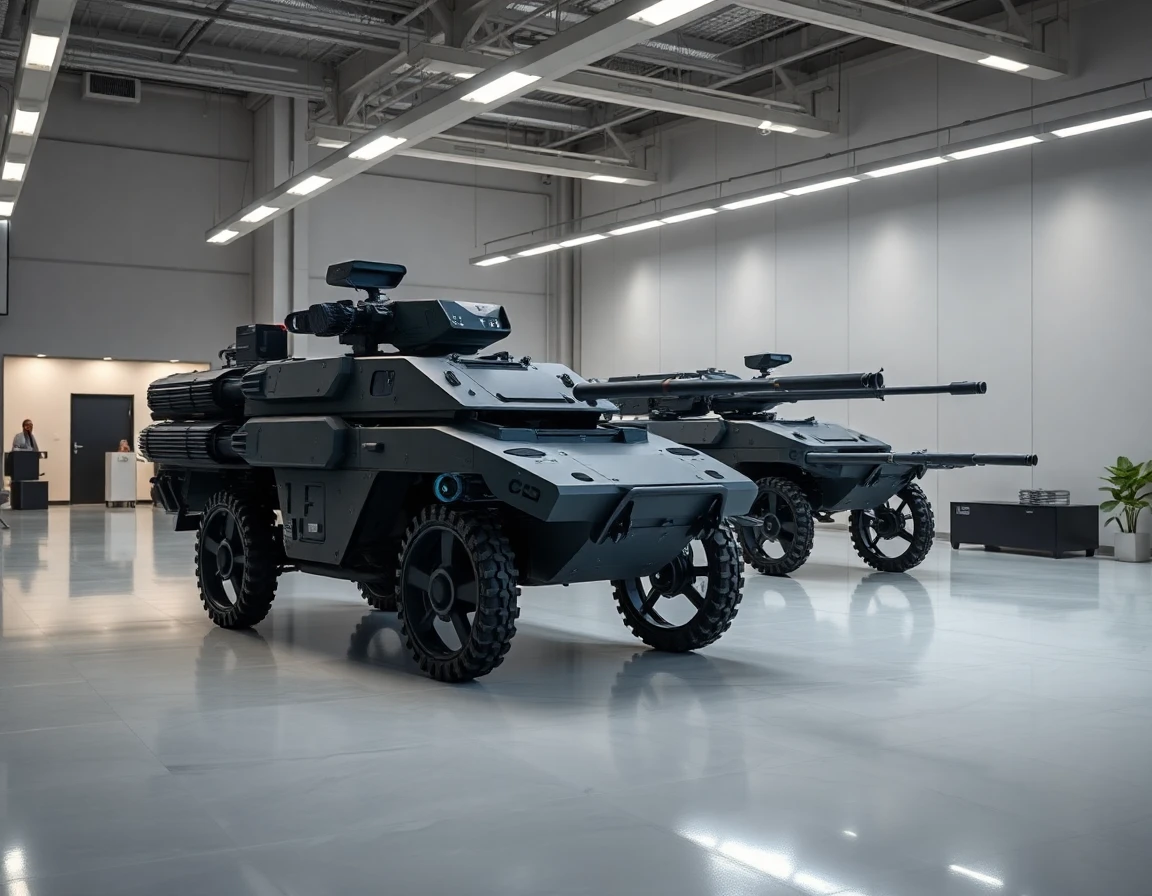
As global security dynamics evolve, the U.S. military is strategically pursuing advanced technologies across various domains to bolster its defense capabilities. Recent developments highlight a strong focus on automation, artificial intelligence (AI), and unmanned systems that promise to reshape the battlefield landscape.
Advancements in Military Technology
The U.S. Army is increasingly investing in automated target recognition technology, which is designed to enhance the detection of explosive hazards and battlefield obstacles. This technology leverages sophisticated algorithms and machine learning to improve situational awareness for soldiers in the field.
Moreover, the Pentagon is exploring high-energy laser systems for domestic air defense applications. These systems are particularly relevant for countering emerging threats, such as drone incursions, with laser deployments being tested near the U.S.-Mexico border for immediate response capabilities.
In a significant move towards integrating AI into military operations, the U.S. Special Operations Command has awarded a $49.5 million contract to Beacon AI. This contract aims to deploy AI-powered pilot assistance software across its aircraft fleet, enhancing operational efficiency and safety.
Additionally, Anduril Industries secured a $100 million contract to develop the U.S. Army’s next-generation command and control (C2) ecosystem. The prototype is expected to be delivered within the year, emphasizing the rapid pace of innovation in military technology.
Unmanned Systems and Drone Development
The race for advanced unmanned systems is heating up, with China recently commencing flight tests of the R6000 large tiltrotor uncrewed aircraft system. This platform is poised to expand long-range uncrewed airlift capabilities significantly, a critical factor in modern military logistics.
Meanwhile, Russia’s Orion reconnaissance and strike UAV has been observed deploying Kh-BPLA laser-guided missiles, showcasing its enhanced precision strike capabilities. The integration of these advanced munitions underscores the increasing importance of unmanned systems in modern combat scenarios.
In Europe, Germany’s Dronivo introduced the MILAN-17 fixed-wing VTOL drone equipped with advanced reconnaissance payloads at Milipol 2025. This development reflects a growing trend in the defense sector towards versatile and capable unmanned aerial systems (UAS).
Defense Procurement and Strategic Shifts
In response to the heightened demand for missile defense systems, Boeing is ramping up production of the Patriot PAC-3 missile seekers. This strategic shift is fueled by global security concerns, particularly those stemming from the Ukraine conflict and broader European rearmament initiatives.
At the recent Dubai Airshow 2025, Russia unveiled the Pantsir SMD-E missile-only short-range defense system, designed to counter drone swarm threats. This system is indicative of the evolving nature of aerial warfare, where swarms of drones present new challenges for traditional defense strategies.
Additionally, Russia showcased the Yak-130M combat aircraft, featuring enhanced avionics and expanded strike options, further emphasizing its commitment to modernizing its military capabilities.
Industry Trends and M&A Activity
According to PwC’s 2026 outlook, mergers and acquisitions (M&A) have emerged as a primary growth lever within the aerospace and defense sectors. As national security priorities shift, there is an increasing demand for next-generation capabilities in defense technology, munitions, and space operations.
Private equity firms are also investing record capital into mid-tier defense suppliers, focusing on operational excellence and speed to scale as key differentiators in a competitive landscape. This shift highlights the industry’s pivot from traditional cost-plus contracting to outcome-based models, where disciplined operators are rewarded with potential margin expansions.
The Role of Advanced Technology
The integration of advanced technologies, such as AI and autonomous systems, is driving the aerospace and defense sector forward. Technologies like precision accelerometers, thermal battery systems, and advanced navigation systems are becoming crucial for ensuring operational readiness and precision in military applications. For example, the Advanced Sensor Module, featuring a 9-DOF MEMS IMU, offers exceptional stability and comprehensive motion sensing capabilities, enhancing the effectiveness of unmanned systems.
Moreover, systems like the YWJ01JG050 ultra-high precision gyroscopic theodolite are pivotal for professional surveying, providing advanced automation and precise azimuth determination necessary for military applications.
Conclusion
The trajectory of military technology and defense capabilities is poised for transformative changes as the U.S. military and global counterparts invest heavily in automation and AI. With advancements in unmanned systems and strategic procurement decisions, the landscape of warfare is evolving. As governments and defense contractors realign their focus towards innovative solutions, the future of aerospace and defense will undoubtedly be shaped by these cutting-edge technologies. As the industry continues to innovate, the implications for national security and global stability will be profound.
References
-
Defense Aerospace News Air Force Aviation - Army Recognition (armyrecognition.com) - 11/19/2025 U.S. Special Operations Command awarded Beacon AI a $49.5 million contract to deploy AI-powered pilot assistance software across its aircraft fleet… Read more.
-
Aerospace and Defense - NewsNow (www.newsnow.com) Latest news on Aerospace and Defence (A&D), covering military spending, NATO, commercial aviation, space, defence contracts, arms deals, and key trends.
-
Technology and Innovation - Defense News (www.defensenews.com) - 7/21/2025 US military eyes high-energy ‘laser dome’ for domestic air defense · Pentagon, FAA sign agreement on deploying anti-drone laser system near Mexico · Pentagon, …
-
Breaking Defense - Defense technology, policy and national security … (breakingdefense.com) Golden Dome czar signals space-based interceptors not guaranteed, as DoD weighs cost · Air Force kicks off AMTI program with competition for first ‘increment’.
-
Aerospace and defense: US Deals 2026 outlook - PwC (www.pwc.com) - 12/16/2025 Shifting national security priorities are driving fresh demand for next-generation capabilities in defense technology, munitions, and space.
-
DefenseScoop | Breaking US Military Tech News, Modern Defense … (defensescoop.com) - 1/19/2023 Army eyeing automated target recognition tech to detect explosive hazards, battlefield obstacles. By Jon Harper · Inside the Army’s new data operations center …