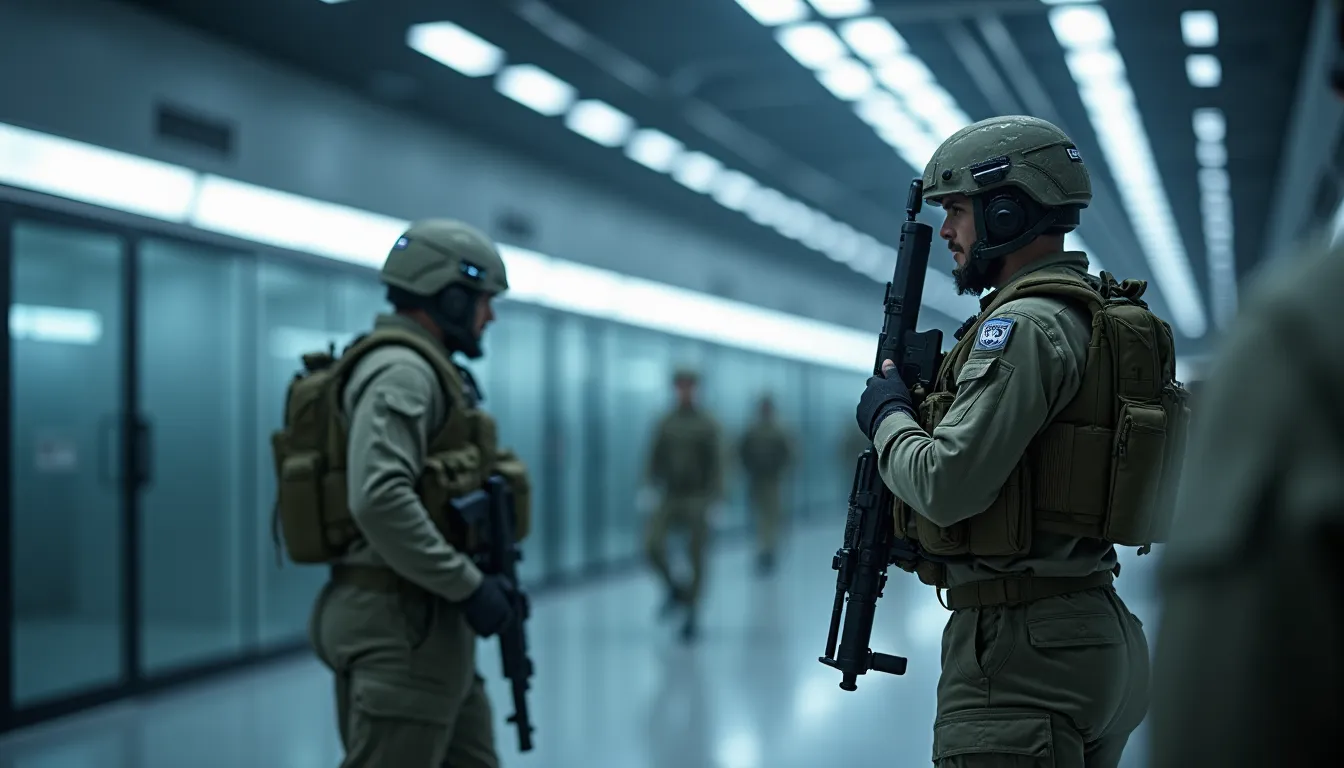
In recent weeks, the military landscape has been significantly reshaped by advancements in aerospace, defense, and technology sectors. As of May 2026, key military branches in the U.S. are prioritizing the modernization of their aircraft fleets, the acquisition of unmanned systems, and the integration of artificial intelligence (AI) into their operational frameworks. This article delves into the latest developments and their implications for future military capabilities.
Air Force Initiatives: Leading the Charge in Modernization
The U.S. Air Force (USAF) has announced several critical initiatives aimed at enhancing its operational capabilities. Notably, the decision to retire the seven E-11 BACN aircraft marks a significant shift towards the Department of the Air Force’s Battle Network. This new framework is designed for improved data fusion and communication relays, with an eye towards integrating space-based systems for future operations.
Another pivotal development is the nearly $1 billion allocation for the procurement of Collaborative Combat Aircraft (CCA). This initiative, which signals the transition from prototypes to full production, is set to introduce the MQ-58 Valkyrie drones into Marine Corps operations by 2029. These advanced unmanned systems are expected to enhance situational awareness and operational efficiency on the battlefield.
In tandem with these developments, the USAF has extended the operational life of its B-1B bombers to 2037, while the Air-Launched Rapid Response Weapon (ARRW) has been revived in the latest Pentagon budget. Such moves underscore the Air Force’s commitment to maintaining a robust strike capability in the face of evolving threats.
Marine Corps and Navy: Innovations in Ground and Naval Warfare
The U.S. Marine Corps is also embarking on significant modernization efforts. The Advanced Reconnaissance Vehicle (ARV) Increment 2 is set to commence development in 2029, focusing on counter-unmanned aerial systems (C-UAS), recovery, and precision fire variants. These enhancements are crucial for maintaining operational superiority in complex environments.
Meanwhile, the Navy is enhancing its capabilities through strategic partnerships, such as the collaboration with Domino AI for rapid Iranian mine countermeasure solutions. The integration of AI into naval operations is expected to streamline decision-making processes and improve response times in critical situations.
Additionally, the Marine Corps is testing the Aerial Logistics Connector (ALC), a pilot-optional helicopter, which is anticipated to demonstrate significant logistical advantages in operational settings by 2027. Such innovations reflect a broader trend towards automation and unmanned systems in military operations.
Drone and UAS Advancements: Pioneering the Future of Warfare
Unmanned aerial systems (UAS) are at the forefront of military innovation. The collaboration between Elbit Systems and Mistral highlights the commitment to enhancing the U.S. Army’s drone capabilities, with the THOR UAS being a notable addition. Furthermore, the introduction of the SIRBAI drone swarm technology at UMEX 2026 showcases the potential of AI-driven swarm tactics in military engagements, enabling coordinated operations that can overwhelm adversaries.
The anticipated deployment of the MQ-58 Valkyrie drones will further solidify the Marine Corps’ capabilities in unmanned warfare, providing enhanced reconnaissance and strike options in contested environments.
Advancements in Defense Technologies: A Comprehensive Approach
Beyond aerial and naval systems, the defense sector is witnessing a surge in innovative technologies. Recent contracts, such as the $454.9 million awarded to Leidos for the upgrade of the USAF Cloud One platform, demonstrate a shift towards leveraging cloud technology for improved operational efficiencies. This modernization is essential for data management and analysis, facilitating rapid decision-making.
In addition, BAE Systems is advancing the Armored Multi-Purpose Vehicle (AMPV) 30mm variants, enhancing the Army’s capabilities in ground combat scenarios, albeit without immediate purchase plans. The introduction of active protection systems in Marine Amphibious Combat Vehicles (ACVs) represents a proactive approach to countering anti-armor threats, ensuring that troops are better shielded against emerging battlefield challenges.
The Role of AI and Advanced Sensors in Modern Warfare
Artificial intelligence continues to play a crucial role in shaping the future of military operations. The Department of Defense’s (DoD) expansion of classified AI initiatives, in collaboration with eight firms, underscores the importance of integrating cutting-edge technologies into defense strategies. Notably, advancements in precision accelerometers and quartz MEMS gyroscopes are enhancing navigation and targeting systems, providing military units with superior operational capabilities.
The integration of high-performance CMOS imaging series in control systems is revolutionizing surveillance and reconnaissance missions, allowing for greater situational awareness in dynamic environments. These technologies are instrumental in ensuring that military forces remain one step ahead of potential threats.
Conclusion: A Future of Enhanced Military Capabilities
As military branches invest in advanced technologies and innovative systems, the landscape of defense is set to transform dramatically. The emphasis on modernization, AI integration, and unmanned systems will not only enhance operational effectiveness but also reshape the strategic approach to global security challenges. Looking ahead, the continued evolution of these capabilities will be pivotal in ensuring that military forces are equipped to meet the complexities of modern warfare. The focus on collaborative partnerships and cutting-edge technologies promises a future where military operations can be executed with unparalleled precision and efficiency.
References
-
Breaking Defense - Defense technology, policy and national … (breakingdefense.com) Space · Air Force seeks to scrap its E-11 BACN fleet. An Air Force spokesperson told Breaking Defense following the hearing that there are seven E-11s in the …
-
Defense One (www.defenseone.com) - 5/2/2026 Space Force wraps decades-long GPS upgrade—and the next one is on tap ; 7 AI firms cleared to provide tools for classified Pentagon networks · Alexandra Kelley …
-
Defense News, Covering the politics, business and … (www.defensenews.com) - 5/1/2026 Pentagon freezes out Anthropic as it signs deals with AI rivals · Investigation: Russian shadow airlines use Algeria as base for secretive missions · Romania …
-
Air Force Technology | Air Defence News & Views Updated … (www.airforce-technology.com) - 5/1/2026 Air Force news covering the latest stories in air defence technology, new aircraft, pilot technologies and trends in global air warfare and security.
-
Military Aerospace: Home (www.militaryaerospace.com) - 5/1/2026 Military & Aerospace Electronics covers enabling technologies for engineers, engineering managers, and program managers in defense prime contractors and
-
Army Technology | Land Defence News & Views Updated Daily (www.army-technology.com) - 4/30/2026 Army news covering the latest stories in land based defence technology … The aerospace and defense industry continues to be a hotbed of patent innovation.
-
ASDNews (www.asdnews.com) - 4/1/2026 Today’s Aerospace & Defense Headlines · Elbit Systems: FUSE to Provide THOR UAS to the US Army Through Partnership with Mistral · Bell Selected by Near Earth …
-
The War Zone (www.twz.com) - 10/11/2023 Latest News ; New VC-25B Air Force One “Bridge” Aircraft Now Fully Modified And Flight Tested · Howard Altman. Updated 4 Hours Ago ; Bunker Talk: Let’s Talk About …
-
DefenseScoop | Breaking US Military Tech News, Modern … (defensescoop.com) - 1/19/2023 DOD expands its classified AI work with 8 companies — excluding Anthropic — amid ongoing dispute. DOD announced new agreements with SpaceX, OpenAI, Google, …