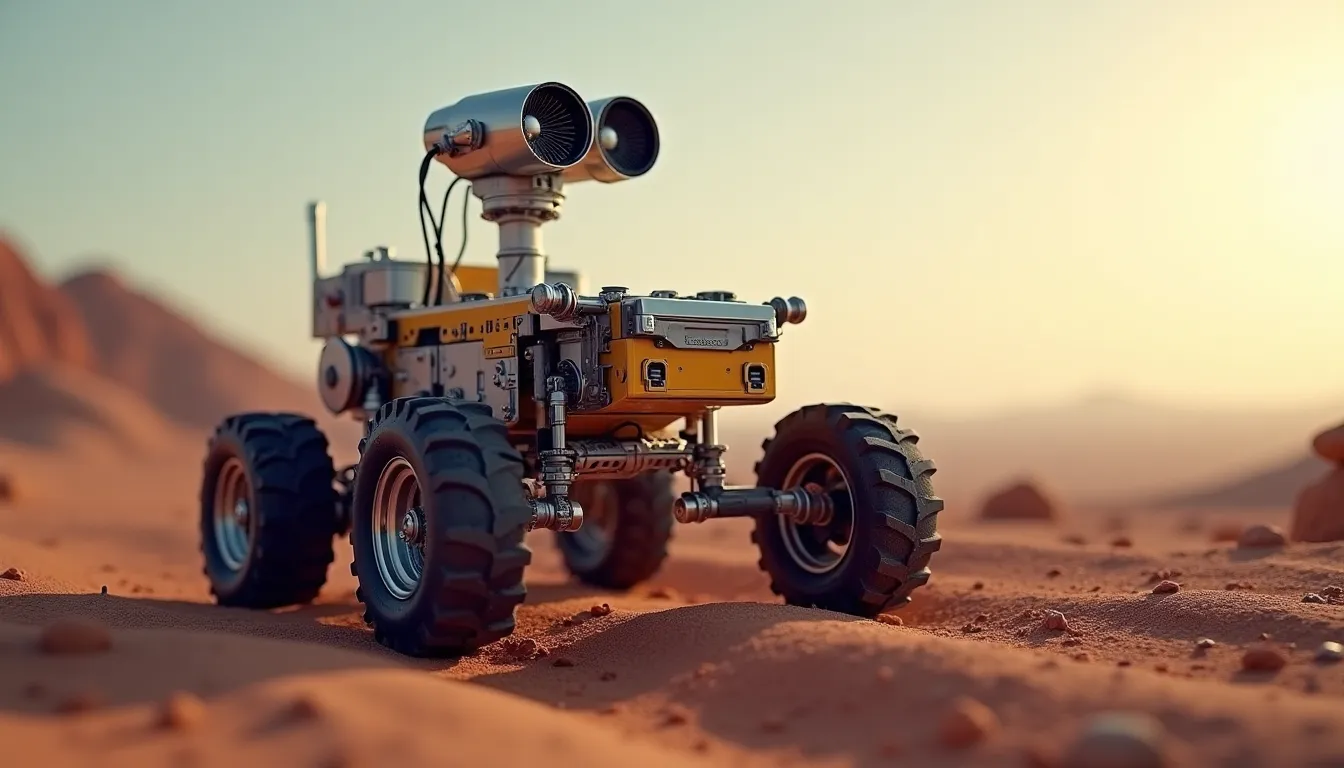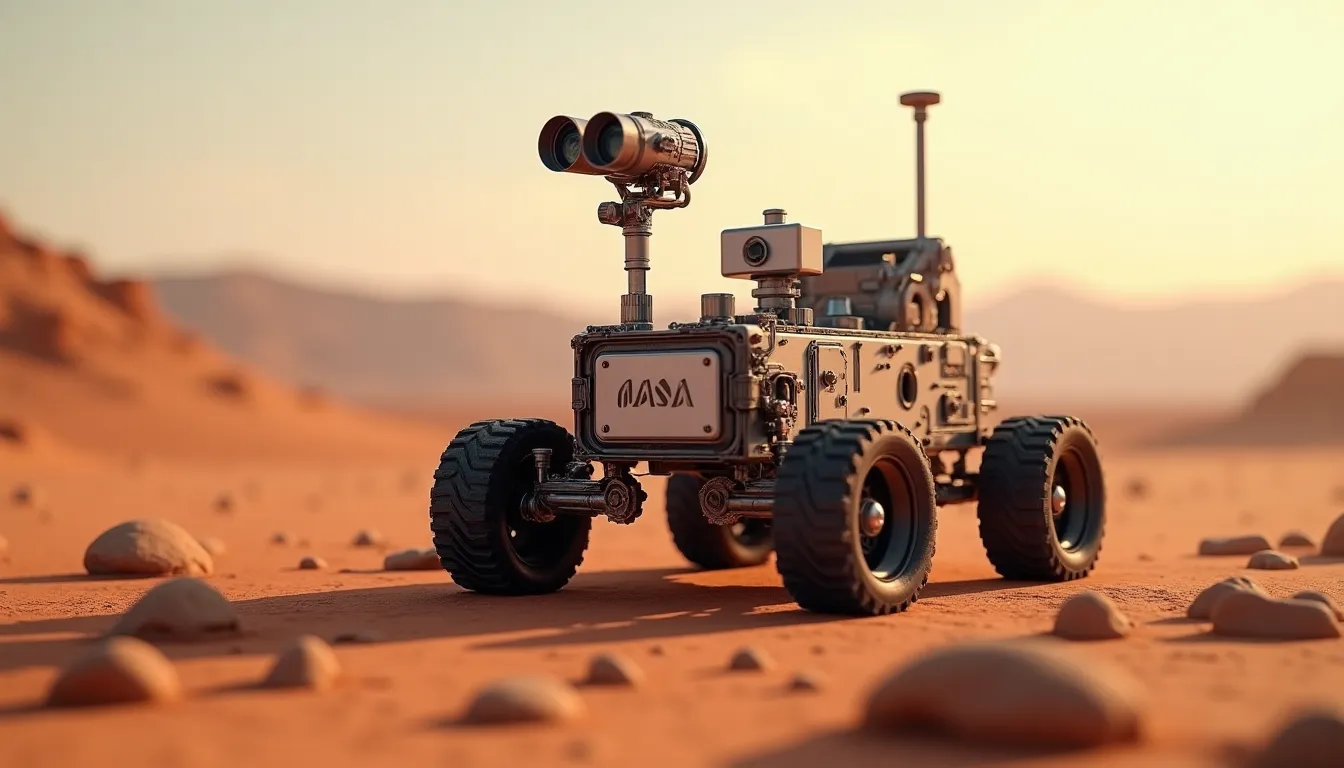
NASA’s Curiosity rover, which has been exploring the Martian surface since 2012, remains a symbol of human ingenuity and the quest for knowledge beyond our planet. Although recent news does not highlight any new developments related to Curiosity itself, its lasting influence on aerospace technology and innovation is profound. This article delves into the implications of Curiosity’s mission and its contributions to the broader aerospace and defense sectors.
The Legacy of Curiosity Rover
Launched on November 26, 2011, Curiosity is part of NASA’s Mars Science Laboratory mission. It was designed to assess Mars’ habitability and investigate its climate and geology. Over the years, Curiosity has sent back invaluable data, including evidence of ancient lake beds and organic molecules, indicating that Mars had conditions suitable for life in the past. Its advanced scientific instruments, such as the ChemCam and the Sample Analysis at Mars (SAM), have been critical in conducting these analyses.
Curiosity’s design incorporates cutting-edge technologies that have set new standards in robotic exploration. For instance, the rover’s Advanced Navigation System utilizes high-performance MEMS accelerometers for superior precision and stability, crucial for navigating the rocky Martian terrain. Such innovations have paved the way for future missions, including the Perseverance rover and the upcoming Artemis missions aimed at returning humans to the Moon.
Recent Developments in Aerospace and Defense
While Curiosity itself hasn’t been in the spotlight recently, the aerospace and defense sectors have seen significant advancements that echo the pioneering spirit of Curiosity. For example, on April 14, 2026, the FAA granted a Special Airworthiness Certification to the Hermeus Quarterhorse, a hypersonic aircraft set to redefine air travel with speeds exceeding Mach 5. This development aligns with the ongoing pursuit of speed and efficiency in aerospace technology, reminiscent of Curiosity’s quest for knowledge.
Additionally, Northrop Grumman’s Cygnus XL spacecraft successfully delivered supplies to the International Space Station on the same date, underscoring the importance of reliable logistics in space exploration and research. The evolution of spacecraft technology, including enhanced control systems with advanced CMOS imaging capabilities, is reflective of the innovations sparked by Mars missions.
The Influence of Robotics and AI on Future Missions
The technological advancements stemming from Curiosity’s mission extend into robotics and artificial intelligence (AI). The integration of AI in spacecraft allows for enhanced autonomy, enabling systems to make real-time decisions without Earth-based commands. This capability is evident in recent developments in counter-UAS technologies, where the Department of Defense has invested in advanced systems to counter unmanned aerial threats effectively.
Moreover, as we look towards future explorations, the use of ZQXXSGDSS systems for precise laser beam positioning and tracking will be vital in robotic landers and rovers. These systems can guide navigation and ensure accuracy in scientific measurements, further facilitating the exploration of Mars and beyond.
The Broader Implications of Space Exploration
The exploration of Mars through missions like Curiosity does not only contribute to our understanding of the Red Planet but also drives innovation across various industries on Earth. The technologies developed for space missions often find applications in medical imaging, environmental monitoring, and advanced manufacturing.
For instance, the MLZ128YS system, a high-performance cooled infrared detector, is used in diverse applications, including thermal imaging and aerospace surveillance. Similarly, innovations in quartz MEMS gyroscopes and thermal battery systems developed for space applications are now utilized in consumer electronics and automotive industries, showcasing the ripple effect of space exploration on everyday life.
Conclusion
While recent searches yield no direct updates about NASA’s Curiosity rover, the impact of its mission continues to be felt across the aerospace and defense sectors. Its legacy of innovation inspires new technologies and applications that enhance our exploration capabilities. As we prepare for future missions to Mars and beyond, the foundation laid by Curiosity will undoubtedly continue to influence the design and technology of the next generation of spacecraft and exploration systems. The journey of discovery remains a testament to human curiosity and the relentless pursuit of knowledge, pushing the boundaries of what is possible in aerospace and defense technology.
References
-
Industry News Archives - AIAA - Shaping the future of aerospace (aiaa.org) - 4/14/2026 Breaking Defense reports, “European missile giant MBDA plans hire 2,800 new workers and invest €5 billion ($5.8 billion) over the…
-
InsideDefense.com | Exclusive national security news from inside … (insidedefense.com) - 4/14/2026 The Air Force is offering land at three Alaska bases to build commercial data centers to support artificial intelligence technology and programs …
-
ASDNews (www.asdnews.com) - 4/1/2026 Today’s Aerospace & Defense Headlines · Rheinmetall and Destinus to Form a JV for Missiles · Norwegian Armed Forces Upgrade Enterprise Simulation Capabilities …
-
News - Category Innovation - USAF (www.af.mil) - 2/13/2026 Sept. 19, 2025. Air Force experiments with AI, boosts battle management speed, accuracy.
-
Technology and Innovation - Defense News (www.defensenews.com) - 7/21/2025 Pentagon, Lockheed Martin agree to $4.7 billion PAC-3 interceptor deal · Lockheed in January discussed a target of increasing annual PAC-3 interceptor production …
-
Breaking Defense - Defense technology, policy and national security … (breakingdefense.com) Space Force to finalize acquisition portfolio structure over next two months · White House wants Pentagon to demo nuclear space power by 2031 · Australia gets new …
-
Updates - SpaceX (www.spacex.com) SpaceX has acquired xAI to form the most ambitious, vertically-integrated innovation engine on (and off) Earth, with AI, rockets, space-based internet, …
-
DefenseScoop | Breaking US Military Tech News, Modern Defense … (defensescoop.com) - 1/19/2023 U.S. Space Force Guardians assigned to Space Delta 5 monitor computer workstations Dec. 18, 2025, at Vandenberg Space Force Base, Calif. (Photo by David …