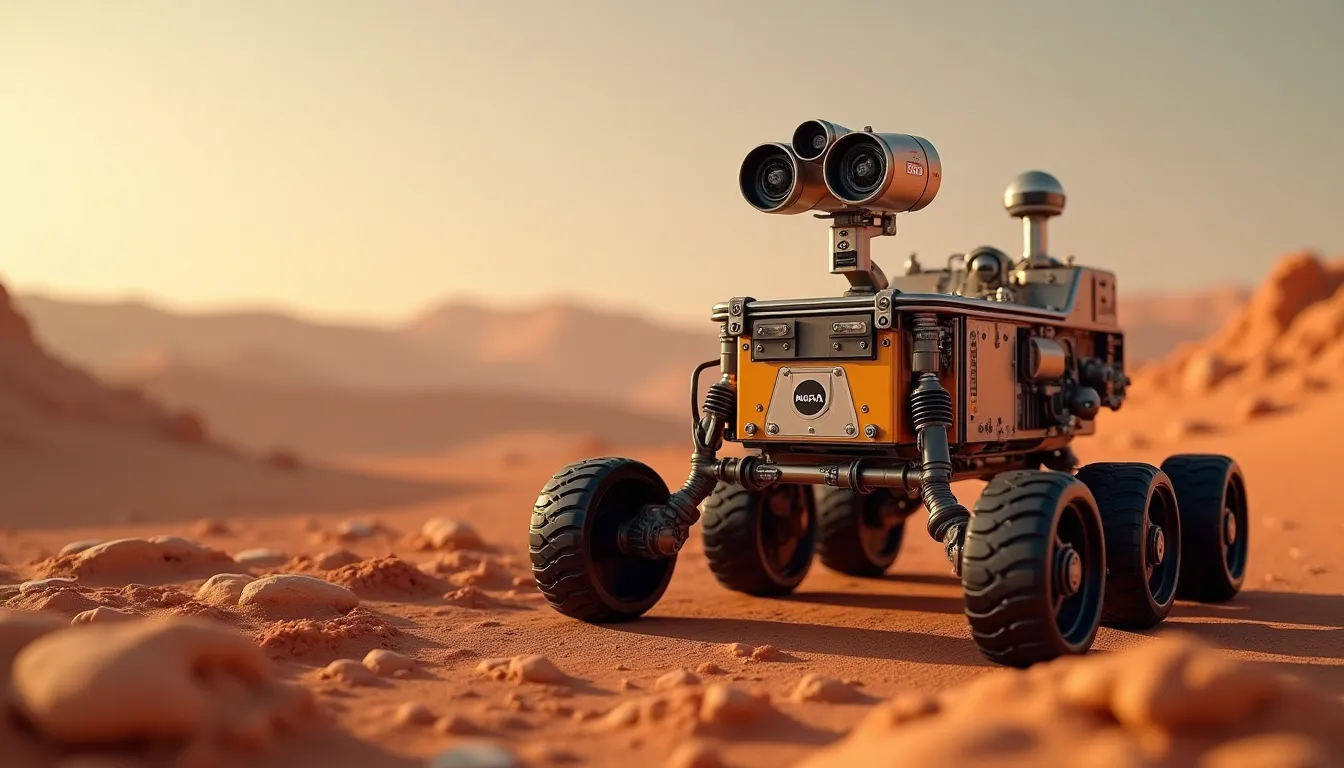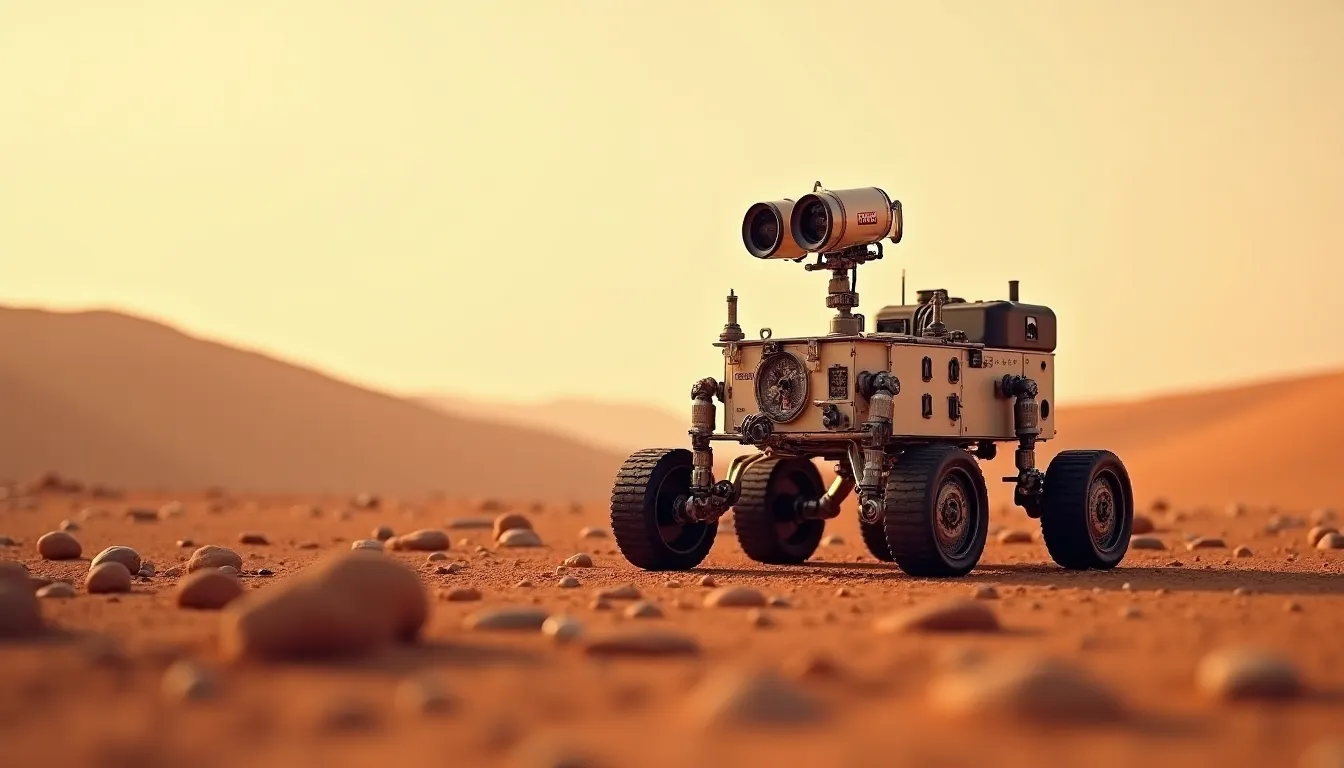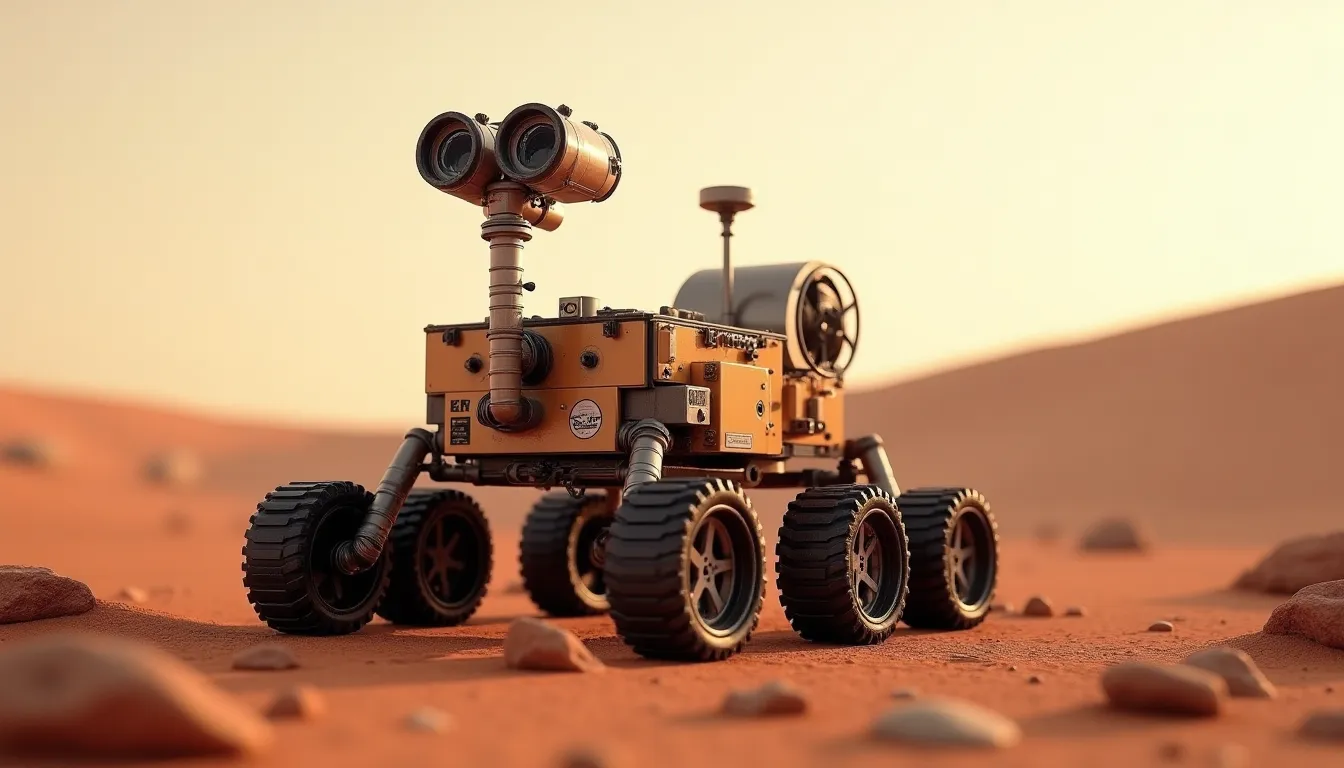
As NASA’s Curiosity rover enters its 14th year on Mars, it remains a beacon of innovation and scientific discovery. Operating successfully in the harsh Martian environment, Curiosity is not only advancing our understanding of the Red Planet but also showcasing the incredible engineering that supports long-duration space missions. Recent developments highlight its exploration of unique geological features, technical upgrades, and a resilient operational framework that extends its scientific capabilities.
Recent Developments and Operational Highlights
In November 2025, Curiosity is actively exploring the intriguing “boxwork terrain” within Gale Crater, a region defined by its striking ridges and hollows formed through processes of cementation and erosion. This terrain offers a unique opportunity for scientists to investigate the geological history of Mars.
One of the most significant milestones achieved during this mission is the completion of Curiosity’s 44th drilling operation on October 24, 2025. This drilling not only marks a technical achievement but also provides essential data about the composition and history of Martian rocks, which is critical for understanding ancient environmental conditions that may have supported life.
To enhance its operational efficiency, Curiosity has undergone recent software upgrades that allow it to autonomously manage its daily tasks. This includes putting itself to sleep when work is completed, a feature that conserves energy from its aging nuclear power source and ultimately extends its operational lifespan. This level of autonomy is crucial as it allows the rover to continue functioning effectively, despite the challenges of its extended mission.
The Science Behind the Exploration
Curiosity’s suite of scientific instruments plays a critical role in its exploration efforts. The rover is equipped with the following advanced tools:
- MAHLI (Mars Hand Lens Imager): Captures high-resolution images of Martian rock and soil.
- Mastcam: Provides detailed images and videos of the Martian landscape and weather phenomena.
- ChemCam: Analyzes the chemical composition of rocks and soil from a distance using laser-induced breakdown spectroscopy.
- APXS (Alpha Particle X-ray Spectrometer): Determines elemental composition of Martian materials.
- REMS (Rover Environmental Monitoring Station): Monitors atmospheric conditions, including temperature, humidity, and wind.
- RAD (Radiation Assessment Detector): Measures the radiation environment on Mars.
- DAN (Dynamic Albedo of Neutrons): Investigates the presence of hydrogen, which may indicate water or ice.
Investigating Boxwork Terrain
The exploration of the boxwork terrain is particularly noteworthy. This geological formation features a network of ridges and hollows that scientists believe resulted from unique sedimentary processes. Curiosity has been analyzing the textures and chemical compositions of both smoother and nodular bedrock, helping to inform future drilling decisions. This detailed examination is crucial for piecing together the planet’s geological history and understanding its potential for past habitability.
Mission Longevity and Engineering Resilience
As of November 13, 2025, Curiosity has been operational for an impressive 4,718 sols, equivalent to 4,847 Earth days, and has traveled over 35.5 kilometers (22.1 miles) from its landing site. This longevity is a testament to the robust engineering that underpins the rover’s design, including high-performance MEMS accelerometers and precision navigation systems. The combination of these advanced technologies enables the rover to navigate the challenging Martian terrain with remarkable accuracy.
Public Engagement and Scientific Outreach
Curiosity’s mission is not just about exploration; it is also about engaging the public and educating future generations. On November 19, 2025, Ashwin Vasavada, Curiosity’s project scientist, will deliver a public lecture at Caltech. This lecture will provide insights into the rover’s discoveries and the challenges of managing a long-duration mission. Such outreach efforts are essential for fostering interest in planetary science and space exploration.
Conclusion
NASA’s Curiosity rover continues to redefine the boundaries of planetary exploration, delivering groundbreaking scientific insights while demonstrating the resilience of advanced robotics in extreme environments. Its ongoing mission in the boxwork terrain, coupled with new autonomous capabilities, ensures that Curiosity will remain a vital asset in the quest to understand Mars’ past and its potential for life. As technology evolves, Curiosity’s mission will likely serve as a model for future explorations, paving the way for new discoveries on Mars and beyond.
References
-
Curiosity Blog, Sols 4682-4688: Seven Mars Years - NASA Science (science.nasa.gov) - 11/14/2025 Curiosity captured the image using its Front Hazard Avoidance Camera (Front Hazcam) on Oct. 9, 2025 — Sol 4684, or Martian day 4,684 of the Mars …
-
Evidence of Ancient Underground Water Reveals Mars May Have … (nyuad.nyu.edu) - 11/11/2025 Evidence of Ancient Underground Water Reveals Mars May Have Stayed Habitable Longer Than Believed. 11112025 Curiosity Rover Surface Water Atri …
-
Watson Lecture: Ashwin Vasavada (PhD ‘98) Discusses … - Caltech (www.caltech.edu) - 11/6/2025 Has life ever existed on Mars? On November 19, 2025, at 7:30 p.m., Ashwin Vasavada (PhD ‘98), a project scientist at the Jet Propulsion …
-
JPL’s Watson Lecture to Explore Mars Discoveries with Curiosity … (www.coloradoboulevard.net) - 11/4/2025 On November 19, 2025, JPL will celebrate this legacy of exploration with the next Watson Lecture, an evening dedicated to the spirit of …
-
NASA’s Mars rover Curiosity captures stunning details of alien rock … (www.sciencedaily.com) - 9/23/2025 Curiosity is exploring Mars’ boxwork terrain, where ridges and hollows may have formed from cementation and erosion. The rover has been …
-
Curiosity rover celebrates 13 years on Mars with well-deserved naps … (www.space.com) - 8/6/2025 Curiosity rover celebrates 13 years on Mars with well-deserved naps and Red Planet ‘coral’. News. By Sharmila Kuthunur published August 6, 2025.
-
Curiosity Rover Updates - NASA Science (science.nasa.gov) - 5/27/2025 12, 2025 Curiosity continues to image, analyze, and traverse through a landscape characterized by higher standing ridges separating low-lying depressions… …
-
Curiosity (rover) - Wikipedia (en.wikipedia.org) - 8/6/2012 The rover is still operational, and as of 13 November 2025, Curiosity has been active on Mars for 4718 sols (4847 total days; 13 years, 99 days) since its …