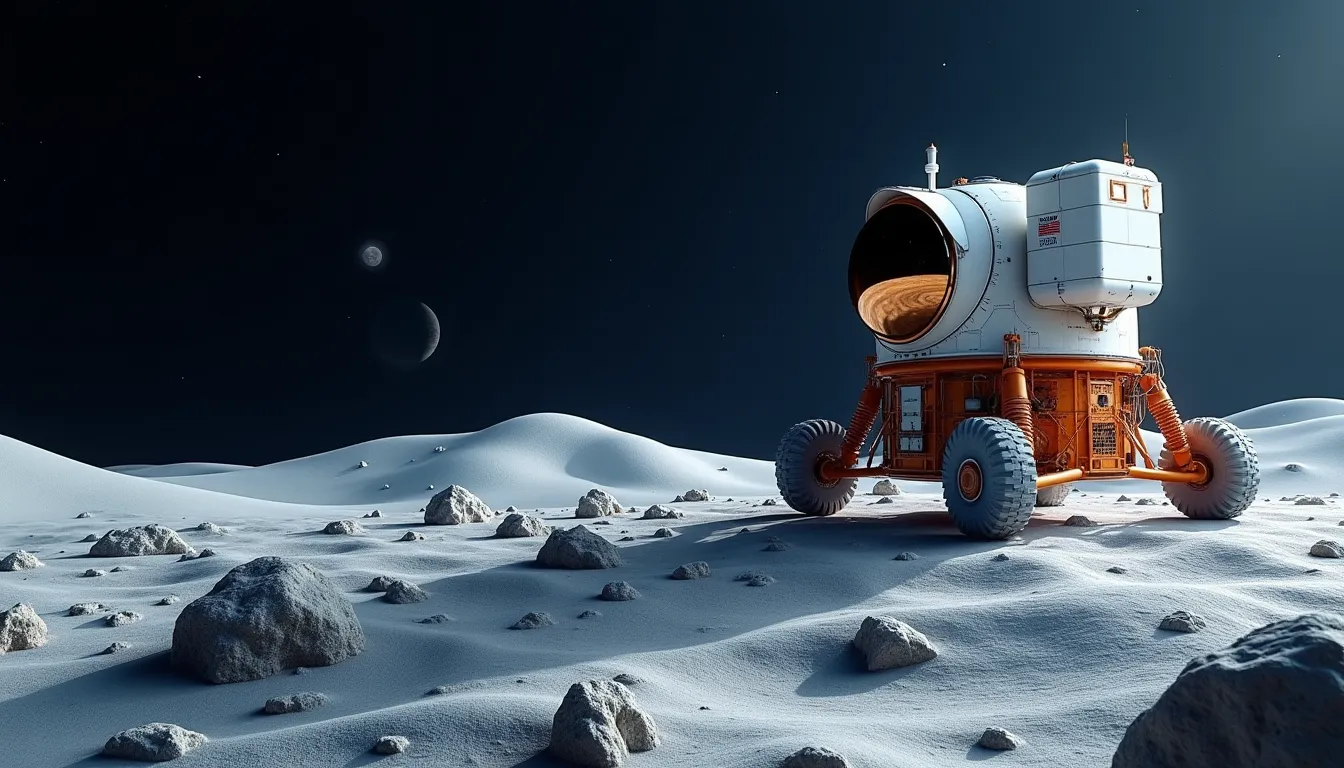
NASA’s ambitious plans to establish a permanent moon base are gaining momentum, yet the project is not without significant challenges. As the agency prepares for this monumental undertaking, it must confront the vulnerabilities inherent in its operational technology systems. These systems are crucial for the safety and efficiency of lunar operations, and addressing their weaknesses is paramount to the success of NASA’s lunar exploration goals.
The Importance of Operational Technology Systems
Operational technology systems encompass a range of technologies that monitor and control physical devices, systems, and infrastructure. For NASA’s moon base, these include navigation systems, environmental monitoring, and communication technologies. Ensuring these systems function reliably in the harsh lunar environment is a critical aspect of the project.
Dr. Ellen Johnson, a senior engineer at NASA’s Johnson Space Center, states, “The operational technology systems we deploy on the moon must be robust and capable of withstanding extreme conditions. Their vulnerability can jeopardize not just the mission but the safety of the astronauts involved.”
Navigational Challenges in Lunar Exploration
Precise navigation will be a cornerstone of NASA’s moon base project. The moon’s environment presents unique challenges, including reduced gravitational pull and a lack of atmospheric references. To tackle these issues, NASA is exploring advanced inertial navigation systems, which integrate high-reliability MEMS gyroscopes and accelerometers. Such systems provide the necessary precision for accurate positioning and movement tracking on the lunar surface.
The Model DGYS60CJ10, a high-performance inertial navigation system, is particularly relevant. It integrates a 3-axis quartz MEMS gyroscope and a 3-axis MEMS accelerometer, making it suitable for applications in aerospace and exploration. According to industry experts, “The DGYS60CJ10 can significantly enhance navigation capabilities for lunar missions, ensuring that our astronauts can operate safely and effectively.”
Environmental Monitoring and Safety
In addition to navigation, environmental monitoring is crucial for maintaining the safety of the lunar base. The harsh conditions on the moon, including extreme temperatures and radiation exposure, necessitate sophisticated monitoring systems. Advanced sensor modules, such as the Advanced Sensor Module, which features an integrated 9-DOF MEMS IMU, will play a vital role in tracking environmental changes and system performance.
This sensor module combines a three-axis gyroscope, accelerometer, and magnetic sensor to provide comprehensive motion sensing capabilities. As Dr. Johnson noted, “Monitoring our systems and the environment will allow us to respond proactively to any challenges that arise, which is essential for the safety of our crew.”
The Road Ahead: Future Developments and Considerations
As NASA continues to develop its moon base project, it is imperative to invest in the latest technology to ensure operational resilience. The integration of advanced gyroscopic instruments and thermal management systems will be critical to maintaining the functionality of equipment in the moon’s extreme conditions. These technologies will help mitigate the vulnerabilities currently identified in operational systems.
Looking ahead, the development of these systems will also inform future missions to Mars and beyond. By establishing a successful lunar base, NASA can gain invaluable insights into long-term space habitation, which will be instrumental for future interplanetary missions.
Conclusion
NASA’s moon base project represents a significant leap forward in human space exploration. However, the vulnerabilities in operational technology systems pose real challenges that must be addressed. By investing in advanced navigation and sensor technologies, NASA can enhance the safety and effectiveness of its lunar operations. As we look to the future, these efforts will not only pave the way for successful lunar missions but also set the stage for humanity’s next giant leap into space.
References
-
NASA’s Research - defensenews.com (defensenews.com)
-
NASA’s Research - aviationweek.com (aviationweek.com)
-
NASA’s Research - spacenews.com (spacenews.com)