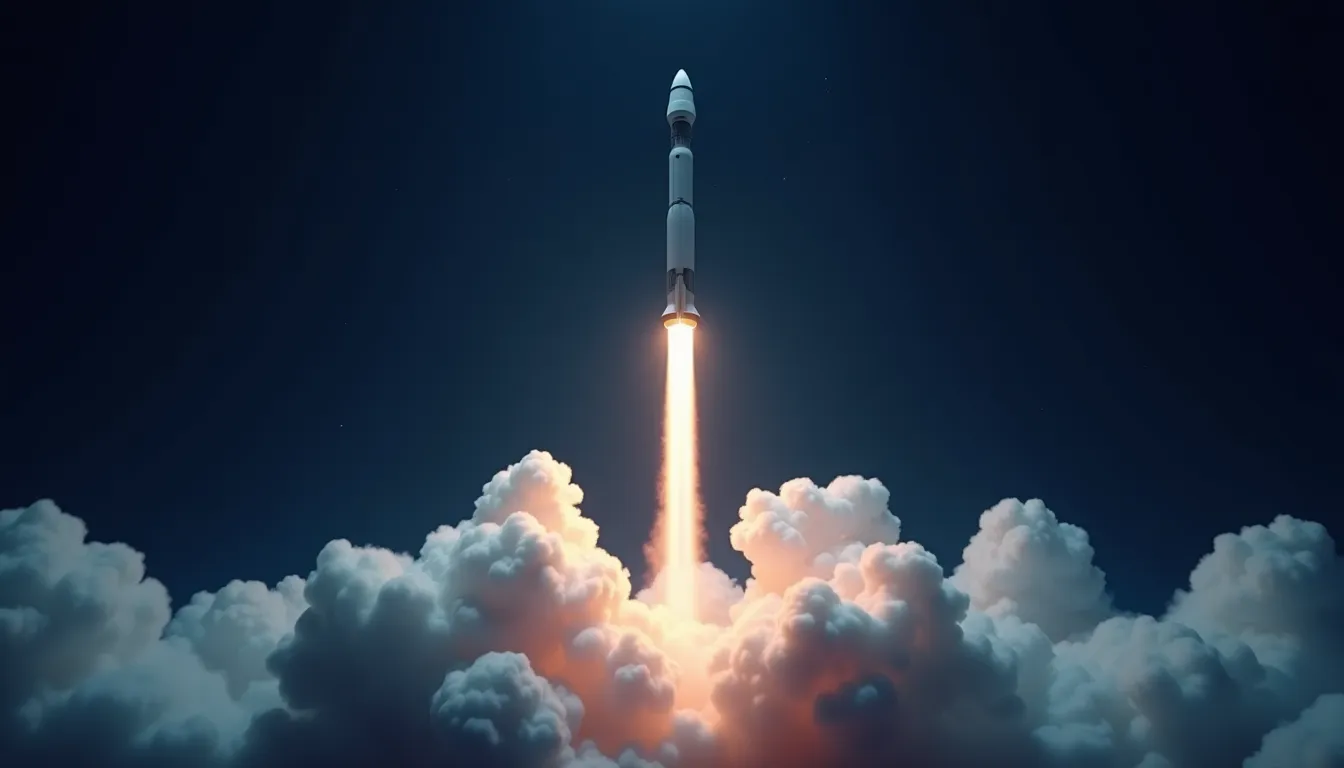
NASA’s Space Launch System (SLS) is preparing to make history with its upcoming missions, which will not only send astronauts to the Moon but also carry a variety of secondary payloads, including innovative satellite systems. This strategic use of the SLS underscores the importance of efficient space deployment technologies in modern aerospace endeavors and highlights the increasing role of secondary payloads in satellite missions.
Understanding the SLS Rocket
The SLS rocket is NASA’s most powerful launch vehicle to date, designed to facilitate deep space exploration. With a lift capacity of over 27 metric tons to low Earth orbit (LEO), the SLS is capable of carrying multiple payloads on a single mission. The rocket’s first flight, known as Artemis I, is anticipated to be a pivotal moment for the future of space travel.
Secondary Payloads: A Game Changer for Satellite Deployment
Secondary payloads are small satellites or experiments that are launched alongside the primary mission objective. These payloads can enhance scientific research, test new technologies, or provide commercial opportunities. The upcoming SLS missions will utilize its capacity to deploy these satellites, allowing for a more economical and efficient approach to satellite launches.
The Role of Advanced Technology
As the SLS prepares for its missions, the integration of advanced technologies becomes paramount. For instance, the use of high-performance 6-DOF MEMS inertial measurement units like the JDWZZ1930B is essential for navigation and stabilization of secondary payloads. This particular system integrates a three-axis gyroscope and accelerometer, ensuring that satellites can maintain their desired orientation and trajectory even in the challenging conditions of space.
Expert Insights on Satellite Innovations
“The deployment of secondary payloads with the SLS is a significant step forward for satellite technology,” said Dr. Emily Carter, a leading aerospace engineer at NASA. “It allows us to not only expand our research capabilities but also opens up new avenues for commercial satellite operations.”
Experts believe that the ability to carry multiple payloads could lead to reduced costs for satellite launches, making space more accessible for various entities, including universities, startups, and international partners.
Future Implications for Satellite Technology
The implications of successful secondary payload deployments extend beyond immediate missions. As the SLS proves its capabilities, we can expect a surge in the development of small satellites that can be launched more frequently and economically. This shift could lead to advancements in fields such as Earth observation, telecommunications, and scientific research.
Additionally, the SLS’s ability to support secondary payloads could encourage collaboration between governmental and private sectors, fostering innovation in satellite design and deployment strategies.
Conclusion: A New Era for Space Exploration
NASA’s SLS rocket represents a major leap forward in the aerospace industry, particularly in the realm of satellite technology. By effectively utilizing secondary payloads, the SLS not only enhances its mission profiles but also paves the way for a new era of space exploration characterized by increased collaboration and innovation. As the rocket prepares for its inaugural flight with secondary payloads, the future of satellite deployment looks more promising than ever.
For more information on NASA’s SLS and its capabilities, visit NASA’s official site.
References
-
satellite Research - defensenews.com (defensenews.com)
-
satellite Research - aviationweek.com (aviationweek.com)
-
satellite Research - spacenews.com (spacenews.com)