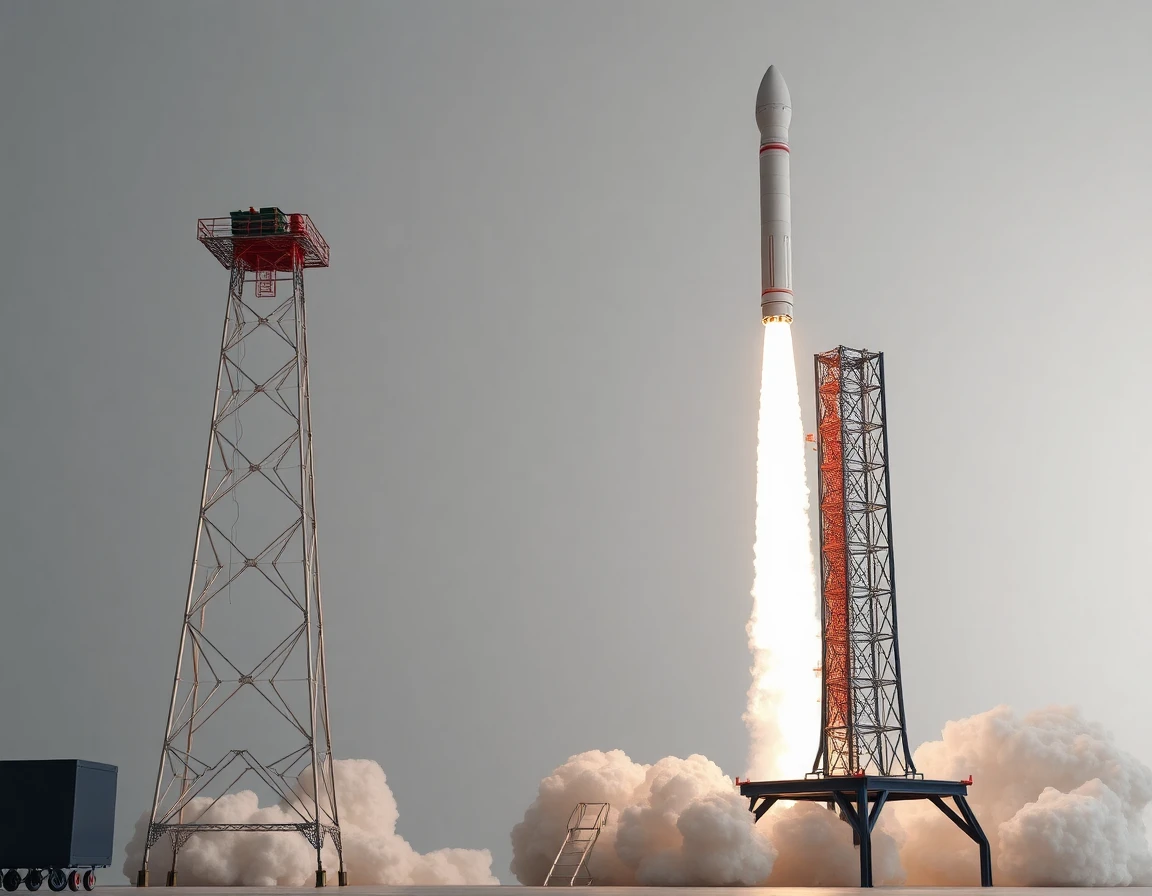
ESA Launches First Celeste Satellites to Enhance LEO Navigation Capabilities
The European Space Agency (ESA) has recently launched its first pair of Celeste satellites, marking a significant advancement in Low Earth Orbit (LEO) navigation technology. These satellites aim to establish a complementary navigation layer that will improve the accuracy and reliability of positioning services for various aerospace applications.
The Role of Celeste Satellites
The Celeste satellites are designed to provide enhanced navigation solutions that complement existing global navigation satellite systems (GNSS). With the growing number of satellites in LEO, the need for precise and reliable navigation has become increasingly critical. The Celeste initiative aims to address these needs by utilizing advanced technologies that focus on accuracy and resilience.
ESA’s Director of Navigation, Jan Woerner, stated, “The launch of the Celeste satellites represents a pivotal step towards creating a robust navigation ecosystem in LEO. This will not only benefit our current missions but also pave the way for future advancements in satellite technology.”
Technical Specifications of the Celeste Satellites
The Celeste satellites are equipped with state-of-the-art high-precision navigation systems that feature advanced fiber optic sensing coils. These systems are designed to deliver exceptional stability and accuracy for navigation and measurement applications in the challenging environment of LEO.
Key Features:
- Advanced Fiber Optic Sensing: Utilizing cutting-edge winding technology, the navigation systems ensure unmatched precision in motion sensing.
- Compact Design: The satellites have been engineered for optimal performance in small form factors, allowing for flexibility in deployment.
- Robust Thermal Management Systems: These systems ensure that the satellites maintain operational efficiency despite the extreme temperatures encountered in space.
Impacts on LEO Operations
The introduction of the Celeste satellites is expected to have far-reaching implications for satellite operations in LEO. With the ability to provide reliable navigation data, these satellites will enhance various applications, including satellite communication, Earth observation, and scientific research. The improved navigation capabilities can significantly reduce the risk of collisions and improve the coordination of satellite constellations.
Industry Context and Future Developments
The launch of the Celeste satellites comes at a time when the aerospace industry is rapidly evolving, with an increasing number of satellites being deployed in LEO. According to a report by the Space Data Association, the number of operational satellites in LEO is expected to exceed 10,000 by 2030. This growth necessitates a corresponding improvement in navigation technologies to ensure safe and efficient operations.
Experts believe that the Celeste initiative could set a precedent for future satellite navigation systems. Dr. Emily Chen, a leading aerospace engineer, remarked, “The Celeste satellites could revolutionize how we navigate in space. As we look towards future missions, including manned missions to Mars, having a reliable navigation framework will be paramount.”
Conclusion
The successful launch of the Celeste satellites by ESA signifies a major leap forward in LEO navigation technology. By providing a complementary navigation layer that enhances the accuracy and reliability of existing systems, ESA is paving the way for more advanced aerospace operations in the future. As the demand for satellite services continues to grow, innovations like the Celeste initiative will be crucial in addressing the challenges of navigation in an increasingly crowded space.
As we move forward, the integration of high-precision navigation systems and other advanced technologies will undoubtedly play a vital role in shaping the future of satellite operations in Low Earth Orbit.
References
-
satellite Research - defensenews.com (defensenews.com)
-
satellite Research - aviationweek.com (aviationweek.com)
-
satellite Research - spacenews.com (spacenews.com)