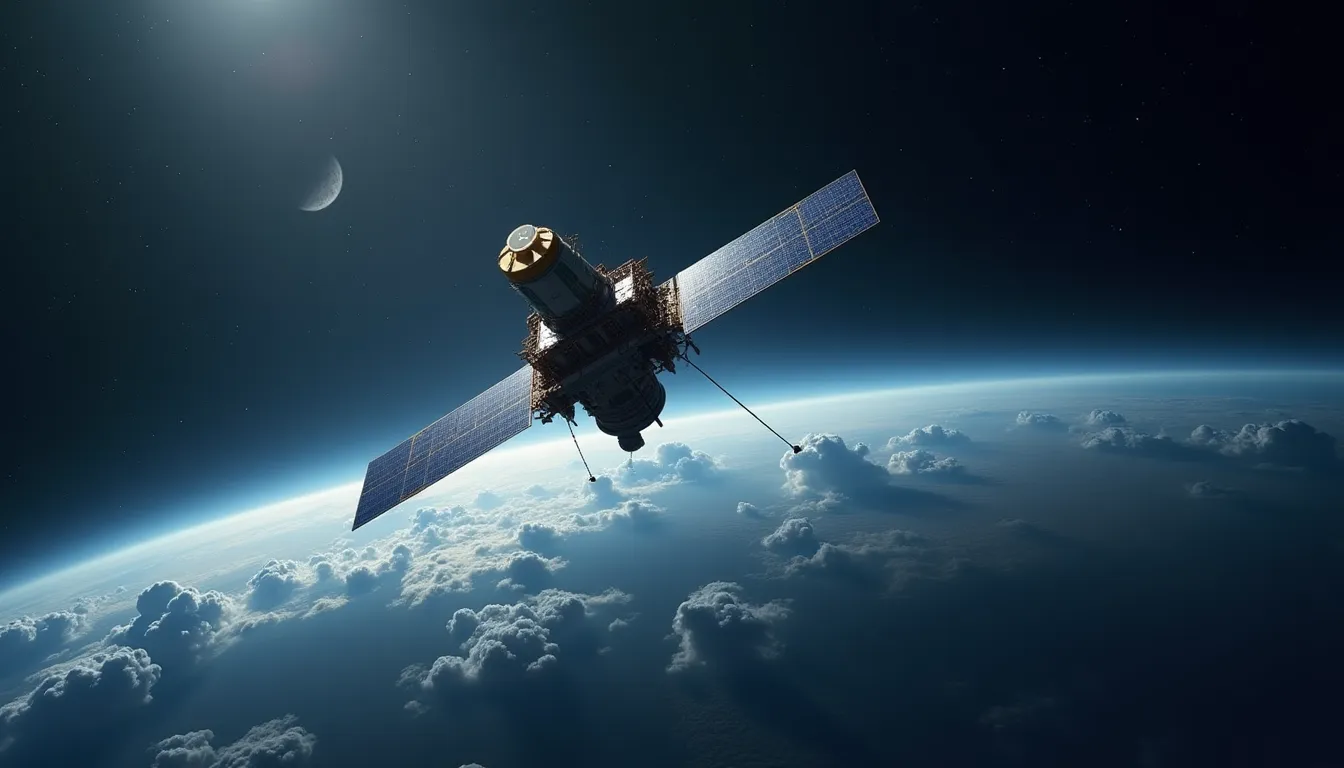
The satellite industry is undergoing a transformative phase, marked by significant advancements in technology and a burgeoning market that is projected to reach a trillion-dollar valuation. As we move into 2026, Europe is making noteworthy strides in low Earth orbit (LEO) navigation systems, while challenges such as orbital congestion and the integration of artificial intelligence in satellite operations come to the forefront. This article delves into the latest developments in satellite technology, highlighting key initiatives and industry trends shaping the future of space navigation and exploration.
ESA’s Celeste LEO-PNT Mission Advances
The European Space Agency (ESA) is set to enhance global positioning capabilities with its Celeste mission, aimed at establishing a robust LEO Positioning, Navigation, and Timing (PNT) system. The first two satellites are scheduled for launch no earlier than March 24, 2026, via Rocket Lab’s Electron rocket from New Zealand. These satellites have successfully completed rigorous qualification tests, including thermal vacuum and electromagnetic compatibility assessments, and are now on their way to integration.
Technical Innovations
Celeste satellites will offer cutting-edge functionalities, including autonomous orbit determination and the transmission of L- and S-band signals from LEO. This will complement existing Galileo systems in medium Earth orbit (MEO), thereby enhancing resilience and performance. Notable future expansions include the development of eight larger satellites by GMV/Thales Alenia Space, expected to incorporate advanced features such as two-way S-band signals, C-band anti-jamming capabilities, and miniaturized atomic clocks, all of which are pivotal for next-generation applications including 5G waveforms.
Orbital Congestion and Megaconstellation Risks
As of February 2026, over 14,000 active satellites orbit the Earth, with proposals for an astonishing 1.23 million additional satellites, including SpaceX’s ambitious plans for deploying up to one million satellites for space data centers. This rapid expansion raises severe concerns about orbital congestion and the potential for catastrophic collisions in space.
Regulatory Challenges
The short operational lifecycles of these satellites, typically around five years, coupled with a regulatory focus primarily on technical specifications, pose challenges for mitigating the impacts of increased satellite brightness on astronomy and cultural practices. Experts advocate for a holistic regulatory framework that includes strategies to reduce the number of satellites and their brightness in the night sky, which is crucial for preserving astronomical observations and cultural heritage.
Commercial and Consumer-Driven Shifts
The year 2026 stands as a pivotal moment in the satellite industry, marking what is termed the “Utility Validation” phase. With the U.S. government’s December 2025 Executive Order promoting commercial procurement and LEO industrialization, sectors such as biotech and semiconductors are poised for growth. The projected market value of satellite direct-to-device (D2D) communications is estimated at $1.3 trillion, with significant investments in infrastructure that support next-generation applications.
Market Dynamics
Major technology companies like Apple and Samsung are expected to integrate satellite capabilities into their 2026 product cycles, facilitating direct satellite communication in consumer devices. This shift will not only enhance connectivity but also allow governments to leverage satellite infrastructure for emergency networks, exemplified by the UK’s Emergency Network initiative.
AI and Defense Technology Trends
Artificial intelligence is increasingly being integrated into satellite operations, enabling advanced capabilities such as edge computing for real-time data processing. This integration is critical for defense applications, where rapid response to threats is paramount.
Defense Investments
The ongoing “security supercycle” is driving significant investments in sovereign satellite networks and AI-driven technologies that enhance command and control systems against jamming and interference. New initiatives, such as the Pentagon’s GEO spy satellites and SpaceX’s traffic management systems, underscore the importance of resilient and adaptive technologies in modern defense strategies.
Conclusion
The landscape of satellite technology is evolving rapidly, with significant advancements in LEO navigation, increased satellite deployments, and the integration of AI into operational frameworks. As the industry navigates the challenges of orbital congestion and regulatory compliance, the focus on resilient systems and innovative applications will be crucial for harnessing the full potential of the burgeoning space economy. Looking ahead, the collaboration between governmental agencies, commercial enterprises, and technological innovators will be essential in shaping a sustainable future for satellite operations in the ever-expanding domain of space.
References
- ESA’s Celeste target launch date confirmed (www.esa.int) - 2/20/2026 *The European Space Agency (ESA) is preparing for the inaugural launch of the Celeste LEO-PNT in-orbit demonstration mission with the first two satellites scheduled to lift off no earlier than 24 March, aboard Rocket Lab’s Electron rocket from the company’s Māhia Launch Complex in New Zealand.
Celes…*
- The Orbital Pivot: Transitioning from Exploration to Global Utility (news.satnews.com) - 2/19/2026 ***In 2026, the space sector is defined by a significant shift that industry analysts call “Utility Validation.” This movement transitions space from a realm of one-time scientific exploration to a critical global infrastructure on par with terrestrial energy and banking. **
This shift is fueled by …*
-
Too many satellites? Earth’s orbit is on track for a catastrophe—but … (phys.org) - 2/19/2026 As of February 2026, approximately 14,000 active satellites are in orbit. An additional 1.23 million proposed satellite projects are in …
-
ABI Research’s Top 7 Space Technology Trends to Know in 2026 (www.abiresearch.com) - 2/19/2026 AI in LEO Networks. Low Earth Orbit (LEO) satellite networks are evolving far beyond their original mission of delivering basic Internet access.
-
Space Brief 19 Feb 2026 - KeepTrack (keeptrack.space) - 2/19/2026 Today’s briefing covers new GEO spy satellites from the Pentagon, SpaceX’s space traffic management, resumption of rocket landings in The …
-
The Consumer: Determining the Future of Space Exploration (news.satnews.com) - 2/18/2026 February 18, 2026 … Access daily or weekly satellite news updates covering all aspects of the commercial and military satellite industry.
-
Satellite proposals threaten the night sky | DarkSky International (darksky.org) - 2/11/2026 Two satellite proposals threaten the night sky — the window to act is now. By Staff. • Published February 11, 2026.