In recent months, the aerospace and defense sectors have witnessed significant advancements in wave-related technologies, marking a pivotal evolution in how these industries approach challenges ranging from hypersonic flight to missile defense. This article delves into the emerging trends and breakthroughs in wave technologies, highlighting their implications for national security and technological superiority.
Hypersonic Wave Management and Testing
The MACH-TB 2.0 project, under the S^2^MARTS Other Transaction Authority (OTA), represents a cutting-edge initiative focusing on hypersonic flight—defined as speeds exceeding Mach 5. This project aims to enhance the testing methodologies for shockwave and thermal wave propagation, crucial for developing maneuverable weapons capable of operating in contested airspaces. By bridging low-Technology Readiness Levels (TRL) with high-TRL flight tests, MACH-TB 2.0 seeks to mitigate risks associated with propulsion systems and materials. This rapid prototyping approach allows for quicker fielding of new technologies, which is essential for maintaining military readiness in an increasingly complex global threat landscape.
AI and Machine Learning in Infrared Wave Detection
A significant development in missile defense is the integration of Artificial Intelligence (AI) and Machine Learning (ML) to improve infrared (IR) wave detection capabilities. The Space Systems Command’s OPIR TAP Lab, supported by the Space Enterprise Consortium (SpEC) OTA, is investing in AI-driven systems to enhance the detection, tracking, and characterization of IR events from satellites. L3Harris Technologies recently secured a contract worth approximately $400 million to upgrade the Terminal High Altitude Area Defense (THAAD) system’s boost motors and Liquid Divert/Attitude Control Systems (LDACS). These enhancements have led to a remarkable 100% intercept success rate in tests, showcasing the effectiveness of advanced IR wave processing in both exo- and endo-atmospheric environments.
Multilayer PCBs for High-Speed Wave Routing
The aerospace and defense Printed Circuit Board (PCB) market is expected to grow significantly—from $527 million in 2025 to an estimated $1.73 billion by 2026. This growth is driven by the increasing need for dense high-speed and mixed-signal wave routing in avionics, mission computers, and electronic warfare (EW) payloads. Multilayer PCB designs facilitate optimal signal integrity and reduced electromagnetic interference, which are essential for SWaP (Size, Weight, and Power) constrained platforms. As systems become more complex, integrating high-performance components such as precision accelerometers and thermal battery systems will be vital to achieving the desired performance levels.
Quantum Wave Capabilities in Digital Defense
Lockheed Martin is at the forefront of integrating quantum technologies into defense applications, leveraging wave superposition and entanglement to enhance computational power and cryptographic security. The exploration of quantum wave capabilities plays a crucial role in developing AI-driven designs for autonomous systems, including the Vectis™ drones and digital twins for missile defense initiatives like the Golden Dome project, a $175 billion endeavor that includes the integration of PAC-3 MSE and THAAD systems. The potential asymmetric advantages offered by quantum computing are poised to revolutionize defense strategies and operational effectiveness.
Space Technology and Waveform Integration
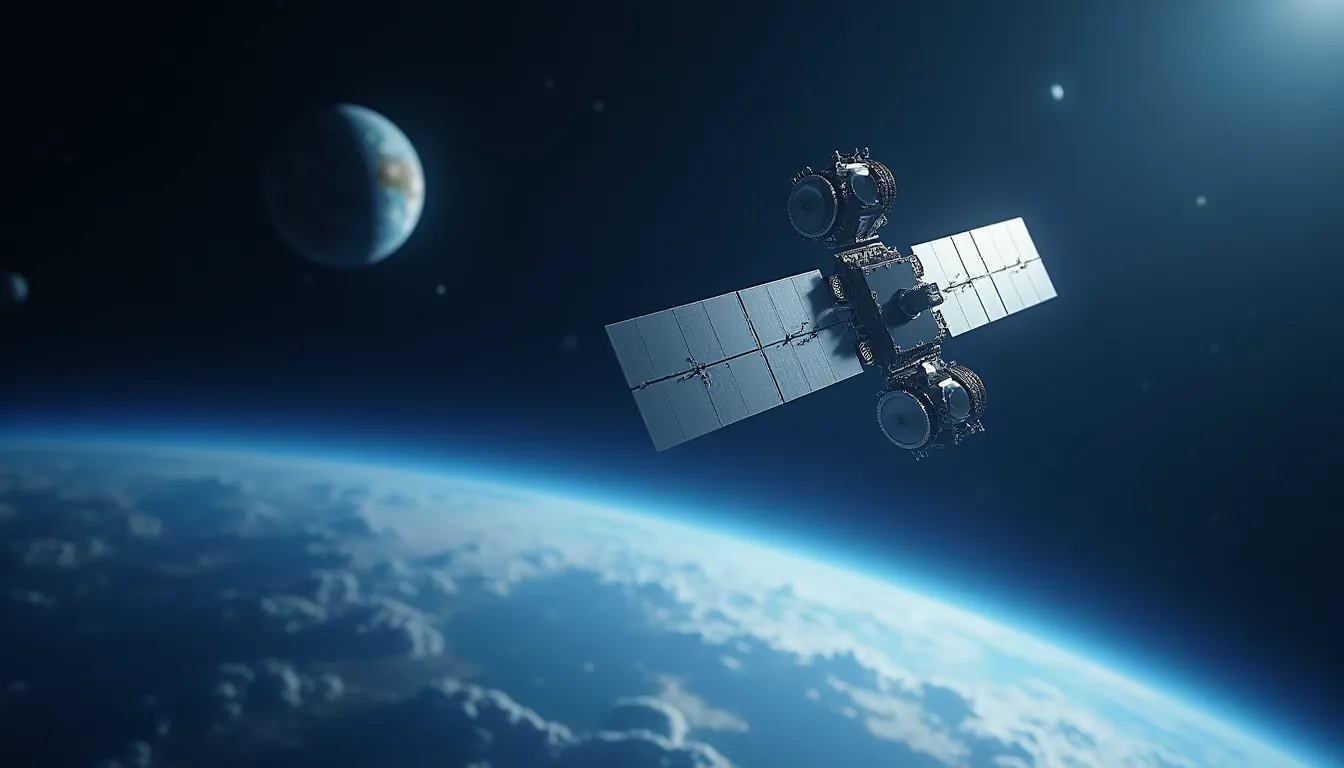
The militarization of space technology is accelerating, with the market projected to reach $63.38 billion by 2026. VisionWave Holdings has recently highlighted developments in satellite-radio integration through contracts like AST SpaceMobile’s inaugural DoD contract for the Proliferated Warfighter Space Architecture. This initiative focuses on enhancing tactical wave communications, essential for modern warfare. The recent Space Tech Boom, occurring between March 2-4, 2026, underscores the significant defense contracts aimed at expanding satellite capabilities and developing autonomous systems that utilize advanced wave sensing technologies.
Conclusion
The advancements in wave technologies across hypersonics, missile defense, and quantum computing signal a transformative phase in aerospace and defense. As these sectors continue to innovate, the integration of sophisticated wave-related systems will be crucial for addressing future challenges and ensuring national security. The focus on rapid prototyping, AI-driven solutions, and high-performance components will not only enhance operational capabilities but also shape the strategic landscape of modern warfare. As industry leaders invest in these technologies, the aerospace and defense sectors are poised to achieve unprecedented levels of efficiency and effectiveness in the years to come.
References
-
Aerospace Daily & Defense Report, March 12, 2026 - Aviation Week (aviationweek.com) - 3/12/2026 Thales has joined the European race to push multi-layered air and missile defense initiatives in an integrated “dome” concept, launching what it …
-
Venture capital investment in defense tech surges while M&A activity … (www.spglobal.com) - 3/11/2026 Major funding rounds are expected to continue in 2026, especially for Anduril, which specializes in advanced autonomous systems. In early 2025 …
-
Aerospace And Defense PCB Market 2026 - The National Law Review (natlawreview.com) - 3/9/2026 The market is expected to grow from $527 million in 2025 at a compound annual growth rate (CAGR) of 4%. The strong growth in the historic period …
-
How technology, strategy and industry are shaping the next fleet (breakingdefense.com) - 3/7/2026 Unmanned systems, digital integration, and emerging technologies are transforming U.S. naval operations. Breaking Defense’s new eBook takes …
-
VisionWave Holdings Provides Corporate Update on Defense and … (www.prnewswire.com) - 3/6/2026 The global space militarization market is projected to reach $63.38 billion in 2026 as nations accelerate investment in satellite surveillance, …
-
Space Tech Boom: Defense Contracts, Satellite Expansion, and … (pod.wave.co) - 3/4/2026 SPACE TECHNOLOGY INDUSTRY UPDATE: MARCH 2-4, 2026 The space technology sector has demonstrated significant momentum over the past 48 hours, …
-
Delivering the Future of Defense Tech | Lockheed Martin (www.lockheedmartin.com) - 3/3/2026 Lockheed Martin is ready to support Golden Dome for America with fielded capabilities across domains, the digital backbone that can connect them …
-
Defense News Unveils Inaugural 2026 Tech Disruptors List (www.defensenews.com) - 3/2/2026 ARLINGTON, VA., March 2, 2026 — Defense News today announced its inaugural 2026 Tech Disruptors list, recognizing the executives, engineers, …
-
Defense Tech Trends for 2026: Innovation in Action - NSTXL (nstxl.org) - 2/6/2026 In 2026, industry experts predicted a surge in defense technology innovation fueled by advancements in artificial intelligence (AI), …
-
What we’re watching in 2026 - Aerospace America (aerospaceamerica.aiaa.org) - 1/5/2026 U.S. President Donald Trump unveiled the ambitious Golden Dome missile defense effort that is slated to cost at least $175 billion, …