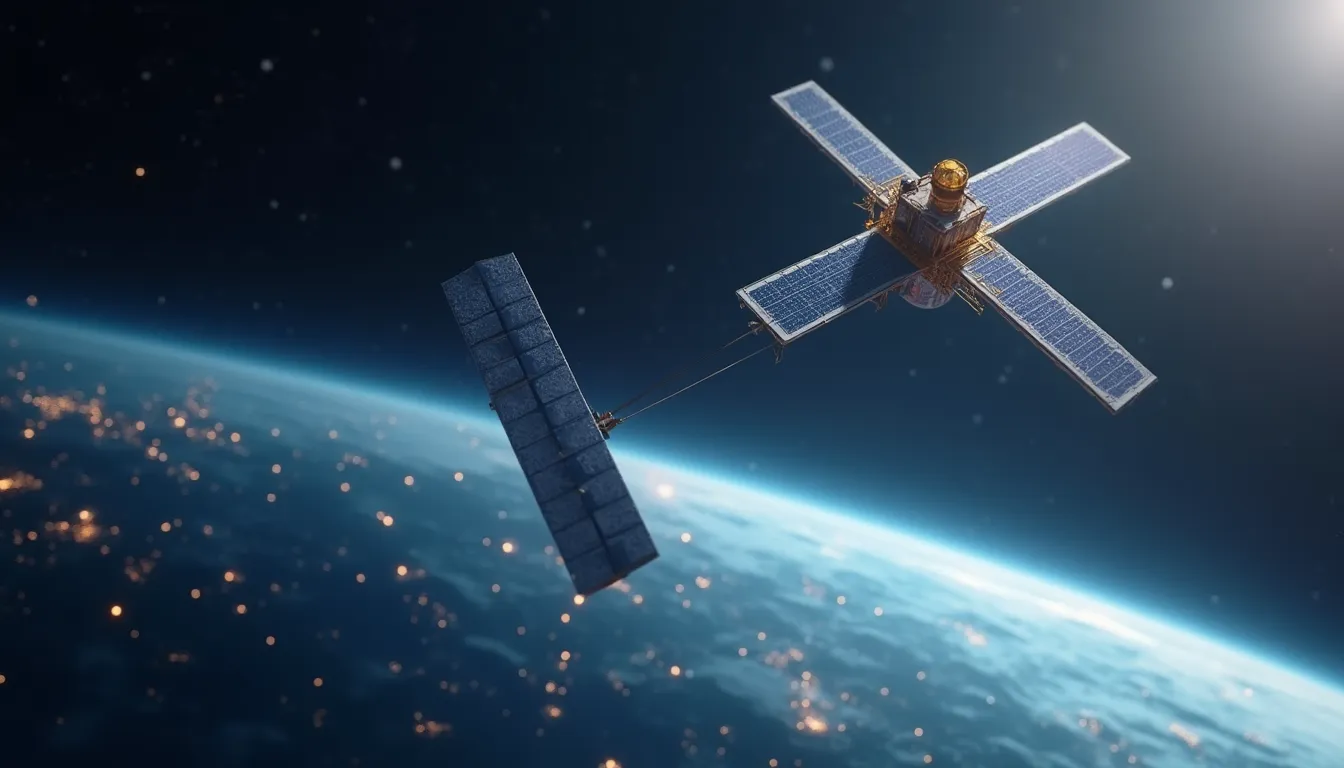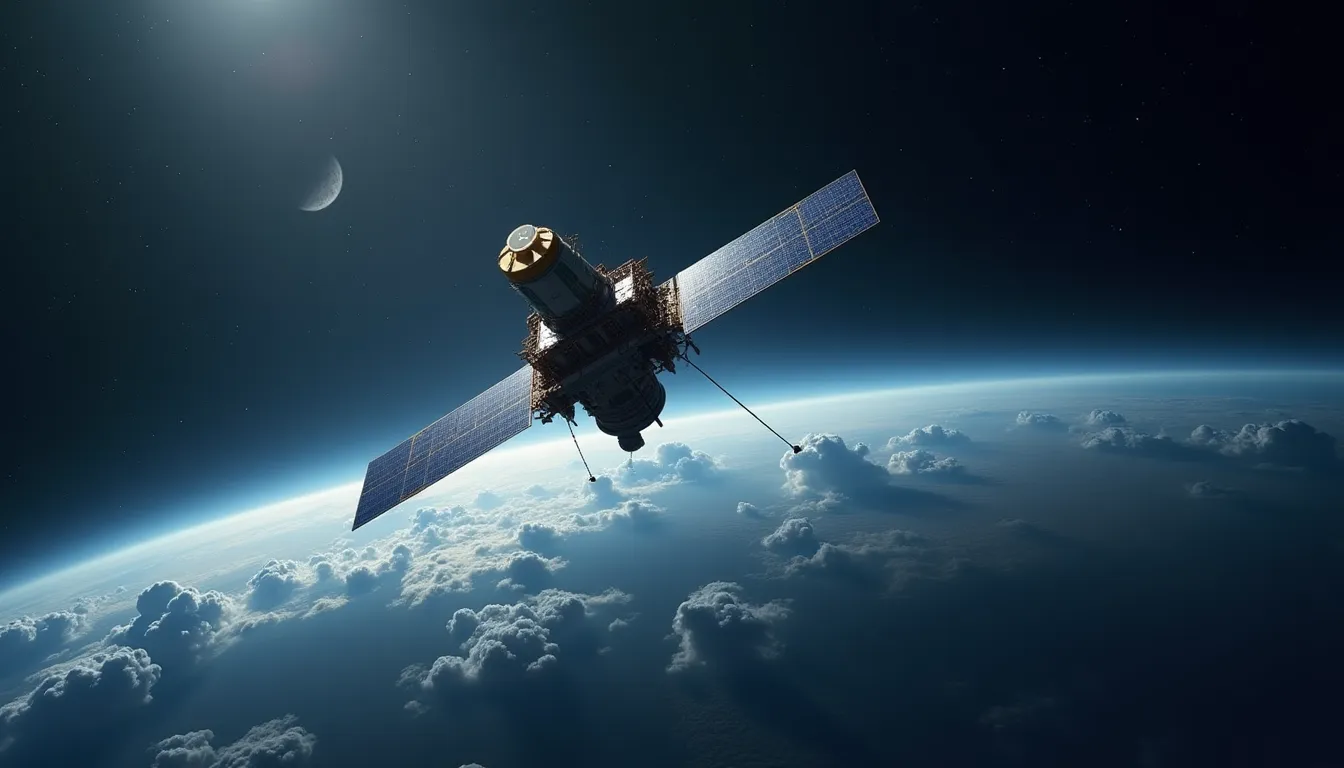
In recent years, the aerospace and defense industries have witnessed a remarkable transformation in satellite technology, with significant advancements shaping connectivity and operational capabilities. Major commercial launches, the integration of artificial intelligence (AI), and the escalating concerns over space debris are just a few facets of this dynamic field. As satellite constellations expand and evolve, the implications for global communications and monitoring are profound.
Major Commercial Satellite Launches and Deployments
AST SpaceMobile’s BlueBird 6 Satellite
One of the most anticipated launches on the horizon is AST SpaceMobile’s BlueBird 6, poised to become the largest commercial communications satellite deployed in low Earth orbit (LEO). Set for liftoff in December 2025 from India’s Satish Dhawan Space Centre, BlueBird 6 boasts an impressive weight of 6.5 metric tons and features over 220 square meters of phased-array antennas. Designed to deliver a throughput of up to 120 Mbps per cell, this satellite will facilitate thousands of simultaneous mobile connections, underpinned by a robust 10 GHz signal processing bandwidth.
Amazon’s Project Kuiper Expansion
In parallel, Amazon is making significant strides with its Project Kuiper initiative, which aims to revolutionize satellite broadband. As of September 2025, the project has successfully launched over 100 satellites, including its first batch of 27 in April 2025. The latest deployment occurred on September 25, 2025, aboard a United Launch Alliance Atlas V 551 vehicle. With a goal of establishing a constellation of more than 3,000 satellites in LEO, Project Kuiper is set to enhance global internet connectivity and accessibility.
SpaceX’s Starlink Operations
Simultaneously, SpaceX continues to advance its Starlink mega-constellation, with a scheduled launch of 28 additional satellites on November 25, 2025. The rapid deployment of Starlink satellites underscores the competitive landscape of satellite internet services, with LEO systems becoming increasingly pivotal for delivering low-latency connectivity across various sectors.
Orbital Satellite Population Growth
The satellite landscape is evolving at an unprecedented pace. As of October 1, 2025, the Union of Concerned Scientists Satellite Database reported a staggering 15,965 active satellites in orbit, with 13,026 currently operational. Over the past year alone, 3,664 satellites were launched, reflecting an acceleration in global deployment that is reshaping the communications paradigm.
AI Integration in Satellite Operations
The integration of artificial intelligence into satellite operations is revolutionizing the industry, enabling enhanced functionalities and operational efficiencies. Key developments include:
- Enhanced Signal Processing: AI algorithms are being utilized for improved signal processing and network optimization, allowing for more efficient use of bandwidth.
- Autonomous Constellations: The industry anticipates the emergence of autonomous satellite constellations within the next five years, capable of real-time optimization of both space and ground assets based on dynamic customer demand.
- On-board AI and Edge Computing: Advanced onboard AI enables in-orbit neural networks for real-time modeling, fault detection, and recovery, significantly enhancing satellite reliability and performance.
- Multi-source Data Fusion: The fusion of data from orbital imagery, aerial platforms, and ground-based sensors is creating dynamic planetary monitoring systems, essential for applications ranging from environmental monitoring to disaster response.
- Advanced Imagery Analysis: AI technologies are now capable of integrating multimodal data sources, including optical, synthetic aperture radar (SAR), and LiDAR, to provide more precise insights into planetary conditions.
Satellite Connectivity Evolution
The evolution of satellite connectivity is witnessing a paradigm shift, moving beyond traditional home broadband services. Key trends include:
- Mobile Device Connectivity: The prevalence of smartphones with satellite connectivity is on the rise, exemplified by Apple’s collaboration with Globalstar for emergency messaging services, which began in 2022.
- Multi-orbit Connectivity: Providers are increasingly adopting a hybrid flexibility model that integrates geostationary (GEO), medium-Earth orbit (MEO), and LEO satellites to optimize connectivity.
- Enterprise and Critical Infrastructure Integration: Satellite services are expanding into sectors such as maritime, aviation, government, and wholesale clients, providing essential connectivity for critical operations.
- Low-latency Services: LEO satellites are emerging as the primary drivers for real-time data applications, gradually replacing traditional broadcast video as the main revenue source in the sector.
Space Debris and Safety Concerns
As the number of satellites in orbit increases, so do concerns regarding space debris. A recent incident involving China’s Shenzhou-20 spacecraft, which was struck by space debris in November 2025, underscores the urgent need for effective orbital debris management strategies. Industry experts emphasize the importance of developing technologies that mitigate collision risks and ensure the long-term sustainability of space operations.
Emerging Propulsion Technologies
The small satellite propulsion sector is experiencing significant growth, with 336 emerging propulsion technologies identified as credible options possessing a Technology Readiness Level (TRL) of 2 or higher as of 2023. This increase reflects a surge in innovation focused on enhancing satellite deployment capabilities, with advanced propulsion systems enabling more efficient maneuvering and operational versatility in space.
Conclusion
The advancements in satellite technology and connectivity are poised to redefine global communication landscapes and operational frameworks across industries. As major players like AST SpaceMobile, Amazon, and SpaceX continue to innovate, the integration of AI and emerging propulsion technologies will further enhance satellite capabilities. However, the challenges of space debris management and safety remain critical considerations for the future of satellite operations. As the industry navigates these complexities, the potential for transformative impacts on society and the economy remains vast, signaling an exciting frontier for aerospace and defense.
References
-
NASA’s Mars-bound ESCAPADE Mission Captures First ‘Selfies’ (science.nasa.gov) - 11/24/2025 The second ESCAPADE spacecraft also successfully took its first photos, but it was targeted toward deep space, so the images were simply black.
-
A Colossal New Satellite Just Reached Orbit—And the Sky May … (dailygalaxy.com) - 11/18/2025 A massive satellite launch is set to upend the global telecom game—no towers, no dishes, just direct connection from space.
-
What’s Happening in Space Policy November 16-22, 2025 (spacepolicyonline.com) - 11/16/2025 Here is SpacePolicyOnline.com’s list of space policy events for the week of November 16-22, 2025 and any insight we can offer about them.
-
The State of Satellite Connectivity (2025) - S&P Global (www.spglobal.com) - 11/6/2025 Satellite connectivity is evolving to reduce latency, dead zones and improve internet of things devices. Interest in residential satellite …
-
Satellite’s AI Future: The Big Debate | October/November 2025 (interactive.satellitetoday.com) - 10/7/2025 Experts from Eutelsat, Space42, Sky Perfect JSAT, and Spire Global weigh in on how AI will impact satellite operations and services.
-
TacSat-3 (Tactical Satellite-3) - eoPortal (www.eoportal.org) - 7/27/2022 - During the first 2.5 days of the mission, the ARTEMIS sensor produced a high-resolution image, the satellite successfully communicated to a ground station via …
-
[PDF] 2023 Small Satellite Propulsion Technologies Compendium v1.41 (aerospace.org) Satellites that are multiple-units in size are measured in U. For example, a satellite that is 20 cm x 10 cm x 10 cm is 2U. Table 1: NASA satellite mass …
-
[PDF] The Space Economy in Figures | OECD (www.oecd.org) … source levels (GEO,. ClimateTRACE, WGIC, 2021[36]). And until recent developments in satellite technology, some methane emissions had been hard to detect …
-
[PDF] Small Spacecraft Technology State of the Art 2024 report - NASA (www.nasa.gov) - 2/14/2025 … 2% of launched mass into orbit over multiple years. Small satellite flight heritage has greatly increased since then as they have become the …
-
SpaceX - Wikipedia (en.wikipedia.org) - 7/16/2004 The same month SpaceX announced the development of a new satellite constellation, called Starlink, to provide global broadband internet service with 4,000 …