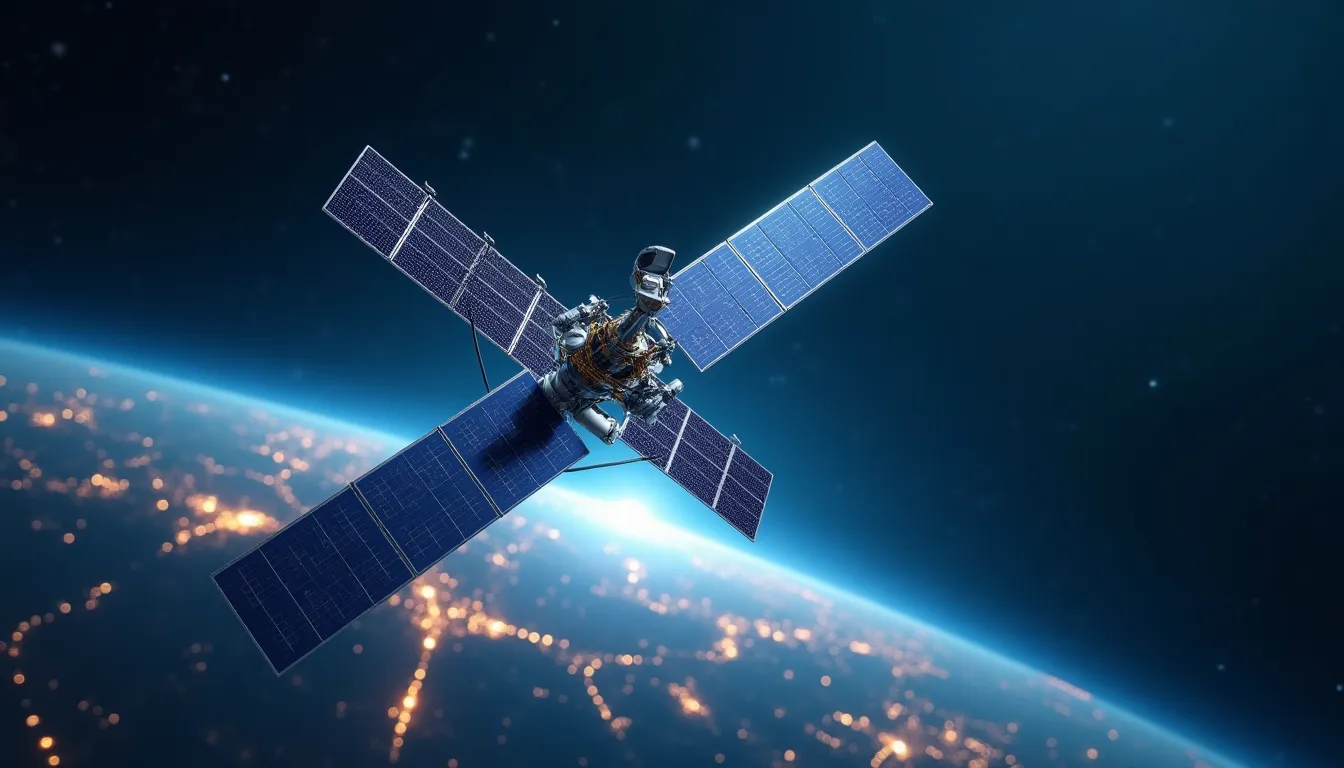
The aerospace and defense industry is witnessing a transformative period marked by significant advancements in satellite technology. As we move deeper into 2026, innovations such as direct-to-device (D2D) connectivity, 5G non-terrestrial networks (NTN), and applications in exoplanet exploration are reshaping the landscape. These developments not only enhance commercial scalability but also bolster national security and catalyze deep-space scientific missions.
The Maturation of Satellite-to-Handset Connectivity
The shift from experimental trials to commercial deployment of satellite-to-handset connectivity is gaining momentum. AST SpaceMobile is at the forefront of this evolution with its BlueWalker platform, which, in partnership with AT&T, aims to roll out beta D2D services in the first half of 2026 using a constellation of 60 satellites. This service will allow mobile devices to connect directly to satellites, facilitating communication in remote areas, a game-changer for industries such as oil and gas that operate offshore or in isolated locations.
Apple’s collaboration with Globalstar is another noteworthy development, integrating satellite features like messaging and roadside assistance into iPhones. This convergence of terrestrial and satellite technologies signifies a critical step toward mainstream adoption, enabling users to maintain connectivity in scenarios where traditional cellular networks fall short.
Other notable players in this space include Iridium, Viasat, Lynk, and Sateliot, each targeting specialized niches within the market. The fastest growth is anticipated in remote applications, where reliable communication is vital. As these technologies mature, we expect to see a surge in the demand for supporting hardware, such as precision accelerometers and advanced sensor modules, which enhance the operational reliability of satellite communication systems.
Airbus’s SpaceRAN Demonstrator: Pioneering Orbital 5G
On January 14, 2026, Airbus UpNext unveiled the SpaceRAN demonstrator, a groundbreaking initiative designed to streamline 5G connectivity via satellites. Utilizing software-defined technology, these satellites will process NTN signals in orbit, significantly reducing latency and improving throughput for user-to-user connectivity.
The consortium behind this project includes renowned entities such as Aalyria, Deutsche Telekom, and Eutelsat, with initial results expected by 2028. This initiative not only prepares the groundwork for future 6G capabilities but also showcases the growing interdependence between terrestrial and satellite networks. As these networks evolve, technologies like high-performance MEMS accelerometers will become increasingly vital for maintaining stability and precision in satellite operations.
National Security and the Proliferated Architecture
SpaceX’s recent launch of the NROL-105 spy satellite on January 16, 2026, underscores the increasing reliance on satellite constellations for national security purposes. Deployed from Vandenberg Space Force Base, this mission marked the 12th deployment since May 2024, emphasizing a resilient architecture that comprises hundreds of small satellites developed in collaboration with Northrop Grumman.
The proliferation of these satellites enhances flexibility, enables rapid deployment, and increases revisit rates for intelligence gathering. This shift towards a more agile satellite constellation is crucial for military and intelligence operations, providing timely data and insights. As these networks expand, the integration of advanced sensor technologies will be essential for ensuring accurate data collection and analysis.
NASA’s Pandora Mission and Exoplanet Exploration
The scientific community is also making strides in satellite technology with the recent launch of RTX’s Blue Canyon Saturn-200, designed for NASA’s Pandora mission. Launched on January 14, 2026, this minisatellite is equipped with the largest telescope payload on a Blue Canyon platform, enabling the study of exoplanet atmospheres with unprecedented precision.
The Saturn-200’s advanced guidance systems allow for exceptional pointing stability, critical for deep-space observation missions. As NASA continues to explore the cosmos, the need for compact and reliable satellite systems, such as the mini lithium niobate optical chips found in cutting-edge sensors, will play a pivotal role in advancing our understanding of the universe.
Emerging Technologies and Policy Shifts
As of January 16, 2026, new developments in satellite technology are not limited to connectivity and exploration. The industry is also witnessing strides in artificial intelligence applications for satellite operations, including contracts focused on AI training that enhance autonomous satellite functions. Additionally, innovations in debris shielding technology are becoming paramount as the number of satellites in orbit increases.
These policy shifts and technological advancements reflect a broader trend towards enhancing operational resilience and sustainability in space. The integration of emerging technologies will likely lead to more efficient satellite operations, further solidifying the role of advanced systems like the ZQXXSGDSS and DBY021550M in next-generation satellite designs.
Conclusion
The landscape of satellite technology is evolving rapidly, driven by advancements in connectivity, national security, and scientific exploration. As companies like AST SpaceMobile, Airbus, and SpaceX push the boundaries of what is possible, the implications for industries reliant on satellite communication and observation are profound. Looking ahead, the convergence of terrestrial and satellite technologies, bolstered by innovative products and advanced systems, will not only enhance connectivity but also open new avenues for exploration and defense. The future of satellite technology promises to be as expansive as the universe it aims to explore.
References
-
Convergence Comes of Age: 2026 Shifts Satellite Promise into … (www.satellitetoday.com) - 1/17/2026 For the better part of a decade, the promise of satellite-to-handset connectivity has sat somewhere between trial and theory.
-
SpaceX launches its 1st national security mission of 2026, sending … (www.space.com) - 1/17/2026 SpaceX launches its 1st national security mission of 2026, sending US spy satellites to orbit … The NROL-105 mission lifted off from California …
-
Space Brief 16 Jan 2026 - KeepTrack (keeptrack.space) - 1/16/2026 Today’s highlights include a significant contract for AI training in satellite operations, a new debris shield technology, and policy shifts …
-
Airbus launches demonstrator to test global 5G connectivity in orbit (www.airbus.com) - 1/14/2026 Airbus UpNext SpaceRAN will leverage Airbus’ software-defined satellite 1 capabilities to manage and optimise 5G signals in orbit. By processing …
-
RTX provides Blue Canyon satellite for interstellar mission (www.rtx.com) - 1/14/2026 Pandora mission to utilize Saturn-200 minisatellite platform for exoplanet long observations. LAFAYETTE, Colo., Jan. 14, 2026 /PRNewswire/ …