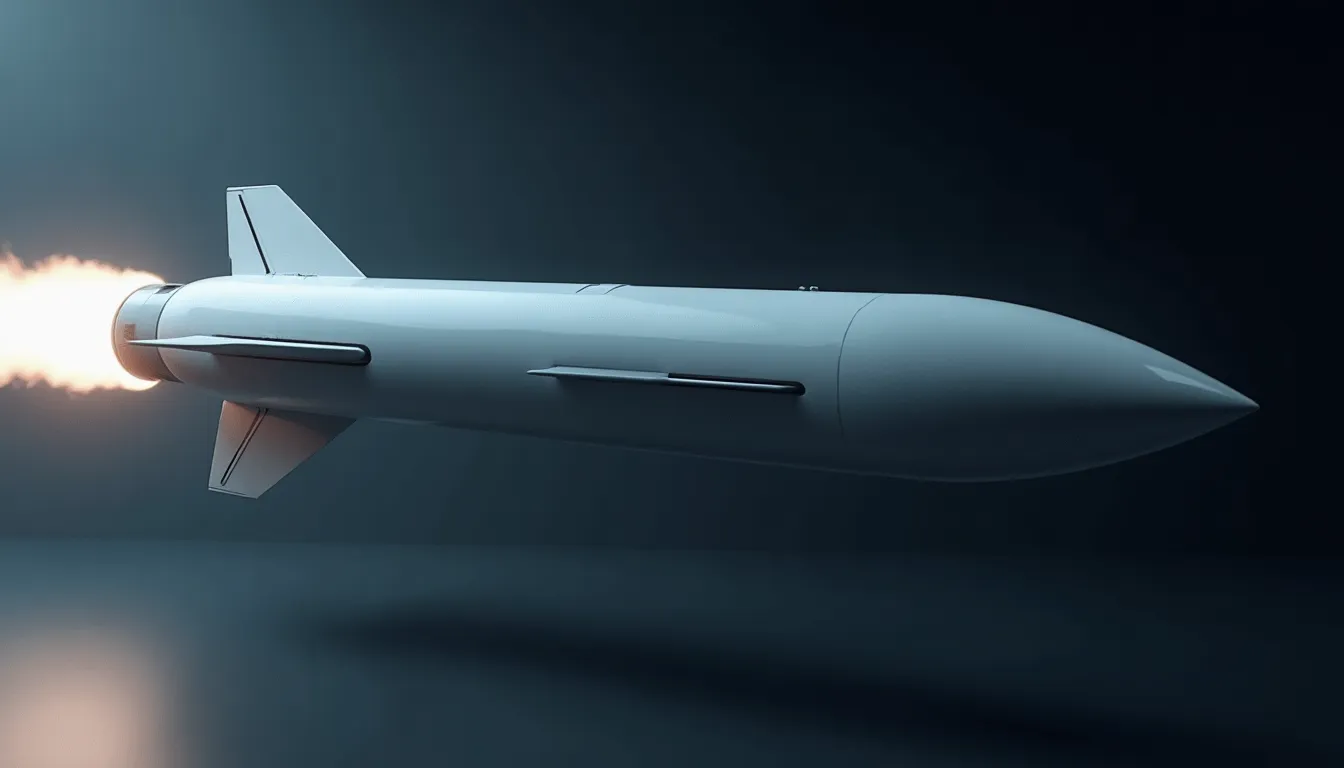
In the ever-evolving landscape of military technology, recent developments in missile systems illuminate a significant shift in defense strategies. With an emphasis on resilience against emerging threats, the United States and its allies are advancing missile technology, particularly in hypersonic capabilities, space-based warning systems, and nuclear cruise missiles. This article highlights the key advancements made in the last month, focusing on technical specifications and strategic implications.
U.S. Space-Based Missile Warning and Defense
The U.S. Space Force is at the forefront of missile warning capabilities through systems like the Space-Based Infrared System (SBIRS) and the Next-Generation Overhead Persistent Infrared (OPIR). These systems are designed to detect ballistic and hypersonic missile launches within seconds, providing critical early warning to military operators. A significant investment of $3.5 billion has been allocated for the Space Development Agency’s Tranche 3, which will deploy 72 satellites starting in 2029, enhancing the U.S. military’s situational awareness in contested environments.
Despite these advancements, vulnerabilities remain; systems face daily threats from jamming and cyberattacks. The initiative known as the “Race to Resilience” aims to create battle-ready architectures by 2026, focusing on technologies like boost-phase interceptors under the Golden Dome program. Recent contracts awarded by the Missile Defense Agency emphasize a strong commitment to developing protective measures against these vulnerabilities, reflecting the urgent need for robust missile defenses in modern warfare.
Nuclear and Conventional Cruise Missiles
In a strategic move to enhance naval capabilities, the U.S. Congress has approved the deployment of Submarine-Launched Cruise Missiles-Nuclear (SLCM-N) on the forthcoming Trump-class BBG(X) battleships. These missiles will utilize the W80 warhead family and feature a Vertical Launch System (VLS) with 128 cells dedicated to SLCM-N, in addition to 12 cells for Conventional Prompt Strike (CPS) hypersonic missiles. The design phase is set to run from 2026 to 2032, with commissioning expected in the late 2030s, thereby reinforcing the U.S. Navy’s strategic deterrence posture.
UK Ballistic Missile Initiative for Ukraine
In response to ongoing military tensions in Ukraine, the United Kingdom has initiated Project Nightfall—an ambitious program aimed at developing ground-launched tactical ballistic missiles with a range exceeding 500 km. These missiles will be engineered to carry a high-explosive warhead weighing 200 kg and are planned for production at a rate of ten units per month. The project aims to enhance the resilience of these systems against electronic warfare, making them vehicle-launched with rapid-fire and withdrawal capabilities. Proposals for this program are due by February 9, 2026, with contracts awarded for prototypes expected to follow in March.
U.S. Hypersonic Missile Programs
Hypersonic technology continues to be a focal point in U.S. military strategy, with several key programs under development:
| Program | Key Details | Status/Funding |
|---|---|---|
| Long-Range Hypersonic Weapon (LRHW, Army) | Combines a booster with a Common-Hypersonic Glide Body (C-HGB) designed for maneuverability and evasion. | FY2026 RDT&E: $513M; multiyear procurement set through FY26 NDAA. |
| Conventional Prompt Strike (CPS, Navy) | Utilizes a 2-stage booster with C-HGB; designed for cold-gas launch from Zumwalt destroyers and Virginia-class submarines. | FY2026 RDT&E: $798.3M; focus on rapid development. |
| Hypersonic Attack Cruise Missile (HACM, Air Force) | Aimed at bombers and fighters, allowing for extensive payload capacity. | FY2026: $802.8M; targeted deployment in FY2027. |
These programs are critical as they aim to ensure the U.S. maintains its strategic edge in an increasingly complex global threat environment.
Production and Industry Expansion
The recent acquisition of Aerojet Rocketdyne by L3Harris marks a significant shift in the defense manufacturing landscape, particularly in scaling the production of solid rocket motors. This partnership aims to enhance the production capabilities for various missile systems, including PAC-3, THAAD, and Tomahawk, through the establishment of a new Missile Solutions business. The recent investor conference highlighted L3Harris’s commitment to innovation and its role in supporting the U.S. defense sector’s expansion efforts.
Advanced Technologies Supporting Missile Systems
Key technologies such as the ZQXXSGDSS System, which includes high-performance single-tube PIN quadrant detectors, are becoming integral to missile guidance and tracking applications. Additionally, advanced sensor modules featuring 9-DOF MEMS IMUs provide exceptional stability and motion sensing capabilities, essential for the precision required in modern missile applications.
Conclusion
The advancements in missile technology underscore a transformative period in defense capabilities, driven by a combination of innovation and strategic necessity. As the U.S. and its allies navigate a complex security landscape, the integration of hypersonic systems, space-based defenses, and next-generation cruise missiles will be pivotal. With ongoing investments and collaborations in missile development, the future of military readiness appears robust, promising enhanced security and deterrence in the face of evolving threats.
References
-
Contracts for Jan. 15, 2026 - Department of War (www.war.gov) - 1/15/2026 MISSILE DEFENSE AGENCY. The Missile Defense Agency (MDA) has made an additional 340 awards under the Scalable Homeland Innovative Enterprise …
-
U.S. Congress approves deployment of SLCM-N nuclear cruise … (armyrecognition.com) - 1/13/2026 US Congress confirms nuclear SLCM-N missiles will equip the future Trump-class BBG(X), marking the return of sea-based nuclear strike …
-
L3Harris Accelerates ‘Arsenal of Freedom’ with Creation of a New … (www.l3harris.com) - 1/13/2026 L3Harris will host an investor conference to discuss the DoW’s partnership with the Missile Solutions business on Tuesday, Jan. 13, 2026, at 9 …
-
The Commercial-Defense Convergence: 2026 Trends to Watch (www.satellitetoday.com) - 1/13/2026 This episode of On Orbit features a webinar Via Satellite editors hosted in December on space and defense trends for 2026.
-
UK to develop new deep strike ballistic missile for Ukraine - GOV.UK (www.gov.uk) - 1/11/2026 11 January 2026. New ballistic missile could carry a 200kg warhead over a range of more than 500 kilometres … The deadline to receive Nightfall development proposals is the 9th February 2026, with development contract(s) aimed to be awarded in March 2026 …
-
What Are the Top Defense Technology Priorities for 2026? A Quick … (www.idga.org) - 1/8/2026 As of January 2026, Norrthrop Gruman, Anduril and General Atomics are the frontrunners to win the autonomous wingman program for the Air Force.
-
Space warfare in 2026: A pivotal year for US readiness (www.defensenews.com) - 1/5/2026 Missile warning and tracking systems, such as the Space-Based Infrared System and emerging Next-Generation Overhead Persistent Infrared …
-
An Overview of Current U.S. Hypersonic Missile Developments (dsm.forecastinternational.com) - 12/22/2025 The United States is currently developing three hypersonic weapons programs: the Navy’s Conventional Prompt Strike (CPS), the Army’s Long-Range …