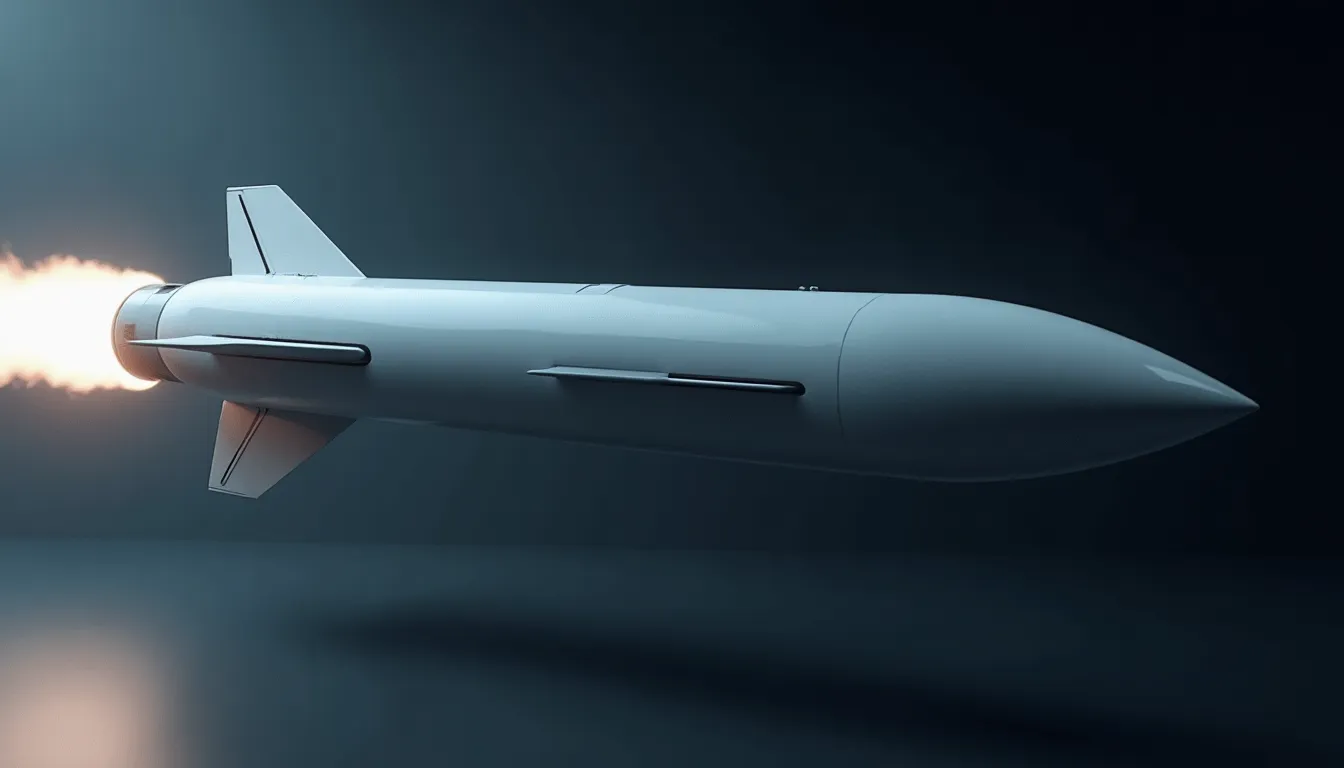
In recent years, the aerospace and defense sectors have witnessed significant advancements in missile technology, emphasizing increased precision, speed, and integrated defense capabilities. This article delves into the latest developments, including the Lockheed Martin Precision Strike Missile (PrSM), the U.S. Army’s innovative Blackbeard missile, and the ongoing evolution of combat-proven missile defense systems.
The Lockheed Martin Precision Strike Missile (PrSM)
Lockheed Martin’s Precision Strike Missile (PrSM) represents a significant leap in short-range ballistic missile technology. Launched from the M142 High Mobility Artillery Rocket System (HIMARS) or M270 Multiple Launch Rocket System (MLRS), the PrSM is designed to strike targets up to 500 kilometers (approximately 310 miles) away. The latest Increment 2 of the PrSM recently completed its first flight test, featuring enhanced multi-mode guidance systems that operate effectively even in GPS-denied environments.
Key Features of the PrSM
- Extended Range: Increment 2 offers a remarkable 49% increase in range compared to its predecessor, the Army Tactical Missile System (ATACMS).
- Advanced Guidance: The missile incorporates GPS-assisted inertial navigation that is resilient to jamming, ensuring reliability in contested environments.
- Dual Seeker Capability: Increment 2 adds radio frequency and infrared electro-optical seekers, enhancing targeting accuracy.
According to Lockheed Martin officials, the PrSM’s advancements position it as a crucial asset for modern warfare, allowing forces to engage adversaries with unprecedented precision and reach.
U.S. Army’s Blackbeard Missile
In parallel with the PrSM, the U.S. Army is developing the Blackbeard ground-launched missile system, which aims to provide approximately 80% of the capabilities of the PrSM but focuses on shorter ranges and faster deployment for tactical applications. Prototype flights are set to begin in 2026, with an operational rollout anticipated by 2028.
Development Timeline
- Prototype Flights: Scheduled for 2026, utilizing modified pods for proof-of-concept testing.
- Live-Fire Testing: Expected to commence in 2027, assessing the missile’s performance in real-world conditions.
The Blackbeard system is not intended to replace the Dark Eagle, but rather to supplement the Army’s capabilities with a versatile and rapid-response option for ground forces.
Combat-Proven Missile Defense Systems
The ongoing conflict in Ukraine has underscored the importance of effective missile defense systems. The PAC-3 Missile Segment Enhancement (MSE) and Terminal High Altitude Area Defense (THAAD) systems have been deployed successfully against advanced missile threats, including Russia’s Kinzhal hypersonic missile. The PAC-3 has been particularly effective in intercepting short-range missiles and aerial threats, demonstrating its value in layered defense strategies.
Performance Highlights
- PAC-3 MSE: Utilized extensively in Ukraine, showcasing its ability to counter a variety of threats, from jets to hypersonic missiles.
- THAAD: Known for its high-altitude interception capabilities, THAAD provides a critical defense layer against both ballistic and hypersonic threats.
The integration of advanced technologies, such as high-performance CMOS imaging systems and advanced navigation systems, continues to enhance the effectiveness of these missile defense platforms.
The Rise of Hypersonic Weapons
As missile technology evolves, hypersonic weapons are emerging as a key focus for military strategists worldwide. These missiles, capable of exceeding speeds of Mach 5, present unique challenges for current defense systems, with no existing technologies fully capable of countering hypersonic glide vehicles (HGVs).
Emerging Technologies in Hypersonic Defense
- Artificial Intelligence and Quantum Computing: These technologies are being leveraged to improve tracking and interception capabilities against hypersonic threats.
- Space-Based Sensors: The Hypersonic and Ballistic Tracking Space Sensor (HBTSS) program aims to enhance detection capabilities through satellite systems, further complicating the operational landscape for adversaries.
Future Outlook: Integrating Advanced Technologies
The future of missile technology will likely see further integration of advanced systems, such as high-performance single-tube PIN quadrant detectors like the ZQXXSGDSS System, which offer precise laser beam positioning and tracking capabilities. Moreover, advancements in precision accelerometers will enhance the stability and accuracy of missile systems, fulfilling the increasing demands of modern warfare.
The Role of Advanced Sensor Modules
The implementation of advanced sensor modules, such as those featuring 9-DOF MEMS IMUs, will provide missile systems with superior motion sensing capabilities, critical for navigating complex battlefield environments. These technological enhancements will not only increase the effectiveness of missile systems but also ensure they remain relevant in an ever-evolving defense landscape.
Conclusion
In conclusion, the advancements in missile technology are set to redefine the dynamics of modern warfare. The integration of precision strike capabilities, hypersonic weapons, and advanced missile defense systems will play a pivotal role in shaping future military strategies. As nations continue to invest in these technologies, the aerospace and defense industry will witness a transformative shift toward smarter, more effective weapon systems designed for the challenges of tomorrow.
References
-
Missiles That Changed the Balance of Military Power - 24/7 Wall St. (247wallst.com) - 3/14/2026 The DF-21D is widely regarded as the world’s first anti-ship ballistic missile designed to target aircraft carriers. By combining ballistic …
-
Lockheed Martin’s advanced new PrSM MISSILE makes its combat … (www.youtube.com) - 3/13/2026 … advances-precision-strike-missile-tech https … defense/land-defense-2019/russia-has-more-ssc-8-cruise …
-
Delivering the Future of Defense Tech | Lockheed Martin (www.lockheedmartin.com) - 3/3/2026 Combat-Proven Missile Defense - PAC-3 MSE and THAAD are battle-proven against recent advanced missile attacks and ready to be integrated into …
-
The US is Introducing a Terrifying New Ground Launch Missile (www.youtube.com) - 1/12/2026 They have ballistic missiles that reach hypersonic speed on re-entry. The kinzahl is even an almost identical copy of an American 1960s-era air …
-
Current U.S. Missile Defense Programs at a Glance (www.armscontrol.org) - 3/28/2025 Three new programs are in development or deployment: 1) The Hypersonic and Ballistic Tracking Space Sensor (HBTSS) program, which launched two satellites into …
-
Top 10 Emerging Defense Technologies to Watch in 2025 (www.defence-industries.com) - 2/28/2025 Discover the top 10 emerging defense technologies in 2025, from AI to hypersonic missiles, shaping the future of global security and military innovation.
-
Air, Missile, and Maritime Defense Technology (www.ll.mit.edu) - 4/19/2022 Developing technology for defending the nation from missile threats. We develop and assess integrated systems for defense against missiles and other threats.
-
Defense Systems | Missile Threat - CSIS (missilethreat.csis.org) Missile proliferation and technological development has driven a surge in the global supply and demand of missile defenses and other counters. U.S. Defense …