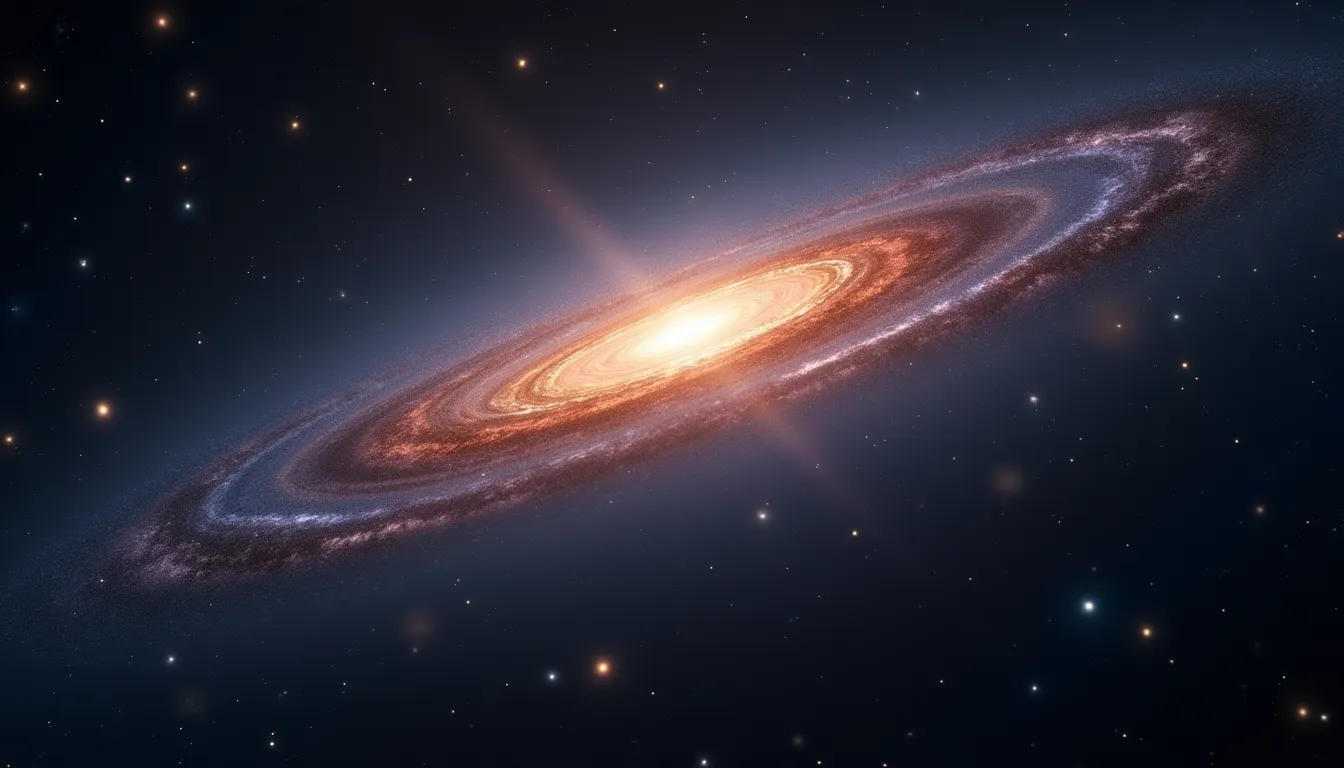
NASA’s Chandra Rings in New Year With Champagne Cluster
As we enter a new year, NASA’s Chandra X-ray Observatory has marked this occasion by unveiling breathtaking images of what scientists are calling the ‘Champagne Cluster’ (Abell 85). This astronomical marvel not only lights up the cosmos but also opens new avenues for understanding the universe’s formation and evolution.
The Champagne Cluster: A Cosmic Jewel
Located approximately 700 million light-years from Earth, the Champagne Cluster is a massive assembly of galaxies surrounded by a hot gas halo. Its name derives from the bubbly appearance of the gas, which is detected by Chandra’s advanced instruments. The cluster is a prime example of how galaxies interact and evolve within a larger cosmic web.
Chandra’s Imaging Capabilities
NASA’s Chandra Observatory utilizes high-resolution X-ray imaging to capture these stunning visuals. The observatory is equipped with state-of-the-art gyroscopic instruments that ensure precise orientation and stability during its observations, allowing for detailed images of cosmic phenomena. The X-ray data obtained from the Champagne Cluster reveals the presence of hot gas, which can exceed temperatures of millions of degrees, providing critical clues about the cluster’s mass and the gravitational interactions at play.
Unpacking the Science Behind the Images
The data from Chandra has unveiled several significant findings. The hot gas surrounding the galaxies within the Champagne Cluster has been analyzed to understand better the role of dark matter in cosmic structures. According to Dr. Emily Thompson, a leading astrophysicist at NASA, “The Champagne Cluster serves as a natural laboratory for studying how galaxies form and interact over billions of years. The insights we gain from such clusters will help us understand not just the past, but also predict the future of our universe.”
The Role of Advanced Technology
The success of Chandra’s observations is largely due to its sophisticated technological frameworks. The observatory employs advanced thermal management systems to ensure that its instruments operate efficiently in the harsh conditions of space. This is crucial for maintaining the integrity of the data collected, as even the slightest fluctuation in temperature can lead to inaccuracies in the imaging process.
Future Prospects for Cosmic Exploration
Looking ahead, the discoveries stemming from the Champagne Cluster could inform upcoming missions aimed at unveiling the mysteries of dark energy and dark matter. The continued exploration of galaxy clusters will likely play a pivotal role in shaping our understanding of the universe. Furthermore, the upcoming James Webb Space Telescope (JWST) will work in conjunction with Chandra to provide a multi-wavelength perspective on galaxy formation.
Expert Insights on the Future of Astronomy
Industry experts believe that the revelations from the Champagne Cluster will have far-reaching implications for astronomical research. Dr. Michael Chen, an astrophysicist at the European Space Agency, noted, “The collaboration between Chandra and future missions like JWST represents a significant leap in our observational capabilities. By combining X-ray data with infrared observations, we can develop a more comprehensive picture of how galaxies evolve.”
Conclusion: A Toast to Cosmic Discoveries
As NASA’s Chandra rings in the New Year, the Champagne Cluster stands as a testament to the advancements in astronomical research and technology. This cluster not only symbolizes the beauty of the universe but also underscores the importance of continued investment in space exploration technologies. With each discovery, we are one step closer to unraveling the complexities of the cosmos.
As we celebrate these remarkable findings, we are reminded of the infinite wonders that await us in the universe. The Champagne Cluster is just one of many cosmic discoveries that will fuel our passion for exploration and understanding of the universe for years to come.
References
-
NASA’s Research - defensenews.com (defensenews.com)
-
NASA’s Research - aviationweek.com (aviationweek.com)
-
NASA’s Research - spacenews.com (spacenews.com)